The British Hypertension Society (BHS) was established in 1980 by a group of physicians interested primarily in research. Over the years it has broadened its remit to encompass teaching and the development of best practice in hypertension management and cardiovascular risk prevention. Originally membership was restricted to people actively involved in research, but recently we have opened our doors to welcome other healthcare professionals (resident in the UK and Ireland) who are interested in the wider field. The majority of hypertension management in the UK is carried out by primary care physicians and nurses with increasing input from pharmacists. Many referrals to secondary care involve cardiologists. These practitioners are not sufficiently represented in the Society and, hence, we are keen for primary care health workers and cardiologists to apply for membership.
Activities
The Society has been instrumental in developing guidelines for the management of hypertension, which have been modified on a variety of occasions. In particular, we have interacted with the National Institute for Health and Clinical Excellence (NICE) on their last two guidelines. Both the BHS and NICE guidelines are looked upon as highly influential worldwide. We have also successfully lobbied Government in respect to reducing dietary salt in foodstuffs. It is likely that more stringent Quality Outcome Framework blood pressure treatment targets will be introduced next year as a direct result of the Society’s influence. BHS Members are now on the NICE Guidelines Implementation Group, looking to develop a national ambulatory blood pressure monitoring (ABPM) registry, and are involved in developing NICE guidance on device management
of hypertension.
We have our own trial programmes with ongoing research such as the Prevention and Treatment of Resistant Hypertension with Algorithm Guided Therapy (PATHWAY) studies in progress. Our current membership includes many world-renowned figures in hypertension research.
Each year we hold an annual conference that runs parallel sessions in research and practical day-to-day management issues. We attract eminent speakers from around the world to this meeting. While the meeting is of very high quality, we also ensure that it has sessions to appeal to all aspects of care and, ultimately, we pride ourselves on being a friendly group. Obviously this is ideal for your continuing medical education.
Expanding membership
As the Society now looks at cardiovascular risk prevention, and not just hypertension in isolation, we are also keen to broaden the membership to include those involved in the management of lipids, kidney disease, obesity and diabetes.
Please visit our website: www.bhsoc.org for more information about the Society and details of how to apply for membership. If you have any specific queries please email Jackie Howarth at [email protected] who would be pleased to help.
Highlights of the European Society of Cardiology (ESC) 2012 Congress held in Munich, Germany on August 25th–29th included the first ever randomised trial addressing the treatment of patients on anticoagulants who receive a stent, and lots more data on the new percutaneous alternatives to valve surgery – TAVI and MitraClip. More from the congress is featured in our podcast at www.bjcardio.co.uk
WOEST: aspirin not required for stent patients on oral anticoagulants
A strategy of using clopidogrel as a single antiplatelet drug for patients receiving a
drug-eluting stent who are also taking an oral anticoagulant appears safe and can reduce bleeding, the results of the WOEST study suggest.
How to treat patients on anticoagulation when they receive a stent is fraught with difficulty as giving the normal dual antiplatelet therapy with aspirin and clopidogrel means they will be taking three anti-clotting agents which could increase bleeding complications to a dangerous level. But no randomised clinical trials have ever investigated whether alternative strategies may be better.
The WOEST study, presented by Dr Willem Dewilde (TweeSteden Hospital, Tilburg, the Netherlands) investigated whether aspirin could be dropped in such patients. It enrolled 573 patients already treated with oral anticoagulants for atrial fibrillation or mechanical valves and undergoing coronary stenting, who were randomised to two groups: one given additional clopidogrel only (double therapy group), or a second given additional clopidogrel and aspirin (triple therapy group).
Table 1. Major results in the WOEST study
Results (table 1) showed that at one-year follow-up, the dual therapy group had less bleeding (the primary end point) than the triple therapy group. There was a significant reduction in minimal and minor bleeding, and major bleeding was also numerically lower, but this did not reach statistical significance. The trial was not powered to show a difference in ischaemic events, but there did appear to be a reduction in mortality in the dual therapy group, and there was no increase in myocardial infarction or stent thrombosis.
Dr Dewilde commented: “Although the number of patients in the trial is limited, this is an important finding with implications for future treatment and guidelines in this group of patients known to be at high risk of bleeding and thrombotic complications”.
Co-chair of an ESC press conference on the study, Professor Keith Fox (University of Edinburgh) noted that although the trial was small, it was the first randomised data on this issue, and as such could be practice changing. “If we look at the evidence prior to this, there has been very little. So this is a very big step. The community will take this seriously,” he said.
Professor Fox discusses the WOEST study in our ESC podcast
MitraClip looks good for high risk mitral valve patients
Another European registry has shown favourable results for use of the percutaneous MitraClip for mitral valve repair. The clip is delivered by catheter through the femoral vein, and is designed to reduce significant mitral regurgitation by clipping together the leaflets of the mitral valve.
ACCESS-EU, a registry of 567 MitraClip patients from 14 European sites, is the largest group of patients evaluated to date. Patients were elderly (mean age 74) with significant co-morbidities, including coronary artery disease in 63% and moderate to severe renal disease in 42%. At baseline, 85% were in New York Heart Association (NYHA) Class III/IV heart failure, and 53% had left ventricular ejection fraction less than 40%. The majority of patients had functional mitral regurgitation, and were considered at high risk for mitral valve surgery.
Results at one year showed that 82% of patients were still alive, 79% had mitral regurgitation grade 2+ or less, and 94% remained free from mitral valve surgery. The majority of patients showed significant clinical improvements, with 72% now classified in NYHA Class I/II. In addition, results reflected an improved functional capacity, with a median improvement of 60.5 meters for six-minute walk distance, and improvements in quality of life, reported Dr Wolfgang Schillinger (Universitätsmedizin Göttingen, Germany).
He concluded that: “Where the benefits of surgery do not outweigh the risks, the MitraClip treatment is an important alternative for patients with mitral regurgitation.”
The transcatheter aortic-valve implementation (TAVI) and MitraClip percutaneous procedures are both discussed in more detail in the new ESC guidelines on the treatment of valve disease, which were released at the meeting.
TRILOGY ACS: no role for prasugrel in medically treated ACS
The antiplatelet agent, prasugrel, failed to significantly reduce cardiovascular events versus clopidogrel in the TRILOGY ACS trial in high-risk acute coronary syndrome (ACS) patients managed medically without revascularisation.
Study chairman, Dr Magnus Ohman (Duke University Medical Center, Durham, US) noted that TRILOGY was designed to complement the TRITON trial in which prasugrel was associated with significantly lower rates of ischaemic events, versus clopidogrel but with an increased risk of major bleeding in ACS patients undergoing revascularisation. “The aim of TRILOGY was to see if prasugrel was just as effective in ACS patients who weren’t getting stents or bypass surgery,” he said.
The trial randomised 7,243 ACS patients not undergoing revascularisation to prasugrel (10 mg daily reduced to 5 mg for patients under 60 kg) or clopidogrel (75 mg daily) for up to 30 months of treatment. The primary end point – cardiovascular death, myocardial infarction, or stroke through a median follow-up period of 17 months – was not significantly different between the two groups (table 1).
Table 1. TRILOGY primary end point
An additional analysis including an additional 2,083 patients aged 75 years or older in whom a reduced 5 mg dose of prasugrel was compared to the regular clopidogrel dose showed similar results.
Some good news
Unlike the TRITON trial, TRILOGY did not show an increase in severe bleeding complications with prasugrel, possibly because of the dose reductions in low body weight and elderly patients. Dr Ohman said this gave reassurance on concerns about the prolonged safety of the drug.
In addition, there was a surprising, time-dependent effect seen, with a trend towards a lower risk of ischaemic events with prasugrel after 12 months. “While there was no difference in the rate of the primary composite end point or its separate components between the two groups in the first year of the study, the curves began to diverge after the one year mark. This is an unexpected finding, and means that the trial raises more questions than it answers and is going to require a lot more analysis,” Dr Ohman said.
The implications of TRILOGY for practice are discussed in our ESC podcast
More encouraging results with TAVI
New data on use of transcatheter aortic-valve implantation (TAVI) from a German registry are reassuring for high-risk patients, with in-hospital mortality was “just as good, if not better” than with conventional aortic-valve surgery, reported Dr Christian Hamm (Kerckhoff Heart and Thorax Centre, Bad Nauheim, Germany). “Patients in high risk groups benefit at least as much from TAVI procedures, particularly when performed transfemorally, as from conventional surgery,” he added.
The German Aortic Valve Registry (GARY) was started in July 2010 and is the only registry so far to include both the new transcatheter procedure and conventional aortic valve replacements and repair. By July 2012 more than 26,000 patients were included from
92 centres, of whom 23% received TAVI.
Data were reported on 15,252 patients treated in 2011. This showed that TAVI is being used mainly in line with current guidelines, with 85% of all patients undergoing the trancatheter procedure being over 75 years (average 81 years versus 68 for surgery), and the TAVI patients also having a higher perioperative risk of mortality.
The reported in-hospital mortality for elective patients was 2.1% for conventional surgery, 5.1% for the transfemoral TAVI and 7.7% for the transapical approach. Stratification of the patients into risk groups revealed a particular benefit for people with high- and very high-risk when treated transfemorally, with mortality rates of 4.7% and 7.7%, respectively.
The overall number of cerebrovascular events during hospital stay was 2.2% in the conventionally treated group versus 3.7% for transfemoral TAVI and 3.5% for transapical TAVI. Vascular complications occurred in 11.9% for the transfemoral, 2.5% for the transapical and 1.0% for the conventional group. The number of patients who needed more than two units of packed red blood cells was 29.4% in conventional surgery and 25.4% with the transapical, versus 11.5% with the transfemoral approach.
Professor Friedrich-Wilhelm Mohr (Leipzig Heart Centre, Germant) commented: “Post-procedural rates of cerebrovascular events, vascular complications, renal failure and blood transfusions have decreased but need further attention. The high number of patients in the register will allow for thorough risk factor analysis for these complications. With the help of subgroup analyses and stratification for risk factors, we also expect to detect which treatment is best for which patient.”
Designated discussant of the results, Dr Olaf Wendler (King’s College Hospital, London), noted that around half of aortic valve patients more than 75 years of age are receiving the TAVI procedure which he said was “impressive” and far higher than anywhere else worldwide.
But he pointed out that the in-hospital mortality for the registry’s lower-risk TAVI patients was higher than that predicted, questioning if this is the right treatment for this group of patients.
Renal denervation benefits persist to 18 months
Long term results from the SYMPLICITY HTN 2 trial suggest that the blood pressure benefits of renal sympathetic denervation persist for at least 18 months.
Earlier results from the trial showed that ablation of the renal nerves led to average blood pressure reductions of 32/12 mmHg at six months in patients with drug-resistant hypertension.
After the six month point, patients in the control group were also offered the renal denervation treatment. The 18-month results showed that patients in the original ablation group continued at the blood pressure level demonstrated at six months (an average reduction of 32/12 mmHg from baseline) while those in the control group who had also now had the procedure also showed similar reductions (28/13 mmHg) from baseline.
Dr Murray Esler (Baker IDI Heart and Diabetes Institute, Melbourne, Australia) reported that pulse pressure improved and heart rates were stable or lower following the procedure. Also, no device-related serious adverse effects and no detrimental effects on the renal vasculature have been reported.
The renal denervation procedure also seems to have beneficial effects on psychological measures, according to a 173-patients study presented by Dr Denise Fischer (Universitätsklinikum des Saarlandes, Homburg, Germany). This showed that three months after ablation, blood pressure had decreased by an average of 17/7 mmHg, and the patients showed significant improvement on a multitasking test designed to assess their ability to respond to stress. Quality of life, anxiety, and depression, headache intensity and sleep problems also improved significantly.
Positive results with renal denervation were also reported from a French registry of 35 consecutive patients. Dr Darren Mylotte (Institut Cardiovasulaire de Paris Sud, France) noted that the average baseline blood pressure was 181/100 mmHg despite an average of 4.6 medications per patient and, at six-months after the procedure, this had been reduced by an average of 30.3/14.6 mmHg.
Dr Sarah Jarvis discusses the relevance of renal denervation studies for primary care in our ESC podcast
FAME II results show benefits of FFR-guided cardiac stenting
Patients with fractional flow reserve (FFR) guided stenting plus the best available medical therapy had superior outcomes to those treated with medical therapy alone, according to results from the FAME II Trial presented during a Hot Line session.
For patients found to have a significant stenosis with FFR, the primary endpoint (a composite of death, myocardial infarction, or urgent revascularisation) occurred in 4.3% of those in the percutaneous coronary intervention (PCI) plus medical therapy group versus 12.7% of those in the medical therapy group. The difference was driven by lower rates of urgent revascularisation in the PCI group than in the medical therapy only group (0.7% vs. 9.5%, p<0.001).
The new findings build upon data from the original FAME trial, which demonstrated improved outcomes and cost-savings when FFR is utilised to guide cardiac treatment procedures.
Learn more about the FAME study in our ESC podcast
New drug class may provide clinical benefits in patients with HF-pEF
The investigational compound LCZ696, an angiotensin receptor neprilysin inhibitor, is the first-in-class therapy to significantly reduce a key predictor of morbidity and mortality in patients with heart failure with preserved ejection fraction (HF-pEF).
Results from the Phase II PARAMOUNT study presented showed that after 12 weeks, LCZ696 met its primary end point by reducing N-terminal pro-B-type natriuretic peptide significantly more than valsartan. The data also suggest that LCZ696 may reverse some structural changes to the heart that occur in patients with heart failure.
“LCZ696 is unique in simultaneously blocking the renin angiotensin system while augmenting the body’s intrinsic natriuretic peptide system through neprilysin inhibition,” said Professor Scott Solomon (Harvard Medical School, Boston, US). “These dual effects may be important in the treatment of HFpEF.”
More on this new agent is discussed in our ESC podcast
ESC selects London for 2015 Congress
The 2015 Congress of the European Society of Cardiology (ESC) will be held in London. The Congress is the largest cardiology meeting in the world, with roughly 35,000 medical professionals expected to attend the five-day event from 29 August – 2 September 2015.
Professor Kim Fox (Royal Brompton Hospital, London), Past President of the ESC, said: “The UK has been a pioneer in cardiovascular research and treatment and it is fitting to bring the congress back to London for the first time in 63 years. Venues for events of this size are difficult to find and we are overjoyed that London now has the structure to host the ESC Congress. The eyes of the medical world will be focused on London as a leader in science and education”.
Younger women – a new risk group for MI
While better treatment does seem to be translating into a lower overall mortality rate after myocardial infarction (MI), there is a worrying trend of more heart attacks occurring in younger people, particularly women, according to the results of a new French study.
The FAST-MI study reported data from four one-month French nationwide registries, conducted five years apart (1995 to 2010), including a total of 6,707 patients with ST elevation MI.
During the study period, 30-day mortality decreased from 13.7% to 4.4% in STEMI patients; mortality decreased from 9.8% to 2.6% in men and from 23.7% to 9.8% in women. However, the average age of those with STEMI decreased from 66.2 years to 63.3 years over the study period, which appeared to be due to an increase in the proportion of younger women with STEMI.
Presenting the data, Dr Nicholas Danchin (Hôpital Européen Georges Pompidou, Paris, France), noted that two different trends seem to be occurring. The mortality rate in the older “traditional MI candidate” is falling, probably because of better primary-prevention efforts, and better treatment when the MI occurs. However, some of this progress is being countered by an increase in MI in younger people – particularly younger women (under 60 years) who smoke.
He reported that younger women still represent a small proportion of all MI patients (about 7% to 8%), but this is up from about 2% to 3% 15 years ago. Danchin suggested that the most likely explanation for this is the increased prevalence of smoking in younger women.
Data from the FAST-MI study show that smoking rates in younger women who have had an MI dramatically increased from 37% in 1995 to 73% in 2010. Obesity rates also increased in this group – up from 18% in 1995 to 27% in 2010.
Dr Sarah Jarvis discusses this study in our ESC podcast
Authors: Drs Janet McComb, André Ng, Henry Purcell, and Andreas Wolff
This year’s Heart Rhythm Congress (HRC 2012), held in Birmingham from 23rd-26th September, was the largest to date showing the growing interest in this specialty. Drs Janet McComb, André Ng, Henry Purcell, and Andreas Wolff report their highlights from the meeting.
Stroke risk assessment in AF
New insights on stroke risk assessment were provided by Dr Ami Banerjee (University of Birmingham), in a session supported by the Atrial Fibrillation Association.
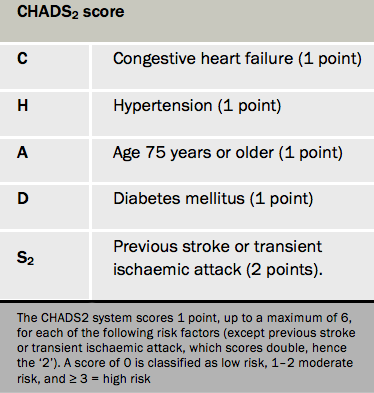
Table 1. CHADS2 score
The CHADS2 risk stratification scoring system (table 1) is currently the indicator for the Quality and Outcomes (QoF) framework used to determine whether an atrial fibrillation (AF) patient warrants anticoagulation. It may underestimate risk and those with a score of zero may actually be at substantial stroke risk. He also pointed out that the system has inherent disadvantages. It does not include many of the risk factors for stroke, it has been derived from historical data sets, and it does not identify patients at low risk of stroke.
“Truly low risk, is the new target for risk prediction,” says Dr Banerjee, who thinks the preferred prediction tool should be CHADS2DS2VASc (table 2) – as advocated in the updated (2012) guidelines for the management of AF from the European Society of Cardiology (ESC) – since it takes into account vascular disease, age 65-74 years and gender. Thus patients with a CHADS2DS2VASc score of zero or those under 65 years, and lone AF irrespective of gender, have a truly low stroke risk and do not need anticoagulation.
Bleeding risk, how to assess it and how to stop it
Table 2. The 2009 Birmingham Scheme – CHA2DS2-VASc Scoring System
“All anticoagulants increase bleeding,” Dr Joe DeBono (University Hospitals, Birmingham) reminded delegates. With warfarin, an indication of anticoagulation activity is given by the INR (with a target of 2-3 for most indications), and reversing its use – with a prothrombin complex concentrate (PCC) and frozen plasma, for example – is fairly straight forward. In contrast, it is difficult to assess activity with the novel oral anticoagulants (NOACs), which are without “proven antidotes” but they do have shorter half-lives (T1/2), he said. They appear to reduce intracranial haemorrhage (ICH) but they may increase gastrointestinal bleeding.
He asked whether the lack of an antidote mattered. Possible reversal strategies for all anticoagulants include use of activated charcoal, and PCC (very expensive and effective in reversing warfarin but its effects with NOACs are less clear). Most bleeds with NOACs appear to be non-fatal and mild, with the latter responding to local haemostatic measures while more serious bleeds may require fluid replacement and fresh frozen plasma. It is key “to get an early haematological opinion”, said Dr DeBono.
He also considered what should be done if patients need an operation or other intervention, as was the case in a quarter of patients during the RE-LY trial, for example. With NOACs having short half-lives, it may be possible to delay the procedure for a day or two while clotting tests may also be useful. Dialysis or reversal agents should be considered but it is important to avoid neuraxial blockade e.g. epidural anaesthesisa and anticoagulants, he said.
“Prevention is better than cure,” he concluded, reminding delegates not to angticoagulate low-risk patients.
The aspirin conspiracy
This was the intriguing title of a presentation from Dr Matt Fay (Westcliffe Medical Practice, Shipley). He gave a history of the clinical use of aspirin and its associated myths, from its ancient non-aceylated form (around 400 BC) up to modern times. He concluded that aspirin is “clearly inferior to oral anticoagulants” in stroke prevention in AF, especially in the elderly, and it carries a similar bleeding risk to OACs. Dr Fay has been instrumental in promoting the view that in AF patients, at moderate to severe risk of stroke, “we should stop thinking aspirin and start thinking oral anticoagulants”.
Anticoagulation is about three times more effective than aspirin in preventing AF-related stroke but about 53% of AF diagnosed patients are treated with antiplatelets, such as aspirin. And such patients remain at risk.
“As we get older the likelihood of getting warfarin decreases,” Dr Fay pointed out, especially in those over the age of 80 years, a group who have the most to gain with OACs. The risk of bleeding in those at risk of falls is the most commonly cited reason for not providing anticoagulation. Recent studies have shown, however, that elderly patients on OACs at high risk of falls, did not have a significantly increased risk of major bleeding, and that such a risk is not a valid reason to avoid anticoagulation.
Bleeding assessment
Dr Ron Pisters (University Medical Centre, Maastricht, The Netherlands) presented views on how and why we should assess bleeding. First, he said, think about stroke risk and then the risk of bleeding. AF, he said, is a cardiovascular risk factor and “not an arrhythmia per se”. He highlighted how only 50% of patients receive anticoagulation while 70% warrant it.
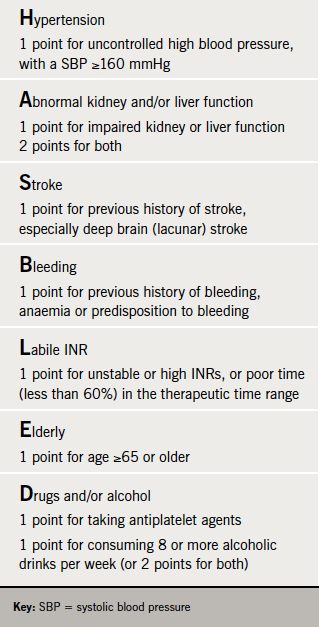
Table 3. The HAS-BLED bleeding risk score
He described how the HAS-BLED score (table 3) has put “bleeding risk on the agenda”. Recommended in the ESC guidelines, HAS-BLED has had “extensive validation” and Dr Pisters believes it should be deployed to “advance the care of AF patients” and reduce the risk of bleeding.
GRASP-AF and cost effectiveness
An important session on stroke prevention in AF was hosted by NHS Improvement. Dr Richard Healicon (National Improvement Lead, NHS Improvement) updated the audience on progress with the GRASP-AF programme, which has seen over 2,200 practices uploading data on 285,000 patients with AF.
The average prevalence of AF has risen to 1.78% suggesting that 900,000 patients in England could suffer from this condition. The latest version of GRASP-AF gives the option of using either the CHADS2 or CHA2DS2VASc risk assessment tool, and CHA2DS2VASc data is available on 26,000 patients so far. Anticoagulation rates have risen very slowly by 2.5%, which means that 44% of patients at high risk of stroke are still not anticoagulated.
Marion Kerr (Insight Health Economics) followed with an insightful economical analysis of stroke prevention in AF based on the latest GRASP-AF data. She estimated that every year 18,000 strokes and 5,500 deaths could be prevented in England with optimal stroke prevention. Potential cost savings to the NHS are around £133 million, while those to society could total £260 million.
Dr Matt Fay spoke about improving stroke prevention and focused on addressing the misconception that aspirin is an effective and safer alternative to anticoagulation in AF. Dr Campbell Cowan (Leeds General Infirmary) highlighted that with the shift to CHA2DS2VASc as the risk assessment tool of choice, the threshold for anticoagulation was lowered significantly at the same time.
Improving management practice of anticoagulation treatment
What makes an optimal anticoagulant? This was the question addressed by Professor Gordon McInnes (University of Glasgow) in a Bayer Healthcare sponsored symposium. All of the anticoagulants we have “are undoubtedly highly effective but have major limitations,” he said. Sometimes they need to be given parenterally and often more than once daily. They all have a potential to cause bleeding and have a narrow therapeutic index. Many have important interactions with other drugs and with foodstuffs. Thus monitoring is often necessary and there is a frequent need for dose adjustment. Onset and offset of drug action is relatively slow, which is a problem if there is a need for rapid effect and, conversely, if you need to stop them because of complications.
Professor McInnes reviewed all the anticoagulant classes and looked at the unmet needs in oral anticoagulants. We need drugs that are:
rapidly active and can be rapidly inactivated
have a wider therapeutic margin
have low potential for food and drug interactions
require infrequent dose adjustment
avoid need for monitoring.
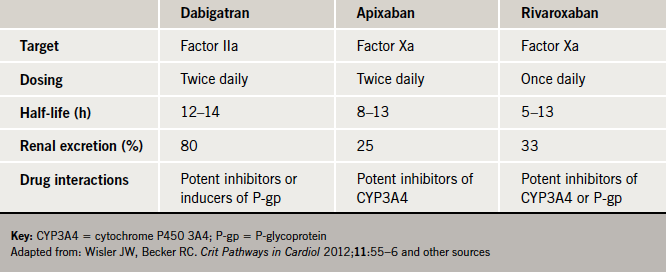
This is the challenge, he said, faced by the new oral anticoagulant agents, which inhibit either thrombin or factor Xa (table 4).
Table 4. Profiles of the available novel oral anticoagulants (NOACs)
Reviewing the NOACs, which included dabigatran, rivaroxaban and apixaban, he said these offered “real potential” (table 4). All are oral agents and have a relatively brief time to maximum serum concentration and none require anticoagulation monitoring, he said. All have a fairly intermediate half-life – some may be taken once rather than twice daily, which may be an important “practical, pragmatic difference between these drugs,” he said. They also have differences in bioavailability and protein binding.
In terms of drug interactions, Professor McInnes said that there was no evidence so far of interactions with foodstuffs with the NOACs but there is potential for interactions with some powerful enzyme inducers, which tend to be limited to select patient groups, such as those being treated for systemic fungal infections/HIV for example. Focusing on drug clearance, he said that agents such as rivaroxaban and apixaban which favour hepatic metabolism, may offer “a potential safety margin” in patients with renal impairment.
NOACS in treatment and prevention of VTE
Dr Alexander Cohen (Kings College Hospital, London) presented on an unlikely but clinically extremely important topic for HRC – treatment of venous thromboembolism (VTE). He reminded delegates that every year more patients die from VTE than from HIV, breast cancer and road traffic accidents, put together and might account for as many as 60,000 deaths per annum in the UK. In addition VTE can also lead to significant morbidity in the form of pulmonary hypertension and post-thrombotic syndrome. He presented “secondary prevention” data comparing NOACs with standard therapy of parenteral anticoagulant plus warfarin, with emphasis on the EINSTEIN programme utilising rivaroxaban,. EINSTEIN-DVT and EINSTEIN-PE both demonstrated non- inferiority over standard therapy in terms of preventing recurrent thromboembolism with comparable safety data to the warfarin-based regime. A similar finding was seen with dabigatran in the RE-COVER programme.
EINSTEIN-Extension compared the safety and efficacy of rivaroxaban to placebo in the secondary prevention of recurrent symptomatic venous thromboembolism, by prolonging preventative treatment by six or 12 months beyond a completed course of anticoagulation therapy. This showed that in the placebo group the recurrence rate was significant at 7.1% and that rivaroxaban reduced recurrence by 82%, at the cost of a slight increase in bleeding complications.
Devices, leads and other complications
One of the highlights of the conference was a session devoted to a lead used with implantable cardioverter defibrillators, which is prone to early failure (St Jude Medical Riata), and which is the subject of medical device alert issued by the Medical Healthcare products Regulatory Agency (MHRA). Delegates learned about the construction of defibrillator leads and how the next generation lead is less likely to fail. This session also covered the management of such patients, looking at the risks of leaving in leads at risk of failure against the risks of replacing them, highlighting the precautions that can be taken to detect failure as soon as it occurs. Clear clinical pointers were given on how to improve practice.
Another very interesting session examined complications of device implantation. It is becoming clear that complications of pacemaker and defibrillator implantation are more common than realised. A call was given for the need to collect robust data and also to reduce complications by ensuring devices are only implanted by competent operators in competent centres.
Management of syncope
In a session on syncope, impressive data were presented from the Manchester Heart Centre rapid access blackout clinic on the diagnosis of the cause of syncope. In a discussion on drugs used to try and prevent syncope, the need to review medication was emphasised – some drug therapy, particularly in the older patient with postural hypotension, should be withdrawn.
Highlights from abstracts, posters and basic sciences
The scientific sessions saw vibrant contribution from many electrophysiology and device centres showcasing data from the latest in cutting-edge research to good clinical practice. Around half of 130 abstracts submitted were selected for presentation as oral and poster (moderated and standard) communications.
Presentations included risk stratification for sudden cardiac death, which continues to be an important research area including promising data from a new proposed algorithm, data on the use of scar and fibrosis from cardiac magnetic resonance imaging (MRI) and other markers in predicting mortality. Data on new technologies and practices in AF ablation were presented, which included contact force catheters, use of MRI to evaluate post-ablation lesions and data on a more widespread practice of uninterrupted warfarin for ablation.
Several presentations looked at the subject of Patient Reported Outcome Measures (PROMs) in ablation procedures with data collected from three electrophysiology centres. The implications of the reporting of these measures in the context of commissioning for procedures were highlighted in addition to the value of using generic tools, which provide measures that can be compared with other surgical operations.
The high incidence of AF in pacing populations (identified with pacemaker interrogation) was presented, especially the importance that when asymptomatic, patients may not receive appropriate antithrombotic therapy. Data were presented from two separate centres on the practice of pacemaker implantation following open heart surgery. AF incidence appeared to be related to surgical complexity.
There was continued important contributions from basic science preclinical mechanistic studies at the congress. A new feature this year was a separate Allied Professionals oral presentation session, which received very positive feedback. Delegates heard of an interesting change in clinical risk score data on implantable cardioverter defibrillator (ICD) patients between implant and generator replacement, experience of an extended catheter lab nurse role in implanting loop recorders and paramedic treatment of supraventricular tachycardias.
Awards
The Young Investigators Award competition continues to be a main feature of the Congress. Top quality research work from the six shortlisted presenters included the importance of autonomic cardiac control during AF ablation and in Brugada syndrome, interesting data on coronary flow with cardiac resynchronisation therapy, basic science data in MRI lesions following acute ablation, and on the dynamic behaviour of electrical signals during persistent AF.
Congratulations to Louisa Malcolme-Lawes (Imperial College London) who won the Young Investigators Clinical Award and to James Harrison (King’s College London) who won the Young Investigators Basic Science Award.
The Arrhythmia Alliance Excellence in Practice Awards were also presented during the congress. Congratulations to Martin Harman who won The Charles Lobban Volunteer Award for Outstanding Contribution to Arrhythmia Services – after being diagnosed with AF at the age of 29, he has raised awareness on both national and international levels through fundraising marathons and local publicity. Dr Carolyn Dean received the Award for Outstanding Medical Contribution to Cardiac Rhythm Management for her research into how magnesium deficiency affects arrhythmia conditions. Ms Melloney Ferrar (Sheffield Teaching Hospitals NHS Foundation Trust) won The Allied Professional Award for Outstanding Contribution to Arrhythmia Management for her work in establishing one of the first clinics solely for postural orthostatic tachycardia syndrome patients. Professor Gregory Lip and Dr Deirdre Lane (University of Birmingham, Centre for Cardiovascular Sciences) won the Team of the Year Award for their collaboration to improve bleeding risk assessment for AF patients.
HRC 2012 highlights
The channelopathies session, which focused on current understanding in genetics and what to do when syndromes such as long QT and Brugada are found
A first class device follow-up master class, with presentations from highly experienced physiologists including Sue Jones (St George’s London) who shared their experience and expertise
The popular “Cases and traces” session where challenging cases were presented by electrophysiologists from around the UK
The new exhibition hall, which housed 50 exhibitors from industry, charities and other organisations, and held events, such as the launch of The Heart of AF website (www.heartofaf.org). This new websiste, produced by the AF Association, has been designed as a one-stop destination for researchers, clinicians and aligned professionals with an interest in AF and the improvement of its management
The abstract posters – showcased in the exhibition hall – with 68 accepted into the scientific programme. All accepted abstracts were published in Europace 2012;14 (suppl 4).
HRC 2013 will take place on 20th-23rd October 2013 at the ICCC, Birmingham
Contributors
Dr Janet Mc Comb, Consultant Cardiologist
Freeman Hospital, Newcastle
Dr G André Ng, Consultant Cardiologist and Electrophysiologist
University of Leicester / University Hospitals of Leicester, Glenfield Hospital
Dr Henry Purcell, Senior Fellow in Cardiology
Royal Brompton Hospital, London
Dr Andreas Wolff, General Practitioner
Whinfield Medical Practice, Darlington
Please note the pdf for this report is an abbreviated version of the above report. The HRC report follows on from the ESC coverage in this pdf.
The European Association for the Study of Diabetes (EASD) and the American Diabetes Association (ADA) have published new guidelines on the treatment of type 2 diabetes, which are less prescriptive than previous guidelines. They advocate more patient involvement and give guidance on the rational approach to the choice of therapy.
While general recommendations regarding the intensiveness of glycaemic therapy focused in the past on a HbA1c target below 7%, the new statement emphasises that goals must be individualised, with the precise target taking into account patient’s attitude and expected treatment efforts, the risk associated with glycaemia and other adverse effects, disease duration, life expectancy, other co-morbidities, established vascular complications, and the patient’s own resources and support system.
It notes, for example, some patients may feel that the weight gain associated with a particular diabetes therapy is unacceptable, whereas others may consider risk of hypoglycaemia as the primary factor in selecting treatment. And patients who are older with multiple co-morbidities will have different issues compared with a younger newly-diagnosed person that is otherwise healthy.
EASD president, Professor Andrew Boulton (University of Manchester) said: “The overarching goal should be to reduce blood glucose concentrations safely to a range that will substantially minimise long-term complications, but always keeping in mind the potential adversities with treatment burden, particularly in the elderly”.
Other key points from the guidelines include:
Diet, exercise and education to remain the foundation of any type 2 diabetes treatment programme
Unless there are prevalent contraindications, metformin is the optimal first-line drug
After metformin, there are limited data to guide treatment. Combination therapy with an additional one or two oral or injectable agents is reasonable, aiming to minimise side effects where possible
Ultimately, many patients will require insulin therapy alone or in combination with other agents to maintain glucose control.
Four years of hormone-replacement therapy (HRT) started soon after the onset of the menopause improved depression and anxiety in healthy women without promoting or worsening cardiovascular disease, the results of the KEEPS study show.
The study, presented at the North American Menopause Society 2012 Annual Meeting held in Orlando, Florida, US, involved 700 women who took either oral conjugated equine oestrogens (Premarin®) 0.45 mg/day (lower than the 0.625 mg/day used in the Women’s Health Initiative [WHI] study), transdermal oestradiol (Climara®) 50 micrograms/day, or placebo. Women taking the active oestrogens received 200 mg of micronised progesterone for 12 days each month.
As expected, both types of hormone therapy relieved menopausal symptoms, such as hot flushes and night sweats and had favourable effects on bone mineral density compared with placebo.
WHI results hinted that the timing of therapy may be important. In general, the women in WHI started hormone therapy at an older age (mean age 63 years) than in most previous studies. In KEEPS, however, all the women were within three years of menopause when they entered the study (mean age 52) and had no evidence of cardiovascular disease.
In KEEPS, oestrogen therapy did not increase blood pressure levels. Oral oestrogen had small but favourable effects on high-density lipoprotein and low-density lipoprotein but increased triglycerides and C-reactive protein. Transdermal oestrogen had no effect on biomarkers but improved glucose levels and insulin sensitivity. Carotid ultrasound showed no differences in the progression of arterial wall thickness among the three treatment groups. There was a non-significant trend toward less progression of coronary artery calcium in the hormone therapy groups.
Another study has found a slight increase in fasting glucose levels in patients at increased risk of type 2 diabetes taking statins. The study (published in BMJ online 13th September 2012) was conducted by a Finnish group who concluded that their findings suggest statin use “might have unfavourable effects on glucose metabolism and hamper beneficial effects of lifestyle intervention in people at high risk of type 2 diabetes”.
While the researchers say that that the benefits of statin therapy for the prevention of cardiovascular disease in people with an increased risk of type 2 diabetes are still unequivocal, they suggest that such patients on statins need to focus even more on intensive lifestyle intervention, with a healthy diet, non-smoking, and physical activity.
In the study, 2,798 patients at high risk of diabetes were followed for one year. Patients were given counselling on lifestyle interventions; fasting blood glucose was measured at baseline and one year. Results showed that 484 individuals (17.3%) used statins at baseline. Of these patients, 7.5% developed type 2 diabetes during follow-up compared with 6.5% of those not taking statins, a non-significant difference. However, fasting glucose increased significantly by 0.08 mmol/L in statin users but remained unchanged in non-users.
First UK operation for HF with nerve-stimulating implant
The UK’s first operation to tackle heart failure (HF) with a novel nerve-stimulating device was performed recently at Glenfield Hospital, Leicester. The operation was part of the INOVATE-HF clinical trial, a global investigation to determine the safety and efficacy of the an implantable electrical stimulation device (CardioFit,® BioControl Medical), designed to improve heart function in patients with HF. The study will evaluate the system’s ability to reduce hospitalisation and death among patients with HF, while also exploring whether combined treatment with the system and prescription drug therapy is more effective than drug therapy alone.
NHS Employers urge medical revalidation
Mandatory medical revalidation, to ensure all doctors’ skills are regularly and formally assessed for the first time, should be introduced later this year, according to a statement from the NHS Employers organisation.
The Organisational readiness self-assessment report, published recently by the Government’s NHS Revalidation Support Team, says most organisations are ready to support doctors with revalidation, and urges a Government decision to start the process.
Dean Royles, director of the NHS Employers organisation, said: “The introduction of regular tests and more appraisals for doctors will be a milestone which should reassure the public that their medical care is up to date, safe and effective. Employers will ensure that all doctors are engaged with the process and have access to appraisals, which will become a mandatory part of retaining their licence to practise”.
£4 million for prevention of stroke and dementia
The Wolfson Foundation has recently announced an award of £4 million to Oxford University for research into the prevention of stroke and dementia, to create a new Centre for Prevention of Stroke & Dementia located at the John Radcliffe Hospital, Oxford.
Paul Ramsbottom, Chief Executive of the Wolfson Foundation, said, “This investment will help Oxford build on its existing strengths in stroke and dementia research. Research into neurological conditions has been comparatively underfunded in recent years in the UK – but these diseases have a devastating impact on individuals and their families. We are excited by the possibility for significant advances in understanding these debilitating conditions”.
European statistics show drop in heart disease mortality
There has been significant improvement in Europe’s heart health in the last few years, according to figures on the burden of heart disease released by the European Society of Cardiology (ESC) and the European Heart Network (EHN), to mark World Heart Day (29th September).
CVD is now responsible for four million European deaths annually, down from 4.3 million in 2008 (which represents a drop from 48% to 47% of total European deaths).
Dr Hans Stam, President of the EHN, said: “A few years ago it seemed that the rise in cardiovascular disease was unstoppable; this report shows that we have reversed that trend, and that lives are being saved”. He cautioned though that there are potential problems ahead with diabetes and obesity rising, with smoking still a major issue, and people not exercising enough.
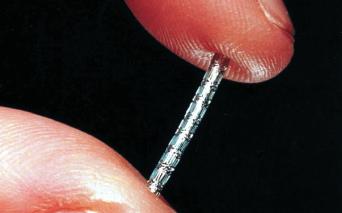
A new jig device allows stents to be electropolished in a single operation, improving productivity whilst reducing rejection rates. The device was developed by Birmingham based metal finishing firm Anopol, and has passed a series of practical trials
TAVI: coming of age
Trancatheter aortic valve implantation (TAVI) is to be made available to patients in Scotland for the first time, following agreement by the Scottish Government. A specialist TAVI clinic based at the Edinburgh Royal Infirmary will undertake 50 TAVI procedures per year.
This follows increasing strong clinical data that it is cost-effective in carefully selected high-risk populations.
TAVI has been included for the first time in the European Society of Cardiology (ESC)/European Association for Cardiothoracic Surgery Guidelines on the Management of Valvular Disease published in August. The guidelines recommend that in severe symptomatic aortic stenosis, TAVI should be indicated in patients who are not suitable for surgery, as assessed by a heart team. High-risk patients that may still be candidates for surgery, but in whom a less invasive approach is favoured by the heart team based on an individual risk profile should also be considered, say the guidelines.
Earlier this year, in March, the National Institute for Health and Clinical Excellence published updated guidance recommending the use of TAVI under normal arrangements for patients for whom surgical aortic valve replacement is considered “unsuitable”. TAVI must continue to be used under special arrangements for patients with aortic stenosis for whom surgical aortic valve replacement is considered suitable but poses a high risk.
European device regulations do not protect patients with diabetes
European medical device regulations are inadequate to protect people with diabetes, according to a recent statement from the European Association for the Study of Diabetes (EASD). The statement was made by EASD President Professor Andrew Boulton (University of Manchester) during the Association’s annual meeting held recently in Berlin.
Professor Boulton said: “The general public, including diabetes patients, were rightly extremely concerned when the various medical device scandals came to light earlier this year. The European Commission appears to have missed its opportunity to tighten up these regulations. Without tougher rules governing approval and surveillance for medical devices, how can we ensure the public has confidence in the system?”
EASD, in collaboration with device manufacturers, wishes to establish conventional standards and calls upon the European Union to implement them in the near future.
EU gives nod to apixaban for AF
The oral factor Xa inhibitor, apixaban, has been given a positive review from the European Medicines Agency’s Committee for Medicinal Products for Human Use (CHMP) for the reduction in risk of stroke or systemic embolisation associated with nonvalvular atrial fibrillation (AF).
The decision was based on results from the ARISTOTLE and AVERROES trials. ARISTOTLE showed that apixaban was more effective than warfarin at preventing stroke or systemic embolism in AF patients, while AVERROES showed apixaban was better than aspirin at reducing strokes and systemic embolisms without increasing major or intracranial bleeding in AF patients unsuitable for warfarin therapy.
Final approval of apixaban for this new indication now awaits the formal decision of the European Commission.
ECG telemedicine in primary care
Costly referrals to secondary care could be reduced by commissioning electrocardiogram (ECG) interpretation to an external service, according to the NHS Technology Adoption Centre.
The service allows GP surgeries to record 12-lead ECG onto a handheld device (HeartView, Broomwell Healthwatch) and transmit the recording by phone to a UK-based centre. An immediate verbal interpretation is provided by a cardiac nurse or cardiologist, with a full written report and copy of the ECG following within minutes.
Staff at the centre are all UK registered cardiac nurses, physiologists or specialist registrars with experience in cardiology departments. Their interpretation skills are continually tested, and they are supervised by consultant cardiologists.
Following several successful NHS Pilots, the service should now be rolled out and commissioned for practices across primary care trusts in the UK according to Dr Derek Rowlands, who provides several annual teaching days for Broomwell Healthwatch, as well as setting and marking a further annual ECG exam.
Authors: John D Somauroo, Robert M Cooper, Simon S Modi, Stephen Westaby, Ravi De Silva
Correspondence from the world of cardiology
Lessons learnt from a tragic loss
Dear Sirs,
Sudden cardiac arrest (SCA) without overt heart disease is thankfully rare but nevertheless an incredibly emotive condition principally because of its inherent predilection for younger patients.1 The recent case report by Westaby et al. with editorial by Sedgwick et al. highlights an important case whereby a young woman died following prolonged cardiopulmonary resuscitation attempts for refractory ventricular arrhythmias. The article concentrates on lessons learnt and potential improvements during the acute resuscitation phase. Principally the team examined the role and timing of the external LUCAS cardiac compression, ECMO, levosimendan and intra-aortic balloon counterpulsation. These technologies have a limited evidence base in this situation,2–4 perhaps a reflection of the complexity of planning high quality studies in such circumstances.
A diagnosis of idiopathic ventricular fibrillation was reached yet the authors do not elaborate further into the differential diagnosis of refractory, catecholamine-sensitive ventricular arrhythmias pertinent to this case. In particular, one must question a diagnosis of catecholaminergic polymorphic ventricular tachycardia (CPVT) which can present not only with its hallmark of adrenaline sensitive bidirectional VT but also with cardiac arrest. Some authors have suggested that CPVT is the underlying pathology in up to 56% of cases of unexplained cardiac arrest.5 Genetic mutations, principally of ryanodine or calsequestrin receptors, are also found in only 55–60% of CPVT cases6 so even molecular autopsy can be unhelpful in nearly half of CPVT presentations. It is also noted that this girl had a history of syncope with a normal echocardiogram and 12-lead ECG, all hallmark features of CPVT.
In times of austerity one might therefore raise the question of cost efficacy of these expensive resuscitation technologies, particularly their widespread inclusion in the cardiac arrest situation. Possibly a more cost efficacious method would be that of screening for and increased education regarding inherited cardiac conditions causing SCA. In particular the repeated use of beta receptor agonists during the arrest situation only serves to worsen arrhythmias in CPVT as was seen in this case. Obviously this can be difficult to avoid and can potentially lead to a downward spiral of arrhythmia, poor cardiac output and further beta agonist use. Provocation testing at index syncope presentation in at risk individuals and their families is potentially more rewarding and should certainly be included in the lessons learned from this report.7
John D Somauroo Consultant Cardiologist Countess of Chester Hospital, Cheshire
Robert M Cooper Specialty Registrar Cardiology
Simon S Modi Consultant Cardiologist and Electrophysiologist Liverpool Heart and Chest Hospital
Smekal D, Johansson J, Huzevka T, Rubertsson S. A pilot study of mechanical chest compressions with the LUCAS device in cardiopulmonary resuscitation. Resuscitation 2011;82:702–6. http://dx.doi.org/10.1016/j.resuscitation.2011.01.032
Mebazaa A, Nieminen MS, Packer M et al. Levosimendan vs dobutamine for patients with acute decompensated heart failure: the SURVIVE Randomized Trial. JAMA 2007;297:1883–91. http://dx.doi.org/10.1001/jama.297.17.1883
Extra Corporeal Life Support Registry Report, Centre Specific Summary, Glenfield Hospital (62). 2012.
Priori SG, Napolitano C. Cardiac and skeletal muscle disorders caused by mutations in the intracellular Ca2+ release channels. J Clin Invest 2005;115:2033–8. http://dx.doi.org/10.1172/JCI25664
Obeyesekere MN, Klein GJ, Modi S et al. How to perform and interpret provocative testing for the diagnosis of Brugada syndrome, long-QT syndrome, and catecholaminergic polymorphic ventricular tachycardia. Circ Arrhythm Electrophysiol;4:958–64. http://dx.doi.org/10.1161/CIRCEP.111.965947
The authors reply
Catecholaminergic polymorphic ventricular tachycardia (CPVT) was indeed considered in the differential diagnosis and a recommendation was made to the family to consider screening for the recognised ryanodine and calsequestrin receptor mutatations. However, none of the antecedent syncopal episodes had been adrenergically triggered (which would have constituted a potential ‘red flag’).
Furthermore, the fact that this patient’s refractory VF was eventually controlled by a combination of beta blockers (plus lidocaine) and the withholding of further adrenaline administration does not point specifically to CPVT, as adrenergically-mediated recruitment of the Purkinje network may be an important perpetuating mechanism in electrical storms of diverse aetiologies. Interestingly, in this patient it was subsequently necessary to withhold the beta blocker and re-introduce inotropic support with adrenaline 48 hours later to facilitate weaning off ECMO support, but that unintended “catecholamine challenge” did not provoke any ventricular ectopy or non-sustained/sustained VT, which would make CPVT less likely as the underlying diagnosis.
As regards cost efficacy, we agree that patients with suspected ion channel disorders should receive appropriate investigation but that is quite separate from the goal of offering optimal circulatory support in rare cases like our patient who suffered haemodynamic collapse following refractory electrical storm. This patient presented with recurrent syncope but no ‘red flags’ in her baseline assessment and tests, and she was being (appropriately) investigated along conventional lines by prolonged ambulatory ECG monitoring with the option of an implantable ECG loop recorder if the symptoms continued and no diagnosis had been made.
Provocative testing is only indicated for patients with syncope/TLOC if there is some suspicion of an inherited cardiovascular disorder based on ECG and/or clinical clues (e.g. adrenergic-triggering or a family history of premature sudden cardiac death). We are not aware of any evidence supporting its blanket use in patients with recurrent syncope/TLOC who are deemed at ‘low risk’ on the basis of current clinical algorithms. Unfortunately, this case is also a timely reminder of a key limitation of all such risk-stratification schemes in clinical practice, namely that ‘low risk’ is not the same as ‘zero-risk’.
Stephen Westaby Consultant Cardiac Surgeon
Ravi De Silva Consultant Cardiothoracic Surgeon
Shane George Consultant Cardiac Intensivist
Duncan Young Consultant in Intensive Care
Yaver Bashir Consultant Cardiologist John Radcliffe Hospital, Oxford
We continue our series in which Consultant Interventionist Dr Michael Norell takes a sideways look at life in the cath lab…and beyond. In this column, he considers team working
You will not need to be reminded that our summer months (such as they were) were witness to a wealth of sporting endeavours. In addition to the ubiquitous and oft-repeated terms like ‘legacy’, ‘inspiration’ and ‘unbelievable’, the word team also enjoyed a reasonable airing.
Extending the example of ‘Team-GB’, and employing a more cardiological perspective, I would submit the term ‘Team Heart’ for general consumption. Before readers assume that I am proposing a new Olympic competition in the form of the quickest call to balloon time, the largest number of new cardiac outpatients processed successfully in four hours, or the highest number of stents implanted during a 30-minute procedure, rest assured.
I am referring to the use of a multi-disciplinary team (MDT) approach in guiding the care of patients with heart disease. A recent national meeting in our own locality focused upon this topic, and I thought I would use this column to reflect some of the issues that were discussed.
How does it work and is it applied?
In the last year or two, international guidelines have advocated this approach supported more by a consensus of opinion than by any strong evidence base. There has been little provided in the way of examples or templates as to how such a collection of expertise is to be constructed, which cases are discussed and how a consensus is to be reached. How any recommendations are documented, whether they are executed or not and how reproducible the whole thing is, are further issues that most units could only dream of addressing – if indeed they were minded to in the first place.
A survey attempting to describe the national picture was reported and the results were certainly interesting. While many units have the semblance of an MDT process in place, the variation in frequency, timing and attendance is marked, as are the type of cases discussed. Often the session allocated is not within ‘office hours’ and nor is it a recognised part of an agreed consultant job plan. Perhaps predictably, direct patient involvement in these meetings is exceedingly rare.
Our own unit has embraced this concept for some years and was able to shed some light onto the actual outcomes of MDT discussions. Increasingly often, further investigation with a pressure wire is advised in order to clarify the functional significance of angiographically questionable disease. This not only assists any proposed angioplasty (PCI) but also helps our surgical colleagues plan their own operative procedures.
As for how often the MDT result is actually carried out as recommended, the answer is most of the time. Sometimes, when offered, the patient will decline surgery (CABG) or more rarely – and less easy to understand – PCI, and occasionally targeted vessels are managed differently, both by the surgeon and by the interventional cardiologist. Rarely, new or unrecognised comorbidity will have emerged prior to any recommended procedure, making one or other approach less attractive.
I have always wondered just how reproducible the process is, and we have been able to examine this as well. I am pleased to say that when cases were re-presented to the MDT (in a blinded fashion) the same decisions were reached in the majority. Those cases in which either further investigation or an alternative revascularisation modality was advised were those in which either PCI or CABG would have been acceptable reflecting the genuine equipoise that exists with many of the cases that we treat.
In that event the patient’s own preference becomes particularly important but how that involvement is stage-managed is another topic of debate. Their presence during the MDT discussion itself can be distressing or intimidating – for both parties – and if the consensus view is to be presented subsequently, perhaps in an outpatient clinic, then thought might be given as to who actually does this.
Is it valuable?
Most of the research around MDTs stems from cancer care where these are well established and found to be beneficial. Currently, evidence that they are of proven value in cardiology does not exist. However, as more cardiac units embrace the process there may well be an opportunity to look at and document outcomes before and after adopting this approach, and, thereby, build up an evidence base.
The psychology of team functioning is fascinating. There is always concern that the loudest voice or most senior figure will tend to influence the outcome. I can confirm that in our own experience, the latter is certainly not the case. Group dynamics will also come into play, with less confident individuals perhaps not feeling comfortable to express their views. Possibly, perverse decisions could result because smaller parties take refuge and confidence in the assumption that the larger group ‘must surely know what it’s doing’.
What – if any – are the medico legal implications of clinical management being derived by consensus? A common defence against alleged medical negligence is that a reasonable body of practitioners would have done the same thing – the application of the so-called Bolam test. A heart team might, therefore, be regarded as ideal in this regard in that it can effectively anticipate and supply the necessary rebuttal if called upon to do so in the future.
But, supposing a practitioner acts in a different manner to that recommended by an MDT, what might then be the consequences? I suppose that as long as the reasoning is justified and documented then it must surely be up to the man – or woman – on the spot to make decisions about a procedure for which they are directly responsible.
Expanding horizons
We know that other areas of cardiology are embracing this process. Transcatheter aortic valve implantation (TAVI) is one example, given the complex nature of the cases discussed, as well as the technology and expense involved. The hospital and community management of heart failure is another topic that has come under this umbrella, guiding the use of cardiac resynchronisation therapy (CRT), as well as instigating end-of-life pathways for less fortunate patients.
Another important area is infective endocarditis (IE). This is a fruitful hunting ground for the litigious type and a common source of negligence claims in cardiology. It involves a long hospital admission with the potential of many complications, patient care often handed over from team to team, and – sadly – a mortality rate that has altered little over the last few decades. As a result, some units discuss its current cases of IE at their regular MDT meetings. This ensures that all parties are up to date with recent clinical developments or test results, and an opportunity is not missed to adjust treatment or consider surgical intervention.
Additional extras
A frequently forgotten spin off from the MDT is recruitment into research trials and registries. As the proportion of a unit’s elective activity declines, identifying cases suitable for inclusion into studies, with sufficient time in which to assess and enrol them, becomes more difficult. Exposure to a departmental meeting in which any treatment plans can be discussed then allows the possibility that these cases might also contribute to the hospital’s research programme.
Given the variety of MDT meetings about, it is likely that some form of harmonisation will be devised so that all units more or less do the same thing. Patients will need to be involved, but at a stage when we are confident that our processes are robust. Rather than proscriptive, we should view this as reassuring; the actual outcome that derives as a consensus from discussion is not as important as the transparency of decision making.
An observational study was conducted on patients with pre-existing coronary heart disease who were re-admitted to an acute district general hospital with a further acute coronary event. Their demographics, admission drug therapies and cardiovascular risk factor parameters were recorded and analysed. Of the 100 patients admitted over a nine-month period, more than a quarter of them were taking suboptimal secondary prevention drug therapies. Furthermore, a proportion of patients were not achieving adequate cholesterol, blood pressure and heart rate targets, which, in turn, may be a major contributory factor for their re-presentation to hospital.
Introduction
Over 90 people die from myocardial infarction (MI) every day in the UK.1 Cardiac rehabilitation, which incorporates cardioprotective drug therapies as one of its core components,2 has been shown to be associated with a reduction in recurrent MI.3 The National Service Framework (NSF) for Coronary Heart Disease (CHD) set out a strategy in 2000 to change CHD services over the next 10 years.4 Improvements have been delivered in most standards of cardiac services but uptake and adherence to cardiac rehabilitation programmes following MI, coronary angioplasty or coronary artery bypass (CABG) surgery are still below the 85% target set for each of these diagnostic groups.5
Studies have demonstrated prognostic benefits from effective management of cardiovascular (CV) risk factors in patients with established CHD. Clinical guidelines by the National Institute for Health and Clinical Excellence (NICE),6 American Heart Association (AHA)/American College of Cardiology (ACC)7,8 and European Society of Cardiology (ESC)9 emphasise risk factor modification through optimisation of drug therapies for secondary prevention following MI. All include treatment targets for blood pressure and lipid control, in addition to recommendations on diet, smoking cessation, physical activities and weight management. Failure of adherence to these guidelines could potentially increase the risk of recurrent coronary events and hospital re-admission rates. Although there is no guideline recommendation on post-MI heart rate target, elevated heart rate has been shown to be associated with increased risk of further cardiac events in those with established cardiovascular disease (CVD),10,11 and recent trials have shown benefits in patients with resting heart rate of <70 beats per minute and reduced left ventricular function.12,13
Aim
To determine the extent of secondary prevention drug therapies and effects on CV risk factor targets in patients with pre-existing CHD who presented with a further acute coronary event in a busy London district general hospital. To our knowledge, this is the first study that has explored pharmacological secondary prevention and CV risk targets in such a specific cohort of patients in the UK.
Methods
In this single-centre, prospective, observational study, the admission details, drug therapies and CV risk factors (cholesterol level, blood pressure and heart rate) were recorded on consecutive patients admitted during unselected acute medical takes with an acute coronary syndrome (ACS) (defined as unstable angina or non ST-elevation myocardial infarction [NSTEMI] or ST-elevation myocardial infarction [STEMI]) over a nine-month period between January 2011 and October 2011. Patients with an established diagnosis of CHD were identified from this group and included into the study. This included patients who had a previous NSTEMI or STEMI, and patients who had undergone coronary revascularisation (either percutaneous coronary intervention [PCI] or CABG). Additionally, patients with sole coronary artery disease (CAD) as determined on a previous coronary angiogram were also included. Any reasons for suboptimal drug therapy, such as allergy, adverse reaction, contraindication and patient’s refusal, were also noted but still included in this study to avoid selection bias.
Results
A total of 100 patients (61% male, mean age 65.1 ± 1.9 years; 39% female, mean age 65.5 ± 2.2 years) were included. Of these, n=38 (38%) were non-smokers, n=26 (26%) current smokers and n=36 (36%) ex-smokers.
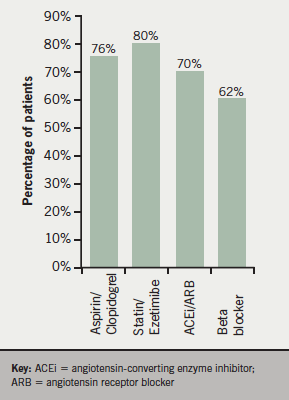
Figure 1. Percentage of patients on secondary prevention drug therapy, n=100
Of those medications used for secondary prevention, 47 (47%) patients were on aspirin alone, seven (7%) on clopidogrel alone and 22 (22%) on dual antiplatelet therapy. Seven (7%) patients were on lone moderate-intensity warfarin therapy. Regarding lipid-regulating medication, 76 (76%) were receiving a statin, three (3%) receiving ezetimibe and one (1%) was on two anti-lipid drugs. For blood pressure control, 70 (70%) were on an angiotensin-converting enzyme inhibitor (ACEi) or angiotensin receptor blocker (ARB), and 62 (62%) were on a beta blocker; with seven (7%) taking diltiazem as the alternative to beta blocker due to intolerance or contraindications (figure 1).
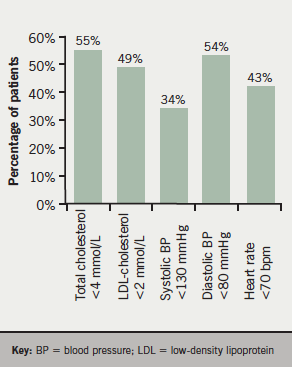
Total cholesterol was <5 mmol/L (audit target level) in 82% and <4 mmol/L in 55% of patients; 49% of patients had low-density lipoprotein (LDL)-cholesterol <2 mmol/L. The mean total cholesterol level was 3.98 mmol/L (95% confidence interval [CI] 3.7–4.3 mmol/L) and mean LDL cholesterol was 2.24 mmol/L (95% CI 2.0–2.5 mmol/L).
Overall, 34% of patients had systolic blood pressure (BP) <130 mmHg and 54% had diastolic BP <80 mmHg. The mean presenting systolic BP was 139.1 ± 26.6 mmHg, and mean presenting diastolic BP was 78.5 ± 15.9 mmHg.
Resting heart rate was <70 bpm in 43% of patients and 14% of patients had a resting heart rate of <60 bpm.
Discussion
Figure 2. Percentage of patients that had achieved cardiovascular risk factor targets, n=100
We detected a significant proportion of CHD patients were on suboptimal secondary prevention drug therapies at the point of their re-admission to hospital with an ACS. In our cohort of 100 patients, 24% were not on antiplatelet therapy (although 7% were on moderate-intensity warfarin therapy), 20% were not receiving any lipid-regulating drug, and 30% were not on treatment with either an ACEi or ARB. While 38% of patients were not on a beta blocker, 7% were taking a suitable alternative treatment in the form of a non-dihydropyridine calcium channel blocker. Treatment targets for total cholesterol level, systolic BP and heart rate were reached in only 55%, 34% and 43% of patients, respectively (figure 2).
Possible reasons for the suboptimal management of secondary prevention drug therapy lie in the ineffective communication between the discharging hospital team, primary care and patient. Insufficient or imprecise information conveyed to patients’ general practitioners (GPs) by hospital doctors following hospital discharge may mean repeat prescriptions are not correctly provided for patients, or discharge medication not titrated upwards to evidence-based dosage in order to achieve BP, lipid and heart rate goals following hospital discharge. Inadequate explanation to patients and/or poor understanding on the patient’s behalf regarding the indications and importance of his/her prescribed drugs increases non-compliance to medications. Lack of appropriate follow-up in post-MI/CHD clinic or by a GP may compound the problem further.
Hence, better strategies are required to ensure that management of secondary prevention in CHD patients is improved. Attaining good communication channels between the hospital and GPs deserves more attention. It is important to provide GPs with clearer and more precise instructions on hospital discharge documents in regards to patients’ drug therapies, their indications, doses and treatment duration, if any. Second-line drugs should be recommended if the patient has to discontinue first-line therapy due to intolerance or side effects.
Reiterating the key points on CV treatment goals on patients’ discharge documents, or dissemination of CV prevention guidelines/practices to the GPs, may be useful. Continued and close monitoring of lipids, BP and heart rate in CHD patients should be encouraged – both in GPs and the patients. For the patients, clear explanation by the discharging physician or pharmacist, including providing written instructions to patients before discharge, is central to good drug compliance.
Early referral to, and engagement of CHD patients in, a comprehensive cardiac rehabilitation programme will not only provide them with appropriate lifestyle risk-factor management, such as smoking cessation, increased physical activities and weight control, but may also provide an important channel to ensure necessary drug treatments are not overlooked and strengthen patients’ adherence to medications.
We acknowledge that only a relatively small cohort of patients from a single district general hospital were assessed in our study and results might be influenced by local factors, such as accessibility to cardiac rehabilitation services and the effectiveness of communication between our doctors and local GPs. However, the findings do support other studies highlighting that secondary prevention and/or risk factor modification in CHD patients is often not optimally achieved in clinical practice.14-17 Our study does have potential implications in the current National Health Service (NHS) climate. It emphasises the importance of needing to focus on evidence-based interventions, patient communication/compliance and close liaison among health professionals. Our results reinforce the idea of concentrating on pathways that can potentially avoid hospital re-admissions and provide cost-savings, priorities related to primary-care commissioning strategies and effective inpatient bed management. Perhaps, replicating this study in other centres may provide a feel for the national picture.
Conflict of interest
None declared.
Key messages
NICE (National Institute for Health and Clinical Excellence), AHA/ACC (American Heart Association/American College of Cardiology) and ESC (European Society of Cardiology) clinical guidelines recommend risk factor modification by optimisation of drug therapies for secondary prevention in patients who have suffered a myocardial infarction
We found that more than a quarter of patients with pre-existing coronary heart disease who were re-admitted to hospital with an acute coronary syndrome (ACS) were on suboptimal secondary prevention drug therapies
Attainment of targets for cholesterol level, blood pressure and heart rate was low at the point of their re-admission
Better strategies are required to ensure that patients with known coronary heart disease receive adequate drug therapies for secondary prevention
British Association for Cardiovascular Prevention and Rehabilitation. The BACPR standards and core components for cardiovascular disease prevention and rehabilitation 2012 (2nd Ed.). London: BACPR, March 2012. Available from: http://www.bacpr.com/resources/15E_BACPR_Standards_FINAL.pdf
Clark AM, Hartling L, Vandermeer B, McAlister F. Meta-analysis: secondary prevention programs for patients with coronary artery disease. Ann Intern Med 2005;143:659–72.
Department of Health. Coronary Heart Disease: National Service Framework for Coronary Heart Disease – Modern Standards and Service Models. London: DoH, March 2000.
British Heart Foundation. The National Audit of Cardiac Rehabilitation – Annual Statistical Report 2010. London: BHF, 2010.
National Institute for Health and Clinical Excellence. MI: secondary prevention. NICE clinical guideline 48. Developed by the National Collaborating Centre for Primary Care. London: NICE, May 2007.
Smith SC Jr, Allen J, Blair SN et al.; AHA/ACC; National Heart, Lung, and Blood Institute. AHA/ACC guidelines for secondary prevention for patients with coronary and other atherosclerotic vascular disease: 2006 update: endorsed by the National Heart, Lung, and Blood Institute. Circulation 2006;113:2363–72. http://dx.doi.org/10.1161/CIRCULATIONAHA.106.174516
Sidney CS Jr, Benjamin EJ, Bonow RO et al. AHA/ACCF secondary prevention and risk reduction therapy for patients with coronary and other atherosclerotic vascular disease: 2011 update. Circulation 2011;124:2458–73. http://dx.doi.org/10.1161/CIR.0b013e318235eb4d
The Fifth Joint Task Force of the European Society of Cardiology and Other Societies on Cardiovascular Disease Prevention in Clinical Practice. European guidelines on cardiovascular disease prevention in clinical practice. Eur Heart J 2012;33:1635–701. http://dx.doi.org/10.1093/eurheartj/ehs092
Fox K, Ford I, Steg PG, Tendera M, Robertson M, Ferrari R. Heart rate as a prognostic risk factor in patients with coronary artery disease and left ventricular systolic dysfunction (BEAUTIFUL): a subgroup analysis of a randomised controlled trial. Lancet 2008;372:817–21. http://dx.doi.org/10.1016/S0140-6736(08)61171-X
Diaz A, Bourassa MG, Guertin MC, Tardif JC. Long-term prognosis value of resting heart rate in patients with suspected or proven coronary artery disease. Eur Heart J 2005;26:967–74. http://dx.doi.org/10.1093/eurheartj/ehi190
Fox K, Ford I, Steg PG, Tendera M, Ferrari R. Ivabradine for patients with stable coronary artery disease and left ventricular systolic dysfunction (BEAUTIFUL): a randomised double-blind, placebo-controlled trial. Lancet 2008;372:807–16. http://dx.doi.org/10.1016/S0140-6736(08)61170-8
Swedberg K, Komajda M, Bohm M et al. Ivabradine and outcomes in chronic heart failure (SHIFT): a randomised placebo-controlled study. Lancet 2010;376:875–85. http://dx.doi.org/10.1016/S0140-6736(10)61198-1
Turley AJ, Roberts AP, Morley R, Thornley AR, Owens WA, de Belder MA. Secondary prevention following coronary artery bypass grafting has improved but remains sub-optimal: the need for targeted follow-up. Interact Cardiovasc Thorac Surg 2008;7:231–4.
Kotseva K, Wood D, De Backer G, De Bacquer D, Pyörälä K, Keil U; EUROASPIRE Study Group. EUROASPIRE III: a survey on the lifestyle, risk factors and use of cardioprotective drug therapies in coronary patients from 22 European countries. Eur J Cardiovasc Prev Rehabil 2009;16:121–37. http://dx.doi.org/10.1097/HJR.0b013e3283294b1d
Shakur R, Sathasivam S, Yu C et al. Optimizing secondary prevention: statin prescribing across East and West London in accordance with NICE guidelines. J R Soc Med 2011;2:63.
Yusuf S, Islam S, Chow CK et al.; Prospective Urban Rural Epidemiology (PURE) Study Investigators. Use of secondary prevention drugs for cardiovascular disease in the community in high-income, middle-income, and low-income countries (the PURE Study): a prospective epidemiological survey. Lancet 2011;378:1231–43. http://dx.doi.org/10.1016/S0140-6736(11)61215-4
You are not logged in
You need to be a member to print this page.
Find out more about our membership benefits