A single defibrillation safety margin test is sufficient in most ICD patients: experience from a UK tertiary centre

Br J Cardiol 2010;17:240–3 Leave a comment
Click any image to enlarge
Authors:

Ventricular fibrillation (VF) is induced at the time of implantable cardioverter defibrillator (ICD) implantation in the UK, typically at least twice, with defibrillation 10 J below the maximum output. With the advent of modern leads/devices a single test may be sufficient.

240-img-1We retrospectively evaluated our ICD database between September 2006 and October 2007 to determine baseline patient/procedure characteristics and details of defibrillation threshold assessment during implant. All patients underwent at least two defibrillation safety margin (DSM) tests (10 J below the maximum output of the device). Logistic regression analysis was performed to identify factors predicting two successful consecutive DSM tests (with 10 J safety margin). A total of 264 procedures were performed (mean age ± standard error: 65.6 ± 0.8 years); 258 (97.7%) patients had successful first DSM test (with 10 J safety margin), the remaining six (2.3%) needing interventions with resultant two successful consecutive DSM tests (with 10 J safety margin). Of the 258 patients, 253 had a successful second DSM test (with 10 J safety margin), the remaining five successfully cardioverted at maximum output; the latter were tested again (without additional intervention) and all had a successful third DSM test (with 10 J safety margin). Successful first DSM test was an independent predictor of success for two consecutive DSM tests (p<0.001).

In conclusion, with modern leads and devices, a single successful DSM test is sufficient. This may be particularly important in patients in whom multiple VF inductions would be undesirable, such as those with severe left ventricular systolic impairment.

Introduction

Implantable cardioverter defibrillators (ICDs) are designed to treat ventricular arrhythmias and their efficacy is commonly tested at implantation. The defibrillation threshold (DFT) is the minimum electrical dosage that successfully terminates ventricular fibrillation (VF). The DFT test has been defined as the minimal energy at which at least two defibrillation shocks successfully terminate induced VF.1 A DFT test involves multiple VF inductions to ensure the device can sense, detect and convert VF. Defibrillation is a probabilistic phenomenon in which the higher the shock strength, the higher the likelihood of successful defibrillation. The most common approach in clinical practice to approximating the DFT is to induce VF at least twice and defibrillate the patient with an energy at least 10 J less than the maximum output of the ICD.2 This method ensures an adequate safety margin in most patients, although it does not determine the actual DFT.3 With the advent of modern leads and devices, this strategy of double defibrillation safety margin (DSM) testing (at least 10 J below the maximum output of the device each time) may be unnecessary, particularly in patients with severe left ventricular (LV) systolic impairment.

Methods

We retrospectively evaluated our ICD database at Glenfield Hospital, University Hospitals of Leicester, UK from September 2006 to October 2007. Information collected included baseline patient characteristics, ICD indication, lead/generator data, procedure time and data on DFT assessment. All our patients underwent DFT assessment at implant using the following protocol: VF induced in all using 30–50 Hz burst pacing, shock on T-wave or DC fibber induction; the device was programmed to deliver an initial shock ≥10 J below the maximum output of the device, and if this failed, a second shock at maximum output. An external biphasic 360 J shock was given if both ICD shocks failed. A second VF induction was performed in all patients with the same protocol as above; there was a five minute waiting period between tests. A successful DSM test was defined as VF cardioversion at ≥10 J below the maximum output of the device. If a patient failed the first DSM test, additional manoeuvres were performed to achieve successful defibrillation with ≥10 J safety margin for two consecutive tests. These manoeuvres included ICD lead repositioning, addition or removal of superior vena cava coil, shock polarity reversal, or fixed pulse width programming. For patients who failed the second DSM test (but passed the first), a third DSM test was performed without performing additional manoeuvres to the device or lead. Data on mortality of the cohort at follow-up were also collected.

Predictors of success for two consecutive successful DSM tests were assessed using binary logistic regression analysis. Mean values are given with standard error of mean (SEM). All statistical analyses were performed using SPSS version 12.0.

Results

A total of 264 procedures were performed with the ICD tested in all (212 males and 52 females). The mean age ± SEM of the cohort was 65.6 ± 0.8 years; 225 (85%) patients had a new generator and leads (of which 199 were completely new implants), 38 (14%) had a new pulse generator only and one new ICD lead only. A variety of modern devices and ICD leads were used (table 1). One hundred and fifteen patients (44%) had ICD implantation for primary prevention and 149 (56%) for secondary prevention. The aetiology was ischaemic in 156 (59%) patients and non-ischaemic in 108 (41%).
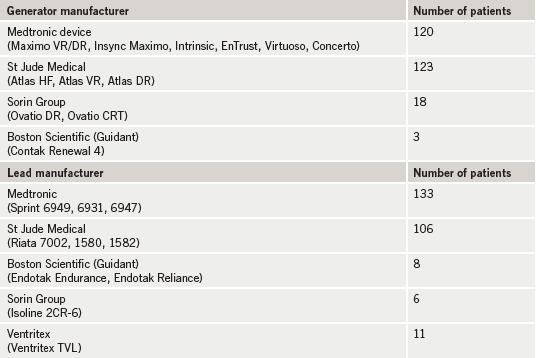
Table 1. Details of generator and lead manufacturers in our implantable cardioverter defibrillator (ICD) cohort (n=264)

Prevalence of poor LV function (defined as ejection fraction [EF] <30%) was 73.9%, moderate LV function (EF 30–50%) 15.0% and good LV function (EF >50%) 11.1%. Mean QRS duration on resting 12-lead electrocardiogram (ECG) was 130.2 ± 3.0 ms. Mean implantation procedure time was 89.8 ± 3.6 minutes. The mean implant data for the right ventricle (RV) ICD lead were: R-wave amplitude 15.2 ± 0.4 mV (range 5–30 mV), impedance 732.1 ± 13.8 Ω and threshold 0.66 ± 0.03 [email protected] ms. Single-chamber ICDs were implanted in 118 and dual-chamber in 146 (including 70 cardiac resynchronisation therapy ICDs). A single RV coil was used in 22% of the cohort with the remainder having dual coils. All ICD leads were placed at the right ventricular apex.

Figure 1 shows the outcome of DFT assessment for the whole cohort. Successful first DSM test was noted in 258 (97.7%). Of these, 253 had a successful second DSM test with five failing the second DSM test (with ≥10 J safety margin) but successfully defibrillating at maximum output. These five patients underwent a further DSM test (with no device modifications/manoeuvres performed) and passed a third DSM test (with ≥10 J safety margin). Of the six (2.3%) patients who failed the first DSM test (with ≥10 J safety margin), all underwent device/lead modification (mentioned previously) before further testing and all six subsequently passed two consecutive DSM tests (with ≥10 J safety margin).

Figure 1. Flow chart illustrating outcomes of cohort studied

All patients had good sensing of induced VF, and where a shock was successful there was prompt termination of VF. There were no differences in the success rate between those with single- and double-shocking coils. Excluding those patients who had a pulse generator change only from analysis did not affect the findings. There were no adverse clinical events during defibrillation testing in our cohort.

There were 31 deaths in our cohort at a mean follow-up of 2.9 ± 0.02 years following device implantation. There were no significant differences in success of initial defibrillation testing between those that died at follow-up compared with those who did not die.

Using logistic regression analysis a successful first DSM test (with ≥10 J safety margin) was found to be the only independent predictor of success for two consecutive DSM tests with ≥10 J safety margin (p<0.001). Age, sex, number of coils on the ICD lead, aetiology, RV lead data at implant and LV function were not significant predictors of success for two consecutive shocks with ≥10 J safety margin.

Discussion

The goal of defibrillation testing is to ensure the maximal energy output of the device has an extremely high (>99%) probability of terminating VF in a given patient. Most UK centres perform DSM testing at implant, typically with a protocol of two defibrillations at a minimum of 10 J below the maximum output of the device. However, our study suggests this strategy of testing twice may be unnecessary in most patients. Our cohort consisted of patients with both primary and secondary indications and utilised a variety of generator and lead manufacturers. We demonstrated that almost all patients had a successful first DSM test (with 10 J ‘safety margin’) and the vast majority passed the second DSM test (10 J safety margin again) as well. The minority that failed the second DSM test (but successfully defibrillated at maximum output) all passed a third DSM test (with 10 J safety margin) suggesting no incremental benefit of performing the second test. This is particularly important as performing defibrillation testing can be associated with serious complications including post-shock stroke, heart failure, cardiogenic shock, embolic events and even death.4,5 Brignole et al.5 found that life-threatening intra-operative complications occurred in 22 (0.4%) patients out of a cohort of 5,501 patients.

With modern leads, devices and biphasic shocks the number of patients who fail DFT assessment has become small.6 A true probability curve is not constructed in most labs following implantation, the majority performing two DSM tests instead.3 Questions have been raised about the need or benefit for testing at all.7-9 Our data suggest that in a contemporary unselected cohort, very few fail a DSM test, irrespective of ICD indication. A successful first DSM test was predictive of two successful DSM tests suggesting the second test was unnecessary. In the Arrhythmia Single Shock Defibrillation Threshold Testing Versus Upper Limit of Vulnerability: Risk Reduction Evaluation (ASSURE) trial, 426 patients with standard ICD indications were prospectively studied to determine efficacy of DSM testing with a single VF induction and delivery of 14 J shock versus a vulnerability safety margin test (VSM);10 328 patients passed a DSM and/or VSM test at 14 J and two confirmatory 21 J shocks and were included in the analysis cohort. These patients had their device programmed to deliver the first shock at 21 J (10 J below the maximum output) and were followed for 9.5 ± 4.5 months. There were 45 treated episodes in 25 patients with the vast majority (85%) terminated with 21 J and all terminated at 31 J.

These findings were in keeping with the Low Energy Safety Study (LESS) trial11 in which 318 patients were programmed to a maximum output of 31 J during follow-up; 254 had successful defibrillation with 14 J shock at VF induction. Over a follow-up of 24 ± 12 months there were 112 VF/VT episodes with no difference in the success of the first or second shocks for termination of ventricular tachyarrhythmia whether the patients had an initial success at 14 J or underwent more extensive testing. A re-analysis of the LESS data found an initial shock at 14 J had a positive predictive accuracy that was not significantly different from that of two successful shocks at 17 J and 21 J.12

In contrast to the ASSURE and LESS trials (which used 14 J to defibrillate), we evaluated DFT at ≥10 J below the maximum output of the device. Whether we would have achieved the same results had we used 14 J instead is unknown. A recently published study in patients with a primary prevention indication and stable heart failure suggested that most patients had a low baseline DFT, in keeping with our study.13 That study also found that DFT testing did not predict long-term mortality or shock efficacy.

Our study does not provide data on whether DSM testing correlates with successful termination of spontaneous ventricular arrhythmias at long-term follow-up. The latter is clinically important and long-term follow-up of this and other cohorts will address this important issue. However, mortality in our cohort at follow-up was not correlated with DSM testing at implant.

Conclusion

With the advent of modern leads and high energy devices, the strategy of double DSM testing may be unnecessary. We suggest a successful single DSM test with good sensing and prompt arrhythmia termination is adequate and does not require further VF induction at ICD implant. The need for DFT testing at all during ICD implant is under considerable debate and our data suggest that DFT testing may, in fact, be unnecessary in patients during ICD implant.

Conflict of interest

None declared.

Key messages

  • The current study suggests that double defibrillation safety margin (DSM) testing at ICD implant is unnecessary
  • With the advent of modern devices and leads, a single test is sufficient in the vast majority for both primary and secondary prevention indications. This is particularly important in patients in whom multiple VF inductions would be undesirable, such as those with severe left ventricular systolic impairment
  • A successful first DSM test with 10 J safety margin independently predicts success of two consecutive DSM tests

References

1. Gerstenfeld EP. Defibrillation threshold testing: is one shock enough? Heart Rhythm 2005;2:123–4.

2. Curtis A. Defibrillation threshold testing in implantable cardioverter-defibrillators. Might less be more than enough? J Am Coll Cardiol 2008;52:557–8.

3. Barold SS, Herweg B, Curtis AB. The defibrillation safety margin of patients receiving ICDs: a matter of definition. Pacing Clin Electrophysiol 2005;28:881–2.

4. Birnie D, Tung S, Simpson C et al. Complications associated with defibrillation threshold testing: the Canadian experience. Heart Rhythm 2008;5:387–90.

5. Brignole M, Raciti G, Bongiorni M et al. Defibrillation testing at the time of implantation of cardioverter defibrillator in the clinical practice: a nation-wide survey. Europace 2007;9:540–3.

6. Day JD, Olshansky B, Moore S et al. High defibrillation energy requirements are encountered rarely with modern dual-chamber implantable cardioverter-defibrillator systems. Europace 2008;10:347–50.

7. Curtis A. Defibrillator implantation without induction of ventricular fibrillation: good enough? Circulation 2007;115:2370–2.

8. Viskin S, Rosso R. The top 10 reasons to avoid defibrillation threshold testing during ICD implantation. Heart Rhythm 2008;5:391–3.

9. Gula L, Massel D, Krahn A et al. Is defibrillation testing still necessary? A decision analysis and Markov model. J Cardiovasc Electrophysiol 2008;19:400–05.

10. Day JD, Doshi RN, Belott P et al. Inductionless or limited shock testing is possible in most patients with implantable cardioverter-defibrillators/cardiac resynchronization therapy defibrillators: results of the multicenter ASSURE study (Arrhythmia Single Shock Defibrillation Threshold Testing Versus Upper Limit of Vulnerability: Risk Reduction Evaluation With Implantable Cardioverter-Defibrillator Implantations). Circulation 2007;115:2382–9.

11. Gold M, Breiter D, Leman R et al. Safety of a single successful conversion of ventricular fibrillation before the implantation of cardioverter defibrillators. Pacing Clin Electrophysiol 2003;26:483–6.

12. Higgins S, Mann D, Calkins H et al. One conversion of ventricular fibrillation is adequate for implantable cardioverter-defibrillator implant: an analysis from the Low Energy Safety Study (LESS). Heart Rhythm 2005;2:117–22.

13. Blatt JA, Poole JE, Johnson GW et al. No benefit from defibrillation threshold testing in the SCD-HeFT (Sudden Cardiac Death in Heart Failure Trial). J Am Coll Cardiol 2008;52:551–6.
Aneurysmal saphenous vein graft rupture: late complication of coronary artery bypass surgery

Br J Cardiol 2010;17:244 Leave a comment
Click any image to enlarge
Authors:

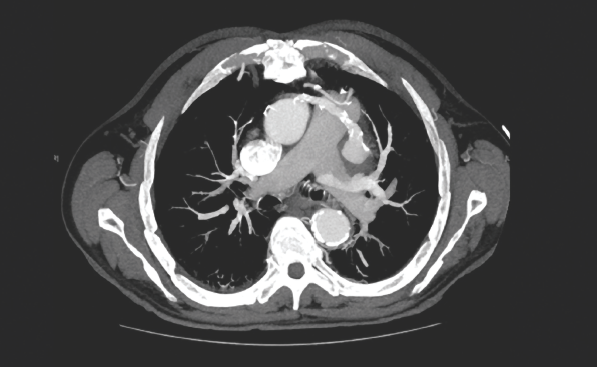
A 72-year-old man, who underwent coronary artery bypass grafting 14 years previously, presented with sharp posterior chest pain and presyncope.

Figure 1. CT scan showing aneurysmal dilatation of saphenous vein graft

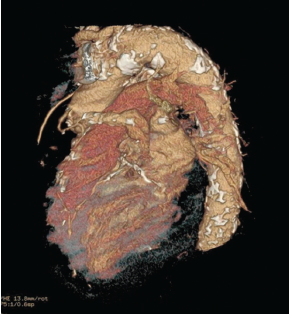
Computed tomography (CT) demonstrated aneurysmal dilatation of a saphenous vein graft with irregularity of the aneurysmal sac suggestive of rupture and moderate haemo-pericardium (figures 1 and 2).

Figure 2. 3D reconstruction from CT angiogram

Invasive angiography showed no residual leak with modest perfusion of the distal vessel. The size of the aneurysmal segment and the presence of distal perfusion precluded the use of a polytetrafluoroethylene ‘covered’ stent or occlusion device. He remained haemodynamically stable and pain free, and the effusion resolved. Giant (>4 cm) saphenous vein graft aneurysm formation is a rare but potentially fatal late complication of bypass surgery.

Conflict of interest

None declared.

Ictal bradycardia and asystole associated with intractable epilepsy: a case series

Br J Cardiol 2010;17:245–8 Leave a comment
Click any image to enlarge
Authors:

Ictal bradycardia/asystole is a poorly recognised cause of collapse late in the course of a typical complex partial seizure. Its recognition is important as it might potentially lead to sudden unexpected death in epilepsy (SUDEP). We present five patients with intractable complex partial seizures who had associated ictal bradycardia/asystole. All the patients underwent cardiac pacing to potentially prevent SUDEP. It is important to recognise and treat ictal asystole early, and to achieve this there is need for both an increase in epilepsy monitoring beds and a recognition of the potential role of implantable loop recorders in the evaluation of patients with epilepsy who clinically appear to be at increased risk for ictal asystole.

Introduction

Heart rhythm changes are common during seizures, even those seizures not associated with convulsive activity. Most studies report tachycardia, a heart rate increase of more than 10 beats per minute above the baseline, as the most common rhythm abnormality occurring in 64–100% of temporal lobe seizures.1,2 By contrast, ictal bradycardia has been reported in less than 6% of patients with complex partial seizures.3,4 The ictal bradycardia syndrome occurs in those with established epilepsy when epileptic discharges disrupt normal cardiac rhythm leading to a decrease in heart rate of more than 10 beats per minute below the baseline. The majority of patients with ictal bradycardia have temporal lobe seizures. It is believed that abnormal neuronal activity during a seizure can affect central autonomic regulatory centres in the brain leading to cardiac rhythm changes. It is important to identify ictal bradycardia as a potential harbinger of lethal rhythms, such as asystole, as this may be one important mechanism leading to sudden unexpected death in epilepsy (SUDEP).5 Ictal bradycardia/asystole may be unrecognised until documented during video-electroencephalograph (EEG)–electrocardiogram (ECG) monitoring in those with refractory epilepsy, often in the context of pre-surgical evaluation. Here we present five patients with intractable complex partial seizures associated with ictal bradycardia or asystole. All the patients underwent cardiac pacing to potentially prevent SUDEP.

Patient 1

This is a 50-year-old right-handed man who has had focal epilepsy since the age of 25 years. He described his attacks as an unusual sensation over his right shoulder, or simply “a presence” followed by heat rising through the right side of his body. He then experienced a heightened feeling that something was about to happen. This was followed by loss of awareness, pulling at his clothes, facial grimacing and talking incoherently. Each of these episodes lasted about 60 seconds. He recovered quickly after each event. Occasionally the attacks were more severe resulting in falls and injury. He usually experienced an urge to micturate after a seizure. The seizure frequency was one every fortnight. He had no early risk factors for epilepsy. Neurological examination was normal. Inter-ictal EEG showed epileptic discharges in the left fronto-temporal region.

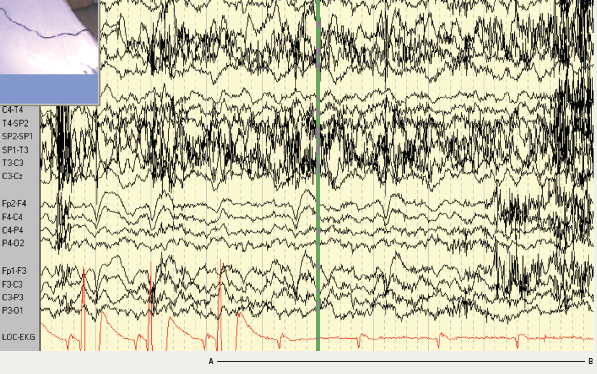
Magnetic resonance imaging (MRI) of the brain showed an area of high signal in the left posterior parietal lobe, which was felt to represent either a low grade glioma or an area of cortical dysplasia. The patient was admitted to the monitoring unit for video-EEG–ECG telemetry as part of the work up for epilepsy surgery (figure 1). At the time of admission, the patient was taking slow-release carbamazepine 400 mg twice daily, slow-release sodium valproate 1,000 mg twice daily and levetiracetam 1,500 mg twice daily. The patient had two seizures while being monitored, both complex partial seizures with electrographic onset from the left temporal region. One of the seizures was associated with ictal asystole. The heart rate at seizure onset was 60 beats per minute, slowing down to 55 beats per minute, followed by a 96 second period of asystole. The period of bradycardia and asystole was preceded by the epileptic seizure. The patient underwent cardiac pacing. No further seizures associated with falls have occurred.

Figure 1. Patient 1: electroencephalograph (EEG)–electrocardiogram (ECG) recording showing a period of asystole A–B

Patient 2

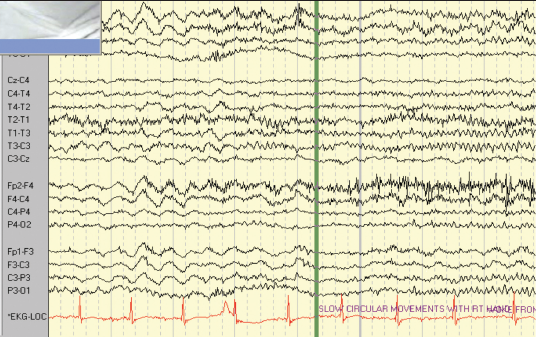
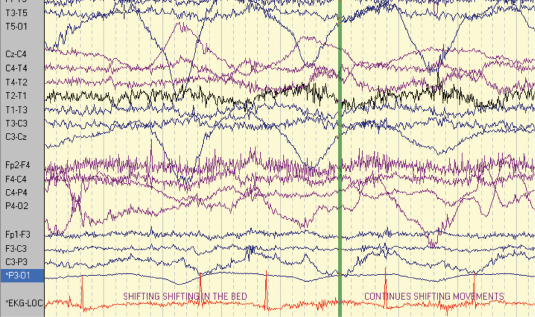
The second patient is a 47-year-old right-handed woman with seizure onset from the age of seven years. Her seizures were characterised by loss of awareness, associated with “fumbling” with her clothes. The seizures were occasional secondarily generalised. She sometimes experienced palpitations and felt she was “going insane”. Seizure frequency at the time of monitoring was two to three per week. She had a normal neurological examination. Her anti-epileptic medication included slow-release carbamazepine 400 mg twice daily and phenytoin 125 mg twice daily. The patient had previously had a vagal nerve stimulator inserted to try and reduce the seizure frequency, but it had little impact on her seizures. MRI showed a lesion in the right temporal lobe consistent with either a low grade glioma or a dysembryoplastic neuroepithelial tumour (DNET). The patient had video-EEG–ECG monitoring over an eight-day period and a total of six complex partial seizures and two auras were recorded (figures 2 and 3). The events were associated with bilateral automatisms, alteration of awareness and automatic wandering. Some events were associated with confused ictal speech. The patient did not exhibit loss of tone during any of the recorded seizures. The ictal EEG showed that the patient had multifocal epilepsy with seizures arising from both temporal lobes. Each of the complex partial seizures was associated with ictal asystole of 10 seconds duration on average. The patient had a cardiac pacemaker inserted.

Figure 2. Patient 2: EEG–ECG recording prior to seizure onset showing a normal heart rate
Figure 3. Patient 2: EEG–ECG recording after seizure onset showing ictal bradycardia

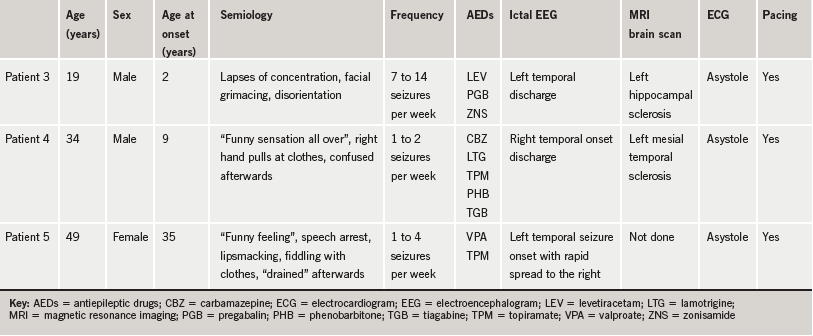
Three other patients who had asystole are tabulated below (table 1).

Table 1. Details of patients experiencing asystole

Discussion

The patients presented here underscore the importance of awareness of ictal bradycardia/asystole. An important distinction is to be made between ictal asystole and convulsive syncope. In ictal asystole, the primary event is the seizure. The epileptic discharge then leads to disruption of the normal cardiac rhythm resulting in slowing of the heart rate or asystole. Clinically this manifests as unexpected collapse or fall late in the course of a typical complex partial seizure. On the other hand, syncope is abrupt loss of consciousness due to a sudden drop in cerebral perfusion. The cause is often relatively benign vasovagal or neurocardiogenic syncope, which results from excessive vagal tone. Vasovagal syncope is usually associated with a precipitant such as standing or venepuncture. Syncope may, however, be caused by potentially fatal cardiac arrhythmias. In convulsive syncope, short-lived myoclonic jerks, tonic spasms, salivation or multifocal jerks may accompany syncope if recovery from cerebral hypoperfusion is delayed. This occurs usually if the head is held in an upright position. The term secondary anoxic seizure is sometimes used. It is not a true seizure and is not associated with epileptic EEG changes. Ictal asystole usually occurs in the context of refractory complex partial seizures while convulsive syncope usually occurs in individuals without epilepsy.6

In ictal asystole, there should be clear evidence of an initial seizure. It is important to differentiate between neurocardiogenic syncope and ictal asystole for two reasons; first, ictal asystole is potentially life threatening as it may be a significant risk factor for SUDEP.7,8 Cardiac pacemaker insertion is, therefore, advised in patients with documented ictal asystole and would be the practice of most epilepsy centres. On the other hand, patients with syncope, if inappropriately treated may be adversely affected by anti-epileptic medication, such as carbamazepine, which may prolong the QT interval and, thereby, potentially cause cardiac arrhythmias. Patients with intractable focal epilepsy are at a higher risk for ictal asystole, while generalised tonic-clonic seizures have been associated with an increased risk for SUDEP. Many of these tonic-clonic seizures have partial onset with subsequent secondary generalisation.9,10 The diagnostic yield of ictal asystole is increased by prolonged video-EEG–ECG monitoring.11 The scarcity of epilepsy monitoring facilities means that ictal asystole will probably remain under-recognised. A possible way of increasing the diagnostic yield of ictal asystole is the use of implantable loop recorders (ILR). The implantable loop recorder can provide continuous long-term ECG home monitoring, and is particularly useful for investigating patients with infrequent symptoms.12 Patients may be monitored for up to one year without the need for hospital admission. Patients with temporal lobe epilepsy who present with unexpected collapse, loss of tone or falls late in the course of a typical complex partial seizure are clinically in a high-risk category for ictal asystole as delayed loss of tone is uncommon in temporal lobe epilepsy.13

Intuitively, we postulate that early diagnosis and treatment of ictal asystole in patients with refractory epilepsy could prevent SUDEP. To achieve this, we recommend that patients with temporal lobe seizures who present with collapse or loss of tone late in the course of a complex partial seizure should either be admitted for video-EEG–ECG monitoring or referred to a cardiologist for an ILR.12 This will facilitate early diagnosis of ictal asystole and treatment by cardiac pacing. It is also apparent that there needs to be an increase in the number of epilepsy monitoring beds.

Conflict of interest

None declared.

Editors’ note
A review article looking at ‘Epilepsy and the heart’ by Drs F Rugg-Gunn and D Holright can be found on pages 233–9 of this issue.

References

1. Marshall DW, Westmoreland BF, Sharbrough FW. Ictal tachycardia during temporal lobe seizures. Mayo Clinic Proc 1983;58:443–6.

2. Blumhardt LD, Smith PE, Owen L. Electrocardiographic accompaniments of temporal lobe epileptic seizures. Lancet 1986;1:1051–6.

3. Smith PE, Howell SJ, Owen L, Blumhardt LD. Profiles of instant heart rate during partial seizures. Electroencephalogr Clin Neurophysiol 1989;72:207–17.

4. Nei M, Ho RT, Sperling MR. EKG abnormalities during partial seizures in refractory epilepsy. Epilepsia 2000;41:542–8.

5. Oppenheimer SM, Cechetto DF, Hachinski VC. Cerebrogenic cardiac arrhythmias: cerebral electrocardiographic influences and their role in sudden death. Arch Neurol 1990;47:513–19.

6. McKeon A, Vaughan C, Delanty N. Seizures versus syncope. Lancet Neurol 2006;5:171–80.

7. Bergen DC. In a heartbeat: autonomic changes during seizures. Epilepsy Curr 2005;5:194–6.

8. Hirsh LJ, Hauser WA. Can sudden unexplained death in epilepsy be prevented? Lancet 2004;364:2157–8.

9. Nashef L, Garner S, Sander JW, Fish DR, Shorvon SD. Circumstances of death in sudden death in epilepsy: interviews of bereaved relatives. J Neurol Neurosurg Psychiatry 1998;64:349–52.

10. Langan Y, Nashef L, Sander JW. Sudden unexpected death in epilepsy: a series of witnessed deaths. J Neurol Neurosurg Psychiatry 2000;68:211–13.

11. Britton JW, Ghearing RG, Benarroch EE, Cascino GD. The ictal bradycardia syndrome: localisation and lateralisation. Epilepsia 2006;47:737–44.

12. Rugg-Gunn FJ, Simister RJ, Squirrell M, Holdright DR,
Duncan JS. Cardiac arrhythmia
in focal epilepsy: a prospective long term study. Lancet 2004;364:2212–19.

13. Schuele SU, Alexopoulos AV, Locatelli ER, Dinner DS. Video-electrographic and clinical features in patients with ictal asystole. Neurology 2007;69:434–41.

In Brief

Br J Cardiol 2010;17:209 Leave a comment
Click any image to enlarge
Authors:

News in brief from the world of cardiology.

New NT-proBNP test

Roche Diagnostics has announced the launch of a new NT-proBNP+ test, which it says can give a result in under 15 minutes when tested on its cobas h232 near-patient testing meter. In addition, the test has an extended measuring range (60 – 9000pg/ml).

The test can serve as an aid in the diagnosis of suspected heart failure, in the monitoring of compensated left ventricular dysfunction and in the risk stratification of patients with acute coronary symptoms. Recent recommendations of a consensus group (Br J Cardiol 2010;17:76-80) highlight the importance of B-type natriuretic peptide (NP) testing for heart failure.

NP testing can rule out heart failure in primary care and reduce the number of referrals for heart failure, which eases waiting lists for echocardiography. Admission and discharge testing can help identify high-risk patients and help with discharge planning and targeting resources.

EU approvals

Vernakalant (Brinavess®, MSD) has been granted marketing approval in the European Union (EU), Iceland and Norway, for the conversion of recent onset atrial fibrillation (AF) to sinus rhythm in adults. The new treatment has a unique mechanism of action from other AF medicines and is the first product in a new class of pharmacologic agents for cardioversion of AF to launch in the EU. Vernakalant acts preferentially in the atria. It is expected it will be launched in the EU later this year.

Pitivastatin has received European Union approval for reduction of total cholesterol and low-density lipoprotein cholesterol in adults with primary hypercholesterolaemia and mixed dyslipidaemia when response to diet and other non-pharmacological measures is inadequate. It differs from some other statins in that it is only minimally metabolised by the liver through the cytochrome P450 pathway.

Fitness to fly report

The British Cardiovascular Society has published guidelines on passengers’ fitness to fly. Over 200 million passengers fly through British airports each year and the BCS report gives evidence that there are very few heart conditions that mean that patients can’t fly safely. The e report includes a summary table of various specific heart conditions with advice on any necessary guidance or restrictions that should be considered for the passenger. The report is available at www.bcs.com.

Correspondence

Br J Cardiol 2010;17:219 Leave a comment
Click any image to enlarge

Correspondence from the world of cardiology

Safe combined intravenous opiate/benzodiazepine sedation for transoesophageal echocardiography

219-img-1Dear Sirs

The recent article by Manika et al.1 regarding sedation for transoesophageal echocardiography (TEE) recommends a national agreed strategy for TEE sedation that incorporates both an opiate and a benzodiazepine. The survey data presented show only 6% of the UK hospitals questioned the use of opioids in combination with midazolam, perhaps with good reason. Bailey et al.2 investigated the effects of midazolam and the opiate fentanyl in volunteers. When midazolam alone was used, no significant respiratory effects were seen. Fentanyl alone produced hypoxaemia (saturations <90%) in half of the subjects, but no apnoea. The combination of drugs, however, produced hypoxaemia in 92% and apnoea in 50%. These authors noted that at the time of publication, 78% of deaths associated with midazolam were respiratory in nature, and 57% involved opiate co-administration. They concluded that the combination should only be used if persons skilled in airway management are present.

The Royal College of Anaesthetists working party specifically state: “Combinations of drugs, especially sedatives and opioids, should be employed with particular caution…there may be potentially dangerous synergistic effects when they (opioids) are used in combination with sedatives”.3 The National Patient Safety Agency comment: “Adverse events occur more commonly when drug combinations are used, for example, midazolam with pethidine or other opioid drugs. Such drugs, used in combination, have synergistic effects and, as a result, narrower margins of safety. The use of multiple drugs during conscious sedation presents additional training requirements”.4

If combination sedation is to be undertaken, then specific recommendations exist. Importantly, the opiate should be given first, with the full effect observed before proceeding.3,5 The midazolam dose should be adjusted (downwards) when combined with opiate.4 The author’s current protocol dictates the administration of midazolam and/or pethidine, with periodic reassessment and repeated administration as necessary. This implies that the drugs may be co-administered at each time point, and that midazolam may be followed by pethidine. If so, this would be against current expert guidance.

At a time when many units run successful TEE lists without any routine sedation, to recommend a national strategy of combination sedation for TEE may not be justified. Whilst combination sedation may improve tolerability of the procedure, the clear and significant additional risks may not justify this approach. Other strategies to improve tolerability whilst reducing the use of sedative agents, for example with ondansetron,6 may be preferable.

Yours faithfully

R Bruce Irwin ([email protected])
SpR Cardiology
Northwest Heart Centre,
Wythenshawe Hospital,
University Hospitals of South Manchester, Manchester.

Dear Sirs,

We read with interest the recent article by Mankia et al.1 and cannot help but agree with the accompanying editorial by McCormack7 that the quoted complication rate of 6/151 requiring resuscitation with intravenous fluids and 2/151 requiring benzodiazepine reversal with flumazanil as concerningly high for a proposed ‘safe’ protocol.

At our centre we make considerable effort to reassure and calm the patient prior to sedation and then use a simple technique of lidocaine (Xylocaine®) local anaesthetic throat spray followed by 2.5 mg intravenous midazolam – reduced to 1.25 mg at the operator’s discretion in elderly patients. After a short period of observation we then intubate in a gentle and controlled manner allowing the patient to guide the pace at which the probe is swallowed.  Very occasionally an additional dose of up to 2.5 mg of midazolam is required for anxious patients. We perform the procedure with the patient in the left lateral position with the echo machine behind the patient so the operator can see both the screen and patient at all times. We provide the patient with 2 litres/minute of oxygen via nasal cannula and undertake continuous ECG monitoring. Using this technique, our patients can be monitored closely and because of the low sedative dose many of our patients remain conscious and rousable and sometimes awake throughout the procedure. We find we are able to explain the findings to the patient immediately after the procedure with generally high levels of information retention. This may not be possible if higher sedative doses were used.

We do not use any opiate analgesia. Although Mankia et al. rightly state that benzodiazapines lack an analgesic effect, we do provide anaesthetic throat spray and there is no evidence presented by Mankia et al. to show that the addition of an opiate produces a better clinical outcome. As they also use a throat spray, the issue, raised by McCormack, regarding suppression of the gag reflex in a sedated patient is not avoided.

Using this technique we have performed 132 procedures over the last two years without the need for use of either intravenous fluids or flumazanil. Despite this, we have only failed to intubate two patients, one of whom was successfully intubated at a second attempt a week later using the same technique, requiring only our standard midazolam dose.  The second patient did not have a further attempt at TOE as it was no longer felt to be clinically necessary. Interestingly, the intubation failure rate from the John Radcliffe group is not quoted by Mankia et al.

The mantra we should all be aiming for is to deliver a dose of sedation that is ‘As Low As Reasonably Practical (ALARP)’. Good patient communication can dramatically reduce anxiety levels allowing lower doses of benzodiazapines to be used. This, in turn, allows intubation to be performed with the cooperation of the patient, obviating the need for opiates. Success rates from this approach are high and complication rates are minimal and the low doses used and avoidance of long-acting agents, such as pethidine, allow the patient to be safely discharged shortly after the procedure having had an explanation of the results. Whilst a nationally agreed guideline is a laudable aim, the suggested protocol does not seem to provide the answer we are looking for.

Yours faithfully

Gareth Wynn ([email protected])
Cardiology ST4

John Somauroo
Consultant Cardiologist

Countess of Chester Hospital,
Liverpool Road, Chester, CH2 1UL.

Dear Sirs,

Mankia et al.1 are to be congratulated for introducing a sedation protocol for transoesophageal echocardiography (TEE) in their institution1.  They also call for a national strategy for TEE sedation that incorporates both an opiate and benzodiazepine.  This call for a national guidelines for TEE is echoed in the accompanying editorial by McCormack,7 who rightly points out that TEE is similar to upper GI endoscopy, and that the British Society of Gastroenterologists (BSG) have published a great deal of guidance for its members; initially in 1991,  the latest iteration relating to the elderly in 2006.8 It has been a source of amazement to those responsible for sedation by non-anaesthetists in individual Trusts, as a result of the Academy of Medical Royal Colleges (AoMRC) report published in 2001,9 that whilst the specialist societies, or Colleges of all of the other specialty groups who carry out sedation, chest physicians, radiologists, gastroenterologists, and ophthalmic surgeons have produced guidelines for their members, this is not the case for cardiologists.  It is time they caught up.

Having said that, we are surprised at the protocol devised by the Oxford group.  As McCormack points out, the suggested maxima for doses of midazolam and pethidine are inordinately high.  We are also surprised that pethidine was chosen as the opioid of choice, as it is relatively long acting, and not particularly efficacious.  Perhaps this was because it was often used by gastroenterologists in the past in the belief it relaxed the sphincter of Oddi.  Practice is changing, and in the BSG’s latest survey of endoscopic retrograde cholangiopancreatography (ERCP) practice, pethidine was used in only 56% of units in England.  Moreover, both the BSG and AoMRC guidance state that if an opioid is to be used that this should be administered first and allowed to take effect prior to administration of a benzodiazepine.

Finally, a comment about risk. There is a plethora of papers, such as by Mankia et al., in which small groups of patients are subjected to sedation techniques ‘successfully’.  The ‘rule of three’ demonstrates that this technique, described in 151 patients, allows us to say with 95% certainty only that the absolute mortality of the technique = 3/151, i.e. less than or equal to 1 in 5010,11.   Clearly, therefore, this small study demonstrates nothing clinically, but rightly highlights the desperate need that cardiologists have for national guidance on sedation in their practice from the British Cardiovascular Society and the British Society of Echocardiography.

Yours faithfully

David N Hunter ([email protected])
Consultant Anaesthetist & Intensivist, and Director of ‘Safer Sedation Course’

Jonathan Lyne ([email protected])
EP Fellow
Royal Brompton Hospital, Sydney Street, London, SW3 6NP.

The authors reply

We read with interest the responses to our article1 and are pleased that there is a general consensus about the need for guideline-led transoesophageal  echocardiography (TEE) sedation practice. The responses also demonstrate some centres are leading the way in providing such an approach. Nevertheless, a major aim of our study was to investigate current sedation practice for TEE over the whole of the UK and the results suggest these responses are not entirely representative of wider practice.

Our protocol was offered as an example of a local solution and the responses offer some important modifications that would allow progress towards more widely applicable guidance. As the median total midazolam dose administered in our cohort was 2 mg – which also reflects the doses used by Wynn and Somauroo – our upper limit of a potential maximum dose of 10 mg midazolam and 75 mg pethidine could quite reasonably be modified. Consistent with the suggestion of Hunter and Lyne, a lower maximum dose of 5 mg midazolam and 50 mg pethidine, as advised by the British Society of Gastroenterology (BSG) for endoscopy,12 might be appropriate. We also acknowledge that provision of an initial dose of opiod without further titration would bring it closer in line with other guidelines. Furthermore, there is varied opinion on the opiod of choice, such that fentanyl may be more acceptable in some centres. Wynn and Somauroo make a vital point regarding the importance of patient reassurance and we agree that there may be value in explicitly stating this within a guideline.

We would suggest Irwin may be being overly cautious in arguing against the combination of opiod and benzodiazepine. The combination is used successfully in many other procedures and its analgesic effect helps simplify intubation and improves the patient’s experience. Our decision to continue use of this combination was, in part, guided by a patient experience survey that we performed as part of the study. This demonstrated a significantly higher patient satisfaction score in those who had also received pethidine. We acknowledge that several patients required benzodiazepine reversal with flumazenil during the period of data collection. The rate of reversal agent and IV fluid use within our unit has been markedly lower since the initial guideline introduction phase and the protocol has been successfully used in well over 500 TEEs. Therefore, we think this may reflect practice during adoption of new guidelines by operators who were not yet fully familiar with the protocol.

We thank the authors for the responses and hope, in combination with our article, these prompt a wider discussion about the importance of TEE-specific sedation guidelines.

Kulveer Mankia
Research Fellow

Paul Leeson ([email protected])
Consultant Cardiologist

Nuffield Department of Anaesthesia, John Radcliffe Hospital,
Oxford, OX3 9DU.

References

1. Manika K, Navickas R, Nicol ED, Bull S, Khan J et al. Safe combined intravenous opiate/ benzodiazepine sedation for transoesophageal echocardiography. Br J Cardiol 2010;17:125-7.

2. Bailey PL, Pace NL, Ashburn MA, Moll JW, East KA, Stanley TH. Frequent hypoxemia and apnea after sedation with midazolam and fentanyl. Anesthesiology 1990;73:826–30.

3. Implementing and ensuring safe sedation practice for healthcare procedures in adults. Report of an intercollegiate working party chaired by the Royal College of Anaesthetists 2002. Available at www.rcoa.ac.uk/docs/safesedationpractice.pdf

4. National Patient Safety Agency. Reducing the risk of overdose with midazolam injection in adults. Rapid response report NPSA/2008/RRR0111. London: NPSA, 9 Dec 2009.

5. Safety and Sedation During Endoscopic Procedures. Guideline published by the British Society of Gastroenterology, September 2003. Available at http://www.bsg.org.uk/clinical-guidelines/endoscopy/guidelines-on-safety-and-sedation-during-endoscopic-procedures.html

6. Aydin A, Yilmazer MS, Gurol T, Celik O, Dagdeviren B. Ondansetron administration before transoesophageal echocardiography reduces the need for sedation and improves patient comfort during the procedure. Eur J Echocardiogr 2010 May 15. [Epub ahead of print]

7. McCormack T. Should the BSE collaborate with the BSG on intravenous sedation? Br J Cardiol 2010;17:103.

8.http://www.bsg.org.uk/images/stories/docs/clinical/guidelines/endoscopy/sedation_elderly.pdf (last accessed June 9, 2010)

9. http://www.rcoa.ac.uk/docs/safesedationpractice.pdf (last accessed June 9, 2010)

10. Ho AM, Chung DC, Joynt GM.  Estimating the risk of a rare adverse event that has not (yet) occurred.  Chest 2000;117:551-5.

11. Eypasch E, Lefering R, Kum CK, Troidl H. Probability of adverse events that have not yet occurred: a statistical reminder. BMJ 1995;311:619-20.

12. The British Society of Gastroenterology. Safety and sedation during endoscopic procedures. London: BSG, 2003. Available from : http://www.bsg.org.uk/clinical-guidelines/endoscopy/guidelines-on-safety-and-sedation-during-endoscopic-procedures.htm