


Atherosclerotic cardiovascular disease (ASCVD) is the most common cause of death and disability worldwide, and dyslipidaemia is a primary and treatable risk factor for the disease. Despite widespread availability and use of lipid-lowering medications, poor health outcomes and reduced quality of life due to ASCVD remain major unmet needs within the UK. Guidelines from the National Institute for Health and Care Excellence (NICE) aim to support identification of high-risk individuals and to optimise management so that fewer people experience acute cardiovascular (CV) events, such as myocardial infarction or stroke, or develop peripheral vascular disease. ASCVD development may begin in childhood and many people experience onset of vascular disease or events despite having cholesterol levels beneath the thresholds defined by NICE for initiation of lipid-lowering therapy. Clinical guidelines tend to favour sequential introduction of medications (usually beginning with statin monotherapy) although combination therapy (from the start of treatment) may provide improvements in long-term CV protection, as demonstrated in other disease areas (e.g., hypertension, type 2 diabetes mellitus). European and international recommendations provide more stringent thresholds that are based upon low-density lipoprotein cholesterol (LDL-C) concentration, rather than the non-high-density lipoprotein cholesterol measures stipulated by NICE; lower LDL-C levels are aimed for as CV risk rises. This article reviews current understanding concerning the mechanisms believed to underpin development of ASCVD, guideline recommendations for management of disease and the evidence supporting more robust therapeutic approaches to lipid lowering. Finally, recommendations are made to support healthcare professionals in improving lipid management, with a treatment algorithm more closely aligned to European guidelines and a range of quick reference resources provided to help guide empowering conversations with patients regarding the importance of lipid lowering for lifetime risk management.
| The BEACON Steering Committee The Bringing Education and Awareness to Cholesterol Optimisation Needs (BEACON) steering committee comprises a multidisciplinary group of healthcare professionals that aims to provide education and advice regarding lipid management, including the streamlining of associated pathways, in clinical practice across the UK. The group is committed to the development of educational resources that will support care providers and help to reshape and align current processes, improve knowledge and enable greater understanding of the rapidly changing lipid-lowering treatment pathway as new therapies become available. |
The enduring burden of atherosclerotic cardiovascular disease
Atherosclerotic cardiovascular disease (ASCVD) represents the leading global cause of morbidity and mortality.1,2 ASCVD is the greatest driver of severe disability in the UK, where it is also the most frequent cause of death in men and the second most common reason for mortality in women.3–6 The prescribing of lipid-lowering medications has helped to lower ASCVD-associated mortality rates across the UK, although the rate of decline has slowed in the past decade.3–6 Prevalence of ASCVD varies substantially across localities and the burden of disease is typically higher among older adults, deprived populations, South Asian or Black ethnicities and people with multiple chronic comorbidities (e.g., type 2 diabetes mellitus [T2DM], chronic kidney disease [CKD]).5–8 Data from the Office for National Statistics have shown stark inequalities in both life expectancy and the number of healthy years lived, revealing differences of approximately 20 years for the expected number of years spent in ‘good’ health among people living in the most deprived areas compared with those in the least deprived locations across England.9 Similar patterns of reduced lifespan and healthspan across the income spectrum have been shown in Wales and Scotland.10 Cardiovascular diseases (CVDs) and events, such as heart attack and stroke, are among the key health conditions believed to be responsible for driving differences between healthy life expectancy and overall lifespan.10,11 Prevention and effective management of ASCVD therefore represents a significant and ongoing area of unmet need that must be tackled in order to reduce associated long-term disability and disparities in health outcomes.6
ASCVD is multifactorial and polygenic.2,6,12–22 Atherosclerosis results from the entry and build-up of cholesterol-containing particles (lipoproteins) in the wall of the artery, accelerated by injury to the arterial wall and genetic vulnerability to lipoprotein retention here.2,18,23–25 Modifiable risk factors that increase injury to the vascular wall and the formation of atherosclerotic plaques include obesity and overweight, hypertension, diabetes, insulin resistance and dyslipidaemia.2,6,12–14 Lifestyle choices, such as smoking, diet and alcohol intake play a key role in influencing the likelihood of developing ASCVD, and family history and genetic factors (e.g., familial hypercholesterolaemia [FH]) are also predictive of disease.2,6,12–14 A growing body of evidence has linked non-traditional factors with increased incidence and worsening of ASCVD.15–22 These include non-modifiable risk factors, such as autoimmune disease and inflammatory conditions (e.g., rheumatoid arthritis, inflammatory bowel disease, gout), CKD, erectile dysfunction and human immunodeficiency virus (HIV), as well as metabolic disorders such as insulin resistance and metabolic dysfunction-associated steatotic liver disease (MASLD)/metabolic dysfunction-associated steatohepatitis (MASH).15–22 In females, risk may be elevated among post-menopausal women and those with polyendocrine metabolic ovarian syndrome (PMOS), premature menopause and adverse pregnancy outcomes.18,19 Some studies have suggested that polygenic risk scores might help in identifying people with certain genetic factors, beyond the traditional indicators of risk.18 Psychological, environmental and social factors can increase the chances of developing ASCVD.18,21 These include chronic psychological stress, depression, anxiety, poor sleep, low socioeconomic status and air pollution.18,21
An overview of atherosclerosis mechanisms
The biological mechanisms underlying ASCVD development are complex and believed to be initially driven by dysfunction within the endothelial cells lining the internal walls of the arteries (the arterial intima; figure 1).2,23–25 Over time, endothelial dysfunction causes the vascular wall to become damaged, allowing lipoproteins carrying lipids (in the form of cholesterol and triglycerides) into the bloodstream to cross the endothelial barrier and become trapped in the compromised arterial wall.2,23–25 The build-up of cholesterol- and triglyceride-carrying lipoproteins eventually leads to the formation of atherosclerotic plaques (atherogenesis).2,23–25 A hallmark of early plaque development is the presence of lipid-containing ‘foam cells’, comprising immune cells (known as macrophages) that are recruited to the artery wall to ‘mop up’ and remove excess lipids, as well as endothelial cells and smooth muscle cells that have taken up lipoproteins carrying cholesterol and triglycerides.23,26 Foam cells stimulate inflammatory signals that cause further disruption within the walls of the artery.23,26
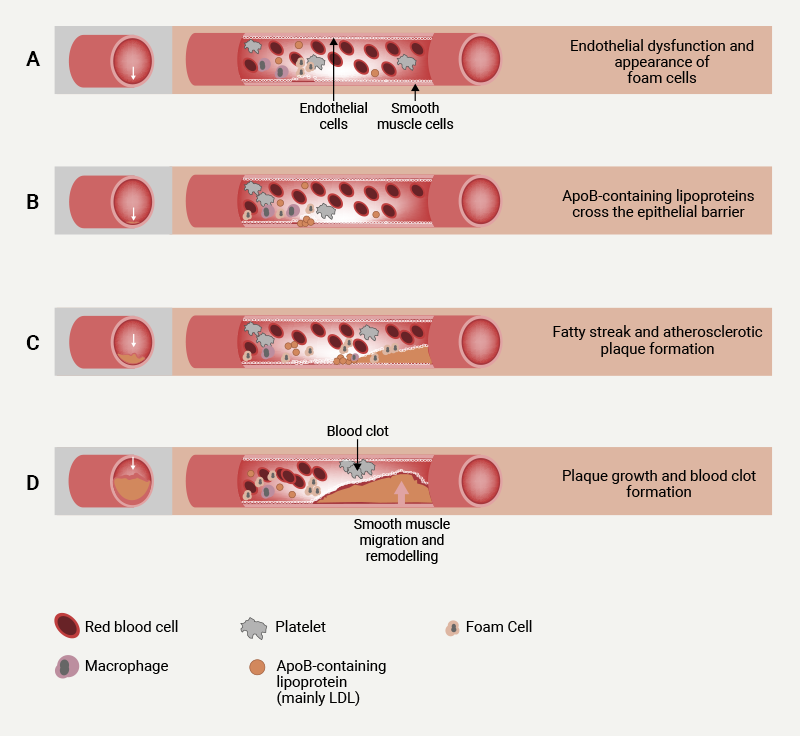
| (A) Endothelial cells lining the arterial intima develop dysfunction and injury, leading to impaired barrier function and reduced nitric oxide availability. Monocyte-derived macrophages attempt to ‘mop-up’ excess lipids in the blood by ingesting them to form foam cells; (B) ApoB-containing lipoproteins, predominantly LDL, penetrate the dysfunctional endothelium and become retained within the subendothelial space; (C) Accumulation and modification (e.g. oxidation) of lipoproteins promote recruitment of inflammatory cells. Macrophage-derived foam cells accumulate, alongside contributions from vascular smooth muscle and endothelial cells, resulting in fatty streak formation and progression to atherosclerotic plaque. This process is accompanied by sustained inflammation and oxidative stress; (D) Progressive plaque growth and ongoing inflammation lead to luminal narrowing and vascular remodelling, driven in part by smooth muscle cell proliferation and migration. Plaque instability or rupture can trigger thrombus formation, leading to acute cardiovascular events such as MI or stroke. Adapted from Zaman et al.2 and Soppert et al.23 Key: ApoB = apolipoprotein B; LDL = low-density lipoprotein; MI = myocardial infarction |
The main types of lipoproteins that accumulate in the artery wall contain a protein called apolipoprotein B (ApoB), which (among other functions) allows the transport of cholesterol to the tissues.23,27 ApoB-containing lipoproteins are also associated with the triggering of oxidative stress and inflammatory pathways.2,23–25 Early visible signs of plaque development are observed as ‘fatty streaks’ that form along the artery wall.2,28 Plaque growth and increasing inflammation cause the blood vessels to become narrowed and smooth muscle cells within the vascular walls begin to multiply and migrate to try to compensate for reduced blood flow capacity, causing arterial changes (or remodelling).2,23,29 Rupture of the plaques can cause blood clot formation (thrombosis) and onset of acute CV events, such as ischaemic stroke, critical limb ischaemia or myocardial infarction (MI).2,13,23,29,30 Endothelial dysfunction may begin in childhood (within the first decade of life), with atherosclerosis developing over a lifetime of exposure to ApoB-containing lipoproteins (figure 2), making early identification of risk critical in lowering the chances of vascular event occurrence or development of established disease.2,23,31–33
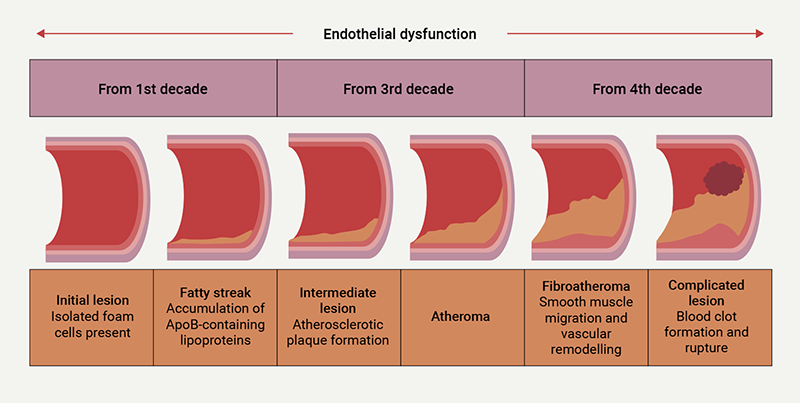
| Adapted from Zaman et al.,2 Soppert et al.23 and Lome S et al.33 Key: ApoB = apolipoprotein B |
ApoB-containing lipoproteins include low-density lipoprotein (LDL), lipoprotein (a) [Lp(a)], intermediate-density lipoprotein (IDL), very low-density lipoprotein (VLDL) and chylomicron (CM) remnants (figure 3).29 LDL is the primary carrier of cholesterol in the bloodstream and the concentration of LDL-cholesterol (LDL-C; sometimes referred to as ‘bad cholesterol’ in the literature) is typically used as an indicator for risk of ASCVD onset or worsening disease.12,13,27,29 In contrast, high-density lipoprotein cholesterol (HDL-C) is widely believed to be cardioprotective and may be described as ‘good cholesterol’ in educational materials.23,29 HDL is the smallest of the lipoproteins and does not contain the ApoB protein.23,34 HDL facilitates ‘reverse cholesterol transport’, involving the removal and transport of excess cholesterol from the tissues to the liver for recycling and excretion.23,34 It is thought to have anti-inflammatory and anti-oxidant effects that help to protect the endothelial cells, while its anti-thrombotic properties reduce platelet aggregation and risk of blood clots.23,29,34 Triglycerides, the body’s primary energy store, are transported in the bloodstream by lipoproteins such as CM and VLDL.23,29 After hydrolysis by lipoprotein lipase (LPL), triglycerides are released as free fatty acids, providing an energy source for muscle or they may be stored in adipose tissue.23,29 Elevated triglycerides contribute to atherogenic remnant particles and, at very high levels, increase the risk of acute pancreatitis.23,29 High triglyceride levels (hypertriglyceridaemia) are a risk factor for ASCVD (independent of LDL-C levels).12,30 The term, dyslipidaemia, usually refers to high concentrations of LDL-C and/or triglycerides and low HDL-C in the blood.2
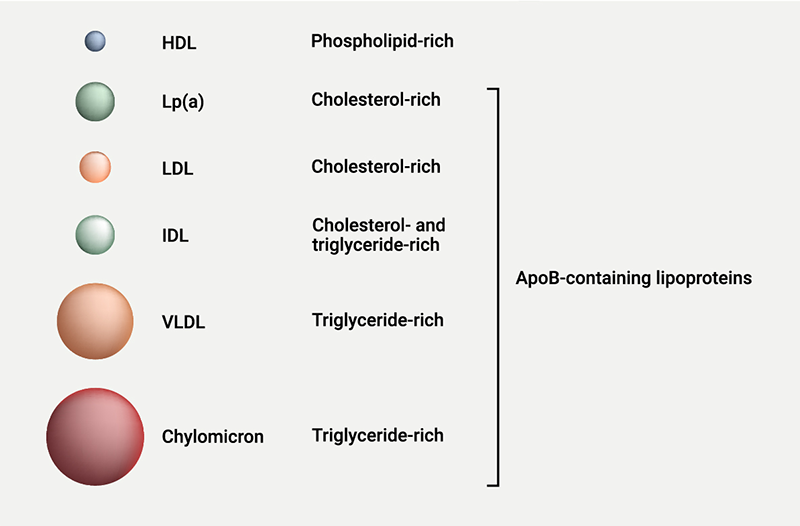
| Adapted from Kenkre JS et al.29 Key: ApoB = apolipoprotein B; HDL = high-density lipoprotein; IDL = intermediate-density lipoprotein; Lp(a) = lipoprotein (a); LDL = low-density lipoprotein; VLDL = very low-density lipoprotein |
Cholesterol/lipid testing
The UK National Institute for Health and Care Excellence (NICE) supports cholesterol/lipid testing for people with ASCVD risk and the latest Quality and Outcomes Framework (QoF) indicators from NHS England provide additional incentives for testing and monitoring in primary and secondary CVD prevention.3,35 Ideally, clinical decisions regarding CV risk would be made using information pertaining to all lipid parameters. In UK clinical practice, a standard lipid profile will comprise laboratory measurement of total cholesterol, HDL-C and triglyceride levels, with the non-HDL-C and LDL-C levels calculated from these measures (table 1).3,12,13,29,30,35 High total cholesterol, triglycerides and non-HDL-C indicate greater risk of ASCVD and acute CV events.3,12,13,29,30 The NICE guideline for CVD, NG238, recommends specialist referral for those individuals with total cholesterol levels >9.0 mmol/L or non-HDL-C >7.5 mmol/L, and urgent specialist review when triglyceride levels are >20 mmol/L (when no association with excess alcohol intake or poor glycaemic control is evident) due to considerably increased risk of acute pancreatitis.3 Current NICE guidance does not require that a fasting sample should be obtained and non-fasting samples are easier to obtain in daily practice.3,29 Lipid profiles, particularly triglyceride levels, may vary according to when the person last ate a meal and fasted samples are appropriate in instances where hypertriglyceridaemia is a concern or the person is starting a medication that could cause severe hypertriglyceridaemia (e.g., corticosteroids).29 Individuals recovering from triglyceride-related pancreatitis should also have a fasted lipid test, which can be taken at the same time as other tests requiring fasting (e.g., glucose).29 Fasting status must be stated in request documentation and laboratory reports.29
Table 1. Summary of UK standard lipid profile and HEART UK/Association for Laboratory Medicine recommendations for enhanced lipid profile parameters3,29
| UK standard lipid profile* | Recommended enhanced lipid profile* | NICE recommendations for specialist referral |
Calculated from the above:
|
Standard profile plus:
|
|
| * Fasting should not be routinely required ahead of testing, but both fasting and non-fasting options should be available (with fasting status documented). Profile measurement should be repeated, at least once, to compensate for biological variation. Factors that may call for an enhanced profile may include family history, clinical signs, recurrent CV events (despite attaining LDL-C or non-HDL-C targets) and raised triglycerides. Key: ApoB = apolipoprotein B; CV = cardiovascular; HDL-C = high-density lipoprotein cholesterol; LDL-C = low-density lipoprotein cholesterol; Lp(a) = lipoprotein (a); NICE = National Institute for Health and Care Excellence |
||
While most of the lipid-lowering studies published to date used LDL-C levels as their main endpoint marker for CV risk reduction, guidelines from the European Society of Cardiology (ESC)/European Atherosclerosis Society (EAS) and the American College of Cardiology (ACC)/American Heart Association (AHA) as well as recommendations from HEART UK/the Association for Laboratory Medicine also support the use of ApoB as a reliable marker for atherogenic risk as this parameter reflects the particle number present.12,13,29,30,36,37 Elevated Lp(a) is also an independent risk factor for ASCVD and measurement of this parameter provides a strong indication of genetic risk.29 Lp(a) concentration ≥250 nmol/L denotes a doubling of risk for ASCVD.29,37 Lifetime levels tend to stay consistent, unless secondary causes of elevation are present (e.g., CKD, untreated overt hyperthyroidism), and a single measurement is usually sufficient.29 HEART UK/the Association for Laboratory Medicine support ApoB and Lp(a) measurement as part of an enhanced lipid profile, alongside standard parameters, to aid further risk stratification during diagnosis and treatment selection.12,13,29,30,36 In general, ApoB measurement is only currently available at specialist lipid services, which may not be accessible to most NHS primary care providers, although greater demand for these tests may result in them becoming more widely available.29 Circumstances in which an enhanced lipid profile using ApoB testing might be appropriate include investigations relating to familial dysbetalipoproteinaemia, hypo- and abetalipoproteinaemia, hypertriglyceridaemia and presence of lipoprotein X (in ratio with total cholesterol).29 Lp(a) measurement would be indicated for certain targeted populations comprising those with personal/family history of premature ASCVD (aged <60 years) or first-degree relatives with elevated serum Lp(a), FH or other genetic dyslipidaemias, people with calcific aortic valve stenosis or individuals who have a borderline increased 10-year CV event risk calculated to be >10% but <15%.29
Currently available lipid-lowering therapies and their mechanisms of action
Randomised controlled trials (RCTs), real-world data and meta-analyses have demonstrated that lowering of LDL-C is associated with reduction in risk for major CV events, including fatal and non-fatal MI and ischaemic strokes.13,14,23,38–65 Achievement of LDL-C levels <1.8 mmol/L (or 70 mg/dL according to US parameters) can result in stabilisation and potential regression of atherosclerotic plaques, slowing of disease progression and lowering of heart attack and stroke risk.66–68
Lipid-lowering therapies are therefore recommended in the UK, Europe and the US for primary and secondary ASCVD prevention.3,12,13,30,37,69 As highlighted in the latest ACC/AHA recommendations, early treatment is critical in reducing lifelong ASCVD risk associated with ongoing exposure to atherogenic lipoproteins.37 Approved pharmacotherapies that aim to lower LDL-C levels typically leverage mechanisms that block cholesterol production or absorption within the body or promote excretion of cholesterol (table 2; figure 4).56,58 Due to their complementary mechanisms of action, some treatments (e.g., statins and ezetimibe, ezetimibe and bempedoic acid – with/without statin therapy) have been shown to provide additive efficacy in reducing LDL-C levels and improving CV risk when used in combination.13,23,53,55–58,70–77 Current NICE NG238 and European guidelines therefore recommend combination therapy when first-line monotherapy has not provided sufficient reduction in lipids.3,12,13,30
Table 2. Approved pharmacotherapies and their mechanisms of action12,13,23,52,56,58
| Class of medicine | Site of action | Mechanism of action |
| Statin | Liver | HMG-COA reductase inhibitor Inhibits LDL-C synthesis |
| Bempedoic acid | Liver | Hepatic ATP citrate lyase inhibitor Inhibits LDL-C synthesis |
| Ezetimibe | Small intestine | NPC1L1 protein inhibition Increases LDL-C clearance |
| PCSK9 inhibitor | Liver | Injectable monoclonal antibody therapy PCSK9 inhibitor Increases LDL-C clearance |
| Inclisiran | Liver | siRNA-based treatment Blocks PCSK9 expression Increases LDL-C clearance |
| Bile acid sequestrant | Small intestine | Prevents reabsorption of bile acids and cholesterol |
| Fibrates | Liver | PPAR-α activator Upregulated LPL expression Increases triglyceride breakdown |
| Omega-3 fatty acids | Potential effect in the liver |
Not determined Potential role in reducing triglyceride-rich lipoproteins and lowering inflammation |
| Key: ATP = adenosine triphosphate; HMG-COA = 3-hydroxy-3-methylglutaryl coenzyme A; LDL-C = low-density lipoprotein cholesterol; NPC1L1 = Niemann-Pick C1 like 1; PCSK9 = proprotein convertase subtilisin/kexin type 9; PPAR-α = peroxisome proliferator activated receptor alpha; siRNA = small interfering ribonucleic acid | ||
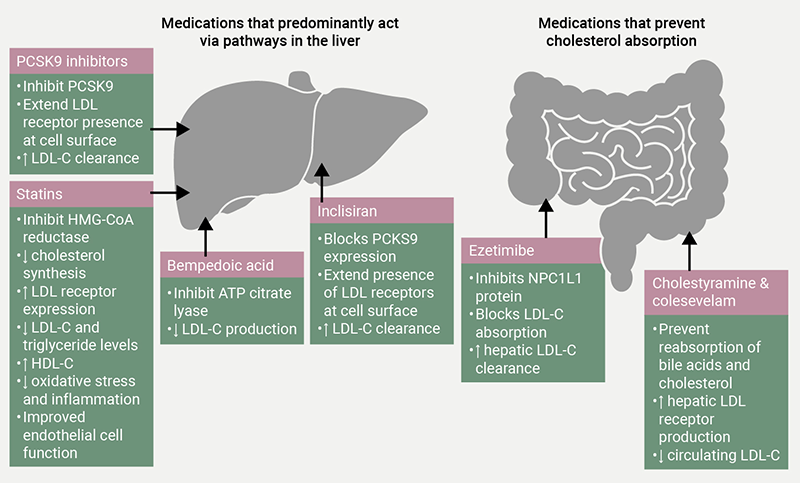
| Key: ATP = adenosine triphosphate; HDL-C = high-density lipoprotein cholesterol; HMG-CoA = 3-hydroxy-3-methylglutaryl coenzyme A; LDL = low-density lipoprotein; LDL-C = low-density lipoprotein-cholesterol; NPC1L1 = Niemann-Pick C1 like 1; PCSK9 = proprotein convertase subtilisin-kexin type 9 |
Targeting LDL-C synthesis
Statins, the recommended first-line treatment option in lipid management, inhibit a critical enzyme in the LDL-C synthesis pathway called 3-hydroxy-3-methylglutaryl coenzyme A (HMG-CoA) reductase.3,12,13,30,56 When the body detects lower levels of cholesterol in the blood following inhibition of the HMG-CoA reductase pathway, expression of LDL receptors at the surface of liver cells will be upregulated to compensate, causing greater uptake of LDL-C from the bloodstream and further lowering of circulating levels.56,58 Data also support a role for statins in reducing inflammation and oxidative stress responses in the blood vessels, improving endothelial cell function and lowering the risk of plaque rupture.23 An extensive body of evidence has demonstrated that statin treatment is associated with dose-dependent reductions in LDL-C and triglycerides as well as increases in HDL-C.3,12,13,30,36,51,56,78 Current NICE guidelines, as well as ESC/EAS and American guidance, recommend first-line statin therapy for the primary prevention of CVD in adults, based upon a plethora of RCT data, observational studies, meta-analyses and cost-effectiveness analysis.3,12,13,30,36,37,78–81 Among the many large-scale studies examining the effects of statins, data from the Cholesterol Treatment Trialists’ (CTT) Collaboration revealed a drop in the risk of major vascular events of approximately one-third with intensive statin therapy.38,48 The reduction in major events was proportional to the absolute LDL-C reduction, even in people with lower starting LDL-C levels (<2.0 mmol/L).38
Bempedoic acid inhibits another key enzyme in cholesterol production, hepatic adenosine triphosphate (ATP) citrate lyase, which acts at an earlier stage in the pathway (upstream) to the HMG-CoA reductase targeted by statins.23,52,54,56,58 The large-scale RCT, CLEAR Harmony, demonstrated statistically significant additional reductions in LDL-C (up to 18.1% versus placebo) and no further treatment-related adverse events (AEs) when bempedoic acid was given in combination with the maximum tolerated dose of statin in people with ASCVD or heterozygous FH, or both (P<0.001).63,82 Treatment outcomes were sustained over a period of 2.5 years with continued combination therapy.83 The CLEAR Outcomes trial showed that LDL-C lowering with bempedoic acid monotherapy was associated with a lower risk of major adverse CV events in people with or at high risk of CVD who were unable/unwilling to take statins due to AEs.62,64 In line with the outcomes demonstrated by the CTT Collaboration, analysis from the CLEAR Outcomes trial demonstrated that risk reduction was proportional to the magnitude of absolute LDL-C lowering achieved.84 Bempedoic acid/ezetimibe combination therapy (with/without statins) has also demonstrated benefits in LDL-C lowering compared to monotherapy with either of these agents.52 Bempedoic acid may be added to statin therapy or ezetimibe when further LDL-C reduction is required.3,85
Reducing LDL-C absorption and enhancing its clearance from the body
Ezetimibe selectively blocks absorption of LDL-C in the small intestine via inhibition of the critical Niemann-Pick C1 like 1 (NPC1L1) protein, causing the liver to increase clearance of LDL-C from the blood.56,58 Ezetimibe is recommended by NICE (NG238 and technology appraisal TA385) in combination with statin therapy to provide greater LDL-C reduction.3,86 It may be used as monotherapy or in combination with bempedoic acid (or another lipid-lowering therapy) or a statin.3,79,86 RCT data showed that addition of ezetimibe to existing statin therapy was superior to statin treatment alone for both LDL-C lowering and HDL-C increase in adults with hypercholesterolaemia (P<0.001).70 Subsequent patient-level analysis (>20,000 adults with CVD risk) revealed improvements in LDL-C, total cholesterol, non-HDL-C, ApoB, triglycerides and lipid ratios when ezetimibe was added to statin monotherapy, regardless of diabetes status, age, race and gender.72 Data from 17,830 people in a large US database showed that addition of ezetimibe to statin therapy (simvastatin, atorvastatin, rosuvastatin) increased the odds of attaining lower LDL-C (<1.8 mmol/L) by 2.6–3.2-fold, compared with titration of statin monotherapy.71 IMPROVE-IT, a large randomised CV outcome trial involving 18,144 people with acute coronary syndrome, demonstrated incremental reductions in LDL-C and improved CV outcomes with combination ezetimibe/statin therapy over a median follow-up of six years.55 These data suggest that individuals who do not show adequate lipid lowering with statins alone may benefit from combination therapy, instead of simply increasing the statin monotherapy dose.13,23,53,55–58,70–72 In addition, the SWEDEHEART trial showed that early combination therapy with ezetimibe and a high-intensity statin provided greater absolute and relative reductions in major adverse CV events among individuals who had experienced a recent MI, compared with delayed initiation of ezetimibe/statin combination treatment.59,60 Those who achieved the lowest non-HDL-C levels at two months and sustained these outcomes had the greatest reduction in risk during the study compared with individuals who showed a delay in lowering of non-HDL-C or those who never reached their non-HDL-C goal.59 Individuals who had not received ezetimibe by 16 months post-MI had the greatest risk of experiencing another major adverse CV event and CV death.60
Injectable monoclonal antibody therapies, evolocumab and alirocumab, bind to an enzyme called proprotein convertase subtilisin-kexin type 9 (PCSK9) involved in the breakdown of LDL receptors.13,23,56 PCSK9 inhibitors (PCSK9is) extend the length of time that the LDL receptors are present at the cell surface, increasing uptake of LDL-C from the blood entering the liver.13,23,56 These medicines need to be self-administered via subcutaneous injection every two weeks.13,23,56 CV outcomes trials showed that, compared with placebo, PCSK9is reduced LDL-C concentration by up to 65%, when given alongside the maximum tolerated dose of high- or moderate-intensity statin, or when used with no statin or ezetimibe background therapy.87–89 Major vascular events were also significantly reduced, compared with placebo (P<0.001).87,88 Following cost/benefit analysis, NICE approved evolocumab and alirocumab for use only in specific clinical circumstances.90,91 PCSK9is may be used in non-FH or mixed dyslipidaemia with CVD and high CV risk (defined as a history of acute coronary syndrome [e.g., MI, unstable angina requiring hospitalisation], coronary or other arterial revascularisation surgery, coronary heart disease, ischaemic stroke, peripheral arterial disease) only when LDL-C is persistently >4.0 mmol/L.90,91 For very high CV risk individuals (defined as having recurrent CV events or CV events in >1 vascular bed [polyvascular disease]), PCSK9is can be prescribed only when LDL-C persists at concentrations >4.0 mmol/L.90,91 People with primary heterozygous FH without CVD can be prescribed PCSK9is only when LDL-C is persistently >5.0 mmol/L, and those with heterozygous FH and CVD may be given PCSK9i therapy when LDL-C continues to be >3.5 mmol/L despite ongoing lipid-lowering therapy.90,91
Inclisiran, a small interfering ribonucleic acid (siRNA)-based treatment, exerts a similar effect to evolocumab and alirocumab by blocking PCSK9 expression in the liver.12,13,23,30,56 It is given as a subcutaneous injection every six months.92 The ongoing ORION clinical trial programme has shown reductions in LDL-C of up to 50% among adults with ASCVD and raised baseline LDL-C concentrations (≥1.8 mmol/L), despite receiving the maximum tolerated statin dose (phase 3 trials: ORION-10 and ORION-11).93 The phase 3 ORION-4 CV outcomes trial is due to complete later in 2026. Inclisiran is indicated in the UK for individuals with primary hypercholesterolaemia or mixed dyslipidaemia as an adjunct to diet and in combination with a statin/statin-based combination regimen when LDL-C goals have not been reached with the maximum tolerated statin dose, or alone/in combination with other lipid-lowering therapies in those who are contraindicated for or unable to tolerate statin therapy.94 However, based on current evidence and cost-effectiveness estimates, NICE (TA733) supports the use of inclisiran as an adjunct to diet in adults in England with LDL-C concentrations persistently ≥2.6 mmol/L who are taking the maximum tolerated statin dose or other lipid-lowering therapies and have a history of CV events (acute coronary syndrome, coronary/arterial revascularisation procedures, coronary heart disease, ischaemic stroke or peripheral arterial disease).92
Bile acid sequestrants, including cholestyramine and colesevelam, prevent reabsorption of bile acids and associated cholesterol from the stomach into the bloodstream.13,23,56 To compensate for the shortfall, the liver uses hepatic cholesterol to synthesise more bile and increases LDL receptor expression resulting in a decrease in circulating LDL-C.13,23,56 UK NICE guidelines do not recommend bile acid sequestrants for use as lipid-lowering therapy or in the prevention of ASCVD.3
Other treatments: targeting triglycerides
Fibrates (e.g., fenofibrate) activate the peroxisome proliferator-activated receptor alpha (PPAR-α), which regulates genes involved in the uptake of fatty acids in the liver and increases the breakdown of triglycerides in VLDL via upregulation of LPL expression.23,56 Fibrates are not currently recommended by NICE as lipid-lowering therapy or for the prevention of ASCVD but may be useful in reducing triglyceride levels to lower pancreatitis risk.3
The mechanisms underlying the potential use of omega-3 fatty acids in decreasing the risk of CV events remain unclear.23 Suggested pathways include their action in reducing synthesis of triglyceride-rich lipoproteins (e.g., VDL, IDL) and lowering inflammation.23,95 Current NICE guidelines limit the use of omega-3 fatty acids (icosapent ethyl only) to individuals on statins with high CV event risk and raised fasting triglycerides (≥1.7 mmol/L).95
Attenuating cardiovascular risk through lipid management
As highlighted already, a rapidly expanding evidence base clearly supports the role of LDL-C lowering in the reduction of risk for ASCVD and/or fatal and non-fatal CV events, such as MIs.13,14,23,38–65 It is important to note that some individuals will be predisposed to developing ASCVD due to their genetic background, the environment in which they have lived (e.g., exposure to second-hand smoke, growing up in poverty) or other factors, such as comorbidities (e.g., diabetes).12,13,27,30,96,97 This means that they have accumulated more endothelial dysfunction and arterial damage at an earlier stage of life and have a greater absolute risk of ASCVD/vascular events.12,13,27,30,96,97 Vulnerability will be higher in these individuals, even if they are able to lower LDL-C during adulthood to reduce their overall lifetime LDL-C exposure level.27,96,98–101 Early, intense and sustained lipid management is therefore critical for people with the greatest risk.12,13,27,30,96,98–101 In general, the higher inherent risk a person has for acute CV events, the lower their target LDL-C levels should be.12,13,30
In the UK, the QRISK® tool (QRISK®2/QRISK®3) is recommended to assess a person’s risk of CVD during the next 10 years, only in cases where there is no pre-existing CVD.3,102 An individual presenting with an MI may have been scored as having a QRISK®2/QRISK®3 10-year risk of 7.5% prior to the event, which would be well below the defined level that triggers prescribing of lipid-lowering therapy (≥10%).3,102
According to global data, approximately 60% of fatal and non-fatal CV events and 20% of all-cause mortality can be attributed to five modifiable risk factors (body mass index, systolic blood pressure, non-HDL-C, smoking, and diabetes).14 Data from a Swedish nationwide cohort demonstrated that around 75% of MIs occurred in people who were not taking lipid-lowering therapy in a population that was aged 55–69 years.50 These data indicate that clinical practice should move away from the current focus on primary and secondary prevention, toward strategies that lower overall CV risk.3,12,13,30
In addition, the impact of elevated triglycerides (>1.7 mmol/L) on CV risk and/or acute pancreatitis should not be underestimated, even when LDL-C levels are well managed. The NICE guidelines recommend that triglycerides should be measured alongside cholesterol parameters (non-HDL-C and LDL-C), with specialist referral for those who have elevated levels (>20.0 mmol/L or >10.0 mmol/L on repeat testing).3 Optimisation of other CV risk factors is endorsed, but NICE does not provide specific advice on how to address high triglyceride levels, other than sign-posting to their guidance on icosapent ethyl use in individuals using statins who have ASCVD.3,95
Identifying high-risk groups
NICE and HEART UK endorse the use of the QRISK® tool for CVD risk estimation in individuals aged 25–84 years, assuming that they do not already have ASCVD and are not taking statins.2,23–25 Most primary care systems may not have been updated to allow easy access to the QRISK®3 tool and continue to measure risk using the QRISK®2 calculator. NICE has highlighted the potential for underestimation of 10-year CVD risk with the QRISK®2 calculator and QRISK®3 can underestimate CV risk in certain groups taking particular medications that cause dyslipidaemia (e.g., antipsychotics, corticosteroids, immunosuppressants) or those who have other underlying conditions (e.g., significant hypertriglyceridaemia [fasting triglycerides 4.5–9.9 mmol/L], severe obesity).3,79 Use of a 10-year tool can also underestimate risk in younger people (aged <40 years) and the QRISK®3-lifetime calculator may be more appropriate for these individuals.3,103 ESC/EAS recommendations endorse the use of the Systematic Coronary Risk Evaluation 2 (SCORE2) and SCORE2-OP (older people; aged ≥70 years) calculators for estimation of risk for MI, ischaemic stroke, or fatal atherosclerotic CV event within 10 years in people without known ASCVD who are aged between 40–89 years.12,13 The SCORE2 tool is available online and may help in assessing risk alongside the QRISK® tools recommended by NICE.3,102,103 Non-fasting non-HDL-C level is the parameter supported by NICE to guide dyslipidaemia management, while lowering of plasma LDL-C represents the main treatment target in the ESC/EAS guidelines.3,12,13
Key factors that should alert HCPs to the likelihood of potential ASCVD and acute CV events include a diagnosis of type 1 diabetes, CKD, strong family history of CVD, high LDL-C levels, raised triglycerides, elevated Lp(a) levels, or evidence of disease on imaging.3,12,13,30 As highlighted already, a growing number of other traditional and non-traditional lifestyle and environmental factors and comorbidities have been identified which can be associated with ASCVD onset and worsening.2,6,12–22
Management of LDL-C levels in clinical practice: the lower, the better
NICE NG238 guidelines for primary prevention of ASCVD use a reduction in non-fasting HDL-C levels of >40% as the only target for statin therapy.3,29 Secondary prevention recommendations are based upon LDL-C targets of ≤2.0 mmol/L or non-HDL-C ≤2.6 mmol/L.3,29 These targets are conservative compared with those of the ESC/EAS and American recommendations as the UK guidelines incorporate cost-effectiveness calculations and are not prioritised according to CV risk.3,12,13,29,30,37,69
The BEACON steering committee strongly advises that lower LDL-C levels should be targeted for those individuals with the greatest risk. The aim should be to drive LDL-C levels as low as possible, given that significant atherosclerosis will be present by the time treatments are initiated.104 These perspectives are aligned with current ESC/EAS guidelines, which provide more stringent LDL-C treatment targets for higher risk groups compared with NG238, with target levels being <1.8 mmol/L for high-risk populations, <1.4 mmol/L for people with ASCVD and very high risk and <1.0 mmol/L for individuals with established ASCVD who have extreme risk and recurrent acute vascular events while taking maximally tolerated statin-based therapy (table 3).12,13,30 People in each of these risk categories should also aim for an LDL-C reduction of at least 50% from baseline.12,13,30
Table 3. Recommendations for lipid-lowering therapy in adults according to NICE, the ESC/EAS and the AHA3,12,13,30,37,69,91,95,123
| Guideline | Key recommendations for LDL-C-lowering therapy in adults | Lipid-lowering targets | Recommended risk calculator |
| NICE. Cardiovascular disease: risk assessment and reduction, including lipid modification (NG238) NICE. Familial hypercholesterolaemia: identification and management (CG71) |
Primary prevention for people with 10-year risk ≥10% (unless known high risk).
Secondary prevention for people with ASCVD.
Heterozygous FH
Specialist referral is required for established ASCVD, high risk of CV events, ≥2 CV risk factors, homozygous FH. |
Primary prevention >40% non-HDL-C reduction Secondary prevention LDL-C ≤2.0 mmol/L or non-HDL-C ≤2.6 mmol/L (fasted and nonfasted) Heterozygous FH ≥50% LDL-C reduction |
QRISK®3 (10-year risk; CV risk >10%) QRISK®3 lifetime (e.g., 10-year risk <10% or aged <40 with CVD risk factors) |
| 2019 ESC/EAS Guidelines for the management of dyslipidaemias: lipid modification to reduce cardiovascular risk. 2025 Focused update of the 2019 ESC/EAS Guidelines for the management of dyslipidaemias |
Primary prevention
Secondary prevention for people with ASCVD.
Heterozygous FH
|
Primary prevention LDL-C targets by CV risk: Low: <3.0 mmol/L Moderate: <2.6 mmol/L High: ≥50% reduction and <1.8 mmol/L Very high: ≥50% reduction and <1.4 mmol/L Secondary prevention LDL-C targets by CV risk: Very high risk (ASCVD (clinical/imaging): <1.0 mmol/L Extreme risk (ASCVD + recurrent CV events): <1.0 mmol/L. ApoB targets by CV risk: Moderate: <100 mg/dL High: <80 mg/dL Very high: <65 mg/dL Heterozygous FH LDL-C <1.8 mmol/L (no other risk factors) LDL-C <1.4 mmol/L (ASCVD or another risk factor) |
SCORE2 SCORE2-OP (10-year risk) CV risk categories: Low: <2% Moderate: ≥2% to <10% High: ≥10% to <20% Very high: ≥20 Extreme risk (ASCVD + recurrent CV events): <1.0 mmol/L |
| 2026 ACC/AHA/AACVPR/ABC/ACPM/ADA/AGS/APhA/ASPC/NLA/PCNA Guideline on the management of dyslipidemia 2019 ACC/AHA Guideline on the primary prevention of cardiovascular disease: A report of the American College of Cardiology/ American Heart Association Task Force on Clinical Practice Guidelines |
Primary prevention
Secondary prevention for people with ASCVD.
Heterozygous FH
|
Primary prevention ≥30% LDL-C reduction (low/borderline risk) ≥30 to ≥50% LDL-C reduction (intermediate risk) ≥50% LDL-C reduction (high risk) Secondary prevention ≥30–49% LDL-C reduction (adults with diabetes without ASCVD) ≥50% LDL-C reduction (adults with diabetes and multiple ASCVD risk factors or with ASCVD [not high risk]) Very high risk + maximum tolerated statin dose: <1.4 mmol/L Heterozygous FM <1.8 mmol/L |
ASCVD Risk Estimator Plus (10-year risk) Risk categories: Low: <3% Borderline: 3% to <5% Intermediate: 5% to <10% High: ≥10% |
| Key: AACVPR = American Association of Cardiovascular and Pulmonary Rehabilitation; AAPA = American Academy of Physician Assistants; ABC = Association of Black Cardiologists; ACC = American College of Cardiology; ACPM = American College of Preventive Medicine; ADA = American Diabetes Association; AGS = American Geriatrics Society; AHA = American Heart Association; APhA = American Pharmacists Association; ASCVD = atherosclerotic cardiovascular disease; ASPC = American Society for Preventive Cardiology; CV = cardiovascular; EAS = European Atherosclerosis Society; ESC = European Society of Cardiology; FH = familial hypercholesterolaemia; HDL-C = non-high density lipoprotein cholesterol LDL-C = low-density lipoprotein cholesterol; NLA = National Lipid Association; NICE = National Institute for Health and Care Excellence; PCNA = Preventive Cardiovascular Nurses Association | |||
Evidence regarding the effectiveness of lower LDL-C targets has long been established.105 Large-scale long-term studies and meta-analyses have revealed the sustained benefits of lipid-lowering therapies and incremental reductions in LDL-C with intensive treatment in reducing CV events over decades.38,55,106–109 Data suggest that, on average, the risk of major CV events will be lowered each year by approximately 21–24% for each 1 mmol/L decrease in LDL-C.38,108,109 The benefits of effective LDL-C lowering are also believed to be cumulative, with additional reduction in risk observed over time when lipid levels are effectively maintained.65 Mendelian studies examining ASCVD outcomes in people with genotypes conferring lower LDL-C levels indicated that lifetime risk of events could be reduced by 50–55% per 1 mmol/L reduction in LDL-C.27,76,110
In 2012, the CTT Collaboration showed that, even in relatively low-risk populations (those with <10% chance of major vascular events over five years), each 1 mmol/L reduction in LDL-C was estimated to reduce the likelihood of a major CV incident by 11 events per 1,000 people over five years.105,108 Yet, similar individuals would not receive LDL-lowering therapy under current UK guidelines.3,12,13,37,69 No evidence exists to suggest that any lower threshold for LDL-C represents an increased risk to health.73,111,112 HCPs should feel confident that any support they provide to reduce a person’s LDL-C will likely benefit their long-term health outcomes. Assisting individuals in gaining an understanding of their own risk of ASCVD, based upon their lifestyle, environment and family history is essential in motivating them to take responsibility for modifiable factors within their control (e.g., diet, smoking, exercise) and helping them to make (and maintain) the necessary changes that will support enhanced long-term results. Interventions that address many of the lifestyle-associated risk factors will also help individuals to feel better/healthier overall, which can assist in maintaining engagement as they might not experience any difference in the way that they feel with lipid-lowering therapy alone, even if it is effective in reducing LDL-C levels.
Available treatment options for ASCVD prevention: what do UK guidelines advise?
Primary prevention of ASCVD
First-line treatment for primary prevention of ASCVD in the UK is typically initiated in primary care and will comprise statin monotherapy, usually atorvastatin (20 mg daily), with an increase in dose (up to 80 mg daily) if non-HDL-C is not lowered by >40% after 3 months.3,79 People with CKD (estimated glomerular filtration rate [eGFR] <60 mL/min/1.73 m2 and/or albuminuria) may need a lower statin dose, depending on the statin selected (the prescribing information should be consulted before initiating treatment).3,79 Ezetimibe (10 mg daily) will be added if the maximum tolerated statin dose fails to lower non-HDL-C by >40%.3,79
Persistence and adherence with statins represents an ongoing challenge in the prevention of CVD and CV events.36,85,113,114 Perceptions and fears regarding tolerability issues can influence an individual’s motivation to take their statin medication as prescribed or to continue in the long term.36,85,113,114 As with all medications, some people may not tolerate statin-based regimens and can experience AEs, although NHS England has warned against labelling people as statin intolerant too quickly.85 NHS England has published a statin intolerance algorithm (or pathway) to provide guidance on the recognition of risk factors for tolerability issues and appropriate approaches to reduce the occurrence of potential AEs.85 Statin-associated muscle symptoms (SAMS) are a key reason for non-adherence or discontinuation, and true statin-related muscle toxicity (SRM) typically resolves when treatment is paused and reoccurs when a statin is reinitiated.85 A spectrum of SRM exists and an individual may be able to continue their treatment if they consider symptoms to be tolerable.85 Non-muscle-related side effects (occurring in up to 1 in 10 people) include gastrointestinal disturbance and asymptomatic increases in hepatic transaminases.85 HCPs should be aware of the main risk factors for SRM and other potential tolerability issues, which include female sex, older age (≥75 years), frailty, history of muscle disorders or high creatine kinase levels, impaired renal or hepatic function, family history of statin intolerance and hypothyroidism.85 Other factors, such as excessive alcohol consumption, high-intensity exercise, dehydration, vitamin D deficiency and potential drug-drug interactions should also be taken into account when considering potential statin tolerability issues.85 Some people may be better able to tolerate their treatment on re-challenge with the same or a different statin (or with a dose adjustment) and an individualised approach that considers the risk versus benefit relationship must be adopted.85
Where statins are contraindicated or not tolerated, ezetimibe (10 mg) monotherapy may be used first line, with the option to add bempedoic acid (180 mg) at 3 months if non-HDL-C or LDL-C reductions are not satisfactory.3,79 NICE and NHS England recommendations suggest that specialist referral should be considered in cases where target non-HDL-C levels have not been achieved, despite maximum first- and second-line therapy.3,35,79
Secondary prevention
High-intensity statin therapy, typically atorvastatin (80 mg daily), is recommended for adults with ASCVD, including coronary heart disease (CHD), angina, acute coronary syndrome (MI or unstable angina), revascularisation, stroke or transient ischemic attack (TIA) or symptomatic peripheral arterial disease.3,79 Statin therapy should not be delayed while awaiting results or addressing modifiable risk factors.3,79
Individuals who require additional LDL-C lowering efficacy may be prescribed ezetimibe or injectable therapies.3,79 Inclisiran can be initiated (in people with LDL-C ≥2.6 mmol/L [in England]) and monitored in a primary care setting.3,79 As already mentioned, PCSK9is are currently only recommended by NICE under certain circumstances in individuals with non-FH or mixed dyslipidaemia or primary heterozygous FH with/without CVD, according to different LDL-C concentration thresholds.90,91 PCSK9is (alirocumab and evolocumab) need to be initiated by a secondary care specialist, with primary care HCPs continuing prescribing and monitoring once treatment has been established and confirmation that the person is tolerating therapy well.3,79 Importantly, people who have elevated risk (including raised LDL-C levels) but remain below the LDL-C thresholds for inclisiran (≥2.6 mmol/L) or PCSK9i monoclonal antibody initiation (persistently >3.5–5.0 mmol/L, depending on CVD and/or FH status and level of CVD risk) will have limited access to these treatments under current NICE guidelines.3,79
Leveraging combination therapy for improved outcomes
Updated NICE clinical guidelines for conditions, such as T2DM, recommend combination therapy from the start of treatment.115 For hypertension, combination therapy may be given when targets have not been met with the first-line medicine.116 The BEACON committee supports a similar approach for lipid lowering, using first-line combination therapy for appropriate people.
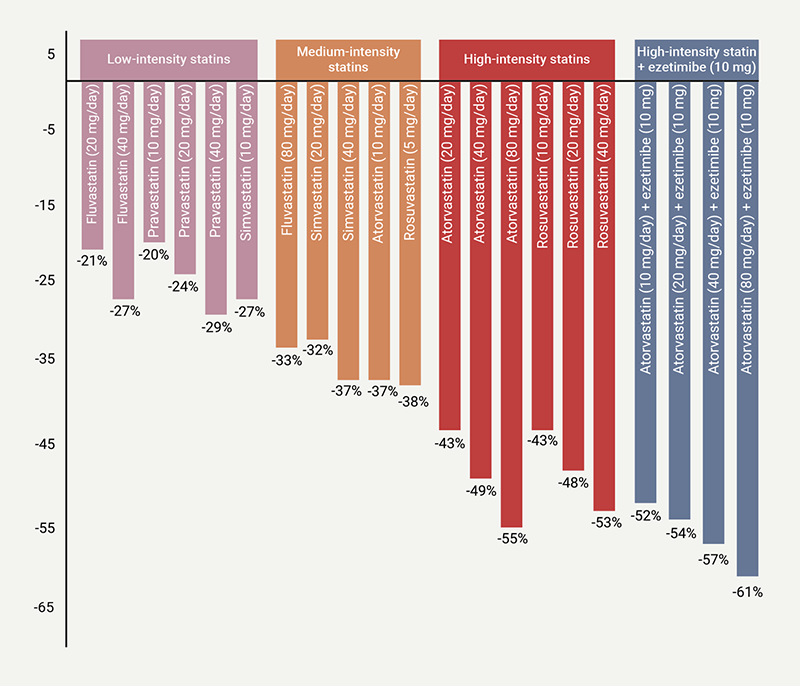
The evidence suggests that simply increasing statin therapy intensity may not be the most appropriate strategy in optimising lipid lowering.55,57,74,76 Indeed, combination therapy, using a medium-intensity statin plus ezetimibe could provide greater reductions in LDL-C and studies indicate that this approach might support improved tolerability outcomes (figure 5).55,57,74,76 The SANTORINI study showed that combination therapy with a statin plus ezetimibe or a PCSK9i plus an oral agent improved LDL-C lowering over one year across 14 European countries in people with high (N=2,033) or very high (N=5,173) ASCVD risk.74 Despite a higher proportion meeting their LDL-C goal with combination therapy, compared with monotherapy, most participants in the study did not achieve their lipid-lowering target.74,76 This highlights the challenges of achieving target LDL-C, even when treatment has been intensified.74,76 IMPROVE-IT showed the benefits of adding ezetimibe to statin therapy to provide incremental improvements in LDL-C and CV outcomes, compared with statin monotherapy.55 The RACING trial demonstrated non-inferiority with medium-intensity statin plus ezetimibe combination therapy, versus high-intensity statin treatment, regarding the three-year composite outcome of CV death, major CV events or non-fatal stroke in people with ASCVD.57 A significantly lower proportion of participants discontinued or required a dose reduction due to tolerability issues with combination therapy, compared with high-intensity statin monotherapy.57 The RACING study group reported similar results for the same primary composite end point in people who had undergone drug-eluting stent implantation.77
| Key: LDL-C = low-density lipoprotein cholesterol |
Tailoring treatment appropriately so that each person is treated to a target LDL-C level, using medium- or high-intensity statin combination therapy with ezetimibe, has provided similar CV outcomes to high-intensity statin monotherapy.117 It is also known that doubling the dose of a statin is associated with an increase in LDL-C lowering of approximately 6%, due to non-linear pharmacokinetics, whereas adding a second medicine with a different mechanism of action is likely to provide additive LDL-C-lowering effect.75,118
As discussed in the ESC/EAS and NHS England guidelines, the average reductions in LDL-C that may be achieved when using existing lipid-lowering options in combination are relatively well established.12,13,30,79 Beyond combination therapy with existing oral therapies (statins, ezetimibe and bempedoic acid), individuals with the highest LDL-C (or non-HDL-C) levels may face further delays in reaching their lipid-lowering targets and optimising their health outcomes due to local commissioning arrangements or the need for specialist referral for injectable PCSK9is therapies.3,79 These people have the greatest immediate need and rapid action is essential in preventing major CV events.12
The BEACON lipid-lowering algorithm and practical advice for consultations
Figure 6 shows the BEACON recommendations for lipid-lowering. The algorithm is based on current evidence and global guidelines and aims to help lower lifetime risk of ASCVD as well as fatal and non-fatal CV events. As many people who suffer acute CV events may be deemed below the threshold of risk according to non-HDL-C (NICE NG238) parameters, the BEACON committee recommends the ESC/EAS approach of attaining the lowest LDL-C levels possible.12,13 However, a full lipid profile should be obtained from the start of management, with an enhanced profile requested where appropriate.3,29 As highlighted already, fasted samples are not mandated by NICE but may be appropriate in some circumstances (e.g., potential hypertriglyceridaemia), and fasting status should be recorded.3,29
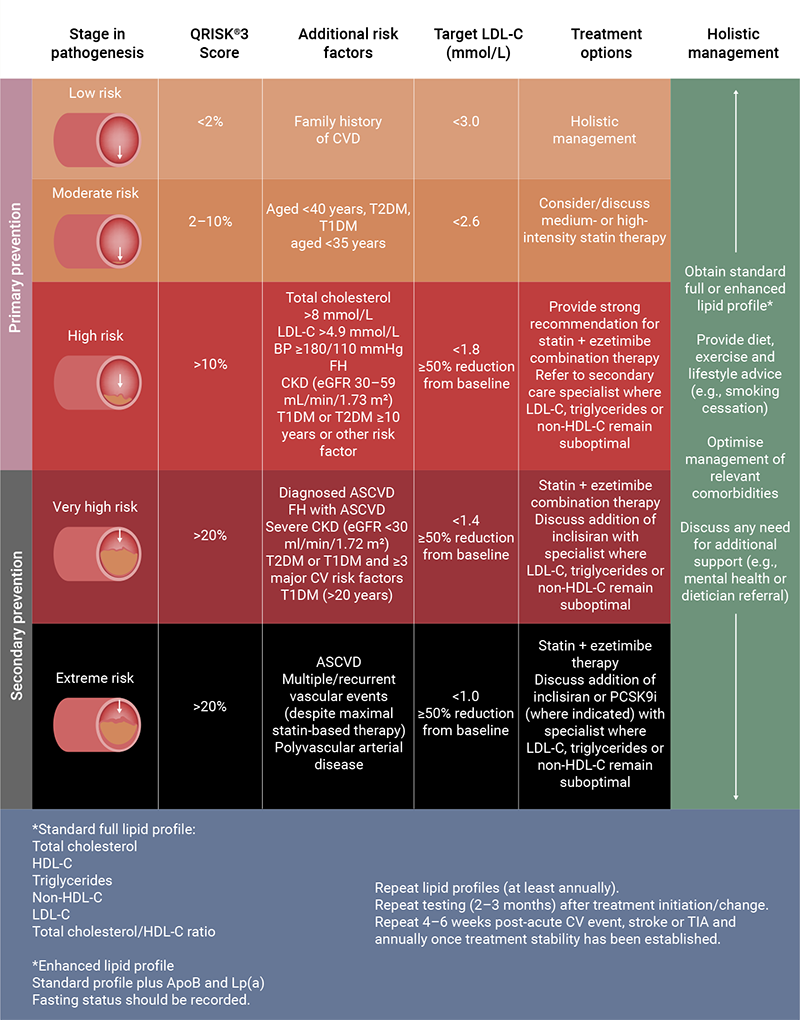
| Key: ASCVD = atherosclerotic cardiovascular disease; BP = blood pressure; CKD = chronic kidney disease; CV = cardiovascular; CVD = cardiovascular disease; eGFR = estimated glomerular filtration rate; FH = familial hypercholesterolaemia; HDL-C = high-density lipoprotein cholesterol; LDL-C = low-density lipoprotein cholesterol; PCSK9i = proprotein convertase subtilisin/kexin type 9 inhibitor; T1DM = type 1 diabetes mellitus; T2DM = type 2 diabetes mellitus; TIA = transient ischemic attack |
At each stage, it is important that the person receiving treatment understands their current CV risk and the advice they have been given in terms of recommended medications and/or lifestyle approach. Box 1 provides a short summary of key points to consider and discuss during consultations about lipid lowering. Holistic management throughout the pathway should include ongoing advice and reinforcement of messaging regarding lifestyle factors such as healthy eating, physical activity, body weight or waist circumference measures, alcohol consumption and sleep improvement.2,28 In addition, optimisation of management regarding any relevant comorbidities (e.g., diabetes, CKD) will be important in lowering ongoing CV risk.2,28
Box 1. Key points for conversations with individuals who may benefit from lipid-lowering therapy
Find out what the person understands about ASCVD risk
Place the person’s level of risk in to context
Explain why cholesterol levels in the blood increase risk of CV events
Establish their willingness to undertake lifestyle changes and/or to take medication for lipid lowering
Highlight the benefits and risks of lipid-lowering therapy
|
| Key: ASCVD = atherosclerotic cardiovascular disease; CV = cardiovascular; CVD = cardiovascular disease; LDL = low-density lipoprotein |
Primary prevention
Initial consultation
- Primary prevention aims to reduce the risk of developing ASCVD or experiencing an acute CV event by addressing any evident modifiable risk factors (e.g., lifestyle, smoking) and reducing the potential harms posed by factors that cannot be modified (e.g., genetic/family history of FH).28
- Where risk for development of ASCVD is suspected, use the QRISK®3 (https://qrisk.org/) or QRISK®3-lifetime calculator (https://qrisk.org/lifetime/), as appropriate, to assess the individual’s risk.103 Remember that certain individuals will have an elevated residual risk due to family or medical history, their environment or lifestyle choices.27,96,98–101 It is also important to consider non-traditional risk factors, such as HIV, autoimmune or inflammatory conditions, metabolic disease (e.g., insulin resistance, MASLD/MASH) or hormone-related factors (e.g., PMOS, menopause, adverse pregnancy outcomes).15–22
- In line with ESC/EAS guidelines, early, intense and sustained lipid management should be initiated for people with the greatest residual CV risk, including those with very high risk and LDL-C ≥1.8 mmol/L or high risk and LDL-C ≥2.6 mmol/L (despite optimisation of non-pharmacological measures, including dietary, lifestyle and environmental factors).12,13,27,30,96,98–101
- Other CV risk factors beyond LDL-C levels should also be assessed, including smoking status, alcohol consumption, hypertension, high body mass index and/or waist circumference, diabetes status and renal function.3 Blood tests to examine transaminase levels and thyroid function should also be conducted.3
- If lipids are very high, (e.g., total cholesterol ≥7.5 mmol/L, LDL-C >5.0 mmol/L) common secondary causes of dyslipidaemia should be ruled out.
- Secondary causes of pure hypercholesterolaemia (raised total cholesterol and LDL-C with normal triglycerides) include hypothyroidism, cholestatic liver disease, anorexia nervosa, nephrotic syndrome, pregnancy, extreme diets (e.g., ketogenic diet) and medications such as atypical antipsychotics, steroids and ciclosporin.29 FH should be considered in these cases.29
- Secondary causes of mixed dyslipidaemia (raised total cholesterol, LDL-C and triglycerides) may include poorly controlled diabetes, metabolic syndrome, insulin resistance, obesity, excessive alcohol consumption, gout, renal disease, hypothyroidism, pregnancy, dietary causes and drugs such as atypical antipsychotics, steroids and ciclosporin, as well as beta-blockers, antiretrovirals, retinoids and oral oestrogens.29
- Targets for LDL-C should be lower for people with elevated CV risk.12,13,27,30,96,98–101
- Provide diet and lifestyle advice for people with a CV SCORE2 <2% (https://www.escardio.org/guidelines/practice-tools/cvd-prevention-toolbox/score-risk-charts/) for 10-year risk of fatal and non-fatal CV events and untreated LDL-C <3 mmol/L.12,13,30,119 Target LDL-C should be <3 mmol/L while QRISK®3 remains <2%.12,13,30
- Discuss lipid-lowering therapy options (medium- or high-intensity statin) with individuals who have a calculated risk of 2–10% and untreated LDL-C >2.6 mmol/L.12,13,30 Target LDL-C should be <2.6 mmol/L while QRISK®3 remains between 2–10%.12,13,30
- Provide a strong recommendation for combination therapy with a high-intensity statin plus ezetimibe in cases where the calculated CV risk is >10% and untreated LDL-C >1.8 mmol/L.12,13,30 Target LDL-C should be at least 50% lower than baseline and <1.8 mmol/L for individuals with high calculated CV risk (QRISK®3 >10%), where possible.12,13,30
- Hypertriglyceridaemia should be addressed:3,37,79
- Assess potential underlying causes, including lifestyle (e.g., diet, physical activity levels, excessive alcohol consumption), underlying conditions (e.g., obesity, T2DM, hypothyroidism), medications (e.g., beta-blockers, diuretics, corticosteroids) and genetic factors (e.g., FH).37
- Mild-to-moderate hypertriglyceridaemia (fasting triglyceride levels 1.7–10 mmol/L): discuss lifestyle adjustments that may improve triglycerides (e.g., diet, exercise).3,12,13,30,37,79 Repeat fasted blood tests when triglycerides are persistently >4.5 mmol/L and seek specialist referral for individuals with non-HDL-C concentrations >7.5 mmol/L.3,79
- Severe hypertriglyceridaemia (fasted triglycerides persistently >10 mmol/L): seek specialist advice. Urgent referral is required with fasted triglycerides > 20 mmol/L (when no evidence of excess alcohol use or poor glycaemic control). Individuals with severe hypertriglyceridaemia are at risk of acute pancreatitis.3,37,79
- Discuss the benefits and risks of lipid-lowering therapy within the context of lifetime CV risk reduction.3
- Ensure that individuals who begin lipid-lowering therapy understand that treatment is a long-term preventative measure to maintain a lower risk of acute CV events, just as lifestyle interventions that promote and improve long-term CV health might (e.g., regular exercise, quitting smoking).120
- Counsel on management of any common potential side effects associated with lipid-lowering medications and set the risks in context against the benefit of lipid-lowering therapy.120,121
- Arrange for regular follow up and review to monitor ongoing lipid levels and assess treatment tolerability, outcomes and adherence, where monotherapy or combination therapy has been prescribed.3,79
Follow up, treatment escalation and specialist referral
- While national guidelines state that lipid profile testing should be repeated at 12 weeks following initiation of treatment, the BEACON Committee suggests that testing within eight weeks may be appropriate.12,29 Post-acute coronary syndrome, lipid profile must be checked within four to six weeks.12,29
- Escalate treatment to optimise lipid lowering for those showing inadequate response to current therapy according to their calculated level of risk at baseline.3,12,13,30,79
- Discuss the benefits and risks of statin treatment when LDL-C is ≥3 mmol/L for individuals with baseline QRISK®3 score <2%.
- Strongly recommend combination therapy with a high-intensity statin plus ezetimibe when LDL-C levels are not reduced by ≥50% from baseline and/or when LDL-C rises above 2.6 mmol/L for individuals with a baseline QRISK®3 score of 2–10%.
Secondary prevention
- Secondary prevention aims to avoid further worsening or progression of existing disease and damage after ASCVD diagnosis or an acute CV event.2,28 Collaboration with secondary care and rehabilitation teams (where appropriate) should also aim to improve quality of life.2,28
- Treatment for people with existing ASCVD will usually comprise a high-intensity statin plus a non-statin therapy with proven CV benefit and target LDL-C should be <1.4 mmol/L.12,13,30,79
- Individuals with extreme risk, who have multiple or recurrent vascular events or CV events in more than 1 vascular bed (polyvascular disease) should aim for LDL-C to be <1.0 mmol/L.12,13,30,79
- For people living in England, inclisiran injectable therapy may be initiated when fasting LDL-C ≥2.6 mmol/L despite maximum tolerated lipid-lowering therapy.12,13,30,79
- PCSK9i therapy can only be initiated (by a secondary care specialist) in specific individuals according to NICE guidelines.3,79,86,92
- Primary non-FH/mixed dyslipidaemia: CVD and high risk (when LDL-C is persistently >4.0 mmol/L) or CVD and very high risk (with LDL-C that persists >3.5 mmol/L).
- Primary heterozygous FH: without CVD (when LDL-C is persistently >5.0 mmol/L); with CVD and high or very high risk (when LDL-C levels persist at >3.5 mmol/L).
BEACON recommendations for improving lipid lowering in clinical practice
The BEACON steering committee believes that lipid-lowering standards in the UK should evolve to more closely reflect recommendations from the ESC/EAS.12,13,30 In addition to the proposed BEACON algorithm, the recommendations summarised below aim to provide actionable advice on the ways in which HCPs can improve lipid management in their daily practice. There are many conflicting and misleading messages in the media regarding CV risk and the use of LDL-C-lowering medications, particularly concerning statins.120,122 Box 2 provides information to help in addressing concerns that a person may have about lipid-lowering medications and dispel some of the most common myths. Box 3 provides links to key resources for HCPs and people with CV risk or dyslipidaemia.
- In individuals who have an elevated 10-year or lifetime risk of acute CV events, education should be provided about the key processes within the body that drive ASCVD development. Information should be shared on the ways in which available treatments may work to prevent disease progression.
- Many people who could benefit from lipid-lowering therapy are resistant to starting treatment due to negative media coverage about statins and their potential side effects. The risk of CV events needs to be placed in context (with evidence) to allow the individual to understand the potentially lifesaving importance of lowering their LDL-C so that they can make informed decisions about their treatment (and lifestyle modifications).
- Help the person you are treating to understand that lipid-lowering treatment is a lifelong, and potentially life-saving, commitment to reduce their long-term risk of experiencing a CV event. Once treatment begins, it should be continued (unless tolerability issues arise).
- Lipid targets must be based on the individual’s risk and combination therapy should be used as standard for appropriate people. The greater the CV risk, the lower the LDL-C target should be.
- The person must be advised that, if they experience tolerability issues with their medicines, it will be possible to find an alternative agent that can be tolerated in most cases. Statin therapy is well tolerated in the majority of people.
- Advise the person not to stop medication without a discussion with their GP or healthcare provider.
Box 2. Lipid-lowering medications – addressing the myths
| Misunderstandings about statins: They have been banned in Europe Statins are still licensed and widely prescribed across the UK and Europe. European and UK guidelines recommend statins as the first line of treatment to prevent CVD.3,12,13,30 They cause cognitive function decline and dementia They are like steroids Statins have worrying side effects What are the possible side effects? How do I know if I’m getting side effects from a statin? Confusion about ASCVD risks: I’m too young to be at risk of a heart attack My cholesterol has always been high, so my body is used to it Confusion about medications I eat a low-fat diet, which should have the same effect as taking a statin Over-the-counter supplements will work as well as statins Once my ‘target’ levels are met, I can reduce/stop statins |
| Key: ASCVD = atherosclerotic cardiovascular disease; CV = cardiovascular; CVD = cardiovascular disease; HDL = high-density lipoprotein; LDL = low-density lipoprotein |
Box 3. Useful links and resources for HCPs and people with CV risk or dyslipidaemia
| British Heart Foundation Do you know the truth about statins? https://www.bhf.org.uk/informationsupport/heart-matters-magazine/medical/statins-fact-or-fiction Statins – your questions answered https://www.bhf.org.uk/informationsupport/heart-matters-magazine/medical/drug-cabinet/statins Understanding high cholesterol https://www.bhf.org.uk/informationsupport/publications/risk-factors/understanding-high-cholesterol High lipoprotein (a) https://www.bhf.org.uk/informationsupport/risk-factors/lipoprotein-a Heart UK FH Europe |
Key messages
- Atherosclerotic cardiovascular disease (ASCVD) remains a major cause of morbidity, mortality and health inequality in the UK. Atherosclerosis may begin in childhood and progress over a lifetime of exposure to ApoB-containing lipoproteins
- Risk assessment should consider lifetime risk (particularly in younger people), family history, comorbidities, triglyceride levels and other traditional (e.g., type 2 diabetes mellitus, overweight/obesity) and non-traditional (e.g., HIV, inflammatory bowel disease) factors
- Lowering of low-density lipoprotein cholesterol (LDL-C) is strongly associated with reduced risk of ASCVD onset, progression and worsening as well as risk of experiencing CV events
- People with the greatest baseline risk for ASCVD should be supported to achieve the lowest possible LDL-C levels through early, sustained intervention
- Combination lipid-lowering therapy, particularly using a statin plus ezetimibe (where appropriate), may help more people to reach LDL-C targets and should be discussed alongside approaches to lifestyle optimisation when making shared treatment/management decisions
Conflicts of interest
BB has received honoraria from Amarin, Aspire, AstraZeneca, Bayer, Boehringer Ingelheim, Chiesi, Consilient, Daiichi Sankyo, GlaxoSmithKline, Leo, Lilly, Menarini, MSD, Napp, Novartis, Novo Nordisk, Orion, Pfizer, Sanofi and Teva.
JC received honoraria/consultancy fees or research funding from Amgen, Sanofi, Daiichi Sankyo, Novartis, Akcea, Sobi, Ultragenyx, Verve Therapeutics, Menarini, Novo Nordisk, Astra Zeneca, Chiesi and Eli Lilly.
ET has received honoraria for services from Bayer, Daiichi Sankyo, Centre for Medical Development, Amarin, Morph consultancy, Royal Pharmaceutical Society, Soar Beyond, Novartis, Menarini, Novo Nordisk and YHPA.
WT: The Westcliffe Partnership has received funding from Abbott, AstraZeneca, Bayer, Boehringer-Ingelheim, Bristol Myers Squibb, Dawn, INRStar, Medtronic, Oberoi Consulting, Pfizer, Roche, Sanofi-Aventis and Servier. WT has received funding from the following companies for provision of educational sessions, speaker fees, advisory and consultancy roles and travel grants to attend conferences: Abbott, AstraZeneca, Amarin Pharmaceuticals Ltd, Bayer, Boehringer-Ingelheim, Dexcom, Daiichi Sankyo, Eli Lilly, European Medtec, Menarini, Merck and MSD, Novartis, Novo Nordisk, Napp Pharmaceuticals Ltd, Roche and Sanofi. WT has also worked in a non-promotional capacity to support GP/PN education via MIMS, medical updates, DPC, DUK, Primary care health, PCDS and PCDE. WT is a Clinical Advisor to Gendius – AI remote management.
AP has received speaker fees and attended advisory boards for Amryt/Chiesi, Sanofi, and Ultragenyx. Educational grants were received from Menarini, Novartis and Sanofi.
DC has received honoraria/expenses from Amarin, AstraZeneca, Boehringer Ingelheim, Daiichi Sankyo, Eli Lilly, Menarini, Novartis, Novo Nordisk, Pfizer and Recordati. He has served on a consulting/advisory board basis for Amarin, AstraZeneca, Daiichi Sankyo, Menarini, Novartis, Pfizer and Recordati, and conducted funded research for AstraZeneca and Daiichi Sankyo.
MHC has received honoraria, research grants and educational support from Abbott, Daiichi-Sankyo, Boehringer Ingelheim, Lilly. Novartis, Sanofi, AstraZeneca, Novo Nordisk, Viatris, MSD and Menarini.
DBND has received honoraria/ project development fees from Sobi, Amgen, Daiichi-Sankyo, Recordati, Novartis, MSD, Lilly and Novo-Nordisk.
PFD has received speaker fees and fees for attendance at advisory boards from Amgen, Amarin, Arrowhead Pharmaceuticals, Besins Healthcare, Daiichi Sankyo, Novartis, Sanofi, Sobi and Ultragenyx. Financial support was received for travel and accommodation to attend national/ international conferences from Novartis, Amgen and Sanofi.
EH has received honoraria and consultancy fees from Novo Nordisk. Menarini, Daiichi Sankyo, Amgen, Amarin and Novartis.
JM has received honoraria from Daiichi-Sankyo and Menarini in relation to educational activities in the last year.
KKR has served on advisory boards, steering committees, or as a consultant or speaker for Abbott Pharmaceuticals, Amarin Pharma Inc., Amgen, AstraZeneca, Bayer Healthcare, Boehringer Ingelheim, Cleerly, CRISPR Therapeutics, CSL Behring, Dr. Reddy’s, Eli Lilly, Esperion Therapeutics, Kowa, MacLeods Pharmaceuticals, Mankind, Menarini International, NewAmsterdam Pharma, Nodthera, Novartis, Novo Nordisk, Pfizer, Sanofi, Silence Therapeutics, Vaxxinity, and Viatris. He reports roles related to trial leadership, oversight, or design for Eli Lilly, Esperion Therapeutics, Kowa, NewAmsterdam Pharma, Nodthera, and Scribe Therapeutics and also holds stock options in NewAmsterdam Pharma, PEMI31, and Scribe Therapeutics.
Funding
Journal supplement processing charges were also funded by A. Menarini Farmaceutica Internazionale SRL.
Medical writing and editorial assistance
This publication has been independently developed by the BEACON steering committee. Medical writing services were provided on behalf of the authors by Rebecca Down, PhD, at Copperfox Communications Limited and project management support was provided by Lisa Kelly at LKOTT Consulting Limited – Medical Communications. Funding for medical writing and project management support services was provided by A. Menarini Farmaceutica Internazionale SRL.
Authorship
All named authors meet the International Committee of Medical Journal Editors (ICMJE) criteria for authorship for this manuscript, take responsibility for the integrity of the work as a whole, and have given final approval for the version to be published.
Author contributions
All named authors critically appraised the data and associated analyses discussed in this paper and each conducted in-depth review of the manuscript content ahead of submission for publication.
Compliance with ethics guidelines
This article is based upon previously conducted studies and does not involve any new studies of human or animal subjects. Any studies discussed within the paper that included human subjects complied with the tenets of the Declaration of Helsinki of 1964 and subsequent revisions and used protocols that had been approved by relevant institutional review boards/ethics committees and included patients who had provided written informed consent.
Beverley Bostock
President Elect
Primary Care Cardiovascular Society, UK
Advanced Nurse Practitioner
Mann Cottage Surgery, Four Shires Medical Centre, Moreton-in-Marsh, Gloucestershire, UK
([email protected])
Jaimini Cegla
Consultant in Metabolic Medicine
Division of Diabetes, Endocrinology and Metabolism, Imperial College London, UK;
Lipids and Cardiovascular Risk Service, Department of Cardiology, Hammersmith Hospital, Imperial College Healthcare NHS Trust, London, UK
Emily Turner
Lead Pharmacist
Aire Valley Surgery and Guiseley and Yeadon Medical Practice, Leeds, UK
Waqas Tahir
GP Partner
Affinity Care, Bradford, UK
Alison Pottle
Consultant Nurse in Cardiology
Royal Brompton & Harefield Hospitals, Harefield Hospital, part of Guy’s & St Thomas’ NHS Foundation Trust, UK
Derek Connolly
Consultant Cardiologist
The Midland Metropolitan University Hospital, Aston University and Institute of Cardiovascular Sciences, University of Birmingham, Birmingham UK
Michael H Cummings
Professor of Diabetes and Endocrinology
Academic Department of Diabetes and Endocrinology, Queen Alexandra Hospital, Portsmouth Hospitals NHS Trust, Portsmouth, UK
Dev BN Datta
Consultant in Metabolic Medicine
Lipid Unit, University Hospital Llandough, Cardiff, UK
Paul F Downie
Consultant Chemical Pathologist
Department of Clinical Biochemistry, University Hospitals Bristol and Weston NHS Trust, Bristol, UK
Elizabeth Hughes
Consultant in Chemical Pathology and Metabolic Medicine
Sandwell and West Birmingham Hospitals NHS Trust, Birmingham, UK
Jim Moore
General Practitioner with Specialist Interest in Cardiovascular Medicine & GPSI Gloucestershire Heart Failure Service
GLOS Heart Failure Service, Gloucestershire Care Services NHS Trust, Brockworth, UK
Kausik K Ray
Professor of Public Health
Department of Primary Care and Public Health, Imperial College London, London, UK
References
1. Stark BA, DeCleene NK, Desai EC et al. Global, regional, and national burden of cardiovascular diseases and risk factors in 204 countries and territories, 1990–2023. JACC 2025;86:2167–243. https://doi.org/ 10.1016/j.jacc.2025.08.015
2. Zaman S, Wasfy JH, Kapil V et al. The Lancet Commission on rethinking coronary artery disease: moving from ischaemia to atheroma. Lancet 2025;405:1264–312. https://doi.org/10.1016/s0140-6736(25)00055-8
3. National Institute for Health and Care Excellence. Cardiovascular disease: risk assessment and reduction, including lipid modification (NG238). 2023. Available at: https://www.nice.org.uk/guidance/ng238/chapter/Update-information
4. Raleigh V, Jefferies D, Wellings D, The King’s Fund. Cardiovascular disease in England. Supporting leaders to take actions. 2022. Available at: https://assets.kingsfund.org.uk/f/256914/x/ad22aeaeff/cardiovascular_disease_in_england_2022.pdf
5. Cheema KM, Dicks E, Pearson J, Samani NJ. Long-term trends in the epidemiology of cardiovascular diseases in the UK: insights from the British Heart Foundation statistical compendium. Cardiovasc Res 2022;118:2267–80. https://doi.org/10.1093/cvr/cvac053
6. British Heart Foundation. UK cardiovascular disease statistics 2026. 2026. Available at: https://www.bhf.org.uk/-/media/files/for-professionals/research/heart-statistics/bhf-statistics-compendium-2026-v2.pdf?rev=74d0999ed0b64c89b300ae1351ebdb18&hash=84D65CCED653DD0F39F90A7142A9697D
7. Allara E, Shi W, Bolton T et al. Burden of cardiovascular diseases in England (2020-24): a national cohort using electronic health records data. Lancet Public Health 2025;10:e943–54. https://doi.org/10.1016/S2468-2667(25)00163-X
8. Barkas F, Dirou M, Dharmayat KI et al. Ethnic differences in the burden of cardiovascular disease risk factors among adult residents of London: the TOGETHER study. BMC Med 2026;24:220. https://doi.org/10.1186/s12916-026-04739-6
9. Office for National Statistics. Healthy life expectancy by national area deprivation, England and Wales: between 2013 to 2015 and 2020 to 2022. 2025. Available at: https://www.ons.gov.uk/peoplepopulationandcommunity/healthandsocialcare/healthinequalities/bulletins/healthylifeexpectancybynationalareadeprivationenglandandwales/between2013to2015and2020to2022
10. The Health Foundation. Inequalities in life expectancy and healthy life expectancy. 2025. Available at: https://www.health.org.uk/resources-and-toolkits/data-tools/evidence-hub/inequalities-in-life-expectancy-and-healthy-life
11. The Health Foundation. Inequalities in specific health conditions by deprivation decile. 2025. Available at: https://www.health.org.uk/resources-and-toolkits/data-tools/evidence-hub/inequalities-in-specific-health-conditions-by
12. Mach F, Koskinas KC, Roeters van Lennep JE et al. 2025 Focused update of the 2019 ESC/EAS Guidelines for the management of dyslipidaemias. Eur Heart J 2025;46:4359–78. https://doi.org/10.1093/eurheartj/ehaf190
13. Mach F, Baigent C, Catapano AL et al. 2019 ESC/EAS Guidelines for the management of dyslipidaemias: lipid modification to reduce cardiovascular risk. Eur Heart J 2020;41:111–88. https://doi.org/10.1093/eurheartj/ehz455
14. Global Cardiovascular Risk Consortium, Magnussen C, Ojeda FM et al. Global effect of modifiable risk factors on cardiovascular disease and mortality. N Engl J Med 2023;389:1273–85. https://doi.org/10.1056/nejmoa2206916
15. Mousavi I, Suffredini J, Virani SS et al. Early-onset atherosclerotic cardiovascular disease. Eur J Prev Cardiol 2025;32:100–12. https://doi.org/10.1093/eurjpc/zwae240
16. Nasir K, Acquah I, Dey AK et al. Inflammatory bowel disease and atherosclerotic cardiovascular disease in U.S. adults-A population-level analysis in the national health interview survey. Am J Prev Cardiol 2022;9:100316. https://doi.org/10.1016/j.ajpc.2022.100316
17. Mahtta D, Gupta A, Ramsey DJ et al. Autoimmune rheumatic diseases and premature atherosclerotic cardiovascular disease: An analysis from the VITAL registry. Am J Med 2020;133:1424–32.e1. https://doi.org/10.1016/j.amjmed.2020.05.026
18. Perone F, Bernardi M, Spadafora L et al. Non-traditional cardiovascular risk factors: Tailored assessment and clinical implications. J Cardiovasc Dev Dis 2025;12:171. https://doi.org/10.3390/jcdd12050171
19. Geraci G, Riccio C, Oliva F et al. Women with PCOS have a heightened risk of cardiometabolic and cardiovascular diseases: statement from the Experts Group on Inositol in Basic and Clinical Research and PCOS (EGOI-PCOS) and Italian Association of Hospital Cardiologists (ANMCO). Front Cardiovasc Med 2025;12:1520490. https://doi.org/10.3389/fcvm.2025.1520490
20. Jowell AR, Urbut SM, Jemma Cho SM et al. Female-specific cardiovascular risk factors in severe hypercholesterolemia. JACC: Advances 2025;4:102035. https://doi.org/10.1016/j.jacadv.2025.102035
21. Wang L, Lei J, Wang R, Li K. Non-traditional risk factors as contributors to cardiovascular disease. Rev Cardiovasc Med 2023;24:134. https://doi.org/10.31083/j.rcm2405134
22. Sanyal AJ, Husain M, Diab C et al. Cardiovascular disease in patients with metabolic dysfunction-associated steatohepatitis compared with metabolic dysfunction-associated steatotic liver disease and other liver diseases: a systematic review. Am Heart J Plus 2024;41:100386. https://doi.org/10.1016/j.ahjo.2024.100386
23. Soppert J, Lehrke M, Marx N, Jankowski J, Noels H. Lipoproteins and lipids in cardiovascular disease: from mechanistic insights to therapeutic targeting. Adv Drug Deliv Rev 2020;159:4–33. https://doi.org/10.1016/j.addr.2020.07.019
24. Enos WF. Coronary disease among United States soldiers killed in action in Korea. J Am Med Assoc 1953;152:1090–3. https://doi.org/10.1001/jama.1953.03690120006002
25. Enos WF. Pathogenesis of coronary disease in American soldiers killed in Korea. J Am Med Assoc 1955;158:912–4. https://doi.org/10.1001/jama.1955.02960110018005
26. Poznyak AV, Nikiforov NG, Starodubova AV, Popkova TV, Orekhov AN. Macrophages and foam cells: brief overview of their role, linkage, and targeting potential in atherosclerosis. Biomedicines 2021;9:1221. https://doi.org/10.3390/biomedicines9091221
27. Ference BA, Ginsberg HN, Graham I et al. Low-density lipoproteins cause atherosclerotic cardiovascular disease. 1. Evidence from genetic, epidemiologic, and clinical studies. A consensus statement from the European Atherosclerosis Society Consensus Panel. Eur Heart J 2017;38:2459–72. https://doi.org/10.1093/eurheartj/ehx144
28. Prasad K. Current status of primary, secondary, and tertiary prevention of coronary artery disease. Int J Angiol 2021;30:177–86. https://doi.org/10.1055/s-0041-1731273
29. Kenkre JS, Mazaheri T, Neely RDG et al. Standardising lipid testing and reporting in the United Kingdom; a joint statement by HEART UK and The Association for Laboratory Medicine. Ann Clin Biochem 2025;62:257–86. https://doi.org/10.1177/00045632251315303
30. Correction to: 2025 Focused update of the 2019 ESC/EAS guidelines for the management of dyslipidaemias: developed by the task force for the management of dyslipidaemias of the European Society of Cardiology (ESC) and the European Atherosclerosis Society (EAS). Eur Heart J 2026;47:697. https://doi.org/10.1093/eurheartj/ehaf1036
31. Almohtasib Y, Fancher AJ, Sawalha K. Emerging trends in atherosclerosis: time to address atherosclerosis from a younger age. Cureus 2024;16:e56635. https://doi.org/ 10.7759/cureus.56635
32. Berenson GS, Srinivasan SR, Bao W, Newman WP, Tracy RE, Wattigney WA. Association between multiple cardiovascular risk factors and atherosclerosis in children and young adults. N Eng J Med 1998;338:1650–6. https://doi.org/10.1056/nejm199806043382302
33. Lome S. Atherosclerosis topic review. Healio. 2026. Available at: https://www.healio.com/cardiology/learn-the-heart/cardiology-review/topic-reviews/atherosclerosis
34. Heart UK. The latest thinking on HDL cholesterol. 2025. Available at: https://www.heartuk.org.uk/educational-content/hdl-cholesterol
35. NHS England. Quality and outcomes framework guidance for 2025/26. 2025. Available at: https://www.england.nhs.uk/wp-content/uploads/2025/03/quality-outcomes-framework-guidance-for-2025-26.pdf
36. Cegla J. National Institute for Health and Care Excellence guidelines for lipid management. Heart 2023;109:661–7. https://doi.org/10.1136/heartjnl-2022-321414
37. Blumenthal RS, Morris PB, Gaudino M et al. 2026 ACC/AHA/AACVPR/ABC/ACPM/ADA/AGS/APhA/ASPC/NLA/PCNA guideline on the management of dyslipidemia: a report of the American College of Cardiology/American Heart Association Joint Committee on clinical practice guidelines. JACC 2026;87:2624–757. https://doi.org/10.1016/j.jacc.2025.11.016
38. Baigent C, Blackwell L, Emberson J et al.; Cholesterol Treatment Trialists’ (CTT) Collaboration. Efficacy and safety of more intensive lowering of LDL cholesterol: a meta-analysis of data from 170,000 participants in 26 randomised trials. Lancet 2010;376:1670–81. https://doi.org/10.1016/s0140-6736(10)61350-5
39. Sudhop T, Lütjohann D, Kodal A et al. Inhibition of intestinal cholesterol absorption by ezetimibe in humans. Circulation 2002;106:1943–8. https://doi.org/10.1161/01.cir.0000034044.95911.dc
40. Naci H, Brugts JJ, Fleurence R, Tsoi B, Toor H, Ades A. Comparative benefits of statins in the primary and secondary prevention of major coronary events and all-cause mortality: a network meta-analysis of placebo-controlled and active-comparator trials. Eur J Prev Cardiol 2013;20:641–57. https://doi.org/10.1177/2047487313480435
41. Taylor F, Huffman MD, Macedo AF et al. Statins for the primary prevention of cardiovascular disease. Cochrane Database Syst Rev 2013;1:CD004816. https://doi.org/10.1002/14651858.cd004816.pub5
42. Ray KK. Statins and all-cause mortality in high-risk primary prevention. Arch Intern Med 2010;170:1024–31. https://doi.org/10.1001/archinternmed.2010.182
43. Mills EJ, WU P, Chong G et al. Efficacy and safety of statin treatment for cardiovascular disease: a network meta-analysis of 170,255 patients from 76 randomized trials. QJM 2011;104:109–24. https://doi.org/10.1093/qjmed/hcq165
44. LaRosa JC, He J, Vupputuri S. Effect of statins on risk of coronary disease. JAMA 1999;282:2340. https://doi.org/10.1001/jama.282.24.2340
45. Gould AL, Rossouw JE, Santanello NC, Heyse JF, Furberg CD. Cholesterol reduction yields clinical benefit. Circulation 1998;97:946–52. https://doi.org/10.1161/01.cir.97.10.946
46. Genser B, März W. Low density lipoprotein cholesterol, statins and cardiovascular events: a meta–analysis. Clin Res Cardiol 2006;95:393–404. https://doi.org/10.1007/s00392-006-0403-x
47. Mills EJ, Rachlis B, Wu P, Devereaux PJ, Arora P, Perri D. Primary prevention of cardiovascular mortality and events with statin treatments. J Am Coll Cardiol 2008;52:1769–81. https://doi.org/10.1016/j.jacc.2008.08.039
48. Fulcher J, O’Connell R et al.; Cholesterol Treatment Trailists’ (CTT) Collaboration. Efficacy and safety of LDL-lowering therapy among men and women: meta-analysis of individual data from 174,000 participants in 27 randomised trials. Lancet 2015;385:1397–405. https://doi.org/10.1016/s0140-6736(14)61368-4
49. Chou R, Cantor A, Dana T et al. Statin use for the primary prevention of cardiovascular disease in adults. JAMA 2022;328:754. https://doi.org/10.1001/jama.2022.12138
50. Schubert J, Lindahl B, Melhus H et al. Low-density lipoprotein cholesterol reduction and statin intensity in myocardial infarction patients and major adverse outcomes: a Swedish nationwide cohort study. Eur Heart J 2021;42:243–52. https://doi.org/10.1093/eurheartj/ehaa1011
51. Barter PJ, Brandrup-Wognsen G, Palmer MK, Nicholls SJ. Effect of statins on HDL-C: a complex process unrelated to changes in LDL-C: analysis of the VOYAGER database. J Lipid Res 2010;51:1546–53. https://doi.org/10.1194/jlr.p002816
52. Ballantyne CM, Banach M, Mancini GBJ et al. Efficacy and safety of bempedoic acid added to ezetimibe in statin-intolerant patients with hypercholesterolemia: a randomized, placebo-controlled study. Atherosclerosis 2018;277:195–203. https://doi.org/10.1016/j.atherosclerosis.2018.06.002
53. Kosoglou T, Meyer I, Veltri EP et al. Pharmacodynamic interaction between the new selective cholesterol absorption inhibitor ezetimibe and simvastatin. Br J Clin Pharmacol 2002;54:309–19. https://doi.org/10.1046/j.1365-2125.2002.01633.x
54. Laufs U, Banach M, Mancini GBJ et al. Efficacy and safety of bempedoic acid in patients with hypercholesterolemia and statin intolerance. J Am Heart Assoc 2019;8:e011662. https://doi.org/10.1161/jaha.118.011662
55. Cannon CP, Blazing MA, Giugliano RP et al. Ezetimibe added to statin therapy after acute coronary syndromes. N Engl J Med 2015;372:2387–97. https://doi.org/10.1056/nejmoa1410489
56. Michaeli DT, Michaeli JC, Albers S, Boch T, Michaeli T. Established and emerging lipid-lowering drugs for primary and secondary cardiovascular prevention. Am J Cardiovasc Drugs 2023;23:477–95. https://doi.org/10.1007/s40256-023-00594-5
57. Kim B-K, Hong S-J, Lee Y-J et al. Long-term efficacy and safety of moderate-intensity statin with ezetimibe combination therapy versus high-intensity statin monotherapy in patients with atherosclerotic cardiovascular disease (RACING): a randomised, open-label, non-inferiority trial. Lancet 2022;400:380–90. https://doi.org/10.1016/s0140-6736(22)00916-3
58. Parhofer KG, Aguiar C, Banach M et al. Expert opinion on the integration of combination therapy into the treatment algorithm for the management of dyslipidaemia: the integration of ezetimibe and bempedoic acid may enhance goal attainment. Eur Heart J Cardiovasc Pharmacother 2025;11:367–79. https://doi.org/10.1093/ehjcvp/pvaf007
59. Schubert J, Leosdottir M, Lindahl B et al. Intensive early and sustained lowering of non-high-density lipoprotein cholesterol after myocardial infarction and prognosis: the SWEDEHEART registry. Eur Heart J 2024;45:4204–15. https://doi.org/10.1093/eurheartj/ehae576
60. Leosdottir M, Schubert J, Brandts J et al. Early ezetimibe initiation after myocardial infarction protects against later cardiovascular outcomes in the SWEDEHEART registry. J Am Coll Cardiol 2025;85:1550–64. https://doi.org/10.1016/j.jacc.2025.02.007
61. Nissen SE, Menon V, Nicholls SJ et al. Bempedoic acid for primary prevention of cardiovascular events in statin-intolerant patients. JAMA 2023;330:131–40. https://doi.org/10.1001/jama.2023.9696
62. Nicholls SJ, Nelson AJ, Lincoff AM et al. Impact of bempedoic acid on total cardiovascular events: a prespecified analysis of the CLEAR Outcomes randomized clinical trial. JAMA Cardiol 2024;9:245–53. https://doi.org/10.1001/jamacardio.2023.5155
63. Ray KK, Nicholls SJ, Li N et al. Efficacy and safety of bempedoic acid among patients with and without diabetes: prespecified analysis of the CLEAR Outcomes randomised trial. Lancet Diabetes Endocrinol 2024;12:19–28. https://doi.org/10.1016/s2213-8587(23)00316-9
64. Nissen SE, Lincoff AM, Brennan D et al. Bempedoic acid and cardiovascular outcomes in statin-intolerant patients. New Eng J Med 2023;388:1353–64. https://doi.org/10.1056/nejmoa2215024
65. Wang N, Woodward M, Huffman MD, Rodgers A. Compounding benefits of cholesterol-lowering therapy for the reduction of major cardiovascular events: systematic review and meta-analysis. Circ Cardiovasc Qual Outcomes 2022;15: e008552. https://doi.org/10.1161/circoutcomes.121.008552
66. Daida H, Dohi T, Fukushima Y, Ohmura H, Miyauchi K. The goal of achieving atherosclerotic plaque regression with lipid-lowering therapy: Insights from IVUS trials. J Atheroscler Thromb 2019;26:592–600. https://doi.org/10.5551/jat.48603
67. Ahmadi A, Narula J. Primary and secondary prevention, or subclinical and clinical atherosclerosis . JACC Cardiovasc Imaging 2017;10:447–50. https://doi.org/10.1016/j.jcmg.2016.08.002
68. Shin S, Park H-B, Chang H-J et al. Impact of intensive LDL cholesterol lowering on coronary artery atherosclerosis progression. JACC Cardiovasc Imaging 2017;10:437–46. https://doi.org/10.1016/j.jcmg.2016.04.013
69. Grundy SM, Stone NJ, Bailey AL et al. 2018 AHA/ACC/AACVPR/AAPA/ABC/ACPM/ADA/AGS/APhA/ASPC/NLA/PCNA guideline on the management of blood cholesterol: a report of the American College of Cardiology/American Heart Association Task Force on clinical practice guidelines. Circulation 2019;139: e1046–81. https://doi.org/10.1161/cir.0000000000000624
70. Ballantyne CM, Blazing MA, King TR, Brady WE, Palmisano J. Efficacy and safety of ezetimibe co-administered with simvastatin compared with atorvastatin in adults with hypercholesterolemia. Am J Cardiol 2004;93:1487–94. https://doi.org/10.1016/j.amjcard.2004.02.060
71. Foody JM, Toth PP, Tomassini JE et al. Changes in LDL-C levels and goal attainment associated with addition of ezetimibe to simvastatin, atorvastatin, or rosuvastatin compared with titrating statin monotherapy. Vasc Health Risk Manag 2013;9:719–27. https://doi.org/10.2147/VHRM.S49840
72. Morrone D, Weintraub WS, Toth PP et al. Lipid-altering efficacy of ezetimibe plus statin and statin monotherapy and identification of factors associated with treatment response: a pooled analysis of over 21,000 subjects from 27 clinical trials. Atherosclerosis 2012;223:251–61. https://doi.org/10.1016/j.atherosclerosis.2012.02.016
73. Masana L, Ibarretxe D, Plana N. Reasons why combination therapy should be the new standard of care to achieve the LDL-cholesterol targets. Curr Cardiol Rep 2020;22:66. https://doi.org/10.1007/s11886-020-01326-w
74. Ray KK, Aguiar C, Arca M et al. Use of combination therapy is associated with improved LDL cholesterol management: 1-year follow-up results from the European observational SANTORINI study. Eur J Prev Cardiol 2024;31:1792–803. https://doi.org/10.1093/eurjpc/zwae199
75. Ben-Yehuda O. Combination therapy with lower statin dose and the race to LDL-C goal. J Am Coll Cardiol 2023;82:411–3. https://doi.org/10.1016/j.jacc.2023.06.003
76. Ray KK, Reeskamp LF, Laufs U et al. Combination lipid-lowering therapy as first-line strategy in very high-risk patients. Eur Heart J 2022;43:830–3. https://doi.org/10.1093/eurheartj/ehab718
77. Lee S-J, Joo JH, Park S et al. Combination lipid-lowering therapy in patients undergoing percutaneous coronary intervention. J Am Coll Cardiol 2023;82:401–10. https://doi.org/10.1016/j.jacc.2023.05.042
78. Mangione CM, Barry MJ, Nicholson WK et al. Statin use for the primary prevention of cardiovascular disease in adults. JAMA 2022;328:746–53. https://doi.org/10.1001/jama.2022.13044
79. Khatib R, Neely D; Accelerated Access Collaboration (AAC; NHS England). Summary of national guidance for lipid management for primary and secondary prevention of CVD. 2024. Available at: https://www.england.nhs.uk/aac/wp-content/uploads/sites/50/2020/04/lipid-management-pathway-v6.pdf
80. Arnett DK, Blumenthal RS, Albert MA et al. 2019 ACC/AHA guideline on the primary prevention of cardiovascular disease: a report of the American College of Cardiology/American Heart Association Task Force on Clinical Practice Guidelines. Circulation 2019;140:e596–646. https://doi.org/10.1161/cir.0000000000000678
81. Arnett DK, Blumenthal RS, Albert MA et al. 2019 ACC/AHA guideline on the primary prevention of cardiovascular disease: a report of the American College of Cardiology/American Heart Association Task Force on clinical practice guidelines. J Am Coll Cardiol 2019;74:e177–232. https://doi.org/10.1161/CIR.0000000000000678
82. Ray KK, Bays HE, Catapano AL et al. Safety and efficacy of bempedoic acid to reduce LDL cholesterol. N Engl J Med 2019;380:1022–32. https://doi.org/10.1056/nejmoa1803917
83. Ballantyne CM, Banach M, Bays HE et al. Long-term safety and efficacy of bempedoic acid in patients with atherosclerotic cardiovascular disease and/or heterozygous familial hypercholesterolemia (from the CLEAR Harmony open-label extension study). Am J Cardiol 2022;174:1–11. https://doi.org/10.1016/j.amjcard.2022.03.020
84. Lincoff AM, Ray KK, Sasiela WJ et al. Comparative cardiovascular benefits of bempedoic acid and statin drugs. J Am Coll Cardiol 2024;84:152–62. https://doi.org/10.1016/j.jacc.2024.04.048
85. Khatib R, Neely D; ACC Clinical Subgroup. Statin intolerance pathway. 2022. Available at: https://www.england.nhs.uk/aac/wp-content/uploads/sites/50/2020/04/statin-intolerance-pathway-v2.pdf
86. National Institute for Health and Care Excellence. Ezetimibe for treating primary heterozygous-familial and non-familial hypercholesterolaemia. Technology appraisal guidance (TA385). 2016. Available at: https://www.nice.org.uk/guidance/ta385
87. Schwartz GG, Steg PG, Szarek M et al. Alirocumab and cardiovascular outcomes after acute coronary syndrome. N Eng J Med 2018;379:2097–107. https://doi.org/10.1056/nejmoa1801174
88. Sabatine MS, Giugliano RP, Keech AC, et al. Evolocumab and clinical outcomes in patients with cardiovascular disease. N Eng J Med 2017;376:1713–22. https://doi.org/10.1056/nejmoa1615664
89. Roth EM, Davidson MH. PCSK9 inhibitors: mechanism of action, efficacy, and safety. Rev Cardiovasc Med 2018;19:S31–46. https://doi.org/10.3909/ricm19s1s0002
90. National Institute for Heath and Care Excellence. Alirocumab for treating primary hypercholesterolaemia and mixed dyslipidaemia (TA393). 2016. Available at: https://www.nice.org.uk/guidance/ta393/resources/alirocumab-for-treating-primary-hypercholesterolaemia-and-mixed-dyslipidaemia-pdf-82602908493253
91. National Institute for Health and Care Excellence. Evolocumab for treating primary hypercholesterolaemia and mixed dyslipidaemia (TA394). 2016. Available at: https://www.nice.org.uk/guidance/ta394/resources/evolocumab-for-treating-primary-hypercholesterolaemia-and-mixed-dyslipidaemia-pdf-82602910172869
92. National Institute for Health and Care Excellence. Inclisiran for treating primary hypercholesterolaemia or mixed dyslipidaemia. Technology appraisal guidance (TA733). 2021. Available at: https://www.nice.org.uk/guidance/ta733
93. Ray KK, Wright RS, Kallend D et al. Two phase 3 trials of inclisiran in patients with elevated LDL cholesterol. N Engl J Med 2020;382:1507–19. https://doi.org/10.1056/nejmoa1912387
94. Novartis Pharmaceuticals UK Limited. Leqvio 284 mg solution for injection in pre filled syringe. 2025. Available at: https://www.medicines.org.uk/emc/product/12039/smpc
95. National Institute for Health and Care Excellence. Icosapent ethyl with statin therapy for reducing the risk of cardiovascular events in people with raised triglycerides (TA805). 2022. Available at: https://www.nice.org.uk/guidance/ta805/resources/icosapent-ethyl-with-statin-therapy-for-reducing-the-risk-of-cardiovascular-events-in-people-with-raised-triglycerides-pdf-82613251568581
96. Zhang Y, Pletcher MJ, Vittinghoff E et al. Association between cumulative low-density lipoprotein cholesterol exposure during young adulthood and middle age and risk of cardiovascular events. JAMA Cardiol 2021;6:1406–13. https://doi.org/10.1001/jamacardio.2021.3508
97. Gallucci G, Tartarone A, Lerose R, Lalinga AV, Capobianco AM. Cardiovascular risk of smoking and benefits of smoking cessation. J Thorac Dis 2020;12:3866–76. https://doi.org/10.21037/jtd.2020.02.47
98. Shapiro MD, Bhatt DL. “Cholesterol-years” for ASCVD risk prediction and treatment. J Am Coll Cardiol 2020;76:1517–20. https://doi.org/10.1016/j.jacc.2020.08.004
99. Cannon CP, de Lemos JA, Rosenson RS et al. Use of lipid-lowering therapies over 2 years in GOULD, a registry of patients with atherosclerotic cardiovascular disease in the US. JAMA Cardiol 2021;6:1060–8. https://doi.org/10.1001/jamacardio.2021.1810
100. Hansen MK, Mortensen MB, Warnakula Olesen KK, Thrane PG, Maeng M. Non-HDL cholesterol and residual risk of cardiovascular events in patients with ischemic heart disease and well-controlled LDL cholesterol: a cohort study. Lancet Reg Health Eur 2024;36:100774. https://doi.org/10.1016/j.lanepe.2023.100774
101. Sampson UK, Fazio S, Linton MF. Residual cardiovascular risk despite optimal LDL cholesterol reduction with statins: the evidence, etiology, and therapeutic challenges. Curr Atheroscler Rep 2012;14:1–10. https://doi.org/10.1007/s11883-011-0219-7
102. ClinRisk Ltd. QRISK®3 risk calculator. Available at: https://www.qrisk.org/
103. ClinRisk Ltd. QRISK®3-lifetime cardiovascular risk calculator. 2023. Available at: https://qrisk.org/lifetime
104. Karungi I, Stevens CAT, Brandts J, Ray KK. Cardiovascular event rate modifies response to pharmacologic LDL-C lowering in primary prevention: implications of a systematic review and meta-analysis for clinical practice. Am J Prev Cardiol 2026;28:101655. https://doi.org/10.1016/j.ajpc.2026.101655
105. Mihaylova B, Emberson J, Blackwell L et al.; Cholesterol Treatment Trialists’ (CTT) Collaborators. The effects of lowering LDL cholesterol with statin therapy in people at low risk of vascular disease: meta-analysis of individual data from 27 randomised trials. Lancet 2012;380:581–90. https://doi.org/10.1016/s0140-6736(12)60367-5
106. Ford I, Murray H, Packard CJ et al. Long-term follow-up of the West of Scotland Coronary Prevention Study. N Engl J Med 2007;357:1477–86. https://doi.org/10.1056/nejmoa065994
107. O’Donoghue ML, Giugliano RP, Wiviott SD et al. Long-term evolocumab in patients with established atherosclerotic cardiovascular disease. Circulation 2022;146:1109–19. https://doi.org/10.1161/circulationaha.122.061620
108. Atar D, Jukema JW, Molemans B et al. New cardiovascular prevention guidelines: how to optimally manage dyslipidaemia and cardiovascular risk in 2021 in patients needing secondary prevention? Atherosclerosis 2021;319:51–61. https://doi.org/10.1016/j.atherosclerosis.2020.12.013
109. Collins R, Reith C, Emberson J et al. Interpretation of the evidence for the efficacy and safety of statin therapy. Lancet 2016;388:2532–61. https://doi.org/10.1016/s0140-6736(16)31357-5
110. Ference BA, Majeed F, Penumetcha R, Flack JM, Brook RD. Effect of naturally random allocation to lower low-density lipoprotein cholesterol on the risk of coronary heart disease mediated by polymorphisms in NPC1L1, HMGCR, or both. J Am Coll Cardiol 2015;65:1552–61. https://doi.org/10.1016/j.jacc.2015.02.020
111. Tada H, Usui S, Sakata K, Takamura M, Kawashiri M. Low-density lipoprotein cholesterol level cannot be too low: considerations from clinical trials, human genetics, and biology. J Atheroscler Thromb 2020;27:489–98. https://doi.org/10.5551/jat.rv17040
112. Bandyopadhyay D, Qureshi A, Ghosh S et al. Safety and efficacy of extremely low LDL-cholesterol levels and its prospects in hyperlipidemia management. J Lipids 2018;2018:1–8. https://doi.org/10.1155/2018/8598054
113. Martín-Fernández M, González-González MA, Pedrosa-Naudín MA, Fernández-Lázaro D, Álvarez FJ, Gutiérrez-Abejón E. Newly started versus previously treated statin patients: a retrospective cohort study comparing adherence and persistence with reference to cardiovascular prevention. Pharmaceuticals (Basel) 2025;18:634. https://doi.org/10.3390/ph18050634
114. Xie M, Martin SS, Turchin A. Reasons for non-acceptance of statin therapy by patients at high cardiovascular risk. Sci Rep 2025;15:17014. https://doi.org/10.1038/s41598-025-01930-2
115. National Institute for Health and Care Excellence. Type 2 diabetes in adults: management. NICE guideline. NG28. 2026. Available at: https://www.nice.org.uk/guidance/ng28
116. National Institute for Health and Care Excellence. Hypertension in adults: diagnosis and management. NICE guideline (NG136). 2019. Available at: https://www.nice.org.uk/guidance/ng136/chapter/Recommendations#treating-and-monitoring-hypertension
117. Hong S-J, Lee Y-J, Lee S-J et al. Treat-to-target or high-intensity statin in patients with coronary artery disease. JAMA 2023;329:1078–87. https://doi.org/10.1001/jama.2023.2487
118. Leitersdorf E. Cholesterol absorption inhibition: filling an unmet need in lipid-lowering management. Eur Heart J Suppl 2001;3:E17–23. https://doi.org/10.1016/S1520-765X(01)90108-7
119. European Association of Preventative Cardiology. SCORE2 and SCORE2-OP calculators. Risk assessment models to estimate the 10-year risk of cardiovascular disease in patients in Europe. Available at: https://www.escardio.org/guidelines/practice-tools/cvd-prevention-toolbox/score-risk-charts/
120. British Heart Foundation. Statins – your questions answered. 2023. Available at: https://www.bhf.org.uk/informationsupport/heart-matters-magazine/medical/drug-cabinet/statins
121. British Heart Foundation. 4 statin alternatives that lower cholesterol. 2024. Available at: https://www.bhf.org.uk/informationsupport/heart-matters-magazine/medical/statin-alternatives
122. British Heart Foundation. 7 natural alternatives to statins that claim to lower cholesterol. 2024. Available at: https://www.bhf.org.uk/informationsupport/heart-matters-magazine/medical/cholesterol-lowering-alternatives
123. National Institute for Health and Care Excellence. Familial hypercholesterolaemia: identification and management (CG71). Last updated: 4 October 2019. 2008. Available at: https://www.nice.org.uk/guidance/cg71/resources/familial-hypercholesterolaemia-identification-and-management-pdf-975623384005
124. British Heart Foundation. Understanding high cholesterol. 2025. Available at: https://www.bhf.org.uk/informationsupport/publications/risk-factors/understanding-high-cholesterol
125. Goldstein LB, Toth PP, Dearborn-Tomazos JL et al. Aggressive LDL-C lowering and the brain: impact on risk for dementia and hemorrhagic stroke: a scientific statement from the American Heart Association. Arterioscler Thromb Vasc Biol 2023;43:e404–42. https://doi.org/10.1161/atv.0000000000000164
126. Heart UK. High HDL cholesterol. 2024. Available at: https://www.heartuk.org.uk/genetic-conditions/high-hdl-cholesterol
127. Al Zein M, Khazzeka A, El Khoury A, Al Zein J, Zoghaib D, Eid AH. Revisiting high-density lipoprotein cholesterol in cardiovascular disease: is too much of a good thing always a good thing? Prog Cardiovasc Dis 2024;87:50–9. https://doi.org/10.1016/j.pcad.2024.10.009


