

2026, Volume 33, Issue 3, pages 81–120
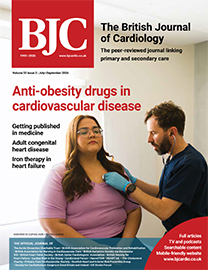
2026, Volume 33, Issue 3, pages 81–120
Editorials Clinical articles News and viewsTopics include:-
- Anti-obesity drugs in cardiovascular disease
- Getting published in medicine
- Adult congenital heart disease
- Iron therapy in heart failure
Editorials
Back to topJuly 2026 Br J Cardiol 2026;33:83–5 doi:10.5837/bjc.2026.034
Publishing in medicine: why, when, where, what and how
Benoy N Shah

‘Publish or perish’. This well-known phrase, likely first mentioned over a century ago, was even once the title of a one-day course run in central London, which I attended. Thankfully, this mantra has faded from prominence in recent years, but what does it mean, why did it become so (in)famous and what have the consequences been? Oxford physician, clinical pharmacologist and writer Dr Jeffrey Aronson proposed a definition for the ‘publish or perish’ paradigm last year, suggesting the following:
“An aphorism that describes the pressure on an academic to have innovative scholarly material published in reputable journals or other forms of scholarly output, sufficiently often, in order to avoid demotion, dismissal, failure to progress in one’s scholarly career, or diminishing the status or reputation of one’s scholarly community or discipline.”1
Clinical articles
Back to topSeptember 2026 Br J Cardiol 2026;33:95–101 doi:10.5837/bjc.2026.041
Adult congenital heart disease: a review of the moderately complex lesions
Rosie Oatham, Kiana Mostaghimi, Lydia Bevis, Milos Prica, David Warriner
The population of adults living with congenital heart disease (CHD) has expanded substantially over the last 40 years due to advances in diagnostic, transcatheter, and surgical techniques. Consequently, clinicians, regardless of their specialty, will encounter patients presenting with sequelae of both simple and complex CHD more frequently. Familiarisation with the pathophysiology and basic management of these conditions, including the role of adult congenital heart disease (ACHD) centres, is, therefore, vital. The moderately complex congenital heart defects that may present in adulthood include atrioventricular septal defects (AVSD), Ebstein’s anomaly (EA), tetralogy of Fallot (TOF) and transposition of the great arteries (TGA). Some of these defects are typically diagnosed and repaired in infancy, so clinicians must be aware of the possibility of adults presenting with post-repair complications, but some patients with unrepaired or undiagnosed defects remain asymptomatic until middle age, where they may present with heart failure, arrhythmia, endocarditis or even sudden cardiac death.
September 2026 Br J Cardiol 2026;33:102–7 doi:10.5837/bjc.2026.042
Ironing out the details: a comprehensive review of iron therapy in heart failure
Ravi Chotalia, Yasir Bakhit, Minesh Chotalia, Shirley Sze
Iron deficiency (ID) is common in patients with heart failure (HF) and is independently associated with poor outcomes, such as reduced functional capacity and quality of life, increased frailty and increased risk of HF hospitalisations and mortality. Intravenous iron has been shown to be an effective and well-tolerated therapy in patients with HF with reduced and mildly reduced ejection fraction and ID, improving quality of life and functional status and reducing the risk of HF hospitalisations. This review aims to summarise the evidence behind intravenous iron therapy in HF from recent key randomised-controlled trials. This review will also discuss the evidence for intravenous iron therapy in patients with HF with preserved ejection fraction. Ultimately, we also aim to review remaining uncertainties, such as sex-specific differences in outcomes, the optimal iron repletion and maintenance strategies, and the most accurate measures of ID in HF.
September 2026 Br J Cardiol 2026;33:115–8 doi:10.5837/bjc.2026.043
Let’s be CLEAR: Cath Lab Evaluation of Atherosclerotic Risk is a disease modifying opportunity
Brian Cunneen, Daniel O’Callaghan, Carmel O’Callaghan, Francis O’Neill, Bryan Loo, Peter Wheen, David Moore, David Mulcahy, Richard Armstrong, Vincent Maher
Coronary artery disease (CAD) remains a leading cause of morbidity and mortality globally, with early identification and management of risk factors being crucial to its management. Patients undergoing day-case angiograms represent a relatively high-risk population, yet often lack comprehensive risk-factor evaluation. Interventions have been shown to be more consistently aligned with guideline-recommended targets when conducted in hospital. As such, the cardiac catheterisation lab offers an invaluable opportunity for cardiovascular risk factor screening and intervention.
We enrolled 585 consecutive patients attending our institution for day-case coronary angiograms. Blood samples were collected for lipid profile and glycated haemoglobin (HbA1c), in addition to blood pressure recordings and a smoking history taken. The results were available for clinician review on the day, with encouragement to intervene on off-target risk factors.
We identified high levels of patients with established CAD and risk factors outside of the target range. This included 77% and 70% with low-density lipoprotein (LDL) and non-high-density lipoprotein (non-HDL) above target, respectively. There were also 19% smoking and 14% with HbA1c above target. A number of patients with CAD and previously undiagnosed risk factors were also identified, including 18 newly diagnosed with diabetes. A considerable proportion of these had interventions made on the day of their procedure.
Our results demonstrate a clear benefit to risk-factor screening in the catheterisation lab, with a high number of patients found to have risk factors outside of the target range, or previously undiagnosed, and appropriate interventions were made as a result.
September 2026 Br J Cardiol 2026;33:119 doi:10.5837/bjc.2026.044
Has the required heparin dose increased in PCI? A single-centre experience
Mohamed Kira, Mohamed Abouelasaad, Ahmed Elshafey, Mohamed Darwish, Roopa Jairaj Patil, Zaynah Zubair, Alison Calver, Simon Corbett, Richard Jabbour, Michael Mahmoudi, John Rawlins, Rohit Sirohi, James Wilkinson, Jonathan Hinton, Nick Curzen
Unfractionated heparin (UFH) is routinely used in percutaneous coronary intervention (PCI). The aim of this study was to determine whether the required dose of heparin used during PCI procedures has increased over time, which was our subjective observation.
This retrospective study analysed the required heparin dosage in 100 consecutive patients undergoing isolated PCI for each year between 2016 and 2024, starting from 1 January of each year. The primary analysis compared the total heparin dose administered (a) unadjusted and (b) adjusted for weight and procedure duration, between annual populations. A secondary analysis compared heparin dosage in patients with at least one activated clotting time (ACT) value >250 seconds, the target ACT level at our centre.
The median total heparin dose rose from 9,000 units (U) in 2016 (interquartile range [IQR] 7,000–11,000 U), to 12,000 U (IQR 10,000–15,000 U) in 2024 (p<0.001). The median weight- and time-adjusted total heparin dose in 2016 was 1.95 (IQR 1.44–2.77) U/kg/min compared with 2.93 (IQR 2.1–3.8) U/kg/min in 2024 (p<0.001).
In the secondary analysis (in those who achieved a target ACT >250 seconds), the median dose was 1.81 (IQR 1.21–2.24) U/kg/min in 2016 versus 2.59 (IQR 2.03–3.22) U/kg/min in 2024 (p<0.001).
In conclusion, there has been a significant and unexplained increase in the total administered heparin dose for PCI cases in this centre between 2016 and 2024.
September 2026 Br J Cardiol 2026;33:120 doi:10.5837/bjc.2026.045
Catheter ablation for idiopathic premature ventricular complexes: a single-centre experience
Ryan I Sia*, Aditya Sharma*, Jaswinder Gill, Anoop Shetty, Conn Sugihara, Jonathan Behar, Mark O’Neill, Matthew Wright, Aldo Rinaldi, John Whitaker
The most common site of origin of idiopathic premature ventricular complexes (PVCs) is the right ventricular outflow tract (RVOT). This study reports a single-centre UK National Health Service (NHS)-based experience of catheter ablation (CA) for idiopathic PVCs.
We conducted a retrospective review of the electronic patient record, searching for all patients undergoing idiopathic PVC ablation at Guy’s and St Thomas’ NHS Foundation Trust (GSTT) between January 2016 and June 2023. There were 147 procedures performed in 118 patients: 21 patients underwent repeat ablations. There were 75% originating in the RVOT and 11% from the left ventricular outflow tract (LVOT). Acute suppression of PVCs was achieved in 121 procedures (82%). Following acutely successful ablations, PVC burden reduction was greater in RVOT (85% decrease) than LVOT PVCs (44% decrease) at follow-up (p=0.03). There were 12 patients with PVC-induced cardiomyopathy identified. Following successful ablation (n=9), left ventricular ejection fraction (LVEF) increased from 38% to 49%. Symptomatic improvement after ablation was reported by 80%, with 64% having complete symptomatic resolution. Patients experiencing complete symptom resolution had a 92% decrease in PVC burden, whereas patients with residual symptoms had a 76.2% decrease (p=0.03).
Procedural complications occurred in 10 procedures (6.8%): five were classified as major, including four pericardial effusions requiring pericardiocentesis, and one cardioversion for pulseless ventricular tachycardia.
In conclusion, CA is an effective and safe strategy for PVC suppression in idiopathic PVCs, and may result in a significant symptomatic improvement even without complete PVC suppression. Among those with PVC-induced cardiomyopathy, CA results in improved LVEF.
September 2026 Br J Cardiol 2026;33(3) doi:10.5837/bjc.2026.046
Case of AMI with global ST-elevation and complete heart block secondary to malignancy-induced thromboembolism
Zahid Khan, Sebastian Vandermolen, Daniel Jones
We present a case of malignancy-induced thromboembolism resulting in global ST-elevation myocardial infarction and complete heart block.
September 2026 Br J Cardiol 2026;33(3) doi:10.5837/bjc.2026.047
Tachycardia-dependent left-bundle branch block misdiagnosed as ischaemia: a case report
Salman Rafi, Kamran Nazir, Tahir Nazir, Irfan Ahmed, Waqas Ahmed, Wahid Chughtai, Adnan Ahmed, Faiyaz Mohammed, Ahmed Noeman, Usman Ahmed
Rate-related left-bundle branch block (LBBB) is an uncommon conduction abnormality that can mimic ventricular tachycardia or myocardial ischaemia, and in prolonged cases may contribute to cardiomyopathy.
We describe the case of a 49-year-old woman with a previous history of mitral valve annuloplasty, anomalous pulmonary vein correction, and atrial fibrillation ablation who presented with recurrent palpitations and exertional chest pain. Despite normal echocardiograms and negative investigations for ischaemia, initially; a subsequent repeat exercise-tolerance test in 2024 revealed tachycardia-induced LBBB.
Tachycardia-induced LBBB may cause haemodynamic instability, chest pain (‘painful LBBB syndrome’), or long-term ventricular dysfunction. Early recognition is important for avoiding misdiagnosis as ventricular tachycardia or acute coronary syndrome. Clinical management focuses on rate control, exclusion of coronary disease, and the use of implantable cardiac device therapy in refractory or cardiomyopathic cases.
This case highlights the diagnostic challenges in patients with recurrent tachycardia-induced LBBB, the importance of excluding coronary artery disease, and the role of timely electrophysiology assessment to guide long-term management.
September 2026 Br J Cardiol 2026;33(3) doi:10.5837/bjc.2026.048
No time for delay: a complicated case of infective endocarditis in a young patient with congenital heart disease
Malanka Lankaputhra, Federica Caldaroni, Melissa GY Lee
An 18-year-old woman with truncus arteriosus presented with septic shock due to methicillin-sensitive Staphylococcus aureus infective endocarditis of her right-ventricle-to-pulmonary-artery (RV-PA) conduit requiring urgent conduit replacement and a prolonged admission complicated by acute respiratory distress syndrome and significant deconditioning. She had three separate presentations to external medical practitioners in the week preceding admission. This case underscores the complexity of managing infective endocarditis in patients with congenital heart disease and the importance of early referral to a specialist congenital centre.
August 2026 Br J Cardiol 2026;33:87–94 doi:10.5837/bjc.2026.038
GLP-1 receptor agonists in cardiovascular disease: a guide for cardiologists
Sarah L Ayton, Dimitris Papamargaritis, Melanie J Davies, Gerry P McCann, Gaurav S Gulsin
Obesity is a global epidemic, which, directly and indirectly, contributes to almost all cardiovascular diseases, including atherosclerotic cardiovascular disease, heart failure and atrial fibrillation. Reduction of weight is associated with substantial improvements in cardiometabolic risk factors, including blood pressure and glycaemic control, with over 10% weight loss required to see improvement in rates of major adverse cardiovascular events. Glucagon-like peptide-1 (GLP-1) receptor agonists have changed the landscape of type 2 diabetes and obesity management, showing significant benefit in glycaemic control and weight loss. Their potential for cardiovascular benefits means that they will likely have a central role in the management of patients with obesity-related cardiovascular diseases. This review summarises currently available GLP-1-based pharmacotherapies and highlights recent trials demonstrating cardiovascular benefits, and also provides practical guidance for patient selection, available agents, their initiation and patient monitoring. This will serve as an aid for cardiovascular clinicians, who will inevitably encounter patients suitable for, or already using, these drugs in their daily practice.
August 2026 Br J Cardiol 2026;33(3) doi:10.5837/bjc.2026.039
Management of Brugada storm in a district general hospital
Scott R Coutts, James Campbell, Colin G Stirrat
A 61-year-old man with Brugada syndrome (BrS) (SCN5A mutation) presented with chest pain to a district general hospital (DGH). There was no history of syncope or ventricular arrhythmias. A subcutaneous implantable cardioverter-defibrillator (S-ICD) was in situ for primary prevention following extraction of a previous transvenous ICD due to infection.
Investigations suggested a non-ST-elevation myocardial infarction. While awaiting coronary angiography, he developed a ventricular tachycardia (VT) storm with recurrent cardiac arrests over 30 minutes due to polymorphic VT, receiving seven S-ICD shocks.
Defibrillation, isoprenaline and quinidine were employed to manage the polymorphic VT storm, permitting transfer to a tertiary centre for further investigations. Coronary angiography demonstrated an occluded marginal artery, which was managed medically. Isoprenaline was weaned following quinidine initiation, the S-ICD reactivated, and he was discharged. A year later, there have been no further ventricular arrhythmias while on quinidine.
This case report demonstrates the effectiveness of isoprenaline, which is easily accessible and readily available in DGHs, in stabilising an acute Brugada storm. Quinidine allowed successful weaning from isoprenaline, but lack of availability limits its use. Finally, this case report highlights both the benefits and risks of primary prevention ICDs in BrS.
August 2026 Br J Cardiol 2026;33(3) doi:10.5837/bjc.2026.040
Refractory inappropriate sinus tachycardia treated with hybrid ablation
Matthew Laird, Paul Foley
We present a patient with medication-refractory inappropriate sinus tachycardia (IST) who was hospital-bound and successfully treated with hybrid thoracoscopic ablation.
July 2026 Br J Cardiol 2026;33:108–13 doi:10.5837/bjc.2026.035
Secondary prevention lipid management after ACS at a DGH: a quality improvement project
Matthew Laird*, Pok-Tin Tang*, Mayur Patel, Thomas Hyde
Lipid management is a key component of secondary prevention after acute coronary syndrome (ACS), but guideline adherence is variable. Adjunctive lipid-lowering therapies (LLTs) beyond statins are available, yet eligibility in the real-world setting is not well-described. We aimed to improve local post-ACS lipid management, and evaluate eligibility for LLTs.
Consecutive admissions of patients with ACS to a district general hospital from April to June 2022 were assessed for: inpatient lipid-profile assessment, inpatient LLT management, and outpatient repeat lipid profiles. A structured intervention, including updating blood testing panels, education, and reference resources, was implemented. We re-audited admissions in April–June 2024, where eligibility for adjunctive LLTs was assessed.
There were 97 (cycle 1) and 102 (cycle 2) patients identified. While performance was suboptimal in cycle 1, we observed improvements in cycle 2 (baseline full lipid profile testing from 10% to 75%; appropriate LLT management 65% to 78%; post-discharge repeat testing 37% to 63%). At one year post-ACS, 35% of patients remained subtherapeutic, but medication changes were rare.
In conclusion, through use of a structured intervention, we were able to improve post-ACS lipid management. Many patients fail to achieve therapeutic lipid lowering. Strategies to address this are urgently required.
July 2026 Br J Cardiol 2026;33(3) doi:10.5837/bjc.2026.037
Late-onset transvenous pacemaker lead-associated thrombosis
Rachel Ruck*, Bet Mishra*, Aidan Shaw
A man in his eighties presented with a two-week history of left-arm swelling and bruising. Twelve years earlier, he had undergone dual-chamber pacemaker implantation for bradycardia and syncope. His past medical history included hypertension, paroxysmal atrial fibrillation (pAF), and coronary artery bypass grafting (CABG) 15 years prior.
Upon further investigation with ultrasound Doppler, and computerised tomography (CT) of his chest, a thrombus was confirmed in the left subclavian vein, associated with a pacing lead. He was initiated on a three-week course of low molecular weight heparin (LMWH). Although his symptoms initially improved, traces of the thrombus remained on his follow-up CT after commencing treatment, and he was continued on lifelong direct oral anticoagulant (DOAC).
Pathogenesis, incidence, investigations and management of pacemaker-induced thrombosis are discussed. This case illustrates a rare, delayed presentation of pacemaker-induced thrombosis in the context of a symptomatic presentation and highlights the potential need for prolonged anticoagulation.
News and views
Back to topSeptember 2026 Br J Cardiol 2026;33:86
In brief
News on ESH, hFRenDs (Heart Failure, Renal and Diabetes) conference, a tribute to Professor Eugene Braunwald, ESC Congress 2026, and congratulations to new appointments...July 2026 Br J Cardiol 2026;33(3)
