
Atrial fibrillation ablation: safety and efficacy

Br J Cardiol 2010;17:255–6 Leave a comment
Click any image to enlarge
Authors:

Following recent publication of the 2010 European Society of Cardiology (ESC) guidelines for atrial fibrillation (AF) it is timely the BJC publish an article by Gunawardena et al. (see pages 271-6) describing a single centre cohort analysis of their AF ablation procedures.1

The outcomes of patients with AF are well documented (table 1) but frequently remain underestimated by both patients and health professionals alike. AF is associated with increased rates of death, stroke, other thromboembolic events and heart failure, significant hospitalisation, and reduced quality of life and exercise capacity. Despite these sobering facts, many trials have failed to demonstrate benefit in maintaining sinus rhythm (SR) over anticoagulation and rate control. Yet, quality of life is significantly impaired in patients with AF compared with healthy controls, and post hoc analyses suggest maintaining SR may improve quality of life, and could possibly be associated with improved survival. Furthermore, post hoc analysis of the Atrial Fibrillation Follow-up Investigation of Rhythm Management (AFFIRM) database, assessing a rate versus rhythm control strategy suggested that the deleterious effects of anti-arrhythmic drugs (increased mortality of 49%) may have offset the benefits of SR (53% reduction in mortality).2 Therefore, with an ageing population, and the prevalence of AF set to double in the next 50 years, much expectation surrounds recent developments including new anticoagulation drugs (dabigatran), stroke prevention interventions (left atrial appendage occlusion) and anti-arrhythmic therapies (dronedarone). However, the article by Gunawardena et al., describes the outcomes of a not so recent development, catheter-based atrial ablation.

Patient selection

In the study by Gunawardena et al., 100 patients underwent an AF ablation, in keeping with National Institute for Health and Clinical Excellence (NICE) guidance, they were symptomatic despite drug therapy. Historically, catheter ablation has usually been performed in this group of patients; symptomatic paroxysmal AF (PAF), resistant to at least one anti-arrhythmic drug. This is supported by data from multiple single centre randomised studies, multi-centre prospective studies and meta-analyses comparing drug treatment with catheter ablation, showing superiority of rhythm outcome following ablation. Although data on a direct comparison of drug treatment and catheter ablation as first-line therapy in symptomatic patients with PAF is scarce, given the relative safety of the technique when performed by experienced operators, ablation may be considered as initial therapy in selected patients. Given the risks of long-term anti-arrhythmic therapy, in particular amiodarone, perhaps there is a case for catheter ablation at an earlier stage, particularly in younger patients with a long lifetime exposure risk of drug side effects. This would also be influenced by an increased likelihood of ablation success before atrial cellular and structural changes occur.

Initial AF ablation strategies targeted focal ‘firing’ from the muscle sleeves within the pulmonary veins (PV) that initiate some episodes of AF. Ablation lesions were placed close to the vein ostia in the left atrium (LA) risking stenosis or occlusion of the vein. As the majority of patients with AF recurrence after ablation demonstrate PV reconnection, PV isolation and its maintenance has become the cornerstone of ablation therapy. However, recurrence of AF following these procedures has also been noted, not just from reconnection of the veins, but also from focal ‘firing’ in the antrum of the veins at their insertion into the LA. Therefore, to reduce the risk of PV stenosis and to isolate the antrum, ablation is now more frequently performed by long circumferential lesions encompassing both PV in pairs. In the study by Gunawardena et al., ablation lesions were sited around each vein separately with the goal of isolating all identified veins. However, only 77% of veins were isolated at the time of the first procedure. This may to some degree be explained by the fact that in more recent years technological and imaging advancements have made isolation of all four PV more readily achievable than in historical case series, but is likely to have had an impact on clinical outcome.

A proportion (30%) of the patients in the study by Gunawardena et al. had persistent AF (>7 days AF duration or requiring cardioversion; chemical or electrical). For patients with either persistent or long-standing persistent AF (>1 year duration) the risk–benefit ratio for ablation is less clear. In patients with persistent and long-standing persistent AF, additional ‘substrate modification’ by the ablation of lines and high-frequency signals (complex fractionated electrograms) has helped improve outcome. However, care must be taken to ensure complete conduction block, as gaps in these lines of ablation may provide a substrate for the development of atrial tachycardia utilising conduction routes through these gaps. In this series, additional linear lesions were made in those with persistent AF or those who remained in AF despite vein isolation. Seven patients developed left atrial tachycardia, which would be in keeping with published series.

Patient outcomes

Gunawardena et al. report patient outcome with a ‘real-world’ methodology of failure, partial and ‘clinical’ success. Success was defined by no symptoms, electrocardiogram (ECG) or Holter evidence of AF lasting >30 seconds, and no class 1C or III anti-arrhythmic therapy; ‘partial success’ defined as AF symptoms and objective AF burden substantially reduced on or off previously ineffective anti-arrhythmic therapy; ‘clinical success’ defined as the sum of ‘success’ and ‘partial success’; and ‘failure’ defined as no clinically relevant change in symptoms or AF burden. Cumulative ‘success’, ‘partial success’, ‘failure’ and ‘clinical success’ rates after 22 ± 14 months were 60%, 26%, 14% and 86%, respectively. ‘Clinical success’ rates for paroxysmal and persistent subgroups were 73% and 47% (first procedure) rising to 87% and 83% (all procedures). The definition of clinical success is an interesting one as it essentially reflects the outcome of a procedure as a true reflection of its initial intent, that of symptomatic improvement. In fact it has been proposed that symptom-based follow-up, rather than ambulatory monitoring, may be sufficient, particularly in those where the indication was symptom relief. Although this has not been the usual practice in previous studies it perhaps better defines patient outcome with more clarity. However, the inclusion of a ‘success’ percentage as well as ‘clinical success’ is a necessity as it provides a value that can be benchmarked against other studies. The 2008 Heart Rhythm Society (HRS)/ESC AF consensus document states that being arrhythmia free is the true end point of ablation therapy and remains the ‘gold standard’ for outcome, although it may under represent the true benefit of the procedure.3

Complications from catheter ablation for AF are well documented, in this study mortality was 1% at six months, tamponade 5%, pericarditis 5%, pain 2%, atrial tachycardia 8%, and allergy 1%. These frequencies of complication would not be too dissimilar to published case series. Complications, however, were assessed not as success was, on a per patient basis, but as a percentage of total procedures performed. One could argue that complications per patient are more important in a patient’s treatment journey than complication rates per procedure, particularly as the frequency of further procedures is relatively high (167 procedures in 100 patients).

Summary

This study is a single centre historical cohort of 100 consecutive patients treated in a UK centre with catheter ablation for symptomatic drug refractory AF. The results document outcomes in keeping with published case series with acceptable complication rates. Although medical therapy is the cornerstone of treatment for AF, ablation is assuming an ever greater role. As these procedures become more common and both centres and operators alike become more experienced and comfortable in addressing more advanced disease, the indications for this procedure are likely to expand and encompass more patients.

Conflict of interest

JL has had travel grants from Medtronic, St Jude Medical and Boston Scientific.

Editors’ note

See also the article by Gunawardena et al. on outcomes following catheter ablation of AF in the UK, on pages 269-74 of this issue.

References

  1. Camm AJ, Kirchhof P, Lip GY et al.; the Task Force for the Management of Atrial Fibrillation of the European Society of Cardiology. Guidelines for the management of atrial fibrillation. Eur Heart J 2010; advanced access, doi: 10.1093/eurheartj/ehq278
  2. Wyse DG, Waldo AL, DiMarco JP et al.; Atrial Fibrillation Follow-up Investigation of Rhythm Management (AFFIRM) Investigators. A comparison of rate control and rhythm control in patients with atrial fibrillation. N Engl J Med 2002;347:1825–33.
  3. Calkins H, Brugada J, Packer DL et al. HRS/EHRA/ECAS expert consensus statement on catheter and surgical ablation of atrial fibrillation: recommendations for personnel, policy, procedures and follow-up. A report of the Heart Rhythm Society (HRS) Task Force on catheter and surgical ablation of atrial fibrillation. Heart Rhythm 2007;4:816–61.


Rosiglitazone suspended in Europe

Br J Cardiol 2010;17:259-63 Leave a comment
Click any image to enlarge
Authors:

The diabetes drug, rosiglitazone (Avandia®, GlaxoSmithKline), has been suspended in Europe, following a review of cardiovascular safety data by the European Medicines Agency (EMA).

In contrast, the US Food and Drug Administration (FDA) has allowed the drug to remain available, but only under a very stringent restricted-access programme.

Rosiglitazone has been under mounting scrutiny for several years now after a meta-analysis by Dr Steven Nissen (Cleveland Clinic, Ohio, US) suggested an increased risk of cardiovascular events in patients taking the drug.

The EMA says that doctors should stop prescribing rosiglitazone-containing medicines, and patients taking them should be reviewed in a timely manner to amend their treatment. Patients are advised not to stop their treatment without speaking to their doctor.

The suspension has come about because the agency believes that the benefits of rosiglitazone no longer outweigh its risks. The suspension will remain in place unless convincing data are provided that identify a group of patients in whom the benefits of the medicine outweigh its risks.

The two drug authorities also announced that further data on the safety of rosiglitazone is being sought from a readjudication of the RECORD (Rosiglitazone Evaluated for Cardiac Outcomes and Regulation of Glycaemia in Diabetes) trial at the individual patient-data level. 

A statement released by the FDA says that although there is a “signal of harm” with rosiglitazone, confirmation of the existence and magnitude of this harm has not been possible with available data. “If reliable information on ischaemic risk can be obtained from the readjudication of RECORD, the benefit/risk information for rosiglitazone should be reevaluated,” it adds. 

Commenting on the different decisions taken by the EMA and the FDA, an EMA spokesperson attributed this to “differences in healthcare environments” between the US and Europe, noting that the FDA does not have the legal tool of suspension that is available in Europe.

And the US restrictions are thought to be harsh enough to ensure that use of the drug will be cut dramatically. Patients will only be allowed access to rosiglitazone if they are unable to achieve glycaemic control using other medications and, in consultation with their healthcare professional, decide not to take pioglitazone for medical reasons. Doctors will have to attest to and document their patients’ eligibility, and patients will have to sign statements that they understand the cardiovascular safety concerns. 

An FDA spokesperson said: “We [the FDA and EMA] are taking somewhat different strategies, but both are trying to ensure the goal of safety.”

GlaxoSmithKline said: “The company continues to believe that Avandia® is an important treatment for patients with type 2 diabetes and is now working with the FDA and EMA to implement the required actions”. 

Home monitoring of INR is a viable alternative

Br J Cardiol 2010;17:259-63 Leave a comment
Click any image to enlarge
Authors:

Home INR testing in patients taking warfarin was associated with similar event rates as monthly high-quality clinic testing in a new study, which the authors say has “the potential for a major clinical impact”.

Br-J-Cardiol-2010-17-259

In the The Home INR Study (THINRS), (N Engl J Med 2010;363:1608-20), weekly self-testing did not significantly delay the time to a first stroke, major bleeding episode, or death, but was associated with improvements in time within the therapeutic INR range, patient satisfaction with anticoagulation therapy, and quality of life. 

Although technically this is a negative study as the home testing was not superior to control, the authors point out that the control group was INR tested at high-quality clinics, which is regarded as the gold standard of care. As the home INR testing was equally as good, this is a significant achievement. 

THINRS included 2,922 patients taking warfarin randomised to either weekly self-testing at home or monthly high-quality testing in a clinic. The primary end point was the time to a first major event (stroke, major bleeding episode, or death).

The patients were followed for two to 4.75 years. The two groups had similar rates of the primary end point, although there were more minor bleeding episodes in the self-testing group. The self-testing group had a small but significant improvement in the percentage of time during which the INR was within the target range and a small but significant improvement in patient satisfaction with anticoagulation therapy and quality of life. Costs were higher in the self-testing group but not significantly different from those in the clinic-testing group.

Mediterranean diet reduces new-onset diabetes

Br J Cardiol 2010;17:259-63 Leave a comment
Click any image to enlarge
Authors:

Individuals at high cardiovascular risk but without diabetes who followed a Mediterranean diet had half the rate of new-onset diabetes over four years compared with those on a low-fat diet, a new study shows.

Br-J-Cardiol-2010-17-260

The findings come from a substudy of the PREDIMED (Prevencion con Dieta Mediterranea) trial, currently underway in Spain, to assess the effects of two Mediterranean diets (supplemented with either extra virgin olive oil or mixed nuts), versus a low-fat diet as a control group.

This substudy involved 418 people without diabetes. After a median follow-up of four years, diabetes incidence was 10.1% in the Mediterranean-diet-with-olive-oil group, 11.0% in the Mediterranean-diet-with-nuts group, and 17.9% in the control group. 

The multivariable-adjusted hazard ratio of diabetes in the two Mediterranean diet groups was 0.48.

Sugary drinks linked to increased diabetes and metabolic syndrome

Br J Cardiol 2010;17:259-63 Leave a comment
Click any image to enlarge
Authors:

Consumption of just one or two sugar-sweetened drinks per day is associated with a 26% greater risk of developing type 2 diabetes and a 20% increased risk of developing metabolic syndrome, a new meta-analysis shows.

The recently published analysis (Diabetes Care 2010;33:2477-2483), included data from 11 studies and compared results based on whether patients reported drinking no sugar-sweetened drinks or drinking more than one or two per day. The researchers found the risk of diabetes or metabolic syndrome increased by about 25% with each regular size serving of sugar-sweetened beverage per day. 

They said the risk of developing diabetes from drinking two to three sweetened beverages per day is not very different from the increased risk associated with cigarette smoking.

And the culprits may not just be the calorie content of the drinks, as the authors suggest that the increased risk may be attributed to a combination of excess caloric intake with some unique metabolic effects of fructose and other components of soft drinks.

Compressions-only CPR may be best?

Br J Cardiol 2010;17:259-63 Leave a comment
Click any image to enlarge
Authors:

Bystanders attending to an adult in cardiac arrest should perform the chest-compression-only technique of cardiopulmonary resuscitation (CPR), a new meta-analysis concludes.

The meta-analysis, published early online in The Lancet (doi:10.1016/S0140-6736(10)61454-7) included three studies that randomised patients to receive one of the two CPR techniques according to dispatcher instructions. This showed that chest-compression-only CPR improved the patients’ chance of survival compared with standard CPR (14% vs. 12%). 

The authors comment that: “By avoidance of rescue ventilation during CPR, which is often fairly time-consuming for lay bystanders, a continuous uninterrupted coronary perfusion pressure is maintained, which increases the probability of a successful outcome”.

But they add that cohort studies suggest that standard CPR might be better than compressions-only CPR in patients whose cardiac arrest has a non-cardiac origin, such as drowning, trauma, or asphyxia. And there are not enough data on treating children with out-of-hospital cardiac arrest, which is often of non-cardiac origin. 

But an accompanying editorial suggests that a few rescue breaths may be beneficial during CPR, as long as they don’t interfere with the compressions. They recommend that dispatchers instruct the bystander/rescuer to give 600 compressions over about six minutes followed by two rescue breaths and then compressions and ventilations in a ratio of 100:2 until the emergency medical personnel arrive.

Cardiovascular risk increases after invasive dental treatment

Br J Cardiol 2010;17:259-63 Leave a comment
Click any image to enlarge
Authors:

The risk of cardiovascular events increases sharply in the month following invasive dental treatment, a new study shows.

In the study (published in Ann Int Med 2010;153:499-506), a team led by Dr Caroline Minassian (London School of Hygiene and Tropical Medicine) used the US Medicaid claims database to identify 1,175 people who had experienced both invasive dental treatment and a hospital diagnosis of ischaemic stroke or myocardial infarction. They then compared the risk of the cardiovascular event in periods immediately after invasive dental treatment with the incidence in all other time periods in the patients’ records. 

Results showed that the rate of vascular events significantly increased in the first month after an invasive dental treatment (HR 1.50; 95% CI 1.09-2.06) and then gradually declined to the baseline rate within the next six months. 

“These findings provide further evidence to support the link between acute inflammation and the risk for vascular events,” the authors say. But an accompanying editorial counters that the evidence directly linking periodontal disease, markers of inflammation, and atherosclerosis remains “debatable”. 

PARTNER: transcatheter valves show striking benefits in aortic stenosis patients unsuitable for surgery

Br J Cardiol 2010;17:259-63 Leave a comment
Click any image to enlarge
Authors:

Transcatheter aortic valve replacement (TAVI) was associated with much better outcomes than standard care in patients with severe aortic disease unable to undergo surgery in the PARTNER trial.

The trial, presented at the Transcatheter Cardiovascular Therapeutics (TCT) meeting in Washington DC, US, in September, has also now been published (N Engl J Med 2010;363:1597-1607). 

The PARTNER investigators explain that aortic stenosis is associated with a high rate of death (approximately 50% in the first two years after symptoms appear) among untreated patients. While surgical replacement of the aortic valve reduces symptoms and improves survival, at least 30% of patients are unable to undergo surgery because of advanced age, left ventricular dysfunction, or the presence of multiple coexisting conditions.

For these patients, the less invasive procedure of TAVI has been available since 2002. In this procedure a bioprosthetic valve is inserted through a catheter and implanted within the diseased native aortic valve. But until now there have not been any rigorous, evidence-based clinical data to substantiate the benefits of TAVI as compared to standard therapies.

In the PARTNER trial, 358 patients unsuitable for surgery were randomised to either transcatheter valve implantation or standard care, including balloon valvuloplasty

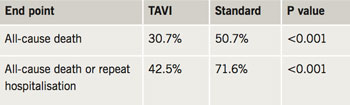
Table 1. PARTNER: one year results:

Results (table 1) showed that although strokes and major vascular complications were higher in the TAVI group in the first 30 days, at one year there were impressive reductions in the TAVI group for all-cause mortality and the composite end point of death or repeat hospitalisation. 

The authors note that only five patients needed to be treated to prevent one death, and only three patients needed to be treated to prevent either a death or repeat hospitalisation. 

“On the basis of a rate of death from any cause at one year that was 20 percentage points lower with TAVI than with standard therapy, balloon-expandable TAVI should be the new standard of care for patients with aortic stenosis who are not suitable candidates for surgery,” the PARTNER authors conclude. 

A second part of the trial comparing TAVI with surgical valve replacement in high-risk patients is still ongoing. 

Xience V stent riding high in four new trials

Br J Cardiol 2010;17:259-63 Leave a comment
Click any image to enlarge
Authors:

Four separate trials, all presented at the Transcatheter Cardiovascular Therapeutics (TCT) meeting in Washington DC, USA, showed impressive results with the new Xience V™ everolimus-eluting stent.

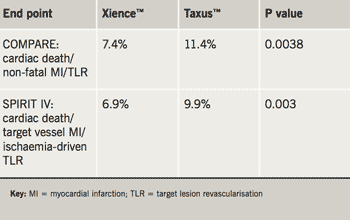
The Xience™ stent was shown to be superior to the Taxus™ paclitaxel-eluting stent in two-year results from the COMPARE and SPIRIT IV trials (table 1). And Xience V™ showed similar outcomes to the Cypher™ sirolimus-eluting stent in the ISAR-TEST 4 and SORT-OUT 4 trials. 

In the COMPARE trial, the everolimus-eluting stent was associated with reductions in the composite end point of death, non-fatal myocardial infarction (MI), and target vessel revascularisation compared with the Taxus Liberté™ stent. 

And in the SPIRIT IV, the everolimus-eluting stent showed a significant reduction in the composite end point of cardiac death, target vessel MI, or ischaemia-driven target lesion revascularisation (TLR) compared with the older Taxus Express™stent.

Particularly notable in both the COMPARE and SPIRIT trials was a lower incidence of late stent thrombosis with the Xience™ stent, which has been a concern with both the Cypher™ and Taxus™ drug-eluting stents.

And this was achieved without all patients maintaining dual antiplatelet therapy throughout the study period. Whereas in SPIRIT IV, 72% of patients were still taking both clopidogrel and aspirin at two years, this applied to just 13% of patients in COMPARE. This observation has led to suggestions that the Xience™ stent might be a good option in patients who may find long-term clopidogrel problematic. 

Table 1. COMPARE and SPIRIT IV: primary end points at two years

National Cholesterol Week launched to raise awareness of hypercholesterolaemia

Br J Cardiol 2010;17:259-63 Leave a comment
Click any image to enlarge
Authors:

HEART UK held its first ever National Cholesterol Week recently and highlighted the importance of knowing your cholesterol at a Parliamentary Reception at the House of Commons. The Parliamentary Reception, sponsored by Welch’s Purple Grape Juice, was organised by HEART UK in conjunction with Chris Ruane MP, Chair of the All-Party Parliamentary Group on Heart Disease.

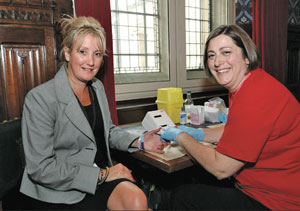
Caroline Dineage MP (left) having her cholesterol tested at the event

Over 80 MPs registered for the event and the charity is urging MPs to create ‘heart healthy’ constituencies. It estimates raised cholesterol affects two thirds of the population – it is particularly keen to raise awareness of familial hypercholesterolaemia (FH), a condition that affects one in 500 people in the UK but is much underdiagnosed.

Although 120,000 people in the UK may have FH, only 15,000 have been diagnosed. Despite publication of the NICE clinical guidance on FH in 2008, the charity says little has been done in England to implement its recommendations, in stark contrast to Wales, Scotland and Northern Ireland, where significant progress is taking place.

This warning follows the results from a study HEART UK commissioned in which Freedom of Information (FOI) requests were sent to Primary Care Trusts (PCTs) in England, asking questions about their progress to date with FH. Nearly 70% of PCTs responded.

Findings from the survey included:

  • a lack of formal planning for FH among many PCTs
  • incomplete knowledge about relevant FH services
    a shortage of specialist care for people with FH including adults, children and pregnant women 
  • PCTs also indicated that they face barriers to treating FH patients.

The survey and its findings will the subject of a future editorial in the journal.