

2026, Volume 33, Issue 2, pages 41–80
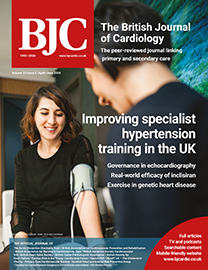
2026, Volume 33, Issue 2, pages 41–80
Editorials Clinical articles News and viewsTopics include:-
- Improving specialist hypertension training in the UK
- Governance in echocardiography
- Real-world efficiency of inclisiran
- Exercise in genetic heart disease
Editorials
Back to topJune 2026 Br J Cardiol 2026;33:43–5 doi:10.5837/bjc.2026.028
Setting a national research agenda for hypertension
Indranil Dasgupta, Allyson Arnold, Pauline A Swift

The burden of hypertension in the UK is profound.1 It is the leading modifiable risk factor for cardiovascular disease, chronic kidney disease and vascular dementia, affecting approximately 30% of adults, with an estimated 4.2 million remaining undiagnosed – an alarming figure that underscores longstanding gaps between evidence and implementation in routine care.2–5 Against this backdrop, the British and Irish Hypertension Society (BIHS), in partnership with the British Heart Foundation Clinical Research Collaborative (BHF‑CRC), has developed the first national, consensus‑driven effort to define future research priorities in hypertension.6 This represents a landmark initiative: a structured attempt to align research, policy, and clinical services with the realities of modern hypertension care.
June 2026 Br J Cardiol 2026;33:46–7 doi:10.5837/bjc.2026.029
Hypertension training: an unmet priority
Philip S Lewis
Over eight million UK citizens are at unnecessary risk of the avoidable consequences of hypertension because of inadequate blood pressure (BP) control.1 Improving this is a key objective of the Department of Health and Social Care, and is one of the five major priorities in the NHSE Core20PLUS5 approach to reducing healthcare inequalities.2 The national emphasis on hypertension case finding and management requires a significant increase in the availability of specialist advice and management, which can improve control and outcomes.
May 2026 Br J Cardiol 2026;33:48–9 doi:10.5837/bjc.2026.020
Ghostbusting in echocardiography
Claire Colebourn
“There’s a ghost in the library”
Documentation in medicine has transformed in the last 10 years: notes no longer scatter across the floor to reveal hurriedly scribbled ward rounds without signature or ownership. In the digital era, we can proudly say that ‘if it wasn’t written down it didn’t happen’. By extension, in the modern world of acute echocardiography, if it wasn’t ‘uploaded and reported’, it didn’t happen. These ‘ghost studies’ roam hospital corridors ready to interfere with patient care in maverick ways. All we are left with clinically is a rumour that a study possibly happened. There should be zero ‘ghost studies’ in our library. But, evidently, the ghosts are yet to be busted.
Clinical articles
Back to topJune 2026 Br J Cardiol 2026;33:50–2 doi:10.5837/bjc.2026.027
Training and referral patterns for hypertension in the UK: huge demand for an untrained work force
James F Brady, Oliver I Brown, C Fielder Camm, Raj Thakkar, Jim Moore, Adrian J B Brady
In the UK, the majority (90%) of hypertension is managed in primary care. Yet, for the 10% who require secondary-care input, there is no specialist register for doctors who manage hypertension. There is a mismatch across the nations with regards to access to secondary care for management of complex hypertension cases. Heterogeneity exists in terms of local specialist services, referral pathways, and specialties overseeing care.
We polled across primary care in the UK to assess accessibility to a local specialist hypertension clinic, the clinical reasons for referral and the specialty referred to. Cardiology was by far and away the leading specialty for referrals. Yet the vast majority of cardiology trainees in the UK are receiving minimal, if any, specialist training in hypertension. A cardiology registrar is likely to spend substantially more days on-call for general medicine than the amount of specialist clinics they can attend in hypertension.
We are facing a major deficit in the specialist management of hypertension if the trainees of today are not ready to provide the required expertise and oversight for the complex cases of tomorrow.
June 2026 Br J Cardiol 2026;33:66–70 doi:10.5837/bjc.2026.030
Transitioning into the new era of conduction system pacing (CSP): a district general hospital experience
Thomas Salisbury, Nageswary Appalanaidu, Calvin Coe, Hitesh Kuhar, Zoe Haynes, Thomas Nelson, Paul Sheridan, Deacon Lee
Conduction system pacing (CSP) ― encompassing His-bundle pacing (HBP) and left bundle-branch area pacing (LBBAP) ― delivers more physiological ventricular pacing compared with traditional right ventricular (RV) pacing. It is gaining traction beyond tertiary centres, however, evidence from district general hospitals (DGHs) remains limited. We aimed to evaluate the feasibility, electrical performance, and early clinical outcomes of CSP implemented in a UK DGH.
We performed a retrospective single-centre study of consecutive patients who underwent successful CSP at Chesterfield Royal Hospital. HBP implants (n=20) were performed between June 2019 and August 2022; LBBAP implants (n=71) between January 2023 and May 2025. Baseline demographics, procedural metrics, pacing parameters, complications, heart-failure (HF) readmissions, and echocardiographic data to 12 months were obtained from electronic records.
Ninety-one patients (mean age 76 ± 10 years; 69% male) received CSP, most commonly for left ventricular systolic dysfunction (LVSD) (40%) or anticipated high right-ventricular pacing burden (42%). LBBAP demonstrated lower implant thresholds than HBP (0.92 ± 0.44 V vs. 1.50 ± 0.77 V) and remained stable to 12 months (0.68 ± 0.25 V). HBP thresholds rose to 2.11 ± 1.49 V at 12 months. Screening time was shorter with LBBAP (9.6 ± 5.9 min) than HBP (14.4 ± 6.8 min, p<0.01). No infections or septal haematomas occurred. Lead revision was required in two HBP recipients and none with LBBAP (hazard ratio 17.14, p=0.067). Nine patients (9.9%) were readmitted with HF, occurring between 56 and 1,500 days post-implant.
In conclusion, CSP can be implemented safely and effectively in a DGH setting. LBBAP offers superior electrical stability, shorter procedure time, and less lead revisions, supporting its preferential adoption as the default pacing strategy for CSP.
June 2026 Br J Cardiol 2026;33:62–3 doi:10.5837/bjc.2026.031
Nurse-led heart murmur clinic at Sheffield Children’s Hospital: a review
Sally Roberts
A nurse-led heart murmur clinic was introduced at Sheffield Children’s Hospital in 2023 to reduce waiting times, support the clinical nurse specialist (CNS) role development, and improve cost-efficiency. By triaging appropriate referrals to a CNS-led pathway with pre-arranged echocardiography and telephone follow-up, the clinic reduced wait times from 16 to 5–6 weeks and saved over £3,000 in its first year. The model demonstrates that nurse-led services can safely and effectively manage selected paediatric referrals, improve access to care, and deliver measurable service efficiencies.
June 2026 Br J Cardiol 2026;33:80 doi:10.5837/bjc.2026.032
How effective are video animations for reducing anxiety and informing patients with CAD? A systematic review
Peter Knapp, Presha Sridhar, Chris Wilkinson
Anxiety is common in people with coronary artery disease (CAD), particularly in association with invasive procedures and investigations. Effective provision of information for patients is crucial, but traditional methods may fail to adequately inform or engage some patients. We aimed to synthesise clinical trials evaluating the effectiveness of video animations provided to patients with CAD.
We performed a systematic review of Medline, CINAHL Plus, Cochrane Library and PsycINFO from January 2000 to January 2025. Conducted in accordance with PRISMA guidelines and presented with a narrative synthesis.
Five randomised-controlled trials met the inclusion criteria. Four included video animations, and one a ‘whiteboard animation’. Each evaluated the animations as an addition to standard care. Patient knowledge was improved in all four trials that assessed it, and anxiety was reduced in two out of four trials that assessed it. There was some evidence of beneficial effects of animations on satisfaction and health behaviours. The quality of evidence was not strong, with two trials having a high risk of bias.
In conclusion, video animations show potential for their effects on knowledge and anxiety in patients with CAD, but the evidence-base is small.
June 2026 Br J Cardiol 2026;33(2) doi:10.5837/bjc.2026.033
Multi-modality evaluation of an extracardiac mass during ablation for typical atrial flutter
Yamini Binani, Akansha Sethi, Mark O’Neill, Jaspal Singh Gill
We present a case involving the discovery of an extracardiac mass during a routine ablation procedure for typical atrial flutter. Using multiple imaging modalities it was possible to assess the mass during the procedure, leading to successful completion of the ablation.
May 2026 Br J Cardiol 2026;33:58–61 doi:10.5837/bjc.2026.021
Exercise and competitive sport in those with genetic heart disease: what we know and what we don’t know. Part 2
Liam Fitzpatrick, Valerie Hayes, Habitha Sulaiman, Deirdre Ward, David Mulcahy
Historically, young people with genetic heart diseases were discouraged from active sport due to concerns about the increased risk of sudden cardiac death during competitive or intensive exercise. The shock resulting from the sudden death of a young athlete, an event often highly publicised, tends to generate concern in the general population, and fear of litigation in a low-evidence area: both influence decision-making by the medical profession when discussing ‘restrictions’, especially in patients with genetic heart diseases, who by definition, are at increased risk of sudden cardiac death. In recent years, however, we have moved to a point where many athletes with certain genetic heart diseases can, with optimal medical therapy, be considered for involvement in various sporting and athletic pursuits. We are cautiously moving away from the assumption that exercise is contraindicated; we are factoring in the wishes of the patient-athlete (shared decision-making), and we are encouraging optimal protection for these athletes during their sporting endeavours (easily available automated external defibrillators [AEDs], and club personnel trained in basic life support [BLS]), while ensuring regular medical assessment to identify alterations in risk status. With dedicated follow-up of all such patient-athletes, we can refine our understanding of how best to advise (and protect) them in terms of exercise for enhanced quality of life.
May 2026 Br J Cardiol 2026;33:71–2 doi:10.5837/bjc.2026.022
Health profiles and lifestyles of those with cardiomyopathy vs. age-matched controls: a UK Biobank analysis
Sherif Kholeif, Marion Guerrero-Wyss, Frederik Ho, Carlos Celis-Morales
Cardiomyopathies are diseases of the heart muscle (ICD‑10 chapter IX, code I42). This study compared the health profiles of individuals with cardiomyopathy to age- and sex-matched controls in the UK Biobank prospective cohort to better understand health behaviours. Historical advice for patients to avoid exercise may have contributed to earlier heart failure; addressing these outdated perceptions could guide future recommendations to improve outcomes and reduce cardiovascular mortality.
Data from the UK Biobank were analysed, including physical activity behaviours, body mass index (BMI), waist circumference, body composition, hand-grip strength, and lifestyle factors, such as intake of fruit, processed/red meat, oily fish, alcohol and smoking, as well as PC-sitting and TV-viewing time. Linear and logistic regression assessed associations between these exposures and cardiomyopathy, adjusting for age, sex, and deprivation index.
The cohort comprised 442 individuals with cardiomyopathy and 173,429 matched controls. Significant differences were noted in age, deprivation index, alcohol intake, BMI, waist and hip circumference, physical activity levels, TV viewing, and sedentary time. Males had higher odds of cardiomyopathy than females (odds ratio [OR] 2.5, 95% confidence interval [CI] 2.04 to 3.05, p<0.0001). Obesity was strongly associated with cardiomyopathy (OR 3.7, 95%CI 2.88 to 4.76, p<0.0001). Sleep risk scores and type of physical activity risk scores were also significantly associated with cardiomyopathy.
In conclusion, individuals with cardiomyopathy demonstrated poorer health profiles and more sedentary behaviours than controls. These findings highlight the need for targeted interventions and updated exercise advice to improve clinical outcomes and reduce cardiovascular mortality in this population.
May 2026 Br J Cardiol 2026;33:73–6 doi:10.5837/bjc.2026.023
Risk of cardiovascular events in kidney transplant recipients undergoing PCI: a systematic review and meta-analysis
Isabella Ellison, Riley Batchelor, Geoffrey Hill, David Chye, William Wilson, Ravi Iyer, Jeffrey Lefkovits, Nigel D Toussaint, Anoop N Koshy
Cardiovascular disease is a leading cause of mortality in patients with chronic kidney disease (CKD) and kidney transplant recipients (KTR). However, it remains uncertain whether KTR status predisposes patients to a heightened risk of major adverse cardiovascular events (MACE) following percutaneous coronary intervention (PCI). A systematic search was conducted using MEDLINE, EMBASE and Cochrane Central Register of Controlled Trials (CENTRAL), encompassing studies from inception to December 2024. The primary outcome was in-hospital mortality in KTR undergoing PCI compared with non-KTR cohorts. A random-effects model was used to analyse pooled data. A total of six studies with 13,287,090 patients were included. Four studies compared PCI outcomes in KTR with various degrees of renal dysfunction, revealing significantly lower in-hospital mortality in KTR compared with patients with CKD (odds ratio [OR] 0.44, 95% confidence interval [CI] 0.35 to 0.55, p<0.001). No significant difference was seen in in-hospital mortality between KTR and patients without CKD (OR 1.12, 95%CI 0.75 to 1.68, I2=95.60%, p=0.57). Two studies compared KTR and patients on haemodialysis, both observed a lower incidence of MACE in the KTR group compared with the haemodialysis cohort (OR 0.43, 95%CI 0.20 to 0.92, I2=0%, p=0.03). In conclusion, PCI in KTR is associated with lower in-hospital mortality as compared with patients with CKD or those on dialysis. There was no mortality difference observed when comparing KTR with patients without CKD.
May 2026 Br J Cardiol 2026;33:77–8 doi:10.5837/bjc.2026.024
Retrospective implementation of BSE age-specific NT-proBNP criteria for triage of suspected heart failure
Andrew Chisom Madu, Brian Li, Daniela Toumazi, Muhammad Asad, Aryan Sabir, Duncan Coles, Anthony Dimarco, Henry Oluwasefunmi Savage
Measuring the N-terminal prohormone of brain natriuretic peptide (NT-proBNP) can help to triage patients with suspected acute heart failure (HF), towards confirmatory transthoracic echocardiography. It has a high negative-predictive value, however, it is not specific due to the influence on its levels by comorbidities. The British Society of Echocardiography (BSE) have published criteria for the triage of those with suspected HF, for inpatient echocardiography, using age-specific NT-proBNP cut-off values.
This study aims to evaluate the diagnostic utility of these recommendations for triaging inpatient echocardiography requests to diagnose acute HF. We analysed data from consecutive inpatients who had an echocardiogram requested between 1 and 15 March 2024, at two secondary care hospitals in the East of England. NT-proBNP results were paired to these requests. Patients were then grouped into the three BSE NT-proBNP cut-off levels and compared. The main outcome of interest was the diagnostic yield for HF using these criteria.
There were 159 patients included in the final analysis: 100 (62.9%) met the NT-proBNP BSE threshold; 65 (65.0%) of these had an inpatient echocardiogram, of which 39 (60.0%) were diagnosed with HF. There were 59 (37.1%) who did not meet the BSE threshold: 29 (49.2%), however, had an inpatient echocardiogram, with nine (31.0%) subsequently diagnosed with HF. Review of these nine patients revealed other valid reasons for echocardiography request: therefore, no cases were truly missed. Patients who had atrial fibrillation (AF) had a similar diagnostic yield for HF compared with those who did not (AF + HF diagnosis 54.0% vs. no AF + HF 67.9%; p=0.385).
In conclusion, the BSE’s age-related NT-proBNP criteria for inpatient echocardiography provides a safe and viable framework for triaging inpatient requests towards a diagnosis of HF. This approach could reduce the burden on stretched services, allowing resources to be directed more appropriately.
May 2026 Br J Cardiol 2026;33(2) doi:10.5837/bjc.2026.025
Takotsubo syndrome with concomitant coronary angioplasty and implantable cardioverter-defibrillator implantation: a case report
Efstathios Oflidis, Anastasia Parziali, Ioannis Tziatzios, Smaro Dimou, Dimitrios Giannoglou
Often considered benign, Takotsubo syndrome (TTS) could be life threatening. We present a 54-year-old female patient with a history of heterozygous beta-thalassaemia and Graves’ disease who came to the emergency department complaining of dizziness, atypical chest pain and an episode of collapse. The patient developed cardiac arrest due to ventricular fibrillation. After 45 minutes of cardiopulmonary resuscitation, return of spontaneous circulation was achieved. A transthoracic echocardiography revealed hypokinetic mid and apical left ventricular (LV) segments. Her coronary angiography showed significant stenosis in the left anterior descending coronary artery, for which she underwent percutaneous coronary intervention. In the subacute phase, she had episodes of polymorphic ventricular tachycardia in the context of QT-interval prolongation. Cardiac magnetic resonance imaging demonstrated diffuse myocardial oedema in the mid and apical segments of the LV. Finally, after 60 days of hospitalisation, an implantable cardioverter-defibrillator was implanted for secondary prevention of sudden cardiac death. This case study demonstrates some of the serious complications of TTS and the medical decisions that may need to be made regarding its treatment course.
May 2026 Br J Cardiol 2026;33(2) doi:10.5837/bjc.2026.026
What about guidelines for out-of-hospital cardiac arrest with unusual cardiac anatomy?
Oluwanifemi O Akintoye, Clive Lewis
Conventional management of out-of-hospital cardiac arrest (OOHCA) in patients with unusual cardiac anatomy may result in inferior outcomes. It is important that appropriate consideration of these patients is made when developing OOHCA resuscitation guidelines. Initiatives to improve outcomes following OOHCA, such as community training of resuscitation techniques, should take patients with unusual cardiac anatomy into account. We present a male in his twenties with heterotaxy syndrome, a congenital defect with abnormally arranged intrathoracic and intra-abdominal organs. He experienced an unwitnessed OOHCA with a downtime of approximately 20 minutes. He had complex congenital heart disease and had undergone previous palliative cardiac surgery resulting in a Fontan circulation. Despite maximal inotropic and vasopressor support, he developed multi-organ failure with diffuse hypoxic brain injury warranting care withdrawal. In this case report we discuss the important roles of appropriate community resuscitation in patients with unusual cardiac anatomy and of mechanical circulatory support in patients with single ventricle physiology.
April 2026 Br J Cardiol 2026;33:53–7 doi:10.5837/bjc.2026.015
Real-world efficacy of inclisiran: data from a tertiary lipid clinic
Matthew M A Waite, Rehan Aftab, Edmund H Wilkes, Pritpal Padam, Lucy Barton, Shahenaz Walji, Ferruccio de Lorenzo, Kausik Ray, Alessia David, Benjamin Jones, Jaimini Cegla
Small-interfering RNA (siRNA)-based therapies, such as inclisiran, offer a novel approach to reducing low-density lipoprotein-cholesterol (LDL-C) and preventing cardiovascular disease (CVD). Inclisiran inhibits proprotein convertase subtilisin/kexin type 9 (PCSK9) synthesis, enhancing LDL-receptor recycling and LDL-particle clearance. Although clinical trials have established its efficacy with LDL-C reductions of 44–52%, real-world studies have reported variable reductions over shorter follow-up periods. This study aimed to assess the long-term efficacy and safety of inclisiran in a diverse real-world cohort.
A total of 238 patients initiating inclisiran between January 2022 and January 2024 at a tertiary lipid service were included. Data on lipid profiles, comorbidities, and medication history were collected from electronic healthcare records. LDL-C reductions were analysed at each dose using a Bayesian hierarchical model, and subgroup analyses explored the influence of familial hypercholesterolaemia (FH) and baseline lipid-lowering therapy.
Inclisiran therapy resulted in a mean LDL-C reduction of 48.4% following the first dose, sustained over 27 months. Patients receiving three or more lipid-lowering therapies at baseline achieved greater LDL-C reductions compared with others (67.4% after first dose vs. 47.6%). No discernible differences in efficacy were observed between patients with and without FH. Inclisiran was well tolerated, with only six patients discontinuing therapy due to adverse events or preference. Approximately 35% of patients met the European Society of Cardiology LDL-C target of <1.4 mmol/L after the first dose, declining to 28% after the fourth dose.
These real-world findings demonstrate that inclisiran is a well-tolerated and effective lipid-lowering therapy, achieving reductions comparable with clinical trial results. Greater reductions in patients on multiple baseline therapies suggest the importance of comprehensive lipid management. While achieving stringent LDL-C targets remains challenging, inclisiran’s practical benefits, including infrequent dosing and good tolerability, underscore its potential to improve CVD outcomes in diverse populations.
April 2026 Br J Cardiol 2026;33:79 doi:10.5837/bjc.2026.016
Improving medication adherence in cardiovascular disease
Hassan Al-Riyami, Sunil K Nadar
The management and prevention of cardiovascular diseases (CVD) is based on adequate adherence to medications and lifestyle changes. The reported rates of adherence with cardiovascular medications range from 30% to 70%, with patients often not taking all or part of their prescribed medications. The rates of non-adherence are even higher for individual cardiovascular risk factors. Assessment of medication adherence is an important part of the management of CVD. Many interrelated socio-economic and healthcare-related factors play a role in an individual patient’s adherence to medications. Understanding how these different factors affect each individual patient can lead to strategies that improve levels of adherence. This would help improve our control of CVDs, both at an individual patient level, and also at the level of national and international health.
April 2026 Br J Cardiol 2026;33:64–5 doi:10.5837/bjc.2026.017
Epidermis to endocardium: mapping the association between atopic dermatitis and infective endocarditis
Oscar Lau, Michelle Thomson, Derek Connolly, Xenophon Kassianides
Infective endocarditis (IE) is a rare, life-threatening infection of the cardiac endocardium caused by bacterial seeding. On the other hand, atopic dermatitis (AD) is a common inflammatory skin condition that disrupts the epidermal barrier, increasing susceptibility to Staphylococcus aureus colonisation and recurrent bacteraemia. This provides a biologically plausible bridge to IE, which we explore in this current literature review.
MEDLINE, Embase and CENTRAL were searched from inception to 7 April 2025. Sixteen studies were included – 15 case reports and one retrospective cohort study – which were grouped into three categories: well-controlled AD with no predisposing risk factors, AD with predisposing risk factors, and uncontrolled AD or alternative AD management.
This review is made up of 24 patients with IE secondary to AD. Of the 16 studies, nine originated from Japan. Mean age was 29.6 years (range 15–42 years), which is significantly younger than classic IE cohorts (mean 60.0 years). Staph. aureus accounted for 23/24 patients, and the mitral valve was affected in 18/24 cases. In terms of patient outcomes, all but one patient survived, but valve surgery was necessary in 20/24 patients.
In conclusion, AD-related IE shows a distinct pattern: younger patients, Staph. aureus dominance and mitral valve involvement requiring mitral valve surgery in the majority. This potential link appears to be under-recognised, hence, greater cross-speciality awareness and rigorous AD control for those at high risk is recommended. The heavy Japanese skew in the literature highlights the need for broader case documentation in other regions to confirm this link across different patient demographics.
April 2026 Br J Cardiol 2026;33(2) doi:10.5837/bjc.2026.018
A case of hypertrophic cardiomyopathy with untoward outcome
Debjit Chatterjee
Risk stratification for sudden cardiac death (SCD) and the selection of patients for prophylactic implantable cardiac defibrillator (ICD) in hypertrophic cardiomyopathy (HCM) are still evolving and far from ideal. I present a historical case of HCM that did not have recognised SCD risk factors. This case highlights the deficiency of the present risk-stratification strategy for HCM and European Society of Cardiology (ESC) risk-scoring system.
News and views
Back to topApril 2026 Br J Cardiol 2026;33(2) doi:10.5837/bjc.2026.019
