Rehabilitation on the move: teaching cardiac rehabilitation in a novel way

Br J Cardiol 2010;17:181-3 Leave a comment
Click any image to enlarge
Authors:

Coronary heart disease is a leading cause of mortality and morbidity worldwide. Risk factor modification through a robust cardiac rehabilitation programme is rewarding and accounts for the major decline in mortality due to coronary heart disease in the long term,1 thus, making it an essential part of the curriculum. With this in mind, we conducted an observational study based on the feedback of 114 medical students over a four-year period about exercise tutorial in cardiac rehabilitation. Data were collected on a 10-point scale questionnaire. An overwhelming majority of students (more than 90%) were deeply impressed by this novel approach of being taught about cardiac rehabilitation. They strongly recommended this unique approach, as not only an effective tutorial on cardiac rehabilitation, but also advocated it enthusiastically as a general teaching method.

Introduction

Coronary heart disease is a common killer and accounts for approximately 105,000 deaths per year in the UK. Recent research has shown that the most effective strategy, despite the advances in interventional cardiology, is effective secondary prevention and risk factor modification along with a robust rehabilitation programme to improve lifestyle, especially for those who have experienced a coronary event.2 It is also the most cost-effective way of reducing cardiovascular mortality and morbidity. Salvaging the acutely ischaemic myocardium with catheter-based interventions without addressing the underlying pathophysiological process represents sub-optimal care.3

Our sedentary modern lifestyle, leading to the obesity epidemic, is a huge challenge. Lifestyle modification including regular physical activity is one of the cardinal components of cardiac rehabilitation.4

“Cardiac rehabilitation is a process by which patients with cardiac disease, in partnership with a team of health professionals, are encouraged and supported to achieve and maintain optimal physical activity and psychosocial health.”5

The aim of this study is to emphasise the importance of cardiac rehabilitation in the curriculum, as well as promote a novel way of conveying it. Below, we analyse the impact of an exercise tutorial about cardiac rehabilitation and consider whether this will be an effective way of teaching as a whole.

Study design

Figure 1. The two-mile Action Heart ‘Walking for Life’ route, which is around the Barrow Hill Nature Reserve in Dudley adjacent to Russells Hall Hospital

This was an observational study conducted between June 2005 and March 2009, involving the learning experience of third-, fourth- and fifth-year medical students who were taught about cardiac rehabilitation over a two-mile exercise route. Each study group involved two to seven students. The tutorial was primarily designed for the year 4 cardio-renal-urology (CRU) module; therefore, the majority of participants in this study were from the same year. The total number of students taking part in this study and exercise feedback was 114, of whom the various proportions from corresponding years were 29 from year 3, 80 from year 4, and five students from year 5.

The teaching tutorial on cardiac rehabilitation took place over a two-mile walking distance called the Action Heart ‘Walking for Life’ route, which is around the Barrow Hill Nature Reserve in Dudley, adjacent to Russells Hall Hospital (figure 1).

Data collection

Data were collected using a 10-point scale questionnaire (figure 2). Data obtained from the questionnaire of 114 medical students was analysed in a systematic way.

Figure 2. The questionnaire students were asked to complete

Results

Figure 3. Results of the questionnaire feedback excluding question 5

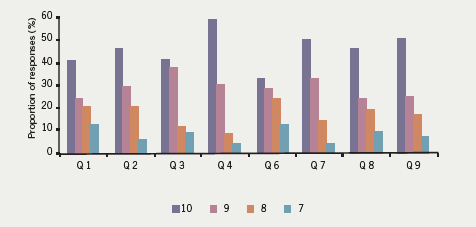
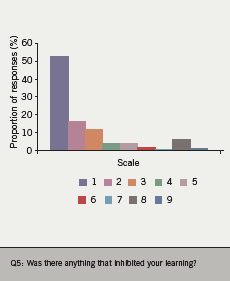
An overwhelming majority of students enjoyed this unique way of being taught about cardiac rehabilitation as an exercise tutorial and highly recommended this novel method of teaching as a whole. Full marks (10/10) were awarded by 46% of respondents, while almost 90% of total responses were graded as 8/10 or above (figure 3). Only seven students (6%) graded the issue of wind blowing impeding proper hearing on windy days as significant (7/10), while the majority of students opined that walking in an open environment helped them concentrate better. It is worthwhile mentioning that question No. 5 looking at this particular aspect of exercise tutorial was graded oppositely to the other questions with 1/10 in fact meaning no disturbance and 10/10 indicating extreme hindrance by wind (figure 4).

Figure 4. Results of the questionnaire feedback to question 5

The students found this opportunity exceptionally unique, entertaining, informative and a superb way of being taught about cardiac rehabilitation, and they unanimously advocated this as a teaching method for other topics.

Some of the positive remarks given by medical students were:

  • “Was good to learn in a different environment and get fresh air. Much more enjoyable than normal lectures!”
  • “Recommend it to other hospitals.”
  • “Was a brilliant teaching session and was nice to learn in a different environment, made it easier to concentrate for some reason!”
  • “Lovely way to learn, easier to concentrate and take in information.”
  • “Liked the idea of going on a walk, aided concentration and made a change.”
  • “Very mind stimulating – a novel experience.”

Conclusion

This report represents a unique study of its kind in terms of analysing exercise tutorial as a unique teaching method and also emphasising cardiac rehabilitation as an essential part of the curriculum. The study had a decent sample size and was conducted over a considerable length of time. The exceptionally positive response of a large number of medical students authenticates its findings, and suggests it could be an extremely effective way of teaching any topic. This study does not negate the need for classrooms and lecture theatres; however, it introduces a novel idea of teaching topics in small groups as exercise tutorials, which can be equally enjoyable and informative.

Conflict of interest

None declared.

Key messages

  • Cardiac rehabilitation is an essential component of coronary heart disease prevention
  • Teaching cardiac rehabilitation in an exercise tutorial is a unique teaching method, which was well received with students
  • This teaching method could be applied to other topics

References

1. Unal B, Critchley JA, Capewell S. Explaining the decline in coronary heart disease mortality in England and Wales between 1981 and 2000. Circulation 2004;109:1101–07.

2. Taylor R, Brown A, Ebrahim S et al. Exercise-based rehabilitation for patients with coronary heart disease: systematic review and meta-analysis of randomized controlled trials. Am J Med 2004;116:682–92.

3. Harbman P. Review: secondary prevention programmes with and without exercise reduced all cause mortality and recurrent myocardial infarction. Evid Based Nurs 2006;9:77.

4. Smith D. Review: increased physical activity and combined dietary changes reduce mortality in coronary artery disease. ACP J Club 2006;144:16.

5. Jolliffe JA, Rees K, Taylor RS, Thompson D, Oldridge N, Ebrahim S. Exercise-based rehabilitation for coronary heart disease. Cochrane Database Syst Rev 001;(1):CD001800.

‘Time is muscle’: aspirin taken during acute coronary thrombosis

Br J Cardiol 2010;17:185-9 Leave a comment
Click any image to enlarge
Authors:

Low-dose aspirin is of value in the long-term management of vascular disease, and the giving of aspirin to patients believed to be experiencing an acute myocardial infarction (AMI) is standard practice for paramedics and doctors in most countries. Given during infarction, aspirin may disaggregate platelet microthrombi and may reduce the size of a developing thrombus. Effects of aspirin other than on platelets have also been suggested and these include an increase in the permeability of a fibrin clot and an enhancement of clot lysis. Animal experiments have also shown a direct effect of aspirin upon the myocardium with a reduction in the incidence of ventricular fibrillation.

Randomised trials have shown that the earlier aspirin is taken by patients with myocardial infarction, the greater the reduction in deaths. We suggest, therefore, that patients known to be at risk of an AMI, including older people, should be advised to carry a few tablets of soluble aspirin at all times, and chew and swallow a tablet immediately, if they experience severe chest pain. 

Introduction
185-img-1Aspirin, used in vascular disease prophylaxis, is probably the most cost-effective drug available in clinical practice and daily low-dose aspirin is now a standard item in the long-term management of vascular disease. Within a public health context, the provision of aspirin to individuals at increased vascular risk has been judged to be the preventive activity of greatest benefit and at the lowest cost (by far), apart from smoking cessation.1 Patients with known vascular disease are clearly at increased vascular risk, and a recent US Task Force judged that ‘individuals at increased risk’ includes males aged over about 45 and females over about 55 years,2 and the conclusions in two reports based on UK populations are in close agreement.3,4

In the acute situation, the giving of aspirin to a patient believed to be experiencing an acute myocardial infarction (AMI) is standard practice.5,6 In what follows, the evidence of benefit from early aspirin is examined and we consider the possible additional benefits if patients at increased vascular risk, including older people, were advised to carry their own aspirin, and chew and swallow an ‘adult’ (300 mg) tablet immediately they experience symptoms suggestive of AMI – the aspirin to be taken even as they summon help.

The clinical problem

Evidence on deaths during the very early stage of a vascular event is limited. Goldstein et al.7 examined the records for 270 witnessed cardiovascular deaths in patients involved in a randomised trial. About a quarter of the deaths had been ‘instantaneous’ (collapse without any symptoms) and, in such cases, cardiopulmonary resuscitation (CPR) is the only appropriate intervention. A further 16% of deaths occurred during the first hour after the commencement of symptoms. From details of a number of studies Gersh and Anderson8 estimated that the typical delay between the commencement of symptoms and hospital treatment was around 96 minutes, and, in an intervention study,9 the out-of-hospital delay for over half the patients with acute AMI was found to be up to two hours.

There has been a sustained drive for earlier treatment of patients with a vascular event, and in most countries paramedics now give aspirin immediately on first contact with a patient who is experiencing severe chest pain and is judged to have possibly had a myocardial infarct or ischaemia.5,6 The UK Department of Health have established a target requiring that at least 75% of patients with chest pain should be attended within eight minutes of a call for an ambulance, and most paramedics are now exceeding this target.10 There is, however, relatively little evidence on the time between the onset of symptoms and the first medical contact (FMC). In Finland, a study found that this interval averaged about 60 minutes regardless of whether or not the patient had a pre-existing history of heart disease.11 A cross-European study estimated that the median FMC in the UK is 68 minutes, but in other European countries the median delay was around 150–200 minutes.12 It seems, therefore, that the opportunity is widespread for what could be termed ‘immediate’ aspirin, that is, aspirin taken while medical help is awaited.

Evidence of benefit

Unfortunately, the reports of randomised trials give no evidence on the effect of aspirin during the first few minutes after symptoms of infarction commence. In the Second International Study of Infarct Survival (ISIS-2), the reduction in deaths by aspirin during the first four hours after the onset of symptoms was 53 ± 8%, compared with 32 ± 9% during the period five to eight hours.13 In the Chinese Acute Stroke Trial (CAST) study of stroke reduction by aspirin, the reduction in deaths by aspirin given within three hours was 36 ± 18%, while in those given aspirin later the reduction was at most 15%.14

Indirect evidence of possible benefit from early aspirin comes from a reduction in the severity of infarction in patients who had developed an infarct while taking aspirin. Col et al.15 found that after adjustment for possible confounding by age, gender, coronary history and medication, “prior aspirin consumption remained independently associated with … non-Q wave and smaller infarct size”. In a series of hospital admissions Garcia-Dorado et al.16 judged that “aspirin … converts 50% of potential AMIs to unstable angina and 20% of Q-wave infarctions to non-Q-wave lesions”. On the other hand, Ridker et al.17 failed to confirm this in the US Physicians study, but conceded that “aspirin therapy may result in a shift of fatal events to severe non-fatal events, severe events to mild events and mild events to no events”.

Possible benefit during infarction

A number of authors have reported finding platelet microemboli within the coronary microcirculation in persons whose death had been ‘sudden’.18,19 In some cases no thrombus could be found in a major coronary vessel, suggesting that microthrombi had developed spontaneously, while in others, microthrombi were additional to a thrombus in a major vessel,20,21 suggesting that fragments from a developing thrombus may have become embolic, or a release action by platelets within a major thrombus may have induced platelet activity within peripheral vessels in the myocardium.21 Platelet aggregates are transient before fibrin is incorporated and early aspirin could, therefore, cause disaggregation of these microemboli, in addition to decreasing thrombus growth and clot volume.22,23

The main mode of action of prophylactic aspirin in vascular disease appears to be through a reduction in platelet aggregation inhibiting the development of a stable thrombus. Measures of platelet aggregation, however, appear to have no predictive power for ischaemic heart disease events.24-26 Effects of aspirin on mechanisms other than platelet aggregation are, therefore, of interest and an action of aspirin on some of them could be of particular importance during the very early processes of thrombosis and infarction.

Aspirin has been shown to acetylate lysine residues in fibrinogen, thus increasing fibrin clot permeability and enhancing clot lysis.27 It also reduces the fibrin mass in a thrombus and leads to a shorter lysis time.28,29 Blood from cigarette smokers has been shown to generate in vitro thrombi that are twice the volume of those in blood from non-smokers, while the ingestion of aspirin by smokers reduced the subsequent thrombus volume to a substantially greater degree (by 62%) compared with the reduction (38%) caused in non-smokers.30 Clearly, the earlier aspirin is taken during thrombosis, and particularly by smokers, the more important these non-platelet effects are likely to be.

A direct effect of aspirin on the myocardium and an anti-arrhythmic effect independent of any action on platelets have also been suggested.31 Moschos et al.32 describe how the occlusion of a coronary artery of a dog by mechanical means can lead to ventricular fibrillation without evidence of any platelet involvement. Fibrillation in these dogs is prevented by aspirin, leading the authors to postulate a direct effect of aspirin upon the myocardium.

Finally, myocardial ischaemia causes a marked increase in catecholamine release and this in turn leads to an increase in free fatty acids,32 a rise which is abolished by aspirin.33 Aspirin may also reduce the vasoconstriction caused by catecholamines34 and by thromboxane A2,35-37 and it reduces catecholamine-induced myocardial necrosis.38 The inhibitory action of aspirin on catecholamines within the myocardium may be the basis for the reduction of arrhythmia during ischaemia.32

The absorption of aspirin

187-img-1The absorption of aspirin has been studied extensively. The drug in soluble and dispersible tablets is absorbed much more rapidly than from the standard tablet. Muir et al.39 reported that five minutes after ingestion of a soluble form, the levels of aspirin in the plasma were about 15 times the level after ingestion of the same dose in a plain tablet. Feldman40 found a 50% inhibition of thromboxane A2 within five minutes after a 325 mg tablet is chewed and swallowed.

There is uncertainty about the dose of aspirin that is appropriate if the drug is taken during infarction. Dabaghi et al.36 reported almost complete (97%) inhibition of aggregation to arachidonic acid 15 minutes after ingesting an 81 mg soluble tablet of aspirin and others have reported similar rapid inhibition of plasma thromboxane,35-37 and platelet thromboxane A240 after small doses of aspirin. There is evidence, however, that absorption can be impaired during the acute phase of infarction41 and a relatively high dose may be advisable.42 Yet in an examination of data from recent randomised trials, there was no difference in the very early mortality following initial doses of 162 mg and 325 mg aspirin, but there was a slightly greater incidence of bleeding after the larger dose.43

Further to all this, most patients with an infarct are likely to receive thrombolytic therapy. There is a marked heightening of platelet activity after thrombolysis,39,44 and prior treatment with aspirin abolishes the excess in re-infarction that otherwise follows fibrinolysis.13 In order to achieve fibrinolysis as early as possible, treatment has been delegated to paramedics, although increasingly where percutaneous coronary intervention (PCI) is available in a timely manner, this has become the preferred intervention. Self-administration of aspirin by a subject at the time of calling an ambulance would, however, be appropriate whatever the subsequent interventions.

Strategy

The administration of aspirin as early as possible during the process of thrombosis and infarction, and, hence, the effectiveness of the drug would be enhanced if patients judged to be at risk carried a few ‘adult’ (300 mg) tablets of aspirin at all times, and were instructed to chew and swallow a tablet immediately they experience symptoms suggestive of infarction. Patients to whom this is recommended should include all those known to be at increased vascular risk, and this should include older persons – perhaps those over the age of about 45 or 50 years.2-4

The peak incidence of AMI is in the early morning45 and patients may be more hesitant about calling for help in those early hours. Platelets appear to be most sensitive to aggregating agents in the early morning,46 and in the US Physicians Health Study it was found that the reduction in AMI by aspirin was significantly greater for the events that occurred in the early morning (59%), than for those that occurred later in the day (34%).45 The taking of aspirin by persons themselves could, therefore, be particularly appropriate at these times.

Areas of uncertainty

Around 30% of patients presenting with an AMI are known to already have coronary disease,47 and these are likely to be on daily low-dose aspirin. Others, such as patients on a statin or an antihypertensive agent, are known to be at high risk of a thrombotic event and a high proportion of these are also likely to be on aspirin. There is evidence, however, that many of these, perhaps even around half such patients, are not actually taking the drug.48 In any case, the half-life of aspirin in the circulation is only 15–20 minutes,49 and it would seem reasonable to surmise that if a thrombus develops despite daily exposure to aspirin, some fresh sensitive platelets are likely to have entered the circulation. If this is the case, an extra dose, say 300 or 600 mg of aspirin, taken in addition to the small daily dose, could be life saving.50

Aspirin has undesirable side effects, and persons advised about the benefits of aspirin should also be told the risks. These include increased risks of gastric haemorrhage and cerebral haemorrhage. Estimates of these extra risks have been derived from randomised trials in which patients take aspirin daily over long periods of time. The risk of death attributable to aspirin in trial patients is at most 4% per year,51,52 and the risk of death from a single dose of aspirin is likely to be very considerably lower than this.

It would be unfortunate, however, if the taking of a tablet by a subject in whom a thrombus is developing, led to delay in the calling of an ambulance, and a consequent delay in the commencement of fibrinolytic treatment.53 Persons informed about aspirin should, therefore, be clearly warned that if rapidly increasing severe chest pain is experienced an ambulance should be called first, and then, without further delay, an aspirin tablet should be chewed and swallowed.

Severe chest pain may arise from a non-cardiac cause. If it is from the voluntary muscles, then aspirin is of course appropriate. The relationship of pleuritic pain to breathing should enable a pulmonary embolus to be readily distinguished. Pain from a bleeding gastric lesion should not be a concern as patients known to have a peptic ulcer, or with current indigestion, should have been warned against taking aspirin at any time, even in an emergency.

Pain from angina on exercise should be easily recognised and not confused with the more severe and unremitting pain of infarction. The most important cardiac causes of chest pain that could cause confusion arise from acute aortic syndromes,54 and in particular dissecting thoracic aorta. These lesions are rare, are usually associated with severe hypertension and the pain has an immediate onset, usually with maximum intensity at the time of onset.55

The question naturally arises as to the advisability of ‘immediate’ aspirin if symptoms suggestive of a stroke are experienced. The two major stroke trials, CAST14 and International Stroke Trial (IST),56 gave evidence suggesting that if aspirin is given early during the acute phase of a stroke, there is an additional reduction in the number of deaths and disabling strokes that is “modest but worthwhile”.57 Nevertheless, if aspirin were taken at the very commencement of symptoms suggestive of a stroke, and if the stroke were a haemorrhagic lesion, then the cerebral bleeding might be increased. Immediate aspirin should not, therefore, be advised if symptoms suggest a stroke.

Guidelines from professional societies

The giving of aspirin by a doctor or a paramedic immediately they have contact with a patient believed to be experiencing an acute AMI, is established practice and is recommended by all the relevant professional bodies. Self-medication in this situation has already been recommended,40,58-61 but appears never to have been actively promoted.

Conclusions and recommendations

About 35% of all deaths are attributed to coronary heart disease each year, that is 36,000 in the UK and almost 900,000 in the USA, and younger patients among these are proportionately more likely to die before reaching hospital.62 The earlier aspirin is taken by these patients, the greater the proportionate survival is likely to be.

Aspirin taken while a thrombosis is growing may limit the size of the thrombus and may enhance thrombolysis, thus limiting the damage to the myocardium and the likelihood of a fatal outcome. Effects of aspirin, other than on platelets, indicate that it may help to preserve myocardial tissue and may also reduce the risk of ventricular fibrillation.

People judged to be at increased vascular risk, including older persons, should, therefore, be advised to carry a few tablets of soluble aspirin at all times, and chew and swallow a tablet immediately they experience sudden severe chest pain. Consideration should also be given to the inclusion of instruction on the risks and benefits of early aspirin to persons trained in CPR.

Aspirin is freely available to the public, but advice of varying quality is being given to the public in newspapers and magazines. In a challenging editorial, Kassirer63 states: “…it [is] essential to identify decisions in which it is especially important to consider patient’s values and to protect such decisions from intrusive external decision making”. We believe that the taking of ‘immediate’ aspirin, as we describe it, is such a decision – provided those advised have been adequately informed of the likely risks and benefits.

Conflict of interest

None declared. The authors declare no vested interest and no special funding for the work described.

Key messages

  • Aspirin, used in vascular disease protection, is probably the most cost-effective drug available in clinical practice
  • The earlier aspirin is given in coronary thrombosis, the greater the reduction in deaths
  • It is also likely that early aspirin will reduce the size and severity of a myocardial infarction and it may reduce the risk of ventricular fibrillation
  • It is accepted practice for paramedics to give aspirin to patients for whom an emergency call has been received because of chest pain
  • It is suggested that patients at increased vascular risk, including older people, should carry tablets of soluble aspirin at all times, and chew and swallow a tablet immediately they experience severe chest pain

References

1. Kahn R, Robertson RM, Smith R et al. The impact of prevention on reducing the burden of cardiovascular disease. Circulation 2008;118:576–85.

2. Preventive Services Task Force. Aspirin for the prevention of cardiovascular disease: US Preventive Services Task Force Recommendation Statement. Ann Intern Med 2009;150:396–404.

3. Bulugahapitiya U, Siyambalapitiya S, Sithole J et al. Age threshold for vascular prophylaxis by aspirin in patients without diabetes. Heart 2008;94:1429–32.

4. Elwood P, Morgan G, Brown G et al. Aspirin for everyone over 50? BMJ 2005;330:1440–1.

5. McVaney KE, Macht M, Colwell CB, Pons PT. Treatment of suspected cardiac ischemia with aspirin by paramedics in an urban emergency medical services system. Prehosp Emerg Care 2005;9:282–4.

6. Fisher JD, Brown SN, Cooke MW. UK Ambulance Service Clinical Practice Guidelines (2006). Joint Royal Colleges Ambulance Liaison Committee, 2006. Available from: http://www2.warwick.ac.uk/fac/med/research/hsri/emergencycare/prehospitalcare/jrcalcstakeholderwebsite/guidelines [accessed 22 February 2009].

7. Goldstein S, Friedman L, Hutchinson R et al. Timing, mechanism and clinical setting of witnessed deaths in postmyocardial infarction patients. J Am Coll Cardiol 1984;3:1111–17.

8. Gersh BJ, Anderson JL. Thrombolysis and myocardial salvage. Circulation 1993;88:296–306.

9. Hedges JR, Feldman HA, Bittner V et al. Impact of community intervention to reduce patient delay time on use of reperfusion therapy for acute myocardial infarction: rapid action for coronary treatment (REACT) trial. Academic Emergency Medicine 2000;7:862–72.

10. The NHS Information Centre. Ambulance Services England 2007–2008. The Information Centre, June 2008. Available from: http://www.ic.nhs.uk/webfiles/publications/Ambulance%
2007-08/Ambulance%20Bulletin%202007-08%20final%20with%20data%20quality
%20note%2015-12-08.pdf
[accessed 12 February 2009].

11. Hirvonen TP, Halinen MO, Kala RA, Olkinuora JT. Delays in thrombolytic therapy for acute myocardial infarction in Finland. Results of a national thrombolytic therapy delay study. Finnish Hospitals’ Thrombolysis Survey Group. Eur Heart J 1998;19:885–92.

12. Widimsky P, Wijns W, Fajadet J et al. Reperfusion therapy for ST elevation acute myocardial infarction in Europe: description of the current situation in 30 countries. Eur Heart J 2010;31:943–57.

13. ISIS-2. Second International Study of Infarct Survival Collaborative Group. Randomised trial of intravenous streptokinase, oral aspirin, both or neither among 17,187 cases of suspected acute myocardial infarction. Lancet 1988;2:349–60.

14. CAST (Chinese Acute Stroke Trial) Collaborative Group. CAST: randomized placebo-controlled trial of early aspirin use in 20,000 patients with acute ischaemic stroke. Lancet 1997;349:1641–9.

15. Col NF, Yasrzbski J, Gore JM et al. Does aspirin consumption affect the presentation or severity of acute myocardial infarction? Arch Int Med 1995;155:1386–9.

16. Garcia-Dorado D, Therous P, Tornos P et al. Previous aspirin use may attenuate the severity of the manifestations of acute ischaemic syndromes. Circulation 1995;92:1743–8.

17. Ridker PM, Manson JE, Buring JE et al. Clinical characteristics of non-fatal myocardial infarction among individuals on prophylactic low-dose aspirin therapy. Circulation 1991;84:708–11.

18. Haerem JW. Platelet aggregates and mural micro-thrombi in the early stages of acute fatal coronary disease. Thromb Res 1974;5:243–9.

19. El-Maraghi N, Genton E. The relevance of platelet and fibrin thromboembolism of the coronary microcirculation with special reference to sudden cardiac death. Circulation 1980;62:936.

20. Frink RJ, Trowbridge JO, Rooney PA. Non-obstructive coronary thrombosis in sudden cardiac death. Am J Cardiol 1978;42:48.

21. Gelman JS, Mehta J. Platelets and prostaglandins in sudden death. Cardiovascular Clinics 1985;15:65–80.

22. Roald HE, Sakariassen KS. Axial dependence of collagen-induced thrombus formation in flowing non-anticoagulated human blood. Anti-platelet drugs impair thrombus growth and increase platelet-collagen adhesion. Thromb Haemostas 1995;73:126–31.

23. Stewart JH, Farrell PC, Dixon M. Reduction of platelet/fibrin deposition in haemodialysers by aspirin administration. Austr and New Zealand J Medicine 1975;5:117–22.

24. Elwood PC, Beswick A, Pickering J et al. Platelet tests in the prediction of myocardial infarction and stroke: evidence from the Caerphilly study. Br J Haematol 2001;113:514–20.

25. Elwood PC, Pickering J, Yarnell J, O’Brien JR, Ben-Shlomo Y, Bath P. Bleeding time, stroke and myocardial infarction: the Caerphilly prospective study. Platelets 2003;14:139–41.

26. Sharp DS, Ben-Shlomo Y, Beswick AD, Andrew ME, Elwood PC. Platelet aggregation in whole blood is a paradoxical predictor of ischaemic stroke: Caerphilly Prospective Study revisited. Platelets 2005;16:320–8.

27. Undas A, Brummel-Ziedins KE, Mann KE et al. Antithrombotic properties of aspirin and resistance to aspirin: beyond strictly antiplatelet actions. Blood 2007;109:2285–92.

28. Williams S, Fatah K, Ivert T et al. The effect of acetylsalicylic on fibrin gel lysis by tissue plasminogen activator. Blood Coagulation and Fibrinolysis 1995;7:718–25.

29. Bjornsson TD, Schneider DE, Berger H. Aspirin acetylates fibrinogen and enhances fibrinolysis. Fibrinolytic effect is independent of changes in plasminogen activator levels. J Pharm Exper Ther 1989;250:154–61.

30. Roald HE, Orvim U, Bakken IJ et al. Modulation of thrombotic responses in moderately stenosed arteries by cigarette smoking and aspirin injestion. Arterioscler Thromb 1994;14:617–21.

31. Hirsh J. Antiplatelet agents: their role in the prevention of sudden death. Ann NY Acad Sci 1982;382:289–304.

32. Moschos CB, Haider B, de la Cruz C et al. Anti-arrhythmic effects of aspirin during non-thrombotic coronary occlusion. Circulation 1978;57:681.

33. Oliver MF. Metabolic causes and prevention of ventricular fibrillation during acute coronary syndromes. Am J Med 2002;112:305–11.

34. Strom EA, Coffman JD. Effect of aspirin on circulatory responses to catecholamines. Arthr Rheumatol 1963;6:689–97.

35. Clarke RJ, Mayo G, Price P, Fitzgerald GA. Suppression of thromboxane A2 but not of systemic prostacyclin by controlled release aspirin. N Engl J Med 1991;325:1137–41.

36. Dabaghi SF, Kamat SG, Payne J et al. Effects of low-dose aspirin on in-vitro platelet aggregation in the early minutes after injestion in normal subjects. Am J Cardiol 1994;74:720–3.

37. Jakubowski JA, Stampfer MJ, Vaillancourt R et al. Cumulative antiplatelet effect of low dose enteric-coated aspirin. Br J Haematol 1985;60:635–42.

38. Hart Gershengorn K. Protection against epinephrine-induced myocardial necrosis by drugs that inhibit platelet aggregation. Am J Cardiol 1972;30:838.

39. Muir N, Nichols JD, Clifford JM, Stillings MR, Hoare RC. The influence of dosing form on aspirin kinetics: implications for acute cardiovascular use. Curr Med Opinion 1997;13:547–53.

40. Feldman M, Cryer B. Aspirin absorption rates and platelet inhibition times with 325mg buffered aspirin tablets chewed or swallowed intact and with buffered aspirin solution. Am J Cardiol 1999;84:404–09.

41. Zhang CL, Wilson KM, Stafford I, Bocher F, Horowitz JD. Absorption kinetics of low-dose aspirin in patients with evolving acute myocardial infarction. Drug Invest 1994;1:169–74.

42. Berglund U, Wallentin L. Persistent inhibition of platelet function during long-term treatment with 75mg acetylsalicylic acid daily in men with unstable coronary artery disease. Eur Heart J 1991;12:428–33.

43. Berger JS, Stebbins A, Granger CB et al. Initial aspirin dose and outcome amongst ST-elevation myocardial infarction patients treated with fibrinolytic therapy. Circulation 2008;117:192–9.

44. Fitzgerald DJ, Catella F, Roy L et al. Marked platelet activation in vivo after intravenous streptokinase in patients with acute myocardial infarction. Circulation 1988;77:142–50.

45. Muller JE, Tofler GH, Stone PH. Circadian variation and triggers of onset of acute cardiovascular disease. Circulation 1989;79:733–43.

46. Ridker PM, Manson JE, Buring JE, Muller JE, Hennekens CH. Circadian variation of acute myocardial infarction and the effect of low-dose aspirin in a randomised trial of physicians. Circulation 1990;82:897–902.

47. Weston CFM, Penny WJ, Julian DG. Guidelines for the early management of patients with myocardial infarction. BMJ 1994;308:767–71.

48. Elwood P, Hughes J, Morgan G, Brown G, Longley M. A survey of aspirin use for vascular prophylaxis in Wales. Quality in Primary Care 2005;13:201–04.

49. Patrono C, Baignet C, Hirsh J et al. Antiplatelet drugs: American College of Chest Physicians evidence-based clinical practice guidelines (8th ed.). Chest 2008;133:199S–233S.

50. Prasad N, Srikanthan VS, Wright A, Dunn FG. Management of suspected myocardial infarction before admission. BMJ 1994;316:353.

51. Pirmohamed M, James S, Meakin S et al. Adverse drug reactions as a cause of admission to hospital: retrospective analysis of 18,820 patients. BMJ 2004;329:15–19.

52. Guise J-M, Mahon SM, Aicken M et al. Aspirin for the prevention of cardiovascular events: a summary of the evidence. Ann Intern Med 2002;136:161–72.

53. Rathmore SS, Curtis JP, Chen J et al. Association of door-to-balloon time and mortality in patients admitted to hospital with ST elevation myocardial infarction: national cohort study. BMJ 2009;338:b1807.

54. Vilacosta I, Aragoncillo P, Canadas V et al. Acute aortic syndromes: a new look at an old conundrum. Heart 2009;95:1130–9.

55. Wooley CF, Sparkes EH, Boudoulas H. Aortic pain. Prog Cardiovascular Dis 1998;40:563–89.

56. IST International Stroke Trial Collaborative Group. A randomised trial of aspirin, subcutaneous heparin, both, or neither among 19,435 patients with acute ischaemic stroke. Lancet 1997;349:1569–81.

57. Kmietowicz Z. Aspirin benefits patients with stroke – but only just. BMJ 1997;314:1646.

58. Brecker SJD. Early aspirin in myocardial infarction. Lancet 1990;335:923.

59. Carpenter AL, Caravalho J. Early public use of aspirin in the face of probable ischaemic chest pain. Lancet 1990;335:486.

60. Norfolk Health. Guidelines for practice procedure with a suspected heart attack. East Norfolk Health Commission, 1996.

61. NHS Executive. The health of the nation: assessing the options: CHD/Stroke. Target effectiveness and cost-effectiveness of interventions to reduce coronary heart disease and stroke mortality. London: Department of Health, 1995.

62. Norris RM on behalf of the UK Heart Attack Study investigators. Sudden cardiac death and acute myocardial infarction in three British health districts: the UK heart attack study. London: British Heart Foundation, 1999.

63. Kassirer JP. Incorporating patients’ preferences into medical decisions. N Engl J Med 1994;330:1895–6.


From patient to plaque. Contemporary coronary imaging – part 2: optical coherence tomography 

Br J Cardiol 2010;17:190-3 Leave a comment
Click any image to enlarge
Authors:

Intra-coronary imaging has become a cornerstone of visualising atherosclerotic coronary artery disease and also to guide the therapy in selected high-risk cases. Optical coherence tomography (OCT) is an imaging modality quite similar to intravascular ultrasound (IVUS), but uses light instead of sound. In the second article on contemporary coronary imaging, the potential of OCT is discussed.

Introduction

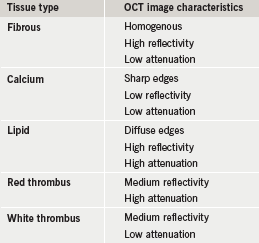
Table 1. Image characteristics of optical coherence tomography (OCT)

Optical coherence tomography (OCT) uses near-infrared electromagnetic radiation, and cross-sectional images are generated by measuring the echo time delay and intensity of light that is reflected or back-scattered from internal structures in the tissue.1,2

Current OCT images are obtained at the peak wavelength in the 1,280–1,350 nm band that enables a 10–15 µm tissue axial resolution, 94 µm lateral resolution at 3 mm, and maximal scan diameter of 6–8 mm (about 10 times resolution as compared with intravascular ultrasound [IVUS]). There are two main technologies that can be used to obtain OCT images: time domain and frequency domain. Frequency domain OCT has the advantage of an improved signal-to-noise ratio allowing fast scanning with improved imaging quality.

OCT image acquisition

OCT cannot image through a blood field, and it requires clearing or displacing blood from the lumen by flushing. There are two basic techniques:

  1. The occlusive technique. During image acquisition, coronary blood flow is stopped by inflating a proximal occlusion balloon and flushing the crystalloid solution at the rate of 0.5–1.0 ml/sec down the coronary artery.
  2. Non-occlusive technique. This is recently developed and does not need proximal balloon occlusion. During image acquisition the image wire pull back is performed at fast speed with simultaneous injection of contrast through the guiding catheter.

Safety of OCT

The energies used in OCT are low and do not cause functional or structural damage to the tissue. There are two reports on the safety of intracoronary OCT imaging.3,4 These reports have not shown any major adverse cardiac events, however, electrocardiogram (ECG) changes and ectopy were seen frequently during the pull back of the image catheter. All ECG changes and patient symptoms rapidly resolved at the end of the procedure.

Plaque characterisation

Ex vivo validation

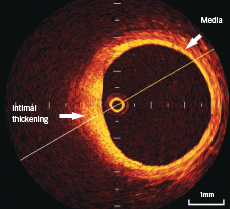
Figure 1. Optical coherence tomography (OCT) shows the three-layer appearance of normal vessel wall. The muscular media appears as a low signal layer between internal and external lamina (2 o’clock). Intimal thickening is seen at 6–9 o’clock

This was first performed in 2002 in 357 ex vivo post-mortem atherosclerotic segments from 90 cadavers.5 This study established OCT criteria for the various plaque components (shown in table 1). High sensitivity and specificity have been obtained by comparing with histology as a gold-standard reference, for the detection of both calcific and lipid-rich plaques (96% and 97%, and 90% and 92%, respectively).

In vivo characterisation

In normal vessels, the coronary artery wall appears as a three-layer structure in OCT images. The media is seen as a dark band delimited by internal elastic lamina (IEL) and external elastic lamina (EEL) (figure 1).

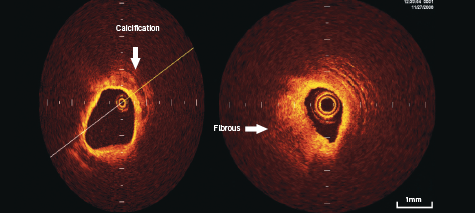
Calcifications within plaques are identified by the presence of well delineated, low back scattering heterogenous regions5-7 (figure 2).

Fibrous plaque consists of homogenous high back scattering areas5-7 (figure 2).

Figure 2. OCT appearance of calcification at 12–3 o’clock position on left-sided panel, and fibrous appearance of plaque at 6–12 o’clock position on right-sided panel

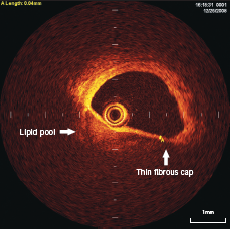
Figure 3. OCT appearance of lipid pool (3–9 o’clock position) with overlying thin (40 µm) fibrous cap. This is the typical appearance of thin cap fibro-atheroma (TCFA)

Necrotic lipid pools are less well delineated, and usually appear as diffusely bordered, signal poor regions with overlying signal-rich bands, corresponding to fibrous caps5-7 (figure 3).

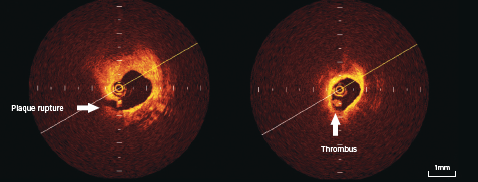
Thrombi are identified as masses protruding into the vessel lumen discontinuous from the surface of the vessel wall (figure 4).

Plaque ulceration or rupture can be detected by OCT as a ruptured fibrous cap that connects the lumen with the lipid pool. These may or may not be associated with thrombus (figure 4).

Thin cap fibro-atheroma (TCFA) is defined as plaques with lipid content in >2 quadrants on cross-sectional analysis and fibrous cap thickness of <65 µm (figure 3).

Figure 4. OCT appearance of plaque rupture (6 o’clock position) on left-sided panel, with intraluminal thrombus seen in right-sided panel

Potential clinical application of OCT

Plaque characteristics in various clinical syndromes

OCT has been shown to provide detailed in vivo characterisation of coronary plaque morphology. Jang et al.8 has evaluated this in patients with recent acute ST elevation myocardial infarction, acute coronary syndromes, and stable angina. Patients with an acute myocardial infarction (MI) and acute coronary syndromes had higher frequency of TCFA, as compared with patients with stable angina (72%, 50% and 20%, respectively; p=0.012). Similar results are shown with OCT analysis in other studies.6,9 This information leads to the better understanding of the mechanisms of coronary artery disease.

OCT can identify subclinical atherosclerotic lesions and the characteristics of high-risk plaque (TCFA or subclinical plaque rupture). This may have relevance to modulate the aggressiveness of medical therapeutic strategies for primary prevention. OCT has the potential for assessing the risk of MI, however, this needs to be proven and tested in future.

Guidance and optimisation of percutaneous coronary intervention

IVUS imaging is traditionally used to assess the outcome of coronary stenting but detailed information is often impossible to obtain because the metal struts impair image quality. Complete and proper approximation of the stent struts to the vessel wall could be better optimised by OCT due to its higher resolution. In 43 imaged stents, OCT consistently outperformed IVUS in the detection of dissection, tissue prolapse and incomplete stent apposition.10,11 These studies also show better understanding of balloon-induced dissection, intraluminal, thrombus, number of cuts made by cutting balloon, and tissue prolapse. The adequacy of stent deployment is a major predictor of re-stenosis and subacute stent thrombosis. Therefore, OCT could potentially pay a role in optimisation of coronary intervention.

OCT could be utilised in assessing angiographically normal and borderline coronary artery stenosis. OCT has got the potential to become a routine tool for guiding interventional procedure as this technology provides accurate lumen measurements, when compared with IVUS.

OCT is particularly helpful in assessment of angiographically hazy lesions, because identification of thrombus is far more superior with this technique as compared with IVUS.

Assessment of vascular healing following drug eluting stent

OCT can allow us to assess the impact of stenting to the vessel wall and can evaluate healing and remodelling of the vessel, which could be used as a surrogate end point for evaluating different stents and their platforms. There are some studies evaluating the neo-intimal coverage of the stent struts following drug eluting stents and bare metal stents. Chen et al.12 have shown higher incidence of unapposed (2% vs. 0%, p<0.001) and uncovered stent struts (13% vs. 0.3%) in sirolimus eluting stent (SES) group as compared with bare metal stent. Similar results were shown by Matsumato et al.,13 where 1.5% of the total stent struts were malapposed and without neointimal coverage in the SES group at six months. Takano et al.14 have shown higher incidence of stent inapposition and uncovered stent struts in patients with acute coronary syndrome (18% vs. 13%, p<0.001; 8% vs. 5%, p<0.005, respectively) as compared with stable angina patients following use of SES stents. However, there is no definite proven causal relationship established between malapposed and/or uncovered stent struts and incidence of late stent thrombosis.

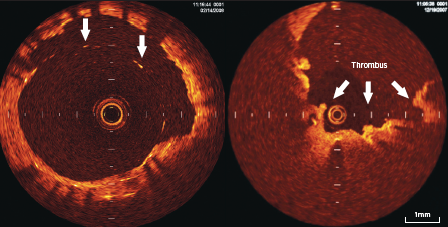
Stent apposition and the neointimal coverage of the stent struts can be identified and monitored because of high resolution of the OCT (figure 5). This could potentially be helpful in follow-up of certain high-risk cases and also to optimise the results of stent implantation.

Figure 5. OCT appearance of stent struts inapposed to the vessel wall (arrows) seen from 10–3 o’clock position on left-sided panel, with overlying thrombus on some of the stent struts as seen on right-sided panel

Limitations of OCT

The main limitation of OCT is the poor penetration power and inability to measure plaque burden where thickness exceeds 1.5 mm. In addition, the severity of plaques located at aorto-ostial locations is difficult to assess with the current stage of technology.

Conclusion

OCT is a rapidly evolving intracoronary imaging technique. It allows detailed structural analysis of superficial structures in the vessel wall, including coronary plaque characterisation and the vascular healing process following coronary stent implantation.

Conflict of interest

None declared.

Editors’ note

The next article in this series will be on computed tomography (CT). Part 1 in this series covered IUUS-derived virtual histology (Br J Cardiol 2010;17:129–32).

Key messages

  • Angiographic assessment of coronary plaque is limited and does not provide the full story
  • Optical coherence tomography (OCT) is a new technique similar to intravascular ultrasound (IVUS) that uses light rather than ultrasound to image structures
  • OCT is around 10 times more powerful than IVUS when it comes to resolution of small structures
  • OCT, like IVUS, can tell the difference between plaque types and is better at imaging thrombus
  • It is hoped that future studies will show the benefit of performing OCT to improve stent deployment and patient outcomes from coronary intervention

References

1. Huang D, Swanson EA, Lin CP et al. Optical coherence tomography. Science 1991;254:1178–81.

2. Brezinski ME, Tearney GJ, Bouma BE et al. Optical coherence tomography for optical biopsy properties and demonstration of vascular pathology. Circulation 1996;93:1206–13.

3. Prati F, Cera M, Ramazzotti V et al. Safety and feasibility of a new non-occlusive technique for facilitated intracoronary optical coherence tomography (OCT) acquisition in various clinical and anatomical scenarios. Eurointerv 2007;3:365–70.

4. Yamaguvhi T, Terashima M, Akasaka T et al. Safety and feasibility of an intravascular optical coherence tomography image wire system in the clinical setting. Am J Cardiol 2008;101:562–7.

5. Yabushita H, Bouma BE, Houser SL et al. Characterisation of human atherosclerosis by optical coherence tomography. Circulation 2002;106:1640–5.

6. Jang IK, Bouma BE, Kang DH et al. Visualisation of coronary atherosclerotic plaques in patients using optical coherence tomography: comparison with intravascular ultrasound. J Am Coll Cardiol 2002;39:604–09.

7. Kubo T, Imanashi T, Takarda S et al. Assessment of culprit lesion morphology in acute myocardial infarction: ability of optical coherence tomography compared with intravascular ultrasound and coronary angioscopy. J Am Coll Cardiol 2007;50:933–9.

8. Jang IK, Tearney GJ, MacNeill B et al. In vivo characterisation of coronary atherosclerotic plaque by use of optical coherence tomography. Circulation 2005;111:1551–5.

9. Kume T, Akasaka T, Kawamato T et al. Assessment of coronary arterial plaque by optical coherence tomography. Am J Cardiol 2006;97:1172–5.

10. Diaz-Sandoval LJ. Optical coherence tomography as a tool for percutaneous interventions. Catheter Cardiovasc Interv 2005;65:492–6.

11. Bouma BE. Evaluation of intracoronary stenting by intravascular optical coherence tomography. Heart 2003;89:317–20.

12. Chen BX, Ma FY, Luo W et al. Neointimal coverage of bare metal and sirolimus eluting stents evaluated with optical coherence tomography. Heart 2008;94:566–70.

13. Matsumoto D, Shite J, Shinke T et al. Neointimal coverage of sirolimus eluting stents at 6 months follow up: evaluated by optical coherence tomography. Eur Heart J 2007;28:961–7.

14. Takano M, Inami S, Jang IK et al. Evaluation by optical coherence tomography of neointimal coverage of sirolimus eluting stent three months after implantation. Am J Cardiol 2007;99:1033–8.

Book review – Evidence-based cardiology, 3rd edition

Leave a comment
Click any image to enlarge
Authors:

By the very nature of book publishing, a relevant evidence-based textbook is always a hard task to achieve. The editors of Evidence-based cardiology preface this book, now in its 3rd edition, with an admission of this limitation. This textbook is, however, more than just a reference volume. It seeks to educate and equip the reader with the tools to critically appraise information, and then demonstrates how research has evolved to shape current practice.

Editors: Yusuf S, Cairns J, Camm J,
Fallen EL, Gersh BJ
Publisher: Wiley-Blackwell,
Oxford, 2010
ISBN: 978-1-4051-5925-8
Price: £180

193-img-1The book begins with an understanding of evidence-based decision making. Diagnostic screening and testing are evaluated, and the fundamentals of statistical analyses are explained. The success of this section is the use of examples from within cardiovascular medicine, which even the most casual observer would have familiarity with. Health economics and implementation are also explored, and serve to further contextualise the translation from clinical trial to real world medicine.
It is also in this first part that two new features are seen. Firstly, the evidence for risk assessment and reduction in non-cardiac surgery is addressed. Useful management information is contained within this chapter, and it sits awkwardly in the section dedicated to general concepts. Nonetheless, the evidence reviewed is comprehensive and up-to-date. The second is concerned with employment fitness standards. It uses the aviation industry to illustrate the interface of evidence, risk and statistics, but neither seeks, nor delivers a review of standards across all industries.

The second section of the book looks at the prevention and management of cardiovascular disease. Primary prevention, epidemiology and genetics are discussed. It was useful to find a chapter on psychosocial influence and cardiovascular disease, highlighting the lack of attention these modifiable risk factors face when clinical trials in this field have inherent limitations.

The third part contains well-constructed chapters on disease management. Many illustrate not only the way in which emerging evidence has shaped our management, but the clinical trials that have developed to answer the emerging questions. However, this is by no means a quick reference guide to management. There are few flow charts, protocols and guidelines and a reader seeking step-by-step treatment would want to look elsewhere. What is provided is a comprehensive overview of the evidence that serves the reader with a tool for clinical decision making.

The book concludes with a useful selection of vignettes, each with the reader being guided through the clinical application of the evidence, explored by different authors earlier in the book. Many of the same arguments are, therefore, rehearsed but the diseases chosen are important, and such repetition only serves to highlight appropriate practice.

The editors remind us of the dictum that clinical decision making combines evidence with clinical expertise and awareness of patients’ needs and preferences. This book certainly gives a framework by which to implement this. This comprehensive review is recommended both for trainees undergoing assessment and more experienced cardiologists seeking to reference their current practice. Even if the evidence becomes no longer current, there is enough here to support decision making well into the future.

James Rosengartan
SpR Cardiology
Portsmouth Hospitals NHS Trust, Portsmouth, PO6 3LY.

The role of nucleic acid amplification techniques (NAATs) in the diagnosis of infective endocarditis

Br J Cardiol 2010;17:195-200 1 Comment
Click any image to enlarge
Authors:

Infective endocarditis (IE) causes high rates of morbidity and mortality. Clinical management is problematic if there are uncertainties over the identity, viability or antibiotic susceptibility of the causative organism. Between 10% and 30% of IE blood cultures are negative, usually a result of prior antimicrobial therapy, but also occurring when causative micro-organisms are non-cultivable or fastidious. While evidence-based guidelines exist for treatment of IE caused by defined agents, clinicians are often faced with the dilemma of IE of unproven aetiology. Duration of empirical therapy is usually titrated against overall clinical response and non-specific laboratory markers of inflammation, but these may bear little relation to ongoing microbial activity in the heart valve. There is an increasing need for more specific, sensitive and rapid tests for the identification of causative organisms. Nucleic acid amplification technologies (NAATs) show promise for rapid detection of pathogen nucleic acid in blood or tissue. This review discusses the developments in this field, and the potential for the application of NAATs to improve aetiological identification in IE.

Introduction

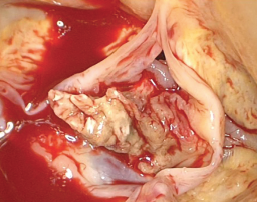
Figure 1. A large vegetation on the aortic valve from a patient with infective endocarditis

Untreated infective endocarditis (IE) is fatal; even with appropriate treatment, IE is associated with high rates of morbidity and mortality worldwide.1 The annual incidence of IE over the past two decades has remained relatively constant, ranging between 1.7 and 6.2 cases/100,000 population. Neither advances in healthcare nor revisions made to the current diagnostic criteria have substantially altered this.1-3 The current definition for IE now incorporates infections of prosthetic heart valves (both bioprosthetic and mechanical), implanted devices (such as pacemakers or ventricular assist devices) and cardiac endothelial surfaces.4 Figure 1 illustrates a large vegetation on the aortic valve from a patient with IE.

The variability in both the clinical manifestations and the course of IE reflect, in part, the heterogeneity of causative micro-organisms; this makes accurate diagnosis by clinical means alone problematic.5,6 Currently, the likelihood of IE is based on a score derived from a combination of clinical, microbiological and echocardiographic evidence.7-10 Laboratory diagnosis consists of culture of the infectious organism from the blood and/or heart valve material. However, the sensitivity of this scoring system is significantly compromised when IE is caused by fastidious or non-cultivable organisms or when patients have received previous antibiotic therapy such that positive cultures cannot be obtained. Novel diagnostic tests, such as nucleic acid amplification technologies (NAATs), that can identify the presence of infective organisms irrespective of the culture constraints will not only improve sensitivity but may reduce empiric treatment by permitting targeted antibiotic therapy. To be clinically useful any such technique must be able to identify the causative micro-organism from blood or tissue rapidly, have appropriately high positive- and negative-predictive values, and demonstrate good reproducibility between laboratories.

This review discusses the developments and application of NAATs for rapid and accurate detection of the infectious aetiology of IE.

Epidemiology and microbiology of IE

IE affects both native and prosthetic (bioprosthetic and mechanical) valves, and may develop through community- or healthcare-associated acquisition (CA-IE and HCA-IE, respectively). Worldwide, CA-IE of the native valve is by far the most common form of IE with rheumatic valve disease remaining the major risk factor;4 in resource-rich countries, however, profound changes in the epidemiology and aetiology of IE have been seen in recent years. There are many reasons for such shifts, but the principles for IE risk remain essentially unaltered: increased opportunity for microbial entry to the blood circulation, the presence of abnormal endocardial surfaces or flow patterns, and diminished host immune capacity.3,4,11 In developed countries with expanding elderly populations, degenerative valve lesions and congenital defects have far outstripped chronic rheumatic valve disease as major underlying risk factors, being present in up to 50% of IE patients over the age of 60 years.5

Although native valve endocarditis remains mostly CA-IE, the incidence of HCA-IE is steadily increasing12 as medical interventions allow greater opportunities for microbial access to the bloodstream via prolonged or repeated intravascular access or cannulation. Cardiothoracic surgical advances in developed healthcare settings have provided the emergence of new risk groups, including patients with prosthetic valves, intravascular devices or endovascular repairs. The flora associated with HCA-IE, predominantly skin-dwelling staphylococcal species, is fundamentally different to that of CA-IE. Such differences therefore demand different treatment.13,14 IE associated with intravenous drug use (IVDU) is in many ways unique – left- and right-sided valves are affected in approximately equal proportions,14 and the variety of microbial flora reflects the different opportunities for contamination at different stages of the process.15,16 Staphylococcus aureus is the predominant organism of IVDU-related IE as it colonises skin flexures; IE caused by Pseudomonas species and other motile Gram-negative bacteria have been attributed to the use of contaminated water to clean needles,17 and dissolving heroin in lemon juice predisposes to candidaemia and Candida IE.18

Prosthetic valve endocarditis occurs at a rate of 3–6/1,000 patient-years, accounting for an estimated 1–5% of all IE cases in resource-rich settings. Early prosthetic valve endocarditis occurs within 60 days of valve surgery11 and is typically HCA-IE, with Staph. aureus, Staph. epidermidis and other coagulase-negative staphylococci the most common pathogens. By contrast, the microbiology of late prosthetic valve endocarditis resembles that of native valve CA-IE.19 The typical microbiology of IE and its patterns of acquisition are summarised in table 1 (available in the PDF download).

Current diagnostic methods used in IE

The recognised epidemiological characteristics, described above, are only associations, and, while they may guide empiric therapy, they are not sufficiently reliable to allow antimicrobial prescribing in individual cases with certainty. For this, microbiological identification of the causative organism is needed; this will also inform the decisions on duration of therapy and even whether surgical intervention should be anticipated.20

However, direct microbiological culture from blood is not without pitfalls. The protean manifestations of IE that in part reflect the variety of aetiological agents, mean that patients frequently present to primary care with non-specific symptoms. Bacteraemia associated with IE is usually continuous but low grade, averaging at 1–10 organisms per ml of blood;21,22 blind trials of antibiotic therapy may, therefore, suppress microbial activity at the valve sufficiently to reduce the sensitivity of blood cultures taken at the time of hospital presentation.2,20-23 Indeed, up to 30% of all IE cases have negative blood cultures.24 A minor proportion of these cases are due to the presence of micro-organisms that are either non-cultivable, fastidious in their nutritional requirements in culture, or are extremely slow-growing on conventional media. The modified Duke criteria try to compensate for these issues, but the scoring system remains flawed (table 2 available in the PDF download).

Rationale for use of NAATs in IE

The advent of molecular technology, the “diagnostic tool for the new millennium”,25 has turned opportunities for rapid organism identification and even detection of certain drug susceptibility patterns from concept into a working reality. The rapid exponential generation of billions of copies of target DNA template from a single original sequence accounts for the potential for NAATs to be sensitive, specific and timely. One of the greatest assets of molecular tests is their potential to be adapted according to purpose. Amplification tests may be designed to be so specific as to detect only a single species, strain, or even resistance-inducing mutation; alternatively, the use of commonly shared genetic sequences as amplification targets allows detection of much broader categories of organisms. For example, the 16S rDNA gene codes for the RNA component of the 30S sub-unit of the prokaryotic ribosome. As it has both highly conserved and variable regions, pan-bacterial primers can be developed to target the conserved regions that immediately adjoin variable regions. Consequently, a single set of primers can be used to amplify the DNA from an enormous range of different bacteria. Subsequent sequencing of this amplified DNA can identify the variable region and thereby the bacterium.26-28 As the 16S rDNA gene sequence is universal throughout all phyla of bacteria it is, therefore, ideally suited for the diagnostics of IE, where there is such immense diversity of possible causative organisms including those that are fastidious or non-cultivable, or even no longer viable.3,29 The majority of NAATs applied to IE have used polymerase chain reaction (PCR) to amplify and subsequently sequence the 16S rDNA gene. To date, this technique has been used most successfully on excised valve tissue, and at present cannot replace microbiological culture of blood. Table 3 ( available in the PDF download) outlines the potential advantages and disadvantages of using molecular techniques to diagnose IE, with specific regard to targeting the 16S rDNA gene.

In fungal endocarditis, the 18S rDNA gene – the equivalent of the bacterial 16S rDNA gene – is more problematic as a diagnostic target since 18S rDNA gene sequences are highly conserved and demonstrate insufficient variability to differentiate between many fungal species. Instead, alternative targets such as short non-coding ribosomal internal transcribed spacer (ITS) regions are increasingly being used. These regions are located between conserved genes encoding for 18S, 5.8S and 28S rDNA, and are highly variable in both length and sequence, and, thus, more efficient for discriminating species than 18S sequences.30

Real-time PCR

More recently, 16S real-time or quantitative PCR (qPCR) has been applied to bacterial IE.2,31 There are a number of advantages of qPCR over conventional PCR: not only is it a more sensitive technique, but it is also more rapid as it eliminates the need for post amplification steps such as gel electrophoresis of PCR products.11 Importantly, qPCR can also measure the amount of inhibition from clinical samples and, hence, evaluate the effectiveness of the nucleic acid extraction method. For this, internal extraction and amplification controls are added to the sample before each of these steps.32

Previous studies have recommended that molecular-based techniques are included as a major criterion in the Duke criteria.22,31,33 Indeed, several studies have now demonstrated PCR positivity on valves in patients classified as possible or definitive IE, even when blood culture was negative.3 Results from these studies are undoubtedly promising, with the sensitivity of PCR from valve material ranging from 41.2% to 96%, compared with direct culture rates of 7.8–24.3%. Information of all published trials using 16S rDNA PCR in IE is available in a supplementary appendix (available online at www.bjcardio.co.uk).

Conclusions

It is important to remember that whatever the method of organism identification in IE, whether culture isolation or molecular nucleic acid detection, the result must still be open to careful interpretation. With an ever-increasing list of organisms that have been associated with both native and prosthetic valve IE, this assessment becomes more complex. Attribution of causation must always be weighed against the possibility of contamination. Appropriate measures to prevent contamination are as critically important in microbiological culture as in the molecular laboratory.

Molecular tests undoubtedly advance the diagnosis of IE; however, a much greater understanding of the variables that influence the sensitivities and specificities of the molecular methods needs to be defined. Recent calls to introduce basic standards in molecular diagnostic test protocols,34 in conjunction with the use of common targets, would allow for a much more accurate comparison between studies. With advances in molecular technology, NAATs now provide far more sensitive and rapid methods to detect the micro-organisms that cause IE. Comparative results from recent studies using NAATs indicate the clear superiority of valve material PCR over conventional valve culture. PCR can provide a positive identification where one or more of the definitive Duke criteria have been inconclusive. Development of consensus guidelines is needed to overcome the difficulties that the lack of standardisation of targets and protocols present to enabling valid comparisons between studies. With recent advances in nucleic acid quantification, NAATs technology may provide a tool to help answer some of the outstanding challenges that remain for IE diagnostics: accurate treatment response monitoring and reliable outcome prediction.

Acknowledgement

SM-J and AZ receive support from the UK Comprehensive Biomedical Research Centre and the National Institue of Medical Research.

Conflict of interest

None declared.

Editors’ note

A supplementary appendix containing information on all published trials using 16S rDNA PCR in IE is available online at www.bjcardio.co.uk

Key messages

  • Infective endocarditis (IE) causes high rates of morbidity and mortality
  • Clinical management is problematic if there are uncertainties over the identity, viability or antibiotic susceptibility of the causative organism
  • Conventional diagnostic microbiological techniques fail when patients have received prior antibiotic therapy, or when the causative organism is fastidious or non-cultivable
  • Nucleic acid amplification techniques (NAATs) now represent a much more sensitive and rapid method for detection of the micro-organisms that cause IE compared with culture alone


References

1. Prendergast B. The changing face of infective endocarditis. Heart 2006;92:879–85.

2. Munoz P, Bouza E, Marin M et al. Heart valves should not be routinely cultured. J Clin Microbiol 2008;46:2897–901.

3. Tak T. Molecular diagnosis of infective endocarditis: a helpful addition to the Duke criteria. Clin Med Res 2004;2:206–08.

4. Bashore T, Cabell C, Fowler V. Update on infective endocarditis. Curr Probl Cardiol 2006;31:274–352.

5. Moreillon P. Infective endocarditis. Lancet 2004;363:139–49.

6. Millar B, Moore J. Antibiotic prophylaxis, body piercing and infective endocarditis. J Antimicrob Chemother 2004;53:123–6.

7. Li J, Sexton D, Mick N et al. Proposed modifications to the Duke criteria for the diagnosis of infective endocarditis. Clin Infect Dis 2000;30:633–8.

8. Lamas C, Eykyn S. Suggested modifications to the Duke criteria for the clinical diagnosis of native valve and prosthetic valve endocarditis: analysis of 118 pathologically proven cases. Clin Infect Dis 1997;25:713–19.

9. Fournier P-E, Casalta J, Habib G, Messana T, Raoult D. Modification of the diagnostic criteria proposed by the Duke Endocarditis Service to permit improved diagnosis of Q fever endocarditis. Am J Med 1996;100:629–33.

10. Bayer AS, Bolger AF, Taubert KA et al. Diagnosis and management of infective endocarditis and its complications. Circulation 1998;98:2936–48.

11. Syed F, Millar B, Prendergast B. Molecular technology in context: a current review of diagnosis and management of infective endocarditis. Prog Cardiovasc Dis 2007;50:181–97.

12. Eykyn S. Endocarditis: basics. Heart 2001;86:476–80.

13. Cosgrove S, Karchmer A. Endocarditis. Medicine 2005;33:66–72.

14. Fowler V, Miro J, Hoen B. Staphylococcus aureus endocarditis: a consequence of medical progress. JAMA 2005;293:3012–21.

15. Brook I. Infective endocarditis caused by anaerobic bacteria. Arch Cardiovasc Dis 2008;101:665–76.

16. Baddour L, Wilson W, Bayer A et al. Infective endocarditis: diagnosis, antimicrobial therapy, and management of complications: a statement for healthcare professionals from the Committee on Rheumatic Fever, Endocarditis, and Kawasaki Disease, Council on Cardiovascular Disease in the Young, and the Councils on Clinical Cardiology, Stroke, and Cardiovascular Surgery and Anesthesia, American Heart Association: Endorsed by the Infectious Diseases Society of America. Circulation 2005;111:e394–e434.

17. Oh S, Havlen P, Hussain N. A case of polymicrobial endocarditis due to anaerobic organisms in an injection drug user. J Gen Intern Med 2005;20:C1–C2.

18. Bisbe J, Miro J, Latorre X et al. Disseminated candidiasis in addicts who use brown heroin: report of 83 cases and review. Clin Infect Dis 1992;15:910–23.

19. Loupa C, Mentzikof D. Current opinions in infective endocarditis. Hellenic J Cardiol 2002;43:53–62.

20. Voldstedlund M, Pedersen L, Baandrup U, Klaaborg K, Fuursted K. Broad-range PCR and sequencing in routine diagnosis of infective endocarditis. APMIS 2008;116:190–8.

21. Watkin R, Lang S, Lambert P, Littler W, Elliott T. The microbial diagnosis of infective endocarditis. J Infect 2003;47:1–11.

22. Millar B, Moore J, Mallon P et al. Molecular diagnosis of infective endocarditis – a new Duke’s criterion. Scand J Infect Dis 2001;33:673–80.

23. Beynon R, Bahl V, Prendergast B. Infective endocarditis. BMJ 2006;333:334–9.

24. Naber C, Erbel R. Infective endocarditis with negative blood cultures. Int J Antimicrob Agents 2007;30S:S32–S36.

25. Yang S, Rothman R. PCR-based diagnostics for infectious diseases: uses, limitations, and future applications in acute-care settings. Lancet Infect Dis 2004;4:337–48.

26. Barken K, Haagensen J, Tolker-Nielsen T. Advances in nucleic acid-based diagnostics of bacterial infections. Clin Chim Acta 2007;384:1–11.

27. Rice PA, Madico GE. Polymerase chain reaction to diagnose infective endocarditis. Will it replace blood cultures? Circulation 2005;111:1352–4.

28. Petti C. Detection and identification of microorganisms by gene amplification and sequencing. Clin Infect Dis 2007;44:1108–14.

29. Clarridge III J. Impact of 16S rRNA gene sequence analysis for identification of bacteria on clinical microbiology and infectious diseases. Clin Microbiol Rev 2004;17:840–62.

30. Deng W, Xi D, Mao H, Wanapat M. The use of molecular techniques based on ribosomal RNA and DNA for rumen microbial ecosystem studies: a review. Mol Biol Rep 2008;35:265–74.

31. Marin M, Munoz P, Sanchez M et al. Molecular diagnosis of infective endocarditis by real-time broad-range polymerase chain reaction (PCR) and sequencing directly from heart valve tissue. Medicine 2007;86:195–202.

32. Mackay I. Real-time PCR in the microbiology laboratory. Clin Microbiol Infect 2004;10:190–212.

33. Bosshard P, Kronenberg A, Zbinden R, Ruef C, Bottger E, Altwegg M. Etiologic diagnosis of infective endocarditis by broad-range polymerase chain reaction: a 3-year experience. Clin Infect Dis 2003;37:167–72.

34. Bustin S, Benes V, Garson J et al. The MIQE guidelines: minimum information for publication of quantitative real-time PCR experiments. Clin Chem 2009;55:611–22.

35. Mylonakis E, Calderwood S. Infective endocarditis in adults. N Engl J Med 2001;345:1318–30.

36. Brouqui P, Raoult D. Endocarditis due to rare and fastidious bacteria. Clin Microbiol Rev 2001;14:177–207.

37. Mandell G, Bennett J, Dolin R. Cardiovascular infections. In: Principles and practice of infectious diseases. Philadelphia: Elsevier/Churchill Livingstone, 2005.

38. Cuculi F, Toggweiler S, Auer M, Auf der Maur C, Zuber M, Erne P. Serum procalcitonin has the potential to identify Staphylococcus aureus endocarditis. Eur J Clin Microbiol Infect Dis 2008;27:1145–9.

39. Dreier J, Vollmer T, Freytag C, Baumer D, Korfer R, Kleesiek K. Culture-negative infectious endocarditis caused by Bartonella spp.: 2 case reports and a review of the literature. Diagn Microbiol Infect Dis 2008;61:476–83.

40. Lang S, Watkin RW, Lambert PA, Bonser RS, Littler WA, Elliott TSJ. Evaluation of PCR in the molecular diagnosis of endocarditis. J Infect 2004;48:269–75.

41. Mueller C, Huber P, Laifer G, Mueller B, Perruchoud A. Procalcitonin and the early diagnosis of infective endocarditis. Circulation 2004;109:1707–10.

42. Christ-Crain M, Muller B. Procalcitonin in bacterial infections – hype, hope, more or less? Swiss Med Wkly 2005;135:451–60.

43. Hodgetts A, Levin M, Kroll J, Langford P. Biomarker discovery in infectious diseases using SELDI. Future Microbiol 2007;2:35–49.

44. Sontakke S, Cadenas M, Maggi R, Diniz P, Breitschwerdt E. Use of broad-range 16S rDNA PCR in clinical microbiology. J Microbiol Methods 2009;76:217–25.

45. Millar B, Moore J. Current trends in the molecular diagnosis of infective endocarditis. Eur J Clin Microbiol Infect Dis 2004;23:353–65.

46. Johnson J. Development of polymerase chain reaction-based assays for bacterial gene detection. J Microbiol Methods 2000;41:201–09.

47. Silkie S, Tolcher M, Nelson K. Reagent decontamination to eliminate false-positives in Escherichia coli qPCR. J Microbiol Methods 2008;72:275–82.

48. Podglajen I, Bellery F, Poyart C et al. Comparative molecular and microbiologic diagnosis of bacterial endocarditis. Emerg Infect Dis 2003;9:1543–7.

49. Haanpera M, Jalava J, Huovinen P, Meurman O, Rantakokko-Jalava K. Identification of alpha-haemolytic streptococci by pyrosequencing the 16S rRNA gene and by use of VITEK 2. J Clin Microbiol 2007;45:762–70.

50. Ghebremedhin B, Layer F, Konig W, Konig B. Genetic classification and distinguishing of Staphylococcus species based on different partial gap, 16S rRNA, hsp60, rpoB, sodA and tuf gene sequences. J Clin Microbiol 2008;46:1019–25.

51. Faibis F, Mihaila L, Perna S et al. Streptococcus sinensis: an emerging agent of infective endocarditis. J Med Microbiol 2008;57:528–31.

52. Fihman V, Raskine L, Barrou Z et al. Lactococcus garvieae endocarditis: identification by 16S rRNA and sodA sequence analysis. J Infect 2006;52:e3–e6.

53. Huggett J, Novak T, Garson J et al. Differential susceptibility of PCR reactions to inhibitors: an important and unrecognised phenomenon. BMC Research Notes 2008;1(1):70.

Are all angiotensin receptors blockers the same?

Br J Cardiol 2010;17:s2 Leave a comment
Click any image to enlarge
Authors:
Sponsorship Statement: This supplement has been sponsored by Takeda UK Ltd. Sponsorship included all print and production costs of the supplement, plus support of the meeting where the discussions took place and support in the writing of the papers. Takeda UK Ltd did not take part in the discussions held at the meeting and editorial control of this supplement resides with the authors and the journal. The supplement underwent peer review and was also reviewed by the faculty and Takeda UK Ltd for accuracy.

This supplement is based on the proceedings of a one-day round-table meeting held on 20th February 2010 to debate whether angiotensin receptor blockers (ARBs) have a class effect or whether they show different efficacy and safety profiles and so should be selected and used on an individual basis. The round-table meeting was initiated and funded by Takeda UK Ltd.

With the patent expiry of the first-in-class ARB, losartan, in March 2010, it is important to decide whether all ARBs are interchangeable since the availability of generic losartan at a price that could be perceived as attractive to primary care trusts (PCTs) and prescribers may result in pressure on physicians to switch patients onto the cheapest generic ARB available. Also, the recent EU Directive 2001/83/EC provides a mechanism for harmonisation of drug labelling for drugs across countries within the EU: this might imply that all ARBs are interchangeable, thus reinforcing the use of a cheaper generic ARB in all clinical situations.

The key conclusion from this meeting was that the evidence base for ARBs varies for the different drugs in this class. Therefore, assuming a class effect may not optimise management decisions for individual patients. Different ARBs have differing pharmacological effects, with potentially different efficacy profiles. Randomised trial evidence differs for the various drugs in this class and so they should not be used interchangeably. The ARB used in a particular setting should be selected based on clinical trial evidence for its use rather than solely on cost considerations.  The papers in this supplement provide the evidence for these conclusions and provide guidance for the physician in selecting the most appropriate ARB for various clinical situations.

Conflict of interest

MC provides consultancy advice to a number of pharmaceutical and device companies, including Takeda UK Ltd. He holds no stocks or shares in any such company.

Disclaimer: UK prescribing information current at the date of publication of this supplement can be found by downloading the PDF. Medinews Cardiology Limited advises healthcare professionals to consult up-to-date Prescribing Information and the full Summary of Product Characteristics available from the manufacturers before prescribing any product. Medinews Cardiology Limited cannot accept responsibility for any errors in prescribing which may occur.

Comparative ARB pharmacology

Br J Cardiol 2010;17:s3-s5 Leave a comment
Click any image to enlarge
Authors:
Sponsorship Statement: This supplement has been sponsored by Takeda UK Ltd. Sponsorship included all print and production costs of the supplement, plus support of the meeting where the discussions took place and support in the writing of the papers. Takeda UK Ltd did not take part in the discussions held at the meeting and editorial control of this supplement resides with the authors and the journal. The supplement underwent peer review and was also reviewed by the faculty and Takeda UK Ltd for accuracy.

Angiotensin II receptor blockers (ARBs) are a class of pharmaceutical agents that modulate the renin-angiotensin-aldosterone system (RAAS), which is responsible for blood pressure (BP) regulation and fluid and electrolyte homeostasis.

Continue reading Comparative ARB pharmacology

Disclaimer: UK prescribing information current at the date of publication of this supplement can be found by downloading the PDF. Medinews Cardiology Limited advises healthcare professionals to consult up-to-date Prescribing Information and the full Summary of Product Characteristics available from the manufacturers before prescribing any product. Medinews Cardiology Limited cannot accept responsibility for any errors in prescribing which may occur.

ARBs in hypertension

Br J Cardiol 2010;17:s6-s9 Leave a comment
Click any image to enlarge
Authors:
Sponsorship Statement: This supplement has been sponsored by Takeda UK Ltd. Sponsorship included all print and production costs of the supplement, plus support of the meeting where the discussions took place and support in the writing of the papers. Takeda UK Ltd did not take part in the discussions held at the meeting and editorial control of this supplement resides with the authors and the journal. The supplement underwent peer review and was also reviewed by the faculty and Takeda UK Ltd for accuracy.

High blood pressure (BP) is one of the leading health risk factors for global mortality, being a higher risk factor than tobacco use, high cholesterol and under-nutrition in both developed and developing regions.1 The estimated total number of adults around the world with hypertension in the year 2000 was 972 million but this figure is predicted to rise by approximately 60% by 2025 to a total of 1.56 billion, due to an ageing population2 and the adverse impact of several aspects of development (figure 1).

Impact of hypertension

Epidemiological data have established a strong direct relationship between increased BP and raised cardiovascular (CV) disease risk. For individuals aged 40–69 years, each increment in systolic BP of 20 mmHg or diastolic BP of 10 mmHg doubles the risk of CV disease (i.e. stroke, ischaemic heart disease, and other vascular diseases) across the entire BP range.3

Figure 1. Prevalence of hypertension worldwide

The World Health Organization has identified high BP as one of the most important preventable causes of premature morbidity and mortality. Antihypertensive drugs have convincingly been shown to be effective treatments for reducing this CV risk. By the mid-1990s an overview of 17 completed randomised trials of antihypertensive treatment by MacMahon et al. demonstrated that a 5–6 mmHg reduction in diastolic BP reduced stroke risk by 38% and coronary heart disease (CHD) risk by 16%.4 There are also other benefits conferred to a variable extent by different antihypertensive therapies, including regression of left ventricular hypertrophy, prevention of dementia, regression of vascular remodelling and atherosclerosis, as well as prevention or delay of the onset of diabetes.

The treatment of hypertension

Management of hypertension in the UK has improved greatly in the last decade due to increased awareness of the significant health risks associated with the condition, improved hypertension management offered by primary care practitioners, and the availability of effective treatment options. Furthermore, the British Hypertension Society (BHS)5 and National Institute for Health and Clinical Excellence (NICE)/ BHS guidelines6 have become widely and increasingly adopted by healthcare professionals. These guidelines provide a clear simple treatment algorithm for patients diagnosed with hypertension. For hypertensive patients aged 55 years and over, or black patients of any age, the initial therapy should be either a calcium channel blocker (CCB) or a diuretic (thiazide or thiazide-type diuretic e.g. indapamide or chlorthalidone). In hypertensive patients younger than 55 years, first-choice therapy should be an angiotensin-converting enzyme inhibitor (ACE inhibitor) or an angiotensin receptor blocker (ARB) if an ACE inhibitor is not tolerated (figure 2).

Figure 2. NICE/BHS guidelines for drug treatment of hypertension

However, CV events are most effectively prevented not by simply reducing high BP in isolation but by improving more than one risk factor at once, since CV events often have a multifactorial aetiology. The various classes of antihypertensive drugs exert differential effects on established non-BP risk factors, including high-density lipoprotein (HDL)-cholesterol, triglycerides, pulse rate, potassium levels and glucose levels. In addition, antihypertensive drugs vary in their duration of action, effect on central BP and their effect on BP variability. Therefore, it cannot be assumed that all antihypertensives exert equal CV protection, even with comparable clinic BP-lowering effects, although such BP-lowering effects are important.

ARBs for the treatment of hypertension

While diuretics are often used as first-line therapy in patients with hypertension, their use is associated with the lowest patient compliance, and compliance with beta-blocker therapy is not notably better. Incremental increases in patient compliance are seen for CCBs and ACE inhibitors, but the highest rate of patient compliance with antihypertensive therapy is seen with the ARBs (figure 3). However, it is uncertain whether these findings are explained by drug tolerability, financial incentives, newness of the product, selection bias or other factors.7

Figure 3. Compliance at one year with antihypertensive treatment

Initially, there were conflicting data regarding use of ARBs for the treatment of hypertension and even a claim that these drugs may increase CV events such as myocardial infarction (MI).8 However, subsequent systematic reviews and meta-analyses have refuted these findings. McDonald et al. evaluated the effect of ARBs on the risk of MI in patients at risk for CV events through a systematic review of controlled trials of ARBs. They identified 19 studies which included 31,569 patients: the use of ARBs was not associated with an increased risk of MI compared with placebo (odds ratio 0.94, 95% confidence interval [CI] 0.75 to 1.16), or with an increased risk of MI when compared with ACE inhibitors (odds ratio 1.01, 95% CI 0.87 to 1.16).9 Similarly, a meta-analysis by Volpe et al. evaluated the effects of treatment using an ARB on the risk of MI, CV and all-cause death, as compared with conventional treatment or placebo. Twenty trials were evaluated comprising 108,909 patients, and this study concluded that the risk of MI was similar in patients treated with an ARB compared with other antihypertensive drugs in a wide range of clinical situations.10

ARBs in hypertension and ventricular hypertrophy

Left ventricular hypertrophy (LVH) is a strong independent indicator of risk of CV morbidity and death in patients with hypertension. Dahlöf et al. aimed to establish whether selective blocking of angiotensin II with losartan or atenolol improves LVH beyond the reduction in BP, and whether this consequently reduced CV morbidity and death. Results showed that losartan reduced a composite end point of morbidity and death (driven predominantly by a reduction in stroke) to a greater extent than atenolol for a similar reduction in BP.11 It would appear that ARBs (in this case, losartan) confer benefits on LVH and CV risk, specifically stroke events, beyond just effectively controlling BP.

ARBs in hypertension and stroke

The Candesartan Atenolol Carotid Haemodynamics Endpoint Trial (CACHET) was conducted by Ariff et al. to investigate whether ARB treatment compared to beta-blocker treatment caused cardiac and large artery remodelling, and the relationship of any arterial remodelling to haemodynamic changes. Results showed that both candesartan (8 to 16 mg per day) and atenolol (50 to 100 mg per day) reduced intima-media thickness (IMT) and intima-media area (IMA) and increased distensibility to similar extents after 52 weeks of treatment. However, despite similar reductions in BP, treatment with atenolol resulted in a lesser reduction in left ventricular mass index, a decrease in lumen diameter and a reduction in carotid blood flow compared with candesartan. Therefore, candesartan demonstrated BP-independent effects on ventricular and carotid arterial structure, which may be a contributory factor to the beneficial effects of antihypertensive treatment with ARBs on some components of CV disease12 (figure 4).

Figure 4. Change in common carotid intima-media thickness (IMT) in the CACHET trial

The beneficial effects of ARBs on stroke risk but not CHD risk reduction can also be seen in the results of the Losartan Intervention For Endpoint reduction in hypertension (LIFE) study, which demonstrated superior stroke outcome for losartan versus atenolol beyond BP reduction.11

The ACCESS study13 was designed to assess the effects of ARB therapy within 36 hours after a stroke in patients with elevated BP. Cumulative 12-month mortality and the number of vascular events differed significantly in favour of candesartan versus placebo (odds ratio 0.475; 95% CI 0.252 to 0.895). The study concluded that early neurohumoral inhibition using an ARB has beneficial effects in cerebral and myocardial ischaemia and, unless contra-indicated, early antihypertensive therapy using candesartan is a well tolerated therapeutic option.

However, not all ARBs have shown consistent clinical benefits in various randomised clinical trials, perhaps reflecting differential effects on BP lowering. The VALUE trial was designed to test the hypothesis that, for the same BP control, valsartan would reduce cardiac morbidity and mortality more than amlodipine in hypertensive patients with a high CV risk. Results showed that BP was reduced by both valsartan and amlodipine treatments, but the effects of the amlodipine-based regimen were more pronounced, especially in the early period (BP 4.0/2.1 mmHg lower in amlodipine group compared to valsartan group after one month, and lower by 1.5/1.3 mmHg after one year; p<0.001 between groups). These BP differences were associated with a trend towards fewer fatal and non-fatal strokes in the amlodipine group (322 versus 281 in the valsartan and amlodipine groups, respectively, HR=1.15 [95% CI 0.98, 1.36], p=0.08).14 Similarly, the PRoFESS trial investigated the effect of lowering BP with the angiotensin receptor blocker, telmisartan within 120 days after a stroke. A total of 20,332 patients were enrolled who recently had an ischaemic stroke and the study evaluated the effects of therapy with telmisartan (80 mg daily) versus placebo. Results showed that therapy with telmisartan initiated after an ischaemic stroke and continued for 2.5 years did not significantly lower the rate of recurrent stroke, major CV events or diabetes compared with placebo.15

Diabetogenic potential of antihypertensive drugs

Both diuretics and beta-blockers induce adverse effects on glucose metabolism and may cause new‑onset diabetes (NOD). The size of this effect is variable within these two drug classes and is affected by drug dose. Elliott et al. undertook a systematic review to assess the effects of antihypertensive agents on the risk of NOD, including 22 clinical trials with 143,153 patients. The study concluded that the risk of NOD with antihypertensive drugs was lowest for ARBs and ACE inhibitors, followed by CCBs and placebo, beta-blockers and diuretics, in rank order16 (figure 5).

Figure 5. Prevention of type 2 diabetes: impact of antihypertensive agents

It is therefore recommended that the combination of a diuretic and beta-blocker should be avoided for the routine treatment of hypertension, except in cases where compelling reasons apply. Conversely, drugs that block the renin-angiotensin system appear to afford an important degree of protection against the onset of NOD, therefore, drugs such as ACE inhibitors or ARBs (that block the renin-angiotensin system) should usually form part of the cocktail of agents necessary to lower BP in patients with impaired glucose tolerance, and also in patients who already have type 2 diabetes.

Conclusions

Hypertension diagnosis and treatment has improved markedly in the UK in the past decade, with hypertension management being simplified by the publication of the NICE/BHS ‘ACD’ algorithm. Evidence shows that ARBs are better tolerated compared to the other major drug classes in the treatment of hypertensive patients. ARBs vary in terms of duration of action and BP‑lowering efficacy.

Overall, CV protective effects are similar between ACE inhibitors and ARBs, but compared with other agents there is some evidence that ARBs may offer better stroke protection and like ACE inhibitors, may be associated with a reduced risk of developing new-onset diabetes. There is no robust evidence that ARBs are associated with significantly increased CV events, including MI, compared to other antihypertensive drugs.

Conflict of interest

NP has served as consultant and received travel expenses, payment for speaking at meetings, or funding for research from several pharmaceutical companies, including Takeda.

Key messages

  • Control of hypertension in the UK is improving, with good guidelines provided by the National Institute for Health and Clinical Excellence (NICE)/British Hypertension Society (BHS) ‘ACD’ algorithm
  • Angiotensin receptor blockers (ARBs) demonstrate good efficacy in hypertension and a good safety profile: early fears about increased risk of myocardial infarction (MI) have been discredited by recent meta-analyses and trials

References

  1. Ezzati M, Lopez AD, Rodgers A, Vander Hoorn S, Murray CJ (Comparative Risk Assessment Collaborating Group). Selected major risk factors and global and regional burden of disease. Lancet 2002;360(9343):1347–60.
  2. Kearney PM, Whelton M, Reynolds K, Muntner P, Whelton PK, He J. Global burden of hypertension: analysis of worldwide data. Lancet 2005;365(9455):217–23.
  3. Lewington S, Clarke R, Qizilbash N, Peto R, Collins R (Prospective Studies Collaboration). Age-specific relevance of usual blood pressure to vascular mortality: a meta-analysis of individual data for one million adults in 61 prospective studies. Lancet 2002;360(9349):1903–13.
  4. MacMahon S, Neal B, Rodgers A. Blood pressure lowering for the primary and secondary prevention of coronary and cerebrovascular disease. Schweiz Med Wochenschr 1995;125(51-52):2479–86.
  5. Williams B, Poulter NR, Brown MJ et al. (British Hypertension Society). Guidelines for management of hypertension: report of the fourth working party of the British Hypertension Society, 2004-BHS IV. J Hum Hypertens 2004;18(3):139–85.
  6. Hypertension – full guideline. NICE/British Hypertension Society and National Collaborating Centre for Chronic Conditions 2006 (www.nice.org.uk/CG034)
  7. Bloom BS. Continuation of initial antihypertensive medication after 1 year of therapy. Clin Ther 1998;20(4):671–81.
  8. Verma S, Strauss M. Angiotensin receptor blockers and myocardial infarction. BMJ 2004;329(7477):1248–9.
  9. McDonald MA, Simpson SH, Ezekowitz JA, Gyenes G, Tsuyuki RT. Angiotensin receptor blockers and risk of myocardial infarction: systematic review. BMJ 2005;331(7521):873.
  10. Volpe M, Tocci G, Sciarretta S, Verdecchia P, Trimarco B, Mancia G. Angiotensin II receptor blockers and myocardial infarction: an updated analysis of randomized clinical trials. J Hypertens 2009;27(5):941–6.
  11. Dahlöf B, Devereux RB, Kjeldsen SE et al. (LIFE Study Group). Cardiovascular morbidity and mortality in the Losartan Intervention For Endpoint reduction in hypertension study (LIFE): a randomised trial against atenolol. Lancet 2002;359(9311):995–1003.
  12. Ariff B, Zambanini A, Vamadeva S et al. Candesartan- and atenolol-based treatments induce different patterns of carotid artery and left ventricular remodeling in hypertension (CACHET Trial). Stroke 2006;37(9):2381–4.
  13. Schrader J, Lüders S, Kulschewski A et al. (Acute Candesartan Cilexetil Therapy in Stroke Survivors Study Group). The ACCESS Study: evaluation of Acute Candesartan Cilexetil Therapy in Stroke Survivors. Stroke 2003; 34(7):1699–703.
  14. Julius S, Kjeldsen SE, Weber M et al. (VALUE trial group). Outcomes in hypertensive patients at high cardiovascular risk treated with regimens based on valsartan or amlodipine: the VALUE randomised trial. Lancet 2004;363(9426):2022–31.
  15. Yusuf S, Diener HC, Sacco RL et al. (PRoFESS Study Group). Telmisartan to prevent recurrent stroke and cardiovascular events. N Engl J Med 2008;359(12):1225–37.
  16. Elliott WJ, Meyer PM. Incident diabetes in clinical trials of antihypertensive drugs: a network meta-analysis. Lancet 2007;369(9557):201–07.
Disclaimer: UK prescribing information current at the date of publication of this supplement can be found by downloading the PDF. Medinews Cardiology Limited advises healthcare professionals to consult up-to-date Prescribing Information and the full Summary of Product Characteristics available from the manufacturers before prescribing any product. Medinews Cardiology Limited cannot accept responsibility for any errors in prescribing which may occur.

ARBs in chronic heart failure

Br J Cardiol 2010;17:s10-s12 Leave a comment
Click any image to enlarge
Authors:
Sponsorship Statement: This supplement has been sponsored by Takeda UK Ltd. Sponsorship included all print and production costs of the supplement, plus support of the meeting where the discussions took place and support in the writing of the papers. Takeda UK Ltd did not take part in the discussions held at the meeting and editorial control of this supplement resides with the authors and the journal. The supplement underwent peer review and was also reviewed by the faculty and Takeda UK Ltd for accuracy.

Heart failure epidemiology

The incidence of heart failure (HF) increases with age and its prevalence is increasing due to an ageing population.1 Although some HF patients can live for many years, absolute survival rates are poor in both sexes, with 50% of men dead at 2.3 years (range: 1.3–2.3 years) and 50% of women dead at 1.7 years (range: 1.32–1.79 years).2 Recent reports, however, suggest that the prognosis has substantially improved in the UK, thought to be related to better treatment and monitoring.3,4

Continue reading ARBs in chronic heart failure

Disclaimer: UK prescribing information current at the date of publication of this supplement can be found by downloading the PDF. Medinews Cardiology Limited advises healthcare professionals to consult up-to-date Prescribing Information and the full Summary of Product Characteristics available from the manufacturers before prescribing any product. Medinews Cardiology Limited cannot accept responsibility for any errors in prescribing which may occur.

ARBs in renal disease

Br J Cardiol 2010;17:s13-s14 Leave a comment
Click any image to enlarge
Authors:
Sponsorship Statement: This supplement has been sponsored by Takeda UK Ltd. Sponsorship included all print and production costs of the supplement, plus support of the meeting where the discussions took place and support in the writing of the papers. Takeda UK Ltd did not take part in the discussions held at the meeting and editorial control of this supplement resides with the authors and the journal. The supplement underwent peer review and was also reviewed by the faculty and Takeda UK Ltd for accuracy.

Diabetic nephropathy is estimated to affect up to 40% of patients with type 2 diabetes. Diabetic nephropathy is characterised by proteinuria, hypertension, progressive decline in renal function and increased mortality (up to 12% per year in patients with increased creatinine levels).

Renal disease and diabetes

Microalbuminuria is known to be a marker of increased cardiovascular (CV) risk. It is not clear whether reducing microalbuminuria on its own is associated with an improved cardiovascular prognosis, but in secondary analyses from studies of angiotensin receptor blockers (ARBs) in people with type 2 diabetes, reduction in albuminuria was associated with a decreased risk of a CV event. Observational analyses from the RENAAL trial found that the magnitude of albuminuria reduction predicted the reduced risk of CV events (figure 1).1

Figure 1. Kaplan-Meier curves for cardiovascular (CV) and heart failure end points, stratified by month-6 change in albuminuria: data from the RENAAL study

Generally, treatment of risk factors such as hypertension will also reduce albuminuria.2 A strategy of targeting treatment specifically to albuminuria has not been tested prospectively in patients with diabetes, but interventions that reduce albuminuria or delay its increase (such as use of ARBs, even in conventionally normotensive patients) may prove to be a useful therapy for diabetic kidney disease.

RAAS inhibition and diabetic nephropathy

Many studies have documented the beneficial effects of both angiotensin-converting enzyme inhibitors (ACE inhibitors)3, 4 and ARBs5–7 on renal function, showing benefits beyond those of simply blood pressure control. Most studies of ARBs have used either irbesartan or losartan.   In a comparison of the calcium channel blocker (CCB) amlodipine versus irbesartan, results from Lewis et al. showed that irbesartan was associated with a risk of the primary composite end point (defined as a doubling of the baseline serum creatinine concentration, the onset of end-stage renal disease, or death from any cause) 20% lower than that in the placebo group (p=0.02) and 23% lower than that in the amlodipine group (p=0.006), with this effect considered to be independent of effect on blood pressure lowering.7 Mogensen et al. also compared the effects of an ACE inhibitor and an ARB, by assessing the efficacy of lisinopril, candesartan or both on blood pressure and urinary albumin excretion in 199 patients with hypertension, microalbuminuria and type 2 diabetes.  The study found that candesartan 16 mg once daily was as effective as lisinopril 20 mg once daily in reducing blood pressure and microalbuminuria in hypertensive patients with type 2 diabetes. Combination treatment was well tolerated and more effective in reducing blood pressure than either drug alone and it also reduced the urinary albumin:creatinine ratio to a greater extent than either drug alone.8 In a direct comparison of the ARBs telmisartan and losartan in the AMADEO study,9 telmisartan was shown to be superior to losartan in reducing proteinuria in hypertensive patients with diabetic nephropathy, despite a similar reduction in blood pressure.

In an attempt to consolidate the individual study results, a meta-analysis by Kunz et al. analysed 49 studies involving 6,181 participants, which reported the results of 72 comparisons comprising ARBs versus placebo, ACE inhibitors, CCBs, or the combination of ARBs and ACE inhibitors in patients with microalbuminuria or proteinuria (from whatever cause) with or without diabetes.  The ARBs and ACE inhibitors were found to reduce proteinuria to a similar degree, with the combination of ARBs and ACE inhibitors reducing proteinuria more than either agent alone.  However, the limitations to this research were that most studies were small, varied in quality, and did not provide reliable data on adverse drug reactions so the effect of combination therapy on the adverse event profile could not be evaluated.10

Conclusions

In conclusion, there are numerous agents available to block the RAAS and improve the outcome for patients with diabetic nephropathy.  Multiple studies have examined the effect of different ACE inhibitors and ARBs, either as monotherapy or in combination, and have demonstrated the effectiveness of both classes of agents in lowering blood pressure and reducing both cardiovascular mortality and morbidity in various at-risk patient populations, including patients with type 2 diabetes.  Current UK guidelines recommend treatment with an ACE inhibitor, or with an ARB if the ACE inhibitor is not tolerated.11 In general, the randomised clinical trials in patients with diabetic nephropathy have used losartan or irbesartan:  both are licensed for use in patients with hypertension and type 2 diabetic nephropathy. However, the recent AMADEO study has also shown telmisartan to have efficacy in this area.

Conflict of interest

MTK received an honorarium from Takeda for his contribution to this supplement.

Key messages

  • Increased proteinuria is associated with increased cardiovascular mortality and morbidity, and therefore identifies patients at high risk who should be targeted for effective reduction of cardiovascular risk factors
  • Treatment of cardiovascular risk factors such as hypertension and hypercholesterolaemia has a positive effect on the development and progression of renal dysfunction
  • Losartan and irbesartan have been shown to slow the progression of renal disease

References

  1. de Zeeuw D, Remuzzi G, Parving HH et al.  Albuminuria, a therapeutic target for cardiovascular protection in type 2 diabetic patients with nephropathy. Circulation 2004;110(8):921–7.
  2. de Zeeuw D, Remuzzi G, Parving HH et al. Proteinuria, a target for renoprotection in patients with type 2 diabetic nephropathy: lessons from RENAAL. Kidney Internat 2004;65(6):2309–20.
  3. Lewis EJ, Hunsicker LG, Bain RP, Rohde RD.  The effect of angiotensin-converting-enzyme inhibition on diabetic nephropathy. The Collaborative Study Group.  N Engl J Med 1993;329(20):1456–62.
  4. The GISEN Group (Gruppo Italiano di Studi Epidemiologici in Nefrologia) [No authors listed].  Randomised placebo-controlled trial of effect of ramipril on decline in  glomerular filtration rate and risk of terminal renal failure in proteinuric, non-diabetic nephropathy.  Lancet 1997;349(9069):1857–63.
  5. Parving HH, Lehnert H, Bröchner-Mortensen J, Gomis R, Andersen S, Arner P (Irbesartan in Patients with Type 2 Diabetes and Microalbuminuria Study Group).  The effect of irbesartan on the development of diabetic nephropathy in patients with type 2 diabetes.  N Engl J Med 2001;345(12):870–8.
  6. Brenner BM, Cooper ME, de Zeeuw D et al. (RENAAL Study Investigators). Effects of losartan on renal and cardiovascular outcomes in patients with type 2 diabetes and nephropathy.  N Engl J Med 2001;345(12):861–9.
  7. Lewis EJ, Hunsicker LG, Clarke WR et al. (Collaborative Study Group).  Renoprotective effect of the angiotensin-receptor antagonist irbesartan in patients with nephropathy due to type 2 diabetes.  N Engl J Med 2001;345(12):851–60.
  8. Mogensen CE, Neldam S, Tikkanen I et al.  Randomised controlled trial of dual blockade of renin-angiotensin system in patients with hypertension, microalbuminuria, and non-insulin dependent diabetes: the candesartan and lisinopril microalbuminuria (CALM) study.  BMJ 2000;321(7274):1440–4.
  9. Bakris G, Burgess E, Weir M, Davidai G, Koval S on behalf of the AMADEO Study Investigators.  Telmisartan is more effective than losartan in reducing proteinuria in patients with diabetic nephropathy. Kidney Internat 2008; 74:364–9; doi:10.1038/ki.2008.204; published online 21 May 2008.
  10. Kunz R, Friedrich C, Wolbers M, Mann JF.  Meta-analysis: effect of monotherapy and combination therapy with inhibitors of the renin angiotensin system on proteinuria in renal disease.  Ann Intern Med 2008;148(1):30–48.
  11. NICE clinical guideline 73. Chronic kidney disease: early identification and management of chronic kidney disease in adults in primary and secondary care. September 2008.
Disclaimer: UK prescribing information current at the date of publication of this supplement can be found by downloading the PDF. Medinews Cardiology Limited advises healthcare professionals to consult up-to-date Prescribing Information and the full Summary of Product Characteristics available from the manufacturers before prescribing any product. Medinews Cardiology Limited cannot accept responsibility for any errors in prescribing which may occur.