UNSEEN AND UNHEARD: Addressing Barriers in Diagnostic and Treatment Inequalities for p.V142I hATTR-CM in Black Communities

Br J Cardiol 2026;33(suppl 1):S3doi:10.5837/bjc.2026.s01
Click any image to enlarge
Authors:
Sponsorship Statement: The development of this white paper was organised and fully funded by Pfizer Ltd. Pfizer Ltd also organised and funded the publication of this work as a supplement to the British Journal of Cardiology.
PP-UNP-GBR-14520 | June 2026

Pfizer

Transthyretin Amyloidosis (ATTR) is a progressive, systemic and life-shortening condition that remains widely under-recognised and frequently misdiagnosed.1 It occurs in two distinct forms: wild-type (wtATTR), which is typically age-related, and hereditary (hATTR), which is caused by pathogenic variants in the transthyretin (TTR) gene.1,2 The p.V142I (formerly V122I) variant of hATTR primarily presents as cardiomyopathy (CM), but can also result in other clinical manifestations such as polyneuropathy.3 The p.V142l variant is most commonly found in individuals with West African and African-Caribbean ancestry.4–7

UNSEEN AND UNHEARD – Addressing Barriers in Diagnostic and Treatment Inequalities for p.V142I hATTR-CM in Black Communities

Diagnosis of ATTR-CM can take years – by which time irreversible heart failure may have already occurred.2,8 hATTR-CM severely impairs quality of life, and median survival in advanced stages is typically only two to three years without timely intervention.2

The Genetic Link to Heart Failure

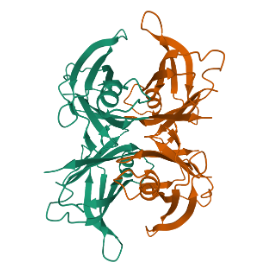
Figure 1. Underlying Pathology of hATTR Caused by the p.V142I Variant9,10

Liver

TTR protein

Amyloid fibrils

Cardiomyopathy

Variation in transthyretin (TTR) gene alters structure of TTR protein produced in the liver

Destabilisation and dissociation of TTR protein

TTR protein subsequently misfolds and aggregates into amyloid fibrils

Fibrils deposit primarily in the myocardium resulting in a predominantly cardiac phenotype

The Genetic Link to Heart Failure

Figure 1. Underlying Pathology of hATTR Caused by the p.V142I Variant9,10

Liver

Variation in transthyretin (TTR) gene alters structure of TTR protein produced in the liver

TTR protein

Destabilisation and dissociation of TTR protein

Amyloid fibrils

TTR protein subsequently misfolds and aggregates into amyloid fibrils

Cardiomyopathy

Fibrils deposit primarily in the myocardium resulting in a predominantly cardiac phenotype

Individuals with p.V142I typically present with heart failure (HF), restrictive cardiomyopathy, and arrhythmias which can ultimately lead to death.5,11,12
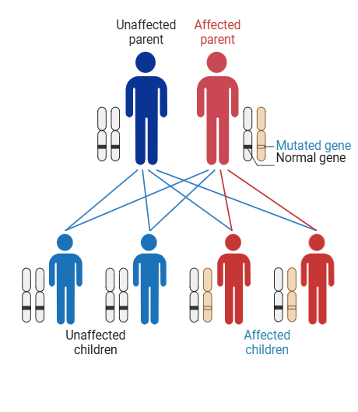
The hereditary form follows an autosomal dominant inheritance pattern. Only one parent needs to pass on the variant for a child to carry it.13–15 Genetic testing is critical – not only to confirm diagnosis and identify family members who carry the variant, but also to enable early detection and timely intervention for improved outcomes.16,17

Inherited Risk

Individuals with p.V142I typically present with heart failure (HF), restrictive cardiomyopathy, and arrhythmias which can ultimately lead to death.5,11,12
The hereditary form follows an autosomal dominant inheritance pattern. Only one parent needs to pass on the variant for a child to carry it.13–15 Genetic testing is critical – not only to confirm diagnosis and identify family members who carry the variant, but also to enable early detection and timely intervention for improved outcomes.16,17

Inherited Risk

Prevalence of the p.V142I Variant

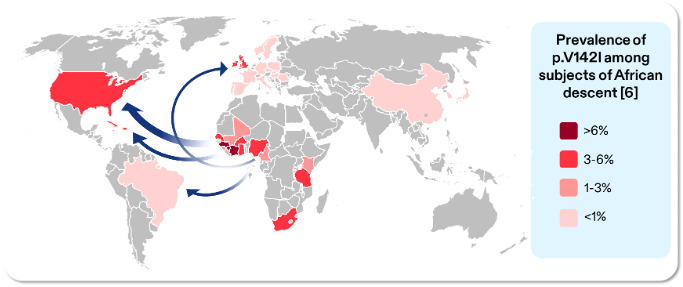
The p.V142I variant is much more prevalent in populations of African descent than globally and exposes a significant health disparity.4,7,18

Population genetics studies supports the origin of p.V142I in West African cohorts and its subsequent introduction into populations across the Americas, the United Kingdom, and Caribbean during periods of migration.6

Figure 2. Prevalence of p.V142I Among Subjects of African Descent6

Figure 2. Prevalence of p.V142I Among Subjects of African Descent
Figure adapted from: Chandrashekar, P., et al. Prevalence and Outcomes of p.Val142Ile TTR Amyloidosis Cardiomyopathy: A Systematic Review. Circ Genom Precis Med, 2021. 14(5): p. e003356.6

Under-recognition and Systemic Barriers

Underdiagnosis in p.V142I Carriers3

A study conducted using the UK Biobank analysed
genetic and clinical data from 243 individuals carrying
the p.V142I variant.

234
p.V142I
carriers

had an enrichment of common hATTR amyloidosis manifestations.

This study provides stark evidence of underdiagnosis in this patient population.

2
out of
243

were formally diagnosed with amyloidosis, highlighting the extent of under-recognition.

Underdiagnosis in p.V142I Carriers3

A study conducted using the UK Biobank analysed
genetic and clinical data from 243 individuals carrying
the p.V142I variant.

had an enrichment of common hATTR amyloidosis manifestations.

were formally diagnosed with amyloidosis, highlighting the extent of under-recognition.

This study provides stark evidence of underdiagnosis in this patient population.

A UK study showed at the time of diagnosis, the p.V124I group of patients has significantly worse LVEF and functional status than the rest of the cohort. Survival was also reduced in the p.V142I group compared to the rest of the subjects.19 This could indicate that the p.V142I variant may present a more aggressive phenotype.19
A US study also showed that black patients, the majority of whom had hATTR-CM caused by p.V142I (102/129, 79%), often presented with more severe disease at onset and poorer survival than their white counterparts who primarily had wild type ATTR-CM (96/135 71.1%).20
A UK study showed at the time of diagnosis, the p.V124I group of patients has significantly worse LVEF and functional status than the rest of the cohort. Survival was also reduced in the p.V142I group compared to the rest of the subjects.19 This could indicate that the p.V142I variant may present a more aggressive phenotype.19
A US study also showed that black patients, the majority of whom had hATTR-CM caused by p.V142I (102/129, 79%), often presented with more severe disease at onset and poorer survival than their white counterparts who primarily had wild type ATTR-CM (96/135 71.1%).20

Access Challenges and Diagnostic Delays

Varied access to diagnostics, the lack of formal amyloidosis care pathways, and limited specialist resources create significant inequities in diagnosis and care across the UK.

Historically, there was only one specialised centre – the National Amyloidosis Centre (NAC) in London – although the network is in the process of being expanded with two additional centres in Liverpool and Birmingham.21 Despite this progress, many regions remain underserved.

Delayed Diagnosis in hATTR-CM

A prospective protocolised clinical follow-up programme at the NAC of 1034 patients with ATTR-CM included 323 patients with hATTR, 205 of whom carried the p.V142I variant. In a subset of patients with 3 years of hospital usage records prior to diagnosis of ATTR-CM, time from first presentation with cardiac symptoms to diagnosis was determined.19

Average diagnostic delay

25 Months

Median time to diagnosis after first presentation at hospital (inpatient, outpatient or emergency department) with cardiac symptoms.

Maximum diagnostic delay

5 Years

For some patients.

Average diagnostic delay

25 Months

Median time to diagnosis after first presentation at hospital (inpatient, outpatient or emergency department) with cardiac symptoms.

Maximum diagnostic delay

5 Years

For some patients.

These delays mean that many patients are only diagnosed when their disease is advanced, with irreversible and extensive cardiac damage, severely limiting their survival prospects.3,8,22,23 Diagnostic delays are also seen for wild-type patients.19 Another UK study reported that healthcare costs for ATTR-CM patients are high from symptom onset, rising with disease progression and linked to delayed diagnosis.24

Patient Advisory Board

Objectives

To understand the relevance of these systemic challenges in the UK, an advisory board was convened with four advisors from the UK, three with hATTR-CM with the p.V142I variant and one caregiver of a relative living with hATTR-CM with the p.V142I variant. The voices of these individuals are central to this white paper, which calls for urgent, collaborative action. Our aim is to improve long-term outcomes for affected individuals and families

To understand the relevance of these systemic challenges in the UK, an advisory board was convened with four advisors from the UK, three with hATTR-CM with the p.V142I variant and one caregiver of a relative living with hATTR-CM with the p.V142I variant. The voices of these individuals are central to this white paper, which calls for urgent, collaborative action. Our aim is to improve long-term outcomes for affected individuals and families

The Patient Voices: Summary of Diagnostic Journeys

Participant 1

Participant 1 experienced an unexplained decline in their physical capacity, with ankle swelling and unexplained weight loss, describing themselves as looking “quite skeletal”.  After multiple investigations and differential diagnoses, NHS referral delays of 3–4 months led them to seek a private consultation, reducing diagnosis time to 4–5 weeks.

“I feel quite lucky to have received a diagnosis within a relatively short timeframe. I attribute this to seeing a cardiologist with experience in the condition. For some individuals, diagnosis can take 5 years.”

Participants 2 and 4

Participants 2 and 4 were diagnosed following an acute cerebrovascular event (stroke), that prompted cardiac tests. One of them went privately to receive their diagnosis.

Participant 3 (Caregiver)

Participant 3 became aware of hATTR-CM due to their mother’s recent diagnosis which took 3 to 4 months from symptom onset.

Participant 1

Participant 1 experienced an unexplained decline in their physical capacity, with ankle swelling and unexplained weight loss, describing themselves as looking “quite skeletal”.  After multiple investigations and differential diagnoses, NHS referral delays of 3–4 months led them to seek a private consultation, reducing diagnosis time to 4–5 weeks.

“I feel quite lucky to have received a diagnosis within a relatively short timeframe. I attribute this to seeing a cardiologist with experience in the condition. For some individuals, diagnosis can take 5 years.”

Participants 2 and 4

Participants 2 and 4 were diagnosed following an acute cerebrovascular event (stroke), that prompted cardiac tests. One of them went privately to receive their diagnosis.

Participant 3 (Caregiver)

Participant 3 became aware of hATTR-CM due to their mother’s recent diagnosis which took 3 to 4 months from symptom onset.

Patient Experience: Pre-diagnosis

Closing the Awareness Gap: hATTR-CM in Communities and Clinical Practice

Before diagnosis, none of the participants had heard of hATTR, and described low awareness in primary care. They felt the speed of diagnosis depended heavily on whether they reached a clinician familiar with the condition.

“I was amazed at how little HCPs know about the condition. I remember a time when I had to explain my diagnosis to the GP, who admitted they would need to Google it”

“I was amazed at how little HCPs know about the condition. I remember a time when I had to explain my diagnosis to the GP, who admitted they would need to Google it”

For two participants, the diagnosis uncovered a hidden legacy of illness within their families, revealing that relatives who had died from heart conditions were now suspected to have had hATTR.

Participants unanimously called for hATTR-CM (p.V142I) to be treated with the same urgency and visibility as sickle cell disease and prostate cancer, both of which have benefitted from prominent, targeted public awareness campaigns in the black community. They stressed that “awareness efforts must begin within communities.”

Participants unanimously called for hATTR-CM (p.V142I) to be treated with the same urgency and visibility as sickle cell disease and prostate cancer, both of which have benefitted from prominent, targeted public awareness campaigns in the black community. They stressed that “awareness efforts must begin within communities.”

Building Trust Through Representation: Overcoming Barriers in Health Communication

Participants expressed frustration with existing educational materials, which lacked cultural representation and were difficult for laypeople to understand. They emphasised that mistrust of healthcare professionals (HCPs) within the African and Afro-Caribbean communities was rooted in a “painful history of unethical medical practices” including people being “used as guinea pigs” in clinical trials.

Equity Gaps in ATTR-CM Clinical Trials

Although several randomised trials have focused on ATTR, they have rarely included African countries as recruitment centres or set explicit goals for enrolling Black patients or those with the p.V142I variant despite data suggesting these cohorts may have worse outcomes, therefore proactive strategies are needed to address these disparities.20,26

Because of this mistrust, they noted that people within the community are more likely to respond to health information delivered by individuals of the same ethnicity. Such concerns align with evidence showing that worse cardiovascular outcomes in Black patients are likely multifactorial, driven in part by mistrust in healthcare providers.26

Patient Experience: During Diagnosis

The Emotional Impact of Diagnosis and Hereditary Guilt

Participants described diagnosis as emotionally challenging, with limited guidance at a life‑changing moment. Having a loved one present at the time of diagnosis helped with remembering details and asking key questions.
Learning hATTR is hereditary was described as particularly difficult, raising concerns about the implications for their children and other relatives. Some participants reported not receiving genetic counselling, and described feeling isolated when deciding how to start family conversations.

Patient Experiences: During diagnosis

Patient Experience: Post Diagnosis

Patient Advocacy Groups (PAGs) Awareness and Impact

One patient shared how joining a PAG (Amyloidosis UK) provided practical guidance and emotional support, helping them feel “less alone.” They valued hearing from others with lived experience. The rest of the participants, however, were unaware of PAGs. It was suggested that information about PAGs should be included with appointment letters so patients and families can access support early. Healthcare practitioners who implement patient advocacy can achieve greater patient satisfaction and reduce health disparities across all communities they serve.27

Caregiver testimonial

“During the numerous consultations my mother had attended, PAGs had not been actively promoted. I felt surprised, disappointed, and angry about it. Awareness about PAGs via posters are not enough and people walk past posters. PAGs should be discussed more proactively during appointments.”

Caregiver testimonial

“During the numerous consultations my mother had attended, PAGs had not been actively promoted. I felt surprised, disappointed, and angry about it. Awareness about PAGs via posters are not enough and people walk past posters. PAGs should be discussed more proactively during appointments.”

Barriers to Information and genetic testing pathways

Participants described confusion about the genetic testing pathway, including uncertainty about who to contact and how relatives can access testing. While asymptomatic carriers are increasingly identified via genotyping, participants noted the need for clearer guidance on screening and management. Evidence suggests systematic screening can improve early identification and outcomes, reinforcing the need for formalised pathways and guidance.28

Recommendations and Clear Call to Action: A Mandate for Systemic Reform

This White Paper calls for urgent, collaborative action to embed equity and efficiency into the care pathway through three strategic pillars.

Pillar 1. Educate Public and HCPs to Improve Recognition and Empower Patients

Launch targeted community campaigns

Use proven channels – radio, community events – to reach at-risk populations, inspired by successful sickle cell and prostate cancer initiatives.

Strengthen HCP education and referral

Equip GPs, cardiologists and multi-disciplinary teams with the knowledge to recognise hATTR and refer patients swiftly to specialist care.

Guide reliable information access

Clinicians should proactively guide patients to reliable hATTR resources, while PAGs and trusted organisations improve their online visibility.

Pillar 1. Educate Public and HCPs to Improve Recognition and Empower Patients

Launch targeted community campaigns

Use proven channels – radio, community events – to reach at-risk populations, inspired by successful sickle cell and prostate cancer initiatives.

Strengthen HCP education and referral

Equip GPs, cardiologists and multi-disciplinary teams with the knowledge to recognise hATTR and refer patients swiftly to specialist care.

Guide reliable information access

Clinicians should proactively guide patients to reliable hATTR resources, while PAGs and trusted organisations improve their online visibility.

Pillar 2. Streamline Genetic Testing and Expand Support

Expand specialist centres

The NHS should consider establishing wider networks of regional amyloidosis centres to reduce travel barriers, under-diagnosis and increase equity of care.

Clarify genetic testing pathways

The UK Amyloidosis Network should consider providing clear, simple guidance on genetic testing and screening, including referral routes and eligibility.

Increase psychological and genetic counselling

The NHS and clinicians should consider offering immediate access to specialised support following diagnosis to address emotional impact and hereditary risk.

Pillar 2. Streamline Genetic Testing and Expand Support

Expand specialist centres

The NHS should consider establishing wider networks of regional amyloidosis centres to reduce travel barriers, under-diagnosis and increase equity of care.

Clarify genetic testing pathways

The UK Amyloidosis Network should consider providing clear, simple guidance on genetic testing and screening, including referral routes and eligibility.

Increase psychological and genetic counselling

The NHS and clinicians should consider offering immediate access to specialised support following diagnosis to address emotional impact and hereditary risk.

Pillar 3. Build Trust Through Diversity and Patient Leadership

Mandate culturally tailored education

Develop accessible, visually engaging materials that reflect African and Afro-Caribbean communities in the UK.

Empower patient advocates and diversify HCPs

Involve patients with lived experience and increase diversity among healthcare professionals to build trust and address ethical concerns.

Pillar 3. Build Trust Through Diversity and Patient Leadership

Mandate culturally tailored education

Develop accessible, visually engaging materials that reflect African and Afro-Caribbean communities in the UK.

Empower patient advocates and diversify HCPs

Involve patients with lived experience and increase diversity among healthcare professionals to build trust and address ethical concerns.

Conclusion

Hereditary ATTR (hATTR) caused by the p.V142I variant is a significant under-recognised health inequity, especially for Black African and Afro-Caribbean communities. Systemic barriers and diagnostic delays compromise patient outcomes and quality of life. This white paper amplifies patient and caregiver voices, calling for urgent, collaborative action from the NHS, policymakers, advocacy groups, and the pharmaceutical industry. Implementing the recommended strategic pillars, including raising awareness, de-centralising care, streamlining genetic testing pathways, and integrating holistic support, will help drive meaningful reform, embed equity, and improve long-term outcomes for individuals and families affected by hATTR.

Barriers to Information and genetic testing pathways

SP is an employee of Pfizer Ltd (UK). JND has received speaker fees and/or consultancy fees from Pfizer, Bristol Myers Squibb, Alnylam and Bayer. CC reports relationships with Alnylam, AstraZeneca, Bayer, Springer Healthcare and CVRM Connect; CC is employed as a TTR Specialist Nurse at the National Amyloidosis Centre, Royal Free Hospital, London. BL is a patient and a Trustee of Amyloidosis UK. VN declares no competing interests; VN is a Trustee of Amyloidosis UK. KT: Managing Director at Amyloidosis UK. The non-governmental organisation receives support from competing companies of the pharmaceutical industry (BridgeBio, AstraZeneca, Alnylam, Intellia) without proximity, dominance or dependence on individual companies.

Funding

The development of this white paper was organised and fully funded by Pfizer Ltd. Pfizer Ltd also organised and funded the publication of this work as a supplement to the British Journal of Cardiology.

Acknowledgement

The authors would like to acknowledge Axa Jacob and Nehali Save from International Medical Communications and Content (IMCC), Pfizer Ltd. for providing medical writing and editorial assistance. Microsoft Co-pilot was used for language editing and refinement of this manuscript.

References

  1. Gertz M, Adams D, Ando Y, et al. Avoiding misdiagnosis: expert consensus recommendations for the suspicion and diagnosis of transthyretin amyloidosis for the general practitioner. BMC Fam Pract 2020;21:198. https://doi.org/10.1186/s12875-020-01252-4
  2. Jain A, Zahra F. Transthyretin Amyloid Cardiomyopathy (ATTR-CM), in StatPearls. 2025: Treasure Island (FL).
  3. Parker MM, Damrauer SM, Tcheandjieu C, et al. Association of the transthyretin variant V122I with polyneuropathy among individuals of African ancestry. Sci Rep 2021;11:11645. https://doi.org/10.1038/s41598-021-91113-6
  4. Damrauer SM, Chaudhary K, Cho JH, et al. Association of the V122I Hereditary Transthyretin Amyloidosis Genetic Variant With Heart Failure Among Individuals of African or Hispanic/Latino Ancestry. JAMA 2019;322:2191–202. https://doi.org/10.1001/jama.2019.17935
  5. Rozenbaum MH, Large S, Bhambri R, et al. Impact of Delayed Diagnosis and Misdiagnosis for Patients with Transthyretin Amyloid Cardiomyopathy (ATTR-CM): A Targeted Literature Review. Cardiol Ther 2021;10:141–59. https://doi.org/10.1007/s40119-021-00219-5
  6. Chandrashekar P, Alhuneafat L, Mannelli M, et al. Prevalence and Outcomes of p.Val142Ile TTR Amyloidosis Cardiomyopathy: A Systematic Review. Circ Genom Precis Med 2021;14:e003356. https://doi.org/10.1161/CIRCGEN.121.003356
  7. Duran-Luciano P, Pandey A, Swett K, et al. Prevalence and Phenotype of Transthyretin Val122Ile Variant in the Hispanic Community Health Study/Study of Latinos. JACC Adv 2025;4:102034. https://doi.org/10.1016/j.jacadv.2025.102034
  8. Regan JA, Khouri MG, Olabisi OA, et al. Should We Systematically Screen for the Amyloidogenic V142I Variant? J Card Fail 2025;31:136–9. https://doi.org/10.1016/j.cardfail.2024.08.055
  9. Parcha V, Malla G, Irvin MI, et al. Association of Transthyretin Val122Ile Variant With Incident Heart Failure Among Black Individuals. JAMA 2022;327:1368–78. https://doi.org/10.1001/jama.2022.2896
  10. Zampino S, Sheikl FH, Vaishnav J, et al. Phenotypes Associated With the Val122Ile, Leu58His, and Late-Onset Val30Met Variants in Patients With Hereditary Transthyretin Amyloidosis. Neurology 2023;100:e2036–e2044. https://doi.org/10.1212/WNL.0000000000207158
  11. Gentile L, Di Bella G, Minutoli F, et al. Description of a large cohort of Caucasian patients with V122I ATTRv amyloidosis: Neurological and cardiological features. J Peripher Nerv Syst 2020;25:273–8. https://doi.org/10.1111/jns.12385
  12. Selvaraj S, Claggett B, Minamisawa M, et al. Atrial Fibrillation and Ischemic Stroke With the Amyloidogenic V122I Transthyretin Variant Among Black Americans. J Am Coll Cardiol 2021;78:89–91. https://doi.org/10.1016/j.jacc.2021.04.042
  13. Bhatt K, Delgado DH, Khella S, et al. Hereditary Transthyretin Amyloidosis in Patients Referred to a Genetic Testing Program. J Am Heart Assoc 2024;13:e033770. https://doi.org/10.1161/JAHA.123.033770
  14. Sekijima Y and Nakamura K. Hereditary Transthyretin Amyloidosis, in GeneReviews((R)), Adam MP, et al., Editors. 1993: Seattle (WA).
  15. Žebrauskienė D, Sadauskienė E, Masiulienė R, et al. Rare c.302C>T TTR Variant Associated with Transthyretin Amyloidosis. Medicina (Kaunas) 2024;60:237. https://doi.org/10.3390/medicina60020237
  16. Fazzini L, Castrichini M, Li Y, et al. Phenotypic Presentation and Longitudinal Characterization of Hereditary ATTRv Amyloidosis in Previously Undiagnosed Family Members. JACC Adv 2025;4:102036. https://doi.org/10.1016/j.jacadv.2025.102036
  17. Zheng Y, Sia C-H, Wong RCC et al. Hereditary transthyretin amyloid cardiomyopathy. Singapore Med J 2023;64:74–80. https://doi.org/10.4103/singaporemedj.SMJ-2021-300
  18. Aung N, Nicholls HL, Chahal CAA, et al. Prevalence, Cardiac Phenotype, and Outcomes of Transthyretin Variants in the UK Biobank Population. JAMA Cardiol 2024;9:964–72. https://doi.org/10.1001/jamacardio.2024.2190
  19. Lane T, Fontana M, Martinez-Naharro A, et al. Natural History, Quality of Life, and Outcome in Cardiac Transthyretin Amyloidosis. Circulation 2019;140:16–26. https://doi.org/10.1161/CIRCULATIONAHA.118.038169
  20. Shankar B, Yanek L, Jefferson A, et al. Race and Socioeconomic Status Impact Diagnosis and Clinical Outcomes in Transthyretin Cardiac Amyloidosis. JACC CardioOncol 2024;6:454–63. https://doi.org/10.1016/j.jaccao.2024.05.001
  21. Choy CH, Steeds RP, Pinney J, et al. Extending the reach of expert amyloidosis care: A feasibility study exploring the staged implementation of a UK amyloidosis network. Clin Med (Lond) 2024;24:100004. https://doi.org/10.1016/j.clinme.2023.100004
  22. Maurer MS, Miller EJ, Ruberg FL. Addressing Health Disparities–The Case for Variant Transthyretin Cardiac Amyloidosis Grows Stronger. JAMA 2024;331:1809–11. https://doi.org/10.1001/jama.2024.2868
  23. Formiga F, García-Pavía P, Sánchez FLM, et al. Health and economic impact of the correct diagnosis of transthyretin cardiac amyloidosis in Spain. Expert Rev Pharmacoecon Outcomes Res 2021;21:1127–33. https://doi.org/10.1080/14737167.2021.1933948
  24. Asher C, Guilder A, Finocchiaro G, et al. Healthcare resource use associated with the diagnosis of transthyretin amyloidosis cardiomyopathy. Health Sci Rep 2022:5:e466. https://doi.org/10.1002/hsr2.466
  25. Spencer-Bonilla G, Njoroge JN, Pearson K, et al. Racial and Ethnic Disparities in Transthyretin Cardiac Amyloidosis. Curr Cardiovasc Risk Rep 2021;15:8. https://doi.org/10.1007/s12170-021-00670-y
  26. Martyn T, Simkowski JM, Hanna M. Understanding Race, Genotype, and Socioeconomic Status in Transthyretin Amyloid Cardiomyopathy: An Area of Deprivation. JACC CardioOncology 2024;6:464–6. https://doi.org/10.1016/j.jaccao.2024.05.006
  27. Gonzalez AR. Patient Advocacy History, Evolution and Impact on Health. Policy Wisdom LLC, 2018. Published April 30:1–5.
  28. Singh A, Wyatt J, Théaudin M, et al. Effectiveness and Utility of Genetic Testing in Establishing a Diagnosis of Hereditary Transthyretin Amyloidosis. J Clin Med 2025;14:6821. https://doi.org/10.3390/jcm14196821
Disclaimer:

Medical knowledge is constantly changing. As new information becomes available, changes in treatment, procedures, equipment and the use of drugs become necessary. The editors/authors/contributors and the publishers Medinews (Cardiology) Ltd have taken care to ensure that the information given in this text is accurate and up to date at the time of publication.

Readers are strongly advised to confirm that the information, especially with regard to drug usage, complies with the latest legislation and standards of practice. Medinews (Cardiology) Limited advises healthcare professionals to consult up-to-date Prescribing Information and the full Summary of Product Characteristics available from the manufacturers before prescribing any product. Medinews (Cardiology) Limited cannot accept responsibility for any errors in prescribing which may occur.

The opinions, data and statements that appear are those of the contributors. The publishers, editors, and members of the editorial board do not necessarily share the views expressed herein. Although every effort is made to ensure accuracy and avoid mistakes, no liability on the part of the publisher, editors, the editorial board or their agents or employees is accepted for the consequences of any inaccurate or misleading information.

© Medinews (Cardiology) Ltd 2026. All rights reserved. No part of this publication may be reproduced, stored in a retrieval system, or transmitted in any form or by any means, electronic, mechanical, photocopying, recording or otherwise, without the prior written permission of the publishers, Medinews (Cardiology) Ltd. It shall not, by way of trade or otherwise, be lent, re-sold, hired or otherwise circulated without the publisher’s prior consent.