Sponsorship Statement: This supplement has been sponsored by Takeda UK Ltd. Sponsorship included all print and production costs of the supplement, plus support of the meeting where the discussions took place and support in the writing of the papers. Takeda UK Ltd did not take part in the discussions held at the meeting and editorial control of this supplement resides with the authors and the journal. The supplement underwent peer review and was also reviewed by the faculty and Takeda UK Ltd for accuracy.
This supplement is based on the proceedings of a one-day round-table meeting held on 20th February 2010 to debate whether angiotensin receptor blockers (ARBs) have a class effect or whether they show different efficacy and safety profiles and so should be selected and used on an individual basis. The round-table meeting was initiated and funded by Takeda UK Ltd.
With the patent expiry of the first-in-class ARB, losartan, in March 2010, it is important to decide whether all ARBs are interchangeable since the availability of generic losartan at a price that could be perceived as attractive to primary care trusts (PCTs) and prescribers may result in pressure on physicians to switch patients onto the cheapest generic ARB available. Also, the recent EU Directive 2001/83/EC provides a mechanism for harmonisation of drug labelling for drugs across countries within the EU: this might imply that all ARBs are interchangeable, thus reinforcing the use of a cheaper generic ARB in all clinical situations.
The key conclusion from this meeting was that the evidence base for ARBs varies for the different drugs in this class. Therefore, assuming a class effect may not optimise management decisions for individual patients. Different ARBs have differing pharmacological effects, with potentially different efficacy profiles. Randomised trial evidence differs for the various drugs in this class and so they should not be used interchangeably. The ARB used in a particular setting should be selected based on clinical trial evidence for its use rather than solely on cost considerations. The papers in this supplement provide the evidence for these conclusions and provide guidance for the physician in selecting the most appropriate ARB for various clinical situations.
Conflict of interest
MC provides consultancy advice to a number of pharmaceutical and device companies, including Takeda UK Ltd. He holds no stocks or shares in any such company.
Disclaimer: UK prescribing information current at the date of publication of this supplement can be found by downloading the PDF. Medinews Cardiology Limited advises healthcare professionals to consult up-to-date Prescribing Information and the full Summary of Product Characteristics available from the manufacturers before prescribing any product. Medinews Cardiology Limited cannot accept responsibility for any errors in prescribing which may occur.
Sponsorship Statement: This supplement has been sponsored by Takeda UK Ltd. Sponsorship included all print and production costs of the supplement, plus support of the meeting where the discussions took place and support in the writing of the papers. Takeda UK Ltd did not take part in the discussions held at the meeting and editorial control of this supplement resides with the authors and the journal. The supplement underwent peer review and was also reviewed by the faculty and Takeda UK Ltd for accuracy.
Angiotensin II receptor blockers (ARBs) are a class of pharmaceutical agents that modulate the renin-angiotensin-aldosterone system (RAAS), which is responsible for blood pressure (BP) regulation and fluid and electrolyte homeostasis.
Disclaimer: UK prescribing information current at the date of publication of this supplement can be found by downloading the PDF. Medinews Cardiology Limited advises healthcare professionals to consult up-to-date Prescribing Information and the full Summary of Product Characteristics available from the manufacturers before prescribing any product. Medinews Cardiology Limited cannot accept responsibility for any errors in prescribing which may occur.
Neil Poulter
Chair of Preventive Cardiovascular Medicine, National
Heart and Lung Institute, Imperial College London, and Honorary Consultant
Physician and Epidemiologist, Peart-Rose Clinic, St Mary’s Hospital, London.
Sponsorship Statement: This supplement has been sponsored by Takeda UK Ltd. Sponsorship included all print and production costs of the supplement, plus support of the meeting where the discussions took place and support in the writing of the papers. Takeda UK Ltd did not take part in the discussions held at the meeting and editorial control of this supplement resides with the authors and the journal. The supplement underwent peer review and was also reviewed by the faculty and Takeda UK Ltd for accuracy.
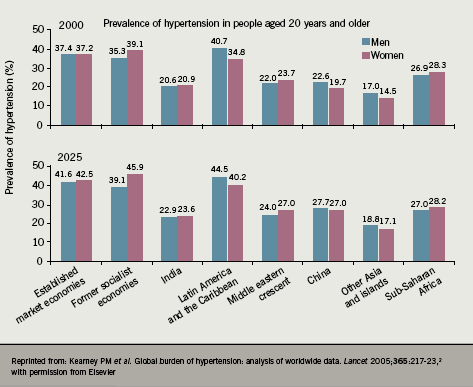
High blood pressure (BP) is one of the leading health risk factors for global mortality, being a higher risk factor than tobacco use, high cholesterol and under-nutrition in both developed and developing regions.1 The estimated total number of adults around the world with hypertension in the year 2000 was 972 million but this figure is predicted to rise by approximately 60% by 2025 to a total of 1.56 billion, due to an ageing population2 and the adverse impact of several aspects of development (figure 1).
Impact of hypertension
Epidemiological data have established a strong direct relationship between increased BP and raised cardiovascular (CV) disease risk. For individuals aged 40–69 years, each increment in systolic BP of 20 mmHg or diastolic BP of 10 mmHg doubles the risk of CV disease (i.e. stroke, ischaemic heart disease, and other vascular diseases) across the entire BP range.3
Figure 1. Prevalence of hypertension worldwide
The World Health Organization has identified high BP as one of the most important preventable causes of premature morbidity and mortality.Antihypertensive drugs have convincingly been shown to be effective treatments for reducing this CV risk. By the mid-1990s an overview of 17 completed randomised trials of antihypertensive treatment by MacMahon et al. demonstrated that a 5–6 mmHg reduction in diastolic BP reduced stroke risk by 38% and coronary heart disease (CHD) risk by 16%.4 There are also other benefits conferred to a variable extent by different antihypertensive therapies, including regression of left ventricular hypertrophy, prevention of dementia, regression of vascular remodelling and atherosclerosis, as well as prevention or delay of the onset of diabetes.
The treatment of hypertension
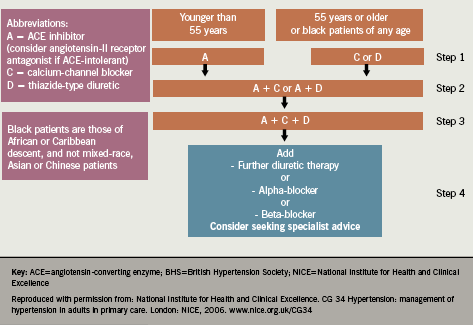
Management of hypertension in the UK has improved greatly in the last decade due to increased awareness of the significant health risks associated with the condition, improved hypertension management offered by primary care practitioners, and the availability of effective treatment options. Furthermore, the British Hypertension Society (BHS)5 and National Institute for Health and Clinical Excellence (NICE)/ BHS guidelines6 have become widely and increasingly adopted by healthcare professionals. These guidelines provide a clear simple treatment algorithm for patients diagnosed with hypertension. For hypertensive patients aged 55 years and over, or black patients of any age, the initial therapy should be either a calcium channel blocker (CCB) or a diuretic (thiazide or thiazide-type diuretic e.g. indapamide or chlorthalidone). In hypertensive patients younger than 55 years, first-choice therapy should be an angiotensin-converting enzyme inhibitor (ACE inhibitor) or an angiotensin receptor blocker (ARB) if an ACE inhibitor is not tolerated (figure 2).
Figure 2. NICE/BHS guidelines for drug treatment of hypertension
However, CV events are most effectively prevented not by simply reducing high BP in isolation but by improving more than one risk factor at once, since CV events often have a multifactorial aetiology. The various classes of antihypertensive drugs exert differential effects on established non-BP risk factors, including high-density lipoprotein (HDL)-cholesterol, triglycerides, pulse rate, potassium levels and glucose levels. In addition, antihypertensive drugs vary in their duration of action, effect on central BP and their effect on BP variability. Therefore, it cannot be assumed that all antihypertensives exert equal CV protection, even with comparable clinic BP-lowering effects, although such BP-lowering effects are important.
ARBs for the treatment of hypertension
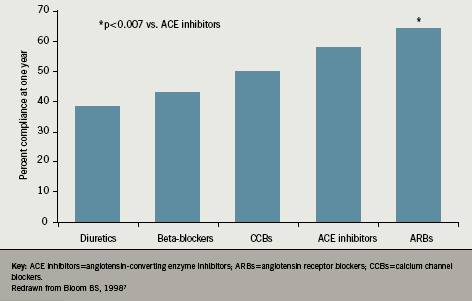
While diuretics are often used as first-line therapy in patients with hypertension, their use is associated with the lowest patient compliance, and compliance with beta-blocker therapy is not notably better. Incremental increases in patient compliance are seen for CCBs and ACE inhibitors, but the highest rate of patient compliance with antihypertensive therapy is seen with the ARBs (figure 3). However, it is uncertain whether these findings are explained by drug tolerability, financial incentives, newness of the product, selection bias or other factors.7
Figure 3. Compliance at one year with antihypertensive treatment
Initially, there were conflicting data regarding use of ARBs for the treatment of hypertension and even a claim that these drugs may increase CV events such as myocardial infarction (MI).8 However, subsequent systematic reviews and meta-analyses have refuted these findings. McDonald et al. evaluated the effect of ARBs on the risk of MI in patients at risk for CV events through a systematic review of controlled trials of ARBs. They identified 19 studies which included 31,569 patients: the use of ARBs was not associated with an increased risk of MI compared with placebo (odds ratio 0.94, 95% confidence interval [CI] 0.75 to 1.16), or with an increased risk of MI when compared with ACE inhibitors (odds ratio 1.01, 95% CI 0.87 to 1.16).9 Similarly, a meta-analysis by Volpe et al. evaluated the effects of treatment using an ARB on the risk of MI, CV and all-cause death, as compared with conventional treatment or placebo. Twenty trials were evaluated comprising 108,909 patients, and this study concluded that the risk of MI was similar in patients treated with an ARB compared with other antihypertensive drugs in a wide range of clinical situations.10
ARBs in hypertension and ventricular hypertrophy
Left ventricular hypertrophy (LVH) is a strong independent indicator of risk of CV morbidity and death in patients with hypertension. Dahlöf et al. aimed to establish whether selective blocking of angiotensin II with losartan or atenolol improves LVH beyond the reduction in BP, and whether this consequently reduced CV morbidity and death. Results showed that losartan reduced a composite end point of morbidity and death (driven predominantly by a reduction in stroke) to a greater extent than atenolol for a similar reduction in BP.11 It would appear that ARBs (in this case, losartan) confer benefits on LVH and CV risk, specifically stroke events, beyond just effectively controlling BP.
ARBs in hypertension and stroke
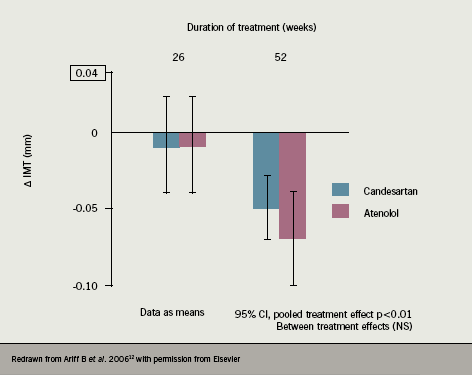
The Candesartan Atenolol Carotid Haemodynamics Endpoint Trial (CACHET) was conducted by Ariff et al. to investigate whether ARB treatment compared to beta-blocker treatment caused cardiac and large artery remodelling, and the relationship of any arterial remodelling to haemodynamic changes. Results showed that both candesartan (8 to 16 mg per day) and atenolol (50 to 100 mg per day) reduced intima-media thickness (IMT) and intima-media area (IMA) and increased distensibility to similar extents after 52 weeks of treatment. However, despite similar reductions in BP, treatment with atenolol resulted in a lesser reduction in left ventricular mass index, a decrease in lumen diameter and a reduction in carotid blood flow compared with candesartan. Therefore, candesartan demonstrated BP-independent effects on ventricular and carotid arterial structure, which may be a contributory factor to the beneficial effects of antihypertensive treatment with ARBs on some components of CV disease12 (figure 4).
Figure 4. Change in common carotid intima-media thickness (IMT) in the CACHET trial
The beneficial effects of ARBs on stroke risk but not CHD risk reduction can also be seen in the results of the Losartan Intervention For Endpoint reduction in hypertension (LIFE) study, which demonstrated superior stroke outcome for losartan versus atenolol beyond BP reduction.11
The ACCESS study13 was designed to assess the effects of ARB therapy within 36 hours after a stroke in patients with elevated BP. Cumulative 12-month mortality and the number of vascular events differed significantly in favour of candesartan versus placebo (odds ratio 0.475; 95% CI 0.252 to 0.895). The study concluded that early neurohumoral inhibition using an ARB has beneficial effects in cerebral and myocardial ischaemia and, unless contra-indicated, early antihypertensive therapy using candesartan is a well tolerated therapeutic option.
However, not all ARBs have shown consistent clinical benefits in various randomised clinical trials, perhaps reflecting differential effects on BP lowering. The VALUE trial was designed to test the hypothesis that, for the same BP control, valsartan would reduce cardiac morbidity and mortality more than amlodipine in hypertensive patients with a high CV risk. Results showed that BP was reduced by both valsartan and amlodipine treatments, but the effects of the amlodipine-based regimen were more pronounced, especially in the early period (BP 4.0/2.1 mmHg lower in amlodipine group compared to valsartan group after one month, and lower by 1.5/1.3 mmHg after one year; p<0.001 between groups). These BP differences were associated with a trend towards fewer fatal and non-fatal strokes in the amlodipine group (322 versus 281 in the valsartan and amlodipine groups, respectively, HR=1.15 [95% CI 0.98, 1.36], p=0.08).14 Similarly, the PRoFESS trial investigated the effect of lowering BP with the angiotensin receptor blocker, telmisartan within 120 days after a stroke. A total of 20,332 patients were enrolled who recently had an ischaemic stroke and the study evaluated the effects of therapy with telmisartan (80 mg daily) versus placebo. Results showed that therapy with telmisartan initiated after an ischaemic stroke and continued for 2.5 years did not significantly lower the rate of recurrent stroke, major CV events or diabetes compared with placebo.15
Diabetogenic potential of antihypertensive drugs
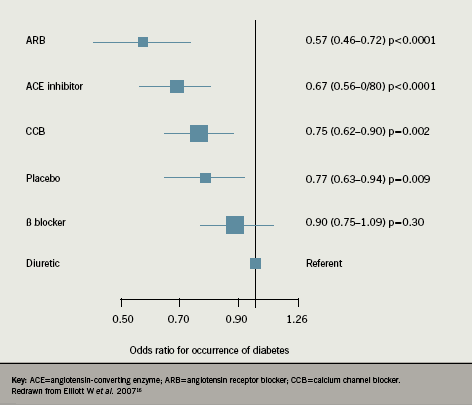
Both diuretics and beta-blockers induce adverse effects on glucose metabolism and may cause new‑onset diabetes (NOD). The size of this effect is variable within these two drug classes and is affected by drug dose. Elliott et al. undertook a systematic review to assess the effects of antihypertensive agents on the risk of NOD, including 22 clinical trials with 143,153 patients. The study concluded that the risk of NOD with antihypertensive drugs was lowest for ARBs and ACE inhibitors, followed by CCBs and placebo, beta-blockers and diuretics, in rank order16 (figure 5).
Figure 5. Prevention of type 2 diabetes: impact of antihypertensive agents
It is therefore recommended that the combination of a diuretic and beta-blocker should be avoided for the routine treatment of hypertension, except in cases where compelling reasons apply. Conversely, drugs that block the renin-angiotensin system appear to afford an important degree of protection against the onset of NOD, therefore, drugs such as ACE inhibitors or ARBs (that block the renin-angiotensin system) should usually form part of the cocktail of agents necessary to lower BP in patients with impaired glucose tolerance, and also in patients who already have type 2 diabetes.
Conclusions
Hypertension diagnosis and treatment has improved markedly in the UK in the past decade, with hypertension management being simplified by the publication of the NICE/BHS ‘ACD’ algorithm. Evidence shows that ARBs are better tolerated compared to the other major drug classes in the treatment of hypertensive patients. ARBs vary in terms of duration of action and BP‑lowering efficacy.
Overall, CV protective effects are similar between ACE inhibitors and ARBs, but compared with other agents there is some evidence that ARBs may offer better stroke protection and like ACE inhibitors, may be associated with a reduced risk of developing new-onset diabetes. There is no robust evidence that ARBs are associated with significantly increased CV events, including MI, compared to other antihypertensive drugs.
Conflict of interest
NP has served as consultant and received travel expenses, payment for speaking at meetings, or funding for research from several pharmaceutical companies, including Takeda.
Key messages
Control of hypertension in the UK is improving, with good guidelines provided by the National Institute for Health and Clinical Excellence (NICE)/British Hypertension Society (BHS) ‘ACD’ algorithm
Angiotensin receptor blockers (ARBs) demonstrate good efficacy in hypertension and a good safety profile: early fears about increased risk of myocardial infarction (MI) have been discredited by recent meta-analyses and trials
References
Ezzati M, Lopez AD, Rodgers A, Vander Hoorn S, Murray CJ (Comparative Risk Assessment Collaborating Group). Selected major risk factors and global and regional burden of disease.Lancet 2002;360(9343):1347–60.
Kearney PM, Whelton M, Reynolds K, Muntner P, Whelton PK, He J. Global burden of hypertension: analysis of worldwide data. Lancet 2005;365(9455):217–23.
Lewington S, Clarke R, Qizilbash N, Peto R, Collins R (Prospective Studies Collaboration). Age-specific relevance of usual blood pressure to vascular mortality: a meta-analysis of individual data for one million adults in 61 prospective studies. Lancet 2002;360(9349):1903–13.
MacMahon S, Neal B, Rodgers A. Blood pressure lowering for the primary and secondary prevention of coronary and cerebrovascular disease. Schweiz Med Wochenschr 1995;125(51-52):2479–86.
Williams B, Poulter NR, Brown MJ et al. (British Hypertension Society). Guidelines for management of hypertension: report of the fourth working party of the British Hypertension Society, 2004-BHS IV. J Hum Hypertens 2004;18(3):139–85.
Hypertension – full guideline. NICE/British Hypertension Society and National Collaborating Centre for Chronic Conditions 2006 (www.nice.org.uk/CG034)
Bloom BS. Continuation of initial antihypertensive medication after 1 year of therapy. Clin Ther 1998;20(4):671–81.
Verma S, Strauss M. Angiotensin receptor blockers and myocardial infarction. BMJ 2004;329(7477):1248–9.
Volpe M, Tocci G, Sciarretta S, Verdecchia P, Trimarco B, Mancia G. Angiotensin II receptor blockers and myocardial infarction: an updated analysis of randomized clinical trials. J Hypertens 2009;27(5):941–6.
Dahlöf B, Devereux RB, Kjeldsen SE et al. (LIFE Study Group). Cardiovascular morbidity and mortality in the Losartan Intervention For Endpoint reduction in hypertension study (LIFE): a randomised trial against atenolol. Lancet 2002;359(9311):995–1003.
Ariff B, Zambanini A, Vamadeva S et al. Candesartan- and atenolol-based treatments induce different patterns of carotid artery and left ventricular remodeling in hypertension (CACHET Trial). Stroke 2006;37(9):2381–4.
Schrader J, Lüders S, Kulschewski A et al. (Acute Candesartan Cilexetil Therapy in Stroke Survivors Study Group). The ACCESS Study: evaluation of Acute Candesartan Cilexetil Therapy in Stroke Survivors. Stroke 2003; 34(7):1699–703.
Julius S, Kjeldsen SE, Weber M et al. (VALUE trial group). Outcomes in hypertensive patients at high cardiovascular risk treated with regimens based on valsartan or amlodipine: the VALUE randomised trial. Lancet 2004;363(9426):2022–31.
Yusuf S, Diener HC, Sacco RL et al. (PRoFESS Study Group). Telmisartan to prevent recurrent stroke and cardiovascular events. N Engl J Med2008;359(12):1225–37.
Elliott WJ, Meyer PM. Incident diabetes in clinical trials of antihypertensive drugs: a network meta-analysis. Lancet 2007;369(9557):201–07.
Disclaimer: UK prescribing information current at the date of publication of this supplement can be found by downloading the PDF. Medinews Cardiology Limited advises healthcare professionals to consult up-to-date Prescribing Information and the full Summary of Product Characteristics available from the manufacturers before prescribing any product. Medinews Cardiology Limited cannot accept responsibility for any errors in prescribing which may occur.
Sponsorship Statement: This supplement has been sponsored by Takeda UK Ltd. Sponsorship included all print and production costs of the supplement, plus support of the meeting where the discussions took place and support in the writing of the papers. Takeda UK Ltd did not take part in the discussions held at the meeting and editorial control of this supplement resides with the authors and the journal. The supplement underwent peer review and was also reviewed by the faculty and Takeda UK Ltd for accuracy.
Heart failure epidemiology
The incidence of heart failure (HF) increases with age and its prevalence is increasing due to an ageing population.1 Although some HF patients can live for many years, absolute survival rates are poor in both sexes, with 50% of men dead at 2.3 years (range: 1.3–2.3 years) and 50% of women dead at 1.7 years (range: 1.32–1.79 years).2 Recent reports, however, suggest that the prognosis has substantially improved in the UK, thought to be related to better treatment and monitoring.3,4
Disclaimer: UK prescribing information current at the date of publication of this supplement can be found by downloading the PDF. Medinews Cardiology Limited advises healthcare professionals to consult up-to-date Prescribing Information and the full Summary of Product Characteristics available from the manufacturers before prescribing any product. Medinews Cardiology Limited cannot accept responsibility for any errors in prescribing which may occur.
Sponsorship Statement: This supplement has been sponsored by Takeda UK Ltd. Sponsorship included all print and production costs of the supplement, plus support of the meeting where the discussions took place and support in the writing of the papers. Takeda UK Ltd did not take part in the discussions held at the meeting and editorial control of this supplement resides with the authors and the journal. The supplement underwent peer review and was also reviewed by the faculty and Takeda UK Ltd for accuracy.
Diabetic nephropathy is estimated to affect up to 40% of patients with type 2 diabetes. Diabetic nephropathy is characterised by proteinuria, hypertension, progressive decline in renal function and increased mortality (up to 12% per year in patients with increased creatinine levels).
Renal disease and diabetes
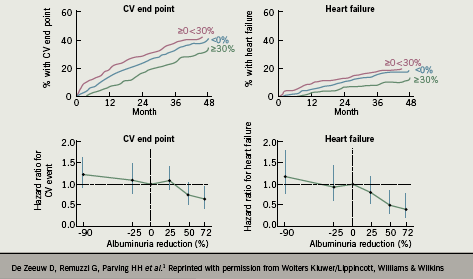
Microalbuminuria is known to be a marker of increased cardiovascular (CV) risk. It is not clear whether reducing microalbuminuria on its own is associated with an improved cardiovascular prognosis, but in secondary analyses from studies of angiotensin receptor blockers (ARBs) in people with type 2 diabetes, reduction in albuminuria was associated with a decreased risk of a CV event. Observational analyses from the RENAAL trial found that the magnitude of albuminuria reduction predicted the reduced risk of CV events (figure 1).1
Figure 1. Kaplan-Meier curves for cardiovascular (CV) and heart failure end points, stratified by month-6 change in albuminuria: data from the RENAAL study
Generally, treatment of risk factors such as hypertension will also reduce albuminuria.2 A strategy of targeting treatment specifically to albuminuria has not been tested prospectively in patients with diabetes, but interventions that reduce albuminuria or delay its increase (such as use of ARBs, even in conventionally normotensive patients) may prove to be a useful therapy for diabetic kidney disease.
RAAS inhibition and diabetic nephropathy
Many studies have documented the beneficial effects of both angiotensin-converting enzyme inhibitors (ACE inhibitors)3, 4 and ARBs5–7 on renal function, showing benefits beyond those of simply blood pressure control. Most studies of ARBs have used either irbesartan or losartan. In a comparison of the calcium channel blocker (CCB) amlodipine versus irbesartan, results from Lewis et al. showed that irbesartan was associated with a risk of the primary composite end point (defined as a doubling of the baseline serum creatinine concentration, the onset of end-stage renal disease, or death from any cause) 20% lower than that in the placebo group (p=0.02) and 23% lower than that in the amlodipine group (p=0.006), with this effect considered to be independent of effect on blood pressure lowering.7 Mogensen et al. also compared the effects of an ACE inhibitor and an ARB, by assessing the efficacy of lisinopril, candesartan or both on blood pressure and urinary albumin excretion in 199 patients with hypertension, microalbuminuria and type 2 diabetes. The study found that candesartan 16 mg once daily was as effective as lisinopril 20 mg once daily in reducing blood pressure and microalbuminuria in hypertensive patients with type 2 diabetes. Combination treatment was well tolerated and more effective in reducing blood pressure than either drug alone and it also reduced the urinary albumin:creatinine ratio to a greater extent than either drug alone.8 In a direct comparison of the ARBs telmisartan and losartan in the AMADEO study,9 telmisartan was shown to be superior to losartan in reducing proteinuria in hypertensive patients with diabetic nephropathy, despite a similar reduction in blood pressure.
In an attempt to consolidate the individual study results, a meta-analysis by Kunz et al. analysed 49 studies involving 6,181 participants, which reported the results of 72 comparisons comprising ARBs versus placebo, ACE inhibitors, CCBs, or the combination of ARBs and ACE inhibitors in patients with microalbuminuria or proteinuria (from whatever cause) with or without diabetes. The ARBs and ACE inhibitors were found to reduce proteinuria to a similar degree, with the combination of ARBs and ACE inhibitors reducing proteinuria more than either agent alone. However, the limitations to this research were that most studies were small, varied in quality, and did not provide reliable data on adverse drug reactions so the effect of combination therapy on the adverse event profile could not be evaluated.10
Conclusions
In conclusion, there are numerous agents available to block the RAAS and improve the outcome for patients with diabetic nephropathy. Multiple studies have examined the effect of different ACE inhibitors and ARBs, either as monotherapy or in combination, and have demonstrated the effectiveness of both classes of agents in lowering blood pressure and reducing both cardiovascular mortality and morbidity in various at-risk patient populations, including patients with type 2 diabetes. Current UK guidelines recommend treatment with an ACE inhibitor, or with an ARB if the ACE inhibitor is not tolerated.11 In general, the randomised clinical trials in patients with diabetic nephropathy have used losartan or irbesartan: both are licensed for use in patients with hypertension and type 2 diabetic nephropathy. However, the recent AMADEO study has also shown telmisartan to have efficacy in this area.
Conflict of interest
MTK received an honorarium from Takeda for his contribution to this supplement.
Key messages
Increased proteinuria is associated with increased cardiovascular mortality and morbidity, and therefore identifies patients at high risk who should be targeted for effective reduction of cardiovascular risk factors
Treatment of cardiovascular risk factors such as hypertension and hypercholesterolaemia has a positive effect on the development and progression of renal dysfunction
Losartan and irbesartan have been shown to slow the progression of renal disease
References
de Zeeuw D, Remuzzi G, Parving HH et al. Albuminuria, a therapeutic target for cardiovascular protection in type 2 diabetic patients with nephropathy. Circulation 2004;110(8):921–7.
de Zeeuw D, Remuzzi G, Parving HH et al. Proteinuria, a target for renoprotection in patients with type 2 diabetic nephropathy: lessons from RENAAL. Kidney Internat 2004;65(6):2309–20.
Lewis EJ, Hunsicker LG, Bain RP, Rohde RD. The effect of angiotensin-converting-enzyme inhibition on diabetic nephropathy. The Collaborative Study Group. N Engl J Med 1993;329(20):1456–62.
The GISEN Group (Gruppo Italiano di Studi Epidemiologici in Nefrologia) [No authors listed]. Randomised placebo-controlled trial of effect of ramipril on decline in glomerular filtration rate and risk of terminal renal failure in proteinuric, non-diabetic nephropathy. Lancet 1997;349(9069):1857–63.
Parving HH, Lehnert H, Bröchner-Mortensen J, Gomis R, Andersen S, Arner P (Irbesartan in Patients with Type 2 Diabetes and Microalbuminuria Study Group). The effect of irbesartan on the development of diabetic nephropathy in patients with type 2 diabetes. N Engl J Med 2001;345(12):870–8.
Brenner BM, Cooper ME, de Zeeuw D et al. (RENAAL Study Investigators). Effects of losartan on renal and cardiovascular outcomes in patients with type 2 diabetes and nephropathy. N Engl J Med 2001;345(12):861–9.
Lewis EJ, Hunsicker LG, Clarke WR et al. (Collaborative Study Group). Renoprotective effect of the angiotensin-receptor antagonist irbesartan in patients with nephropathy due to type 2 diabetes. N Engl J Med 2001;345(12):851–60.
Mogensen CE, Neldam S, Tikkanen I et al. Randomised controlled trial of dual blockade of renin-angiotensin system in patients with hypertension, microalbuminuria, and non-insulin dependent diabetes: the candesartan and lisinopril microalbuminuria (CALM) study. BMJ 2000;321(7274):1440–4.
Bakris G, Burgess E, Weir M, Davidai G, Koval S on behalf of the AMADEO Study Investigators. Telmisartan is more effective than losartan in reducing proteinuria in patients with diabetic nephropathy. Kidney Internat 2008; 74:364–9; doi:10.1038/ki.2008.204; published online 21 May 2008.
Kunz R, Friedrich C, Wolbers M, Mann JF. Meta-analysis: effect of monotherapy and combination therapy with inhibitors of the renin angiotensin system on proteinuria in renal disease. Ann Intern Med 2008;148(1):30–48.
NICE clinical guideline 73. Chronic kidney disease: early identification and management of chronic kidney disease in adults in primary and secondary care. September 2008.
Disclaimer: UK prescribing information current at the date of publication of this supplement can be found by downloading the PDF. Medinews Cardiology Limited advises healthcare professionals to consult up-to-date Prescribing Information and the full Summary of Product Characteristics available from the manufacturers before prescribing any product. Medinews Cardiology Limited cannot accept responsibility for any errors in prescribing which may occur.
Sponsorship Statement: This supplement has been sponsored by Takeda UK Ltd. Sponsorship included all print and production costs of the supplement, plus support of the meeting where the discussions took place and support in the writing of the papers. Takeda UK Ltd did not take part in the discussions held at the meeting and editorial control of this supplement resides with the authors and the journal. The supplement underwent peer review and was also reviewed by the faculty and Takeda UK Ltd for accuracy.
National Health Service (NHS) costs in England grew from about £40 billion in the year 2000 to £100 billion today. That is, they have approximately doubled in real terms within a decade. However, the current economic climate in the UK has led to increasing cost awareness in the NHS. NHS managers have been charged with making £15–20 billion efficiency savings by 2015.1 Although the health service will not lose funding, GPs are under pressure to prescribe low-cost generic medicines wherever possible.2
This brief paper considers how such cost pressures may affect the use of angiotensin receptor blockers (ARBs) in the NHS, given that although losartan is the first drug in this class to become generic in March 2010, others will quickly follow suit. Valsartan loses patent protection in 2011, with candesartan and irbesartan following in 2012.
Indications for ARB use
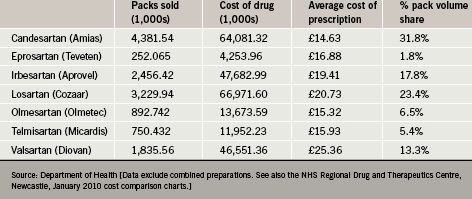
Recent data indicate that candesartan is presently the most widely used ARB in England, accounting for almost a third of all ARB prescriptions. This is in part because it has been competitively priced compared with other ARBs. In average prescription cost terms, candesartan has in recent years enjoyed an approximate 25% price advantage over its main high-volume competitor (table 1).
Table 1. Costs and percentage share of prescriptions associated with ARBs (England, 2008)
At present, there are variations with respect to the licensed indications for ARBs in the UK. All drugs in the class are licensed for the treatment of hypertension whereas only three (candesartan, losartan and valsartan) are indicated for chronic heart failure. Valsartan alone is licensed for use post-myocardial infarction (MI) in patients with left ventricular systolic dysfunction (LVSD). Irbesartan and losartan are the only ARBs presently approved for the treatment of nephropathy in patients
with type 2 diabetes mellitus.
However, it is often assumed that all ARBs are equivalent. If this is believed uncritically, then NHS pharmaceutical advisers and economists may be influenced exclusively by price considerations. The advent of generic level price competition ‘class effect’ prescribing, such that all drugs within a class are assumed to have identical safety and efficacy profiles,3 in some instances could undermine public interests in both continuity of care and the optimisation of individual and/or population level health outcomes.
Broader implications of changing ARB presciptions
Usher-Smith has highlighted the challenges involved in switching patients’ medicines for purely cost-saving purposes.2, 4 He reported his experience within a PCT that encouraged switching established patients from losartan to candesartan in 2005–2006 on cost grounds. Such a policy had originally been estimated to generate a national three-year saving of £128 million. However, in August 2007, the price of losartan was decreased, resulting in reduced actual annual savings. This illustrates the point that the outcomes of cost-reducing measures may be dependent upon unpredictable market adjustments that can undermine their cost-effectiveness even though in this particular instance a significant drop in blood pressure was seen after patients switched to candesartan. This could have been a drug-related effect, or alternatively the effect of enhanced case management associated with the effort of supporting switching. In general, it is the case that moving patients who are well established on one medicine to another demands not only increased clinician time, but also risks undermining their confidence in their clinician and reducing adherence rates. Further, if the drugs are not fully interchangeable this may have additional consequences on outcomes and (in time) overall care/service costs.
In this context, the ‘Real-Life’ study5 discussed by Meredith in this supplement looked retrospectively at candesartan and losartan use in primary care centres in Sweden. It found there was no difference in blood pressure (BP) reduction when comparing the losartan and candesartan groups (although more patients in the losartan arm required a thiazide to achieve the same BP reduction), but that candesartan use was associated with a significantly lower risk of cardiovascular events compared with losartan. The results published to date do not make it possible to quantify the reduced economic burden associated with candesartan use in this context. However, they do raise the possibility that short-term financial gains associated with a general switch to losartan therapy before other ARBs lose patent protection might be offset by factors linked, say, to reduced 24-hour BP control.
Conclusions
Making the best possible use of health resources is an important end. Yet factors other than price advantage alone should be considered before accepting policy decisions to switch patients automatically from one therapeutic agent to another. Care should be taken not to ignore clinically significant utility variations within the ARBs; since these drugs are both effective and relatively free from side effects, they may become more widely used in future as prices fall across the board.
Research such as that by Usher-Smith2 and Kjeldsen et al.5 indicates that the routine ‘switching’ of patients from one drug to another, based on short-term unit price differences alone, might prove counter-productive. Such policies are only defensible when there is robust evidence both that the switch is beneficial and that it justifies the time and effort needed to support patients adequately during the transition from a familiar medicine to a new one. Switching should be backed by evidence regarding relevant population health outcomes
relative to the overall costs incurred and the financial resources released for alternative use.
Conflict of interest
DGT received a fee from Takeda for his involvement in this project, which was shared with a postgraduate student who kindly provided background analysis. MD received an honorarium from Takeda for his contribution to this supplement.
Key messages
The NHS is under pressure to contain costs through the prescribing and supply of low-cost generic medicines whenever appropriate
Losartan is the first angiotensin receptor blocker (ARB) to come off-patent (in March 2010). This may prompt some primary care trusts (PCTs) and practices to switch patients who are currently taking other ARBs to generic losartan
There is evidence that different ARBs have pharmacologically distinct actions, which may differentially affect patient outcomes. Switching patients may not reduce financial costs as much as initially anticipated due to additional clinician time and effort needed to manage patients and because, from an economic perspective, long-term health outcomes may be impaired
A patient-centred, evidence-based approach is needed, rather than one uncritically focused on unit drug costs.
References
NHS 2010–2015: from good to great. Preventative, people-centred, productive. www.dh.gov.uk/en/Publicationsandstatistics/Publications/PublicationsPolicyAndGuidance/DH_109876
Usher-Smith JA, Ramsbottom T, Pearmain H, Kirby M. Evaluation of the cost savings and clinical outcomes of switching patients from atorvastatin to simvastatin and losartan to candesartan in a primary care setting. Int J Clin Pract 2007;61(1):15–23.
Meredith PA, Murray LS, McInnes GT. Comparison of the efficacy of candesartan and losartan: a meta-analysis of trials in the treatment of hypertension. J Hum Hypertens 2009;1–7. Advance online publication, 17 December 2009; doi:10.1038/jhh.2009.99.
Usher-Smith JA, Ramsbottom T, Pearmain H, Kirby M. Evaluation of the clinical outcomes of switching patients from atorvastatin to simvastatin and losartan to candesartan in a primary care setting: 2 years on. Int J Clin Pract 2008;62(3):480–4.
Kjeldsen SE, Stålhammar J, Hasvold P, Bodegard J, Olsson U, Russell D. Effects of losartan vs. candesartan in reducing cardiovascular events in the primary treatment of hypertension. J Hum Hypertens 2009. Advance online publication, 5 November 2009; doi:10.1038/jhh.2009.77.
Disclaimer: UK prescribing information current at the date of publication of this supplement can be found by downloading the PDF. Medinews Cardiology Limited advises healthcare professionals to consult up-to-date Prescribing Information and the full Summary of Product Characteristics available from the manufacturers before prescribing any product. Medinews Cardiology Limited cannot accept responsibility for any errors in prescribing which may occur.
If we consider gastro-oesopageal endoscopy as a similar procedure to transoesophageal echocardiography (TEE) then we might be alarmed at the 30-day mortality of 1:2,000 reported by Quine et al.1 I am not a practitioner of either of those arts, but I am putting on my anaesthetist cap to respond to the article by Mankia et al. discussing intravenous opiate/benzodiazepine sedation in this issue of the journal (see pages 125-7). The endoscopy death rate is especially concerning if you compare the fact that anaesthesia was considered to have been totally responsible for death in less than 1:10,000 operations in the UK.2 Mankia et al. quite rightly suggest that there should be guidelines concerning the safe use of intravenous sedation in TEE, and should be congratulated for highlighting this matter. I would suggest that their gastrointestinal endoscopy colleagues have a lot of experience on which to draw from.
Gastroenterology guidelines
The British Society of Gastroenterology (BSG) guidelines suggest that the opiate is used before the benzodiazepine.3 The BSG guidelines also suggest a maximum dose of 5 mg midazolam and 50 mg pethidine. Mankia et al. seem to permit 10 mg midazolam and 75 mg pethidine in their proposed protocol. Such doses would seem excessive unless you have confidence in your ability to provide assisted ventilation. In the survey nobody appears to have used more than 50 mg pethidine and, therefore, practitioners appear to set their own sensible cut-off points. In gastroscopy, sedation is often avoided, however, the TEE is of a much larger diameter and, therefore, presumably, causes more discomfort and this needs to be taken into account.
The slow incremental use of midazolam should be stressed as important, using bolus injections of only 2 mg, and half that in those over 75 years, with a minimum three minute interval between subsequent bolus injections. Local anaesthetic throat sprays are commonly used in TEE, however, they should ideally not be used in the sedated patient as the loss of the gag reflex increases the dangers.
The use of intravenous fluids to resuscitate six patients and the need to use flumazenil in two patients is concerning as it indicates a relatively high number of problems occurring in only 151 cases.
Importance of monitoring
Any guideline should stress the importance of deciding who is monitoring the patient. If the operator is concentrating on the echocardiogram then they must be assumed to be distracted and, therefore, another person, who is fully trained in resuscitation, needs to be watching the patient and the saturated oxygen levels. The BSG guidelines suggest a minimum of two assistants during gastrointestinal endoscopy. Trainees should be supervised by senior staff and be considered as additional to the minimum number of staff present.
Careful pre-assessment and patient selection has contributed to improved patient safety in anaesthesia and should also be adopted in sedation procedures.4 It does not mean you refuse the patient the procedure required, more that those who have early warning of problems are also prepared to tackle any impending crisis.
Three centres routinely had an anaesthetist present, which was three more than I expected. What is important for the other centres is that the on-call anaesthetists know where the unit is situated and where the resuscitation equipment is sited.
It is important that the British Society of Echocardiography (BSE) produce UK-specific guidelines or recommend a pre-existing protocol as soon as possible.
Conflict of interest
None declared.
Editors’ note
The article by Mankia et al. on safe combined intravenous opiate/benzodiazepine sedation for transoesophageal echocardiography can be found on pages 125-7.
References
1. Quine MA, Bell GD, McCloy RF, Charlton JE, Devlin HB, Hopkins AA. Prospective audit of upper gastrointestinal endoscopy in two regions of England: safety, staffing and sedation methods. Gut 1995;36:462–7.
2. Aitkenhead AR. Injuries associated with anaesthesia. A global perspective. Br J Anaesth 2005;95:95–109.
Andrew Nicolaides
Director of the Vascular Screening and Diagnostic Centre, Emeritus Professor of Vascular Surgery at Imperial College, London, and Chairman of the Cardiovascular Disease Educational and Research Trust
Vascular Screening and Diagnostic Centre, 30 Weymouth Street, London, W1G 7BS.
Cardiovascular disease is the biggest killer in the UK causing 198,000 deaths per year, and stroke is the most common cause of disability in women. Can individuals at increased risk be identified and can heart attacks and strokes be prevented?
Traditional methods of risk assessment for cardiovascular events use conventional risk factors to calculate risk often expressed as the 10-year Framingham Risk Score (10y FRS). However, these methods are far from perfect. Although they identify high-risk groups, if followed up these high-risk groups contain at best only a fraction of the events that will occur in the subsequent 10 years. In the Prospective Cardiovascular Munster (PROCAM) study 6.5% of the population were classified as high risk (10-year risk >20%), 14% as intermediate risk (10-year risk 10–20%) and 79.5% as low risk (10-year risk <10%). At 10 years, 33% of all the myocardial infarctions (MIs) occurred in the high-, 35% in the intermediate- and 32% in the low-risk group. This is because the low-risk group was very large and at least 30% of those who developed MI did not have any of the conventional risk factors.
Screening and improved selection of individuals for more effective prevention is now possible because:
(a) preclinical (silent) atherosclerotic plaques may develop in the arteries slowly over several decades before they rupture or obstruct an artery becoming clinically manifest
(b) screening methods are now available for detecting the presence and stability of such plaques
(c) current prophylaxis with aggressive risk factor modification can reduce morbidity and mortality from MI and stroke by 50%.
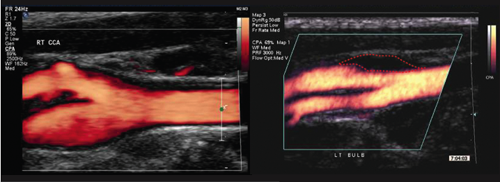
Two methods are currently popular: coronary artery calcium scoring (CACS) using multi-slice computed tomography (CT)-scanning known as electron beam tomography (EBT), and ultrasonic arterial scanning (figure 1). Both provide information that can improve the 10y FRS.
Figure 1. Ultrasound arterial scans showing a normal carotid bifurcation with blood flow shown in red (left) and a bifurcation with a plaque outlined by a red dotted line (right)
CACS using multi-slice
CT-scanning
Six prospective studies have demonstrated that CACS is an independent predictor of future coronary events,1 i.e. it provides information over and above that of the 10y FRS. The risk of annual fatal MI for CACS less than 100 is low (<0.4%), for CACS 100–400 it is moderate (1.3%) and for CACS 400 or higher it is high (2.4%). However, it cannot identify those with non-calcific unstable plaques, which are responsible for most heart attacks.1 Also, the finding of a high CACS in the absence of any significant coronary artery stenosis (>50%) is common, indicating the need to improve predictive ability.
On the basis of the available data the American College of Cardiology Foundation and American Heart Association have stated in their guidelines1 that screening is of limited value in individuals at low risk (10y FRS <10%). However, in individuals at intermediate risk (10y FRS 10–20%) the finding of CACS of 400 or higher would increase the risk to that noted with diabetes or peripheral arterial disease,2 altering clinical-decision making. Individuals with a high 10y FRS (≥20%) should be treated aggressively according to the current National Cholesterol Education Program (NCEP) III guidelines and do not require additional testing.2
A disadvantage of CACS is that it is expensive, and the high radiation dose associated with it does not allow repeated testing. Also, CACS does not provide information on stroke risk.
Screening with ultrasound
High-resolution ultrasound can provide images of the arterial wall and plaques with measurements of intima-media thickness (IMT), plaque thickness and area at a resolution of 0.2 mm, and plaque echodensity. Although IMT can be used to study the effect of risk factor modification in large groups, and has become a validated biomarker,3 it is only marginally better than conventional risk factors in identifying individuals at increased risk. However, new ultrasonic arterial wall measurements, such as the presence and thickness of plaques4-6 and plaque echolucency6-8 not only in the carotid but also in the common femoral artery, are stronger predictors of risk with a relative risk (RR) of 3.0 to 5.0.
Two prospective studies have shown that carotid plaque area is a better predictor of future MI than IMT.9,10 In the Tromsø study,9 IMT, total plaque area and plaque echolucency were measured in 6,226 men and women aged 25 to 84 years with no previous MI followed for six years. The adjusted RR (95% confidence interval [CI]) between the highest plaque area tertile versus no plaque was 1.56 (1.04 to 2.36) in men and 3.95 (2.16 to 7.19) in women. The adjusted corresponding RR (95% CI) for IMT was 1.73 (0.98 to 3.06) in men and 2.86 (1.07 to 7.65) in women. Plaque echolucency (low collagen content) indicating plaque instability was also associated with increased risk of MI. In the study performed in Canada,10 carotid plaque areas from 1,686 individuals followed for up to five years were categorised into four quartiles. The combined five-year risk of stroke, MI and vascular death by quartiles of plaque area was: 5.6%, 10.7%, 13.9% and 19.5%. Thus, the presence, size and type of preclinical plaques are emerging as having a strong association with coronary heart disease and stroke. They can be used to re-classify those in intermediate and low 10y FRS groups into higher or lower risk.
In our own ongoing study, 2,000 individuals over the age of 40 are being screened for conventional risk factors, clinical and preclinical cardiovascular disease and followed-up for five years.11 Both carotid and both common femoral bifurcations are scanned with ultrasound. In the low 10y FRS group, 42% of asymptomatic individuals have atherosclerotic plaques. In another recent study using ultrasound, carotid plaques were found in 34% of individuals at low 10y FRS and CACS of zero.12
Advantages of screening with ultrasound are the relatively low cost and absence of radiation. It can be performed in 30 minutes. In addition, it can be repeated at six-monthly intervals or annually providing information on plaque progression or regression. An added benefit of ultrasound is that with the addition of an extra 5–10 minutes, men over the age of 65 years can be screened for the presence of abdominal aortic aneurysm, as recently recommended by the National Institute for Health and Clinical Excellence (NICE).
A rational screening plan
Individuals with low 10y FRS: should be screened with ultrasound. Absence of plaques, found in 60% of individuals in this low-risk group, will confirm the low risk and further follow-up with ultrasound will not be necessary for three to four years. However, the presence of plaques, found in the other 40%, will result in re-classification to a higher risk and will prompt the clinician, not only to advise on risk factor modification, but also to look for non-conventional risk factors, such as elevated homocysteine. Two recent prospective randomised-controlled trials in individuals with known cardiovascular disease have demonstrated that lowering homocysteine with vitamin supplements has reduced the risk of ischaemic stroke by 25%.13,14
Individuals with an intermediate 10y FRS: should be initially screened with ultrasound. Those with plaques are advised to have aggressive risk factor modification. They are told that plaques should not be allowed to progress and that regression, which with treatment to target can occur in 28%, is associated with a 50% reduction in risk.10 They are also advised to have an annual electrocardiogram (ECG) stress test. If plaques are absent then CACS may be performed. The latter will allow re-classification to a lower- or higher-risk group with confidence.
Individuals with a high 10y FRS: are advised to have aggressive risk factor modification according to the current guidelines. Screening with ultrasound in order to follow plaque progression or regression is optional. However, this and the associated plaque images provide a strong incentive to persevere with prophylactic therapy as compliance can be challenging.
The strategy outlined above uses a combination of conventional risk factors with ultrasound, which is in the forefront of non-invasive, inexpensive imaging modalities for screening asymptomatic individuals. It should go a long way towards achieving the government target of reducing heart attacks and strokes by 40%15 because it identifies many individuals at increased risk that would be missed by 10y FRS.
Setting up cardiovascular screening services or centres throughout the country should be seriously considered. The major investment would not be in the equipment, which is now relatively inexpensive and portable, but in trained staff. Asymptomatic individuals should be referred to such centres by their own physicians. This should avoid inappropriate use of the services. The referring doctor should be responsible for making the decisions on targeted preventive measures based on the individual’s clinical and imaging assessment.
A final consideration is that ultrasound could prove a potent tool in lifestyle
modification, as there is nothing more powerful than asymptomatic individuals
experiencing a real-time image of their arteries showing atherosclerotic deposits.
Such deposits are the end result of all risk factors, known, emerging and yet
unknown including genetic.
Conflict of interest
None declared.
References
1. Greenland P, Bonow RO, Brundage BH et al. ACCF/AHA expert consensus document on coronary artery calcium scoring. Circulation 2007;115:402–26.
2. Third report of the NCEP Expert Panel on detection, evaluation and treatment of high blood cholesterol in adults (Adult Treatment Panel III) final report. Circulation 2002;106:3143–421.
3. Lorenz MW, Marcus HS, Bots ML, Rosvall M, Sitzer M. Prediction of clinical cardiovascular events with carotid intima-media thickness. Circulation 2007;115:459–67.
4. Ebrahim S, Papacosta O, Whincup P et al. Carotid plaque, intima media thickness, cardiovascular risk factors, and prevalent cardiovascular disease in men and women: the British Regional Heart Study. Stroke 1999;30:841–50.
5. Hollander M, Bots ML, Iglesias del Sol A et al. Carotid plaques increase the risk of stroke and subtypes of cerebral infarction in asymptomatic elderly. The Rotterdam Study. Circulation 2002;105:2872–7.
6. Schmidt C, Fagerberg B, Hulthe J. Non-stenotic echolucent ultrasound-assessed femoral artery plaques are predictive for future cardiovascular events in middle-aged men. Atherosclerosis 2005;181:125–30.
7. Honda O, Sugiyama S, Kugiyama K et al. Echolucent carotid plaques predict future coronary events in patients with coronary artery disease. J Am Coll Cardiol 2004;43:177–84.
8. Seo Y, Watanabe S, Ishizu T et al. Echolucent carotid plaques as a feature in patients with acute coronary syndrome. Circ J 2006;70:1629–34.
9. Johnsen SH, Mathiesen EB, Joakimsen O et al. Carotid atherosclerosis is a stronger predictor of myocardial infarction in women than in men: a 6-year follow up study of 6226 persons: the Tromsø study. Stroke 2007;38:2873–80.
10. Spence JD, Eliasziw M, DiCicco M, Hackam DG, Galil R, Lohmann T. A tool for targeting and evaluating vascular preventive therapy. Stroke 2002;33:2916–22.
11. Griffin M, Nicolaides AN, Tyllis TH et al. Carotid and femoral arterial wall changes and the prevalence of clinical cardiovascular disease. Vascular Medicine 2009;14:227–32.
12. Lester SJ, Eleid MF, Khandheria BK, Hurst RT. Carotid IMT thickness and coronary artery calcium score as indications of subclinical atherosclerosis. Mayo Clin Proc 2009;84:229–33.
13. Lonn E, Yusuf S, Arnold JM et al. Homocysteine lowering with folic acid and B vitamins in vascular disease. N Engl J Med 2006;354:1567–77.
14. Saposnik G, Ray JG, Sheridan P, McQueen M, Lonn E. Homocysteine-lowering therapy and stroke risk, severity and disability. Stroke 2009;40:1365–72.
15. Department of Health. Coronary heart disease national service frameworks. London: DoH, 2000.
A new guideline has been published by the National Institute for Health and Clinical Excellence (NICE) and the National Clinical Guidelines Centre for Acute and Chronic Conditions on the early management of unstable angina and non-ST elevation myocardial infarction (NSTEMI).
They note that although cardiovascular deaths are declining, there were still over 40,000 patients with NSTEMI acute coronary syndromes admitted to hospital in England and Wales in 2009. With worrying increases in the incidence of key risk factors – obesity, diabetes, and the tendency for people to take less exercise – the management of these conditions remains a high priority.
As its starting point, the guideline recommends that as soon as a diagnosis of unstable angina or NSTEMI has been made, and aspirin and antithrombin drugs have been offered, patients should be formally assessed for their individual risk of future adverse cardiovascular events using an established risk scoring system that predicts six-month mortality, such as the GRACE (Global Registry of Acute Coronary Events) score. Then treatments should be given according to whether the patient is at high, intermediate or low risk of future events, taking into account the risk of adverse events (particularly bleeding).
The guideline also advises that angiography should be conducted (if no contra-indications), with follow-on percutaneous coronary intervention (PCI) within 96 hours of first admission to hospital in patients who have an intermediate or higher risk of cardiac events (predicted six-month mortality above 3.0%). Angiography should be performed as soon as possible for patients who are clinically unstable or at high ischaemic risk.
Ischaemia testing should be considered before discharge for patients whose condition has been managed conservatively and who have not had coronary angiography.
The guideline also emphasises the importance of providing patients with comprehensive information about their diagnosis and arrangements for follow-up. It further recommends that patients are given advice about the provision of cardiac rehabilitation programmes and about how lifestyle changes, such as giving up smoking, being physically active and eating a Mediterranean diet, can help prevent a future cardiovascular event.
For full guidance, visit http://guidance.nice.org.uk/CG94. This guideline updates and replaces recommendations for the early management of unstable angina and NSTEMI from NICE technology appraisal guidance 47 and 80.
It is hoped that a new National Institute for Health and Clinical Excellence (NICE) guideline on recent onset chest pain will lead to a reduction in cardiovascular deaths.
The guideline, jointly developed with the National Clinical Guidelines Centre for Acute and Chronic Conditions, represents a significant change in practice in some key areas of diagnosing acute coronary sydromes (ACS) and angina.
The focus of the new guideline is on the diagnosis of chest pain which is suspected to be of cardiac origin, so that appropriate treatment can be provided.
It notes that chest pain is experienced by some 20–40% of the general population at some time during their lives, and accounts for up to 1% of visits to GPs, approximately 700,000 visits (5%) to emergency departments and up to 25% of emergency admissions to hospital.
The guideline has two separate diagnostic pathways. The first is for patients with acute chest pain who may have an ACS and the second is for those with intermittent stable chest pain of suspected cardiac origin who may have stable angina.
Recommendations in the guideline for people with suspected ACS include:
Take a resting 12-lead ECG as soon as possible. When people are referred, send the results to hospital before they arrive if possible. Recording and sending the ECG should not delay transfer to hospital.
Do not exclude ACS when people have a normal resting 12-lead ECG.
Do not routinely administer oxygen, but monitor oxygen saturation using pulse oximetry as soon as possible, ideally before hospital admission, to guide the use of supplemental oxygen.
Do not assess symptoms of an ACS differently in different ethnic groups.
Recommendations for people with intermittent stable chest pain who may have stable angina include:
Diagnose stable angina based on either clinical assessment alone or where there is uncertainty, clinical assessment plus diagnostic testing.
If people have features of typical angina based on clinical assessment and their estimated likelihood of coronary artery disease (CAD) is greater than 90%, further diagnostic investigation is unnecessary and should be managed as angina.
Unless clinical suspicion is raised based on other aspects of the history and risk factors, exclude a diagnosis of stable angina if the pain is non-anginal and first consider causes of pain other than angina (such as gastrointestinal or musculoskeletal pain).
In people without confirmed CAD, in whom a diagnosis of stable angina cannot be made or excluded based on clinical assessment alone, estimate the likelihood of CAD, taking into account the clinical assessment and the resting 12-lead ECG. Arrange further diagnostic testing according to the estimated likelihood of CAD.
Do not use exercise ECG to diagnose or exclude stable angina for people without known CAD.
For full guidance, visit http://guidance.nice.org.uk/CG95. This clinical guideline partially updates NICE technology appraisal guidance 73.
You are not logged in
You need to be a member to print this page.
Find out more about our membership benefits