Statins: are they wonder drugs?

Br J Cardiol 2014;21:40doi:10.5837/bjc.2014.008 Leave a comment
Click any image to enlarge
Authors:

Statins are ‘HMG-CoA reductase’ (3-hydroxy-3-methylglutaryl-CoA reductase) inhibitors and attenuate the intracellular levels of cholesterol. By virtue of their multiple pleiotropic modes of action in cardiovascular diseases, statins have also been considered and used for treating various other disorders, with convincing beneficial results, though a few contradictory reports do exist. Taking into account the positive and negative effects of statins, the data need to be viewed with a ‘pinch of salt’ for statins to be labelled as wonder drugs. 

Introduction

StockSince their discovery in the 1970s, statins are widely used in clinics for the treatment of atherosclerosis and other cardiovascular diseases (CVD). Statins attenuate the intracellular levels of cholesterol by inhibiting the rate-limiting enzyme 3-hydroxy-3-methylglutaryl (HMG)-CoA reductase, either by competing with the normal substrate in the enzyme’s active site, or by altering the conformation of the enzyme by binding to its active site.

Lipid-mediated effects

Statins exert their lipid-mediated action by decreasing the production of cholesterol and low-density lipoproteins (LDL), by up-regulation of LDL-receptors and uptake of circulatory LDL. Reduction in intracellular cholesterol induces activation of a protease, causing release of sterol regulatory element binding proteins (SREBPs) from the endoplasmic reticulum. SREBPs are then translocated to the nucleus, where they increase the expression of the LDL-receptor gene that controls the cholesterol homeostasis.1,2

Extended follow-up of the Heart Protection Study (HPS) documented long-term efficacy and safety of lowering LDL-cholesterol (LDL-C) with statins, in 20,536 patients who were at high risk of vascular and non-vascular outcomes with 40 mg simvastatin.3 Atorvastatin at high pharmacologic dose increased LDL-receptor-related protein 1 (LRP1) in both in vitro and in vivo studies.4 Statins further reduce the oxidation of LDL and, thereby, inhibit foam cell formation. Early atorvastatin therapy in 2,341 inpatients after acute coronary syndrome (ACS) was shown to significantly enhance mobilisation and clearance of oxidised phospholipids (OxPL) from the arterial wall,5 and statin therapy was also shown to be an independent predictor of low oxidised LDL (OxLDL) levels in 687 patients with angiographically proven CAD by multi-variable analysis.6

Statins vary in their high-density lipoprotein (HDL)-cholesterol (HDL-C) raising ability. Rosuvastatin and simvastatin demonstrated a positive relation with HDL-C, but the same was not applicable for atorvastatin.7 The increase in HDL-C levels is mediated by reductions in cholesteryl ester transfer protein (CETP) activity.8 Recently, it was shown that for potent statin therapy, instead of chemical assay for HDL-C, HDL particle number may be a better marker of residual risk after statin therapy.9 A post-hoc analysis of intravascular ultrasound data from 1,455 people showed that statin-associated changes in HDL-C were inversely associated with the progression of coronary atherosclerosis, even in patients with low levels of LDL-C via stimulation of the ‘reverse cholesterol transport’ pathway.10,11

Non-lipid-mediated pleiotropic effects

Statins empower multiple pleiotropic modes of action (figure 1), independent of lipid-mediated effects, mediated by their ability to block the generation of isoprenoid intermediates like farensyl pyrophosphate (FPP) and geranyl-geranylphosphate (GGPP) in vascular cells, which serve as lipid attachments for a variety of intracellular signalling molecules, like Rab and Rho.

Figure 1. The major pleiotropic effects of statins

Rho activates a number of nuclear transcription factors such as nuclear factor-kappa B, and reduces endothelial nitric oxide synthetase (eNOS). Statins up-regulate eNOS by inhibiting Rho, and also inhibit the 5-lipoxygenase (5-LO) pathway and chemokine CCL3, thereby, curbing inflammatory processes in atherosclerosis.12 Activation of sphingosine-1-phosphate (S1P) signalling via up-regulation of S1P receptor expression,13 and up-regulation of small GTP-binding protein GDP dissociation stimulator (SmgGDS) followed by Rac1 degradation due to statins, may also account for the pleiotropic effects of statins.14

Various in vivo and in vitro studies, as well as human clinical trials, have successfully demonstrated that statins reduce cardiovascular events,15,16 diabetes,17 progression of nephropathy18 and fracture rates.19 Simvastatin treatment significantly decreased frequency and occurrence of mammary tumours in chemo-carcinogen induced mammary tumours in rats.20 Important pleiotropic and cardioprotective effects of statins could be visualised as improvement in endothelial dysfunction, anti-oxidant, anti-inflammatory and antithrombotic effects, and their ability to up-regulate mitophagy, autophagy and down-regulation of Akt/mTOR signalling.21 Statins benefit in hypertension due to their role in maintaining endothelial function and their interaction with the renin–angiotensin system.22 Statins attenuate occurrence of pulmonary hypertension via the RhoA/Rho-kinase signalling pathway.23 Atorvastatin at a dose of 80 mg and a 50% LDL-C reduction showed large effects on blood pressure, whereas lesser effects were seen in other studies where LDL-C reductions were smaller.24,25 In a cross-sectional study of 2,584 hypertensive adults aged 40 years and older with no known CVD, statin-medicated subjects significantly had their blood pressure under control.26 The Study to Evaluate the Effect of Rosuvastatin on Intravascular Ultrasound-Derived Coronary Atheroma Burden (ASTEROID) demonstrated that rosuvastatin therapy resulted in significant regression of atherosclerosis in patients with CAD, 95% of whom had a history of hypertension.27 However, controversial reports do exist, as the Cholesterol and Recurrent Events (CARE) trial documented that pravastatin in a dose of 40 mg had no significant effects on blood pressure in 4,128 patients.28 In the Plaque Hypertension Lipid-Lowering Italian Study (PHYLLIS) trial, pravastatin did not demonstrate additional blood pressure-lowering effect29 in hypertensive hypercholesterolaemics.

The West of Scotland Coronary Prevention Study (WOSCOPS) showed that pravastatin therapy reduced the risk of type 2 diabetes mellitus (T2DM) by 30%.30 Subgroup analysis of the Scandinavian Simvastatin Survival Study (4S) demonstrated that cholesterol lowering with simvastatin improved prognosis of diabetic patients with coronary heart disease.31 Simvastatin had a favourable effect on leukocyte activation markers in patients with T2DM.32 Meta-analysis of 10 placebo-controlled trials, with 16,000 patients who had diabetes and 54,000 subjects without diabetes, demonstrated a 30% reduction in coronary heart disease and a 12% reduction in mortality.33 Results of the Collaborative Atorvastatin Diabetes Study (CARDS) showed that atorvastatin inhibited the development of CVD in diabetics.34

Contradictory reports also exist, wherein administration of statins lead to onset of diabetes. Rosuvastatin increased the hazard ratio for newly diagnosed diabetes by 25% versus a placebo group.35 A meta-analysis of 13 randomised statin trials with 91,140 participants demonstrated an odds ratio of 1.09 for incident diabetes.36 Annual rates of diabetes were shown to be significantly higher in statin users versus control subjects.37 Also, administration of atorvastatin, rosuvastatin and simvastatin to patients without diabetes increased the risk of incident diabetes, regardless of whether statins were used for primary or secondary prevention of CVD.38

Though these drugs have shown encouraging beneficial results in the primary and secondary prevention of CVD, there is a considerable residual risk in patients receiving statins, for example in the 4S study, where statins reduced the death rate only by 30%, which leaves a considerable number of patients still at risk of events. However, it has been safely documented that statin use among people without evidence of CVD reduced all-cause mortality and other major vascular events without any adverse outcomes.

Effect of statins in other disorders

Besides their role in CVD, statins are reported to play a crucial role in other diseases as well. Both in vitro and in vivo studies demonstrate that statin use results in a significant reduction in different forms of cancer by inducing apoptosis and cell growth.39 Further, the addition of statins to the therapeutic regimen has allowed for the use of lower doses of chemotherapeutic drugs, resulting in milder side effects.40 However, a few trials41 demonstrated no significant differences in the percentage of cancer cases in patients treated with simvastatin or atorvastatin.42 In a retrospective analysis in 1,117 non-muscle-invasive bladder cancer (NMIBC) patients,  statin use was not related to regression, recurrence or cancer specific mortality.43

Statins are shown to attenuate renal injury in both in vivo and in vitro studies.44 Statins ameliorated structural and functional changes of diabetic nephropathy in diabetic rat models.45,46 A meta-analysis with 39,704 subjects reported that statins reduced the rate of renal function loss by 76%.47 In non-diabetic patients with chronic kidney disease, statins improved the tubular status,48 reduced urinary albumin excretion,18 urinary podocyte number and proteinuria, which benefited patients with chronic glomerulonephritis (CGN).49

By virtue of their anti-inflammatory and immunomodulatory properties, statins have also drawn much attention as promising agents in the treatment of many disorders, e.g. rheumatic disease, multiple sclerosis, uveitis, colitis, autoimmune encephalomyelitis and systemic lupus erythematosus.50,51

Negative effects

Considering the overall positive impacts and pleiotropic effects of statins, it may be fair to think that statins are a benefit to society and could easily pass as a cure-all drug, but one also needs to consider their side effects. Numerous pleiotropic effects of statins may add to desirable or undesirable effects. Statins bear the same mode of action, but differ between each other in the extent of lowering LDL-cholesterol. Due to limited cholesterol synthesis, other important inflammatory proteins, endogenous synthesis of coenzyme Q10 and selenoproteins are also inhibited. Evidence from experimental and human studies also suggests that statin withdrawal rapidly abrogates the beneficial effects of statins, and results in rebound inflammation, increased Rho activity, reduced endothelial NO production, increased C-reactive protein (CRP) and induces prothrombotic pathways.52-56The Controlled Rosuvastatin Multi-national Study in Heart Failure (CORONA), Gruppo Italiano per lo Studio della Sopravvivenza nell’Infarto Miocardico – Heart Failure (GISSI-HF) and A Study to Evaluate the Use of Rosuvastatin in Subjects on Regular Haemodialysis – An Assessment of Survival and Cardiovascular Events (AURORA) trials yielded unexpected negative results, wherein, statin administration showed adverse effects in patients with heart failure.57,58

Data from 14 randomised controlled trials has also demonstrated that in people with low cardiovascular risk, caution is needed while prescribing statins for primary prevention use as there was evidence of failure in reporting adverse events, selective reporting of outcomes, and inclusion of people with cardiovascular disease.59 Furthermore, another meta-analysis with the primary objective of investigating all-cause mortality in a high-risk primary prevention set up reported no benefit of statin therapy.60

Conclusion

In summary, accumulating evidence from basic research and clinical trials document that statins have pleotropic effects and, in addition to their applicability in cardiovascular diseases, mark their use in various other diseases as well. Data from large randomised clinical trials clearly demonstrate that statin use results in reduced all-cause mortality, and reduction in clinical end points, such as major vascular events and revascularisation with limited adverse effects. Evidence also shows statins to be cost-effective and of benefit in improving quality of life in primary prevention in people with low cardiovascular risk. Some side effects, such as risk of incident diabetes, increased activity in liver enzymes, (e.g. hepatic transaminases and myopathy) should be re-evaulated in randomised and controlled population-based large trials.

Conflict of interest

None declared.

Key messages

  • Statins are effective in primary and secondary prevention of cardiovascular disease and significantly reduce the risk of major cardiovascular events without significant adverse outcomes
  • Studies, however, exist, wherein statin therapy has been associated with a small increased risk of new-onset diabetes, and muscle pain with no significant effects on blood pressure

References

1. Paumelle R, Staels B. Peroxisome proliferator-activated receptors mediate pleiotropic actions of statins. Circ Res 2007;100:1394–5. http://dx.doi.org/10.1161/01.RES.0000269334.42814.d2

2. Sehayek E, Butbul E, Avner R, Levkovitz H, Eisenberg S. Enhanced cellular metabolism of very low density lipoprotein by simvastatin. A novel mechanism of action of HMG-CoA reductase inhibitors. Eur J Clin Invest 1994;24:173–8. http://dx.doi.org/10.1111/j.1365-2362.1994.tb00984.x

3. Heart Protection Study Collaborative Group, Bulbulia R, Bowman L et al. Effects on 11-year mortality and morbidity of lowering LDL cholesterol with simvastatin for about 5 years in 20,536 high-risk individuals: a randomised controlled trial. Lancet 2011;378:2013–20. http://dx.doi.org/10.1016/S0140-6736(11)61125-2

4. Moon JH, Kang SB, Park JS et al. Up-regulation of hepatic low-density lipoprotein receptor-related protein 1: a possible novel mechanism of antiatherogenic activity of hydroxyl methylglutaryl-coenzyme A reductase inhibitor atorvastatin and hepatic LRP1 expression. Metabolism 2011;60:930–40. http://dx.doi.org/10.1016/j.metabol.2010.08.013

5. Tsimikas S, Witztum JL, Miller ER et al. High-dose atorvastatin reduces total plasma levels of oxidized phospholipids and immune complexes present on apolipoprotein B-100 in patients with acute coronary syndromes in the MIRACL trial. Circulation 2004;110:1406–12. http://dx.doi.org/10.1161/ 01.CIR.0000141728.23033.B5

6. Ndrepepa G, Braun S, Beckerath N et al. Oxidized low density lipoproteins, statin therapy and severity of coronary artery disease. Clin Chim Acta 2005;360:178–86. http://dx.doi.org/10.1016/j.cccn.2005.04.032

7. Barter PJ, Brandrup-Wognsen G, Palmer MK, Nicholls SJ. Effect of statins on HDL-C: a complex process unrelated to changes in LDL-C. Analysis of the VOYAGER database. J Lipid Res 2010;51:1546–53. http://dx.doi.org/10.1194/jlr.P002816

8. McTaggart F, Jones P. Effects of statins on high-density lipoproteins: a potential contribution to cardiovascular benefit. Cardiovasc Drugs Ther 2008;22:321–38. http://dx.doi.org/10.1007/s10557-008-6113-z

9. Mora S, Glynn RJ, Ridker PM. High-density lipoprotein cholesterol, size, particle number, and residual vascular risk after potent statin therapy. Circulation 2013;128:1189–97. http://dx.doi.org/10.1161/CIRCULATIONAHA.113.002671

10. Kontush A, Chapman MJ. Antiatherogenic small, dense HDL – guardian angel of the arterial wall? Nat Clin Pract Cardiovasc Med 2006;3:144–53. http://dx.doi.org/10.1038/ncpcardio0500

11. Nicholls SJ, Tuzcu EM, Sipahi I et al. Statins, high-density lipoprotein cholesterol, and regression of coronary atherosclerosis. JAMA 2007;297:499–508. http://dx.doi.org/10.1001/jama.297.5.499

12. Yang LX, Heng XH, Guo RW et al. Atorvastatin inhibits the 5-lipoxygenase pathway and expression of CCL3 to alleviate atherosclerotic lesions in atherosclerotic ApoE knockout mice. J Cardiovasc Pharmacol 2013;62:205–11. http://dx.doi.org/10.1097/FJC.0b013e3182967fc0

13. Egom EE, Rose RA, Neyses L, Soran H, Cleland JG, Mamas MA. Activation of sphingosine-1-phosphate signalling as a potential underlying mechanism of the pleiotropic effects of statin therapy. Crit Rev Clin Lab Sci 2013;50:79–89. http://dx.doi.org/10.3109/10408363.2013.813013

14. Tanaka S, Fukumoto Y, Nochioka K et al. Statins exert the pleiotropic effects through small GTP-binding protein dissociation stimulator upregulation with a resultant Rac1 degradation. Arterioscler Thromb Vasc Biol 2013;33:1591–600. http://dx.doi.org/10.1161/ATVBAHA.112.300922

15. Scandinavian Simvastatin Survival Study Group.Randomised trial of cholesterol lowering in 4444 patients with coronary heart disease: the Scandinavian Simvastatin Survival Study (4S). Lancet 1994;344:1383–9. http://dx.doi.org/10.1016/S0140-6736(94)90566-5

16. Shepherd J, Cobbe SM, Ford I et al. Prevention of coronary heart disease with pravastatin in men with hypercholesterolemia. West of Scotland Coronary Prevention Study Group. N Engl J Med 1995;333:1301–07. http://dx.doi.org/10.1056/NEJM199511163332001

17. Freeman DJ, Norrie J, Sattar N et al. Pravastatin and the development of diabetes mellitus: evidence for a protective treatment effect in the West of Scotland Coronary Prevention Study. Circulation 2001;103:357–62. http://dx.doi.org/10.1161/01.CIR.103.3.357

18. Tonolo G, Melis MG, Formato M et al. Additive effects of simvastatin beyond its effects on LDL cholesterol in hypertensive type 2 diabetic patients. Eur J Clin Invest 2000;30:980–7. http://dx.doi.org/10.1046/j.1365-2362.2000.00735.x

19. Meier CR, Schlienger RG, Kraenzlin ME, Schlegel B, Jick H. HMG-CoA reductase inhibitors and the risk of fractures. JAMA 2000;283:3205–10. http://dx.doi.org/10.1001/jama.283.24.3205

20. Kubatka P, Kajo K, Zihlavnikova K et al. Immunohistochemical and histomorphological analysis of rat mammary tumors after simvastatin treatment. Neoplasma 2012;59:516–23. http://dx.doi.org/10.4149/neo_2012_066

21. Andres AM, Hernandez G, Lee P et al. Mitophagy is required for acute cardioprotection by simvastatin. Antioxid Redox Signal 2013;published online. http://dx.doi.org/10.1089/ars.2013.5416

22. Straznicky NE, Howes LG, Lam W, Louis WJ. Effects of pravastatin on cardiovascular reactivity to norepinephrine and angiotensin II in patients with hypercholesterolemia and systemic hypertension. Am J Cardiol 1995;75:582–6. http://dx.doi.org/10.1016/S0002-9149(99)80621-3

23. Xing XQ, Gan Y, Wu SJ et al. Statins may ameliorate pulmonary hypertension via RhoA/Rho-kinase signaling pathway. Med Hypotheses 2007;68:1108–13. http://dx.doi.org/10.1016/j.mehy.2006.09.034

24. Ferrier KE, Muhlmann MH, Baguet JP et al. Intensive cholesterol reduction lowers blood pressure and large artery stiffness in isolated systolic hypertension. J Am Coll Cardiol 2002;39:1020–5. http://dx.doi.org/10.1016/S0735-1097(02)01717-5

25. Glorioso N, Troffa C, Filigheddu F et al. Effect of the HMG-CoA reductase inhibitors on blood pressure in patients with essential hypertension and primary hypercholesterolemia. Hypertension 1999;34:1281–6. http://dx.doi.org/10.1161/01.HYP.34.6.1281

26. King DE, Mainous AG, Egan BM, Player M, Geesey ME. The use of statins and blood pressure. Am J Hypertens 2007;20:937–41. http://dx.doi.org/10.1016/j.amjhyper.2007.03.018

27. Nissen SE, Nicholls SJ, Sipahi I et al. Effect of very high-intensity statin therapy on regression of coronary atherosclerosis: the ASTEROID trial. JAMA 2006;295:1556–65. http://dx.doi.org/10.1001/jama.295.13.jpc60002

28. Tonelli M, Isles C, Curhan GC et al. Effect of pravastatin on cardiovascular events in people with chronic kidney disease. Circulation 2004;110:1557–63. http://dx.doi.org/10.1161/01.CIR.0000143892.84582.60

29. Mancia G, Parati G, Revera M et al. Statins, antihypertensive treatment, and blood pressure control in clinic and over 24 hours: evidence from PHYLLIS randomised double blind trial. BMJ 2010;340:c1197. http://dx.doi.org/10.1136/bmj.c1197

30. Freeman DJ, Norrie J, Sattar N. Pravastatin and the development of diabetes mellitus: evidence for a protective treatment effect in the West of Scotland Coronary Prevention Study. Circulation 2001;103:357–62. http://dx.doi.org/10.1161/01.CIR.103.3.357

31. Pyorala K, Pedersen TR, Kjekshus J, Faergeman O, Olsson AG, Thorgeirsson G. Cholesterol lowering with simvastatin improves prognosis of diabetic patients with coronary heart disease: a subgroup analysis of the Scandinavian Simvastatin Survival Study (4S). Diabetes Care 1997;20:614–20.

32. Stulc T, Ceska R, Marinov I, Skrha J. The effect of simvastatin and fenofibrate on the expression of leukocyte adhesion molecules and lipopolysaccharide receptor CD14 in type 2 diabetes mellitus. Neuro Endocrinol Lett 2012;33(suppl 2):73–7.

33. Brugts JJ, Yetgin T, Hoeks SE et al. The benefits of statins in people without established cardiovascular disease but with cardiovascular risk factors: meta-analysis of randomised controlled trials. BMJ 2009;338:b2376. http://dx.doi.org/10.1136/bmj.b2376

34. Colhoun CM, Betteridge DJ, Durrington PN et al. Primary prevention of cardiovascular disease with atorvastatin in type 2 diabetes in the Collaborative Atorvastatin Diabetes Study (CARDS): multicentre randomised placebo-controlled trial. Lancet 2004;364:685–96. http://dx.doi.org/10.1016/S0140-6736(04)16895-5

35. Ridker PM, Danielson E, Fonseca FA et al. Rosuvastatin to prevent vascular events in men and women with elevated C-reactive protein. N Engl J Med 2008;359:2195–207. http://dx.doi.org/10.1056/NEJMoa0807646

36. Sattar N, Preiss D, Murray HM et al. Statins and risk of incident diabetes: a collaborative meta-analysis of randomised statin trials. Lancet 2010;375:735–42. http://dx.doi.org/10.1016/S0140-6736(09)61965-6

37. Wang KL, Liu CJ, Chao TF et al. Statins, risk of diabetes, and implications on outcomes in the general population. J Am Coll Cardiol 2012;60:1231–8. http://dx.doi.org/10.1016/j.jacc.2012.05.019

38. Carter AA, Gomes T, Camacho X, Juurlink DN, Shah BR, Mamdani MM. Risk of incident diabetes among patients treated with statins: population based study. BMJ 2013;346:f2610. http://dx.doi/org/10.1136/bmj.f2610

39. Kawata S, Yamasaki E, Nagase T et al. Effect of pravastatin on survival in patients with advanced hepatocellular carcinoma. A randomized controlled trial. Br J Cancer 2001;84:886–91. http://dx.doi.org/10.1054/bjoc.2000.1716

40. Agarwal B, Bhendwal S, Halmos B, Moss SF, Ramey WG, Holt PR. Lovastatin augments apoptosis induced by chemotherapeutic agents in colon cancer cells. Clin Cancer Res 1999;5:2223–9. Available from: http://clincancerres.aacrjournals.org/content/5/8/2223.full.pdf+html

41. Teo KK, Burton JR, Buller CE et al. Long-term effects of cholesterol lowering and angiotensin-converting enzyme inhibition on coronary atherosclerosis: the Simvastatin/Enalapril Coronary Atherosclerosis Trial (SCAT). Circulation 2000;102:1748–54. http://dx.doi.org/10.1161/ 01.CIR.102.15.1748

42. Pedersen TR, Faergeman O, Kastelein JJ et al. High-dose atorvastatin vs usual-dose simvastatin for secondary prevention after myocardial infarction: the IDEAL study: a randomized controlled trial. JAMA 2005;294:2437–45. http://dx.doi.org/10.1001/jama.294.19.2437

43. Crivelli JJ, Xylinas E, Kluth LA et al. Effect of statin use on outcomes of non-muscle-invasive bladder cancer. BJU Int 2013;112:E4–E12. http://dx.doi.org/10.1111/bju.12150

44. Mirzaii-Dizgah I, Salmanyan B. Renal function in a rat model of neurogenic bladder, effect of statins and phosphodiesterase-5 inhibitors. Eur Spine J 2013;22:2766–9. http://dx.doi.org/10.1007/s00586-013-2927-x

45. Yokota T, Utsunomiya K, Murakawa Y, Kurata H, Tajima N. Mechanism of preventive effect of HMG-CoA reductase inhibitor on diabetic nephropathy. Kidney Int Suppl 1999;71:S178-S181.

46. Usui H, Shikata K, Matsuda M et al. HMG-CoA reductase inhibitor ameliorates diabetic nephropathy by its pleiotropic effects in rats. Nephrol Dial Transplant 2003;18:265–72. http://dx.doi.org/10.1093/ndt/18.2.265

47. Sandhu S, Wiebe N, Fried LF, Tonelli M. Statins for improving renal outcomes: a meta-analysis. J Am Soc Nephrol 2006;17:2006–16. http://dx.doi.org/10.1681/ASN.2006010012

48. Renke M, Tylicki L, Rutkowski P et al. Atorvastatin improves tubular status in non-diabetic patients with chronic kidney disease – placebo controlled randomized, cross-over study. Acta Biochim Pol 2010;57:547–52. Available from: http://www.actabp.pl/pdf/4_2010/547.pdf

49. Nakamura T, Ushiyama C, Hirokawa K et al. Effect of cerivastatin on proteinuria and urinary podocytes in patients with chronic glomerulonephritis. Nephrol Dial Transplant 2002;17:798–802. http://dx.doi.org/10.1093/ndt/17.5.798

50. Mihos CG, Artola RT, Santana O. The pleiotropic effects of the hydroxy-methyl-glutaryl-CoA reductase inhibitors in rheumatologic disorders: a comprehensive review. Rheumatol Int 2012;32:287–94. http://dx.doi.org/10.1007/s00296-011-2008-6

51. Abeles AM, Pillinger MH. Statins as antiinflammatory and immunomodulatory agents: a future in rheumatologic therapy? Arthritis Rheum 2006;54:393–407. http://dx.doi.org/10.1002/art.21521

52. Grundy SM, Cleeman JI, Bairey Merz NC et al. Implications of recent clinical trials for the NCEP Adult Treatment Panel III Guidelines.J Am Coll Cardiol 2004;44:720–2. http://dx.doi.org/10.1016/j.jacc.2004.07.001

53. Kashani A, Phillips CO, Foody JM et al. Risks associated with statin therapy: a systematic overview of randomized clinical trials. Circulation 2006;114:2788–97. http://dx.doi.org/10.1161/CIRCULATIONAHA.106.624890

54. Baigent C, Landray MJ, Reith C et al. The effects of lowering LDL cholesterol with simvastatin plus ezetimibe in patients with chronic kidney disease (Study of Heart and Renal Protection): a randomised placebo-controlled trial. Lancet 2011;377:2181–92. http://dx.doi.org/10.1016/S0140-6736(11)60739-3

55. Lai WT, Lee KT, Chu CS et al. Influence of withdrawal of statin treatment on proinflammatory response and fibrinolytic activity in humans: an effect independent on cholesterol elevation. Int J Cardiol 2005;98:459–64. http://dx.doi.org/10.1016/j.ijcard.2003.11.023

56. Sposito AC, Carvalho LS, Cintra RM et al. Rebound inflammatory response during the acute phase of myocardial infarction after simvastatin withdrawal. Atherosclerosis 2009;207:191–4. http://dx.doi.org/10.1016/j.atherosclerosis.2009.04.008

57. Ridker PM. Statin therapy for low-LDL, high-hsCRP patients: from JUPITER to CORONA. Clin Chem 2010;56:505–07. http://dx.doi.org/10.1373/clinchem.2009.142653

58. Barrios V, Escobar C. Rosuvastatin along the cardiovascular continuum: from JUPITER to AURORA. Expert Rev Cardiovasc Ther 2009;7:1317–27. http://dx.doi.org/10.1586/erc.09.119

59. Taylor F, Ward K, Moore TH et al. Statins for the primary prevention of cardiovascular disease. Cochrane Database Syst Rev 2011;19:1:CD004816. http://dx.doi.org/10.1002/14651858.CD004816.pub5/

60. Ray KK, Seshasai SR, Erqou S et al. Statins and all-cause mortality in high-risk primary prevention: a meta-analysis of 11 randomized controlled trials involving 65,229 participants. Arch Intern Med 2010;170:1024–31. http://dx.doi.org/10.1001/archinternmed.2010.182/

Outcome and complications following diagnostic cardiac catheterisation in older people

Br J Cardiol 2014;21:37doi:10.5837/bjc.2014.003 Leave a comment
Click any image to enlarge
Authors:
First published online February 4th, 2014

In a retrospective, case-controlled study, we examined the influence of diagnostic cardiac catheterisation (DCC) on the management of a cohort of very elderly patients (aged over 80 years). Peri-procedure complications were also determined. Study and control patients (aged less than 70 years) were randomly selected from patients who had undergone DCC over the previous five years. Data were collected on the primary treatment outcome (immediately following DCC) and the secondary outcome – the treatment the patient eventually received. We found that, while those in the very elderly group (n=100) were more likely to be referred for surgical intervention as a primary outcome, there was no overall difference in secondary outcome between the two groups. There was no difference in peri-procedural complications between the two groups. We observed that, in very elderly patients, DCC is both safe and contributes to clinical management to a similar degree compared with younger patients.

Introduction

Little observational data exist on the outcome of diagnostic cardiac catheterisation (DCC) in older people. In England and Wales, the population aged over 80 years is growing faster than any other age group.1DCC in these older patients may reveal widespread and complex coronary disease less suitable for percutaneous coronary intervention (PCI), and age-related comorbidity may preclude surgical intervention.

We conducted a retrospective, case-controlled study to examine the outcome, influence on management and complications of DCC in patients aged 80 years and older. The findings were compared with patients aged less than 70 years who had DCC over the same period.

Method

A total of 17,325 patients underwent DCC at the Silver Heart Unit, a secondary referral centre within a district general hospital between January 2005 and November 2010. We used computer-generated random numbers to identify 100 patients aged 80 years and older at the time of DCC (group A). A control group (group B) of 100 patients under 70 years of age at the time of DCC was identified by the same method. All patients had been referred for assessment of suspected coronary artery disease (CAD). Patients referred for DCC for other reasons (e.g. valvular heart disease) were not included. Clinical and demographic information was obtained from clinic letters and the computerised pathology system. For each patient the following data were obtained:

  • Age and gender
  • Elective or emergency procedure
  • Number of angina medications at the time of DCC
  • Cardiovascular risk factors:
    • total cholesterol (>5 mmol/L)
    • diabetes
    • renal impairment (estimated glomerular filtration rate [eGFR] <60 ml/min)
    • hypertension
    • smoking status
    • peripheral vascular disease (PVD)
    • history of transient ischaemic attack (TIA) or stroke.

The ‘primary outcome’ was the preferred intervention following DCC, and the ‘secondary outcome’ was the intervention the patient eventually received. Both decisions were documented, as were any complications relating to the DCC.

Data were collected from online systems and verified by comparing the data with the hospital case notes in a small, randomly selected sample of 10 patients in each group.

Data were analysed using the Chi-squared statistic and Student’s unpaired t-test.

Results

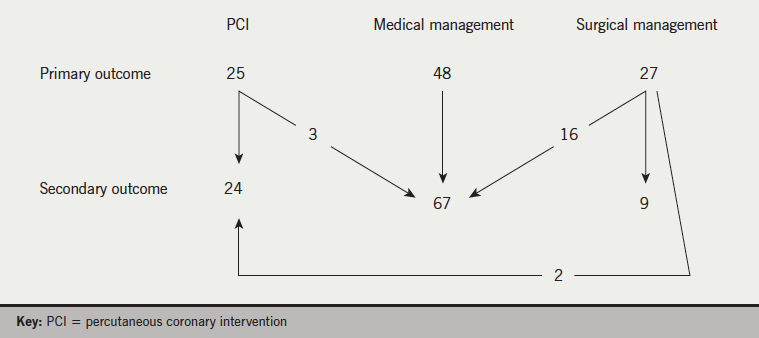
Between January 2005 and November 2010, 17,325 patients underwent DCC, of whom 771 (4%) were aged 80 or over.The characteristics of the two groups of patients are presented in table 1. Primary and secondary outcomes following DCC are presented in table 2 and figures 1 and 2.

Table 1. Baseline characteristics of the two groups
Table 2. Primary and secondary management decisions

More patients from group A were referred for surgery compared with group B (p<0.001). From the 27 patients in group A referred for surgery, 13 were considered unfit for surgery (on the grounds of comorbidity) and a further five patients declined surgery. Only one patient in group B referred for surgery (primary outcome), did not receive surgery. Overall, there was no difference in the final revascularisation rates between the two groups of patients. Of the 18 patients in group A who did not receive surgery (primary outcome), nine were dead within 3.5 years. The corresponding mortality for the entire elderly cohort was 25 (p<0.01).

Figure 1. Primary and secondary treatment outcome of group A
Figure 2. Primary and secondary treatment outcome of group B

There were no significant differences in complication rates following DCC between the two patient groups (table 3).

Table 3. Early (within 24 hours) complications following diagnostic cardiac catheterisation (DCC)

Discussion

In older patients we observed that DCC is safe, and contributes to clinical management in a similar way to that seen in younger patients.

Following DCC, 52% of our older group were referred for revascularisation as the ‘primary outcome’ compared with 40% of younger patients. These findings are similar to previous reports of revascularisation rates in older cohorts: Thompson et al.2 reported that, in patients aged over 75 years of age, 31% and 28% of Canadian men were referred for bypass surgery (CABG) and PCI, respectively. The corresponding values for older Canadian women were 18% and 29%, and the overall referral rates for revascularisation were comparable with a younger cohort. Niebauer et al.3 reported referral rates of 31% and 35%, respectively, for CABG and PCI from 1,085 consecutive patients aged over 80 years.

Primary treatment decision was generally determined by an interventional cardiologist and patient. Secondary outcome was generally determined by the interventional cardiologist and surgeon in the context of an informal multi-disciplinary team (MDT).

Before the widespread introduction of PCI, Elder et al.4 compared ‘primary’ and ‘secondary’ outcomes from DCC in patients aged over 70 years with suspected CAD. The findings were compared with patients aged under 70 years. Referral rates (‘primary outcome’) for revascularisation (predominantly CABG) were 48% and 42% for the older and younger cohorts, respectively.

We made a distinction between the ‘primary outcome’, based on the management plan immediately following DCC, and the treatment actually received, which we termed ‘secondary outcome’. Thus, ‘primary outcome’ would, in most instances, be determined by the cardiologist performing the DCC and would be heavily influenced by the coronary anatomy itself. The ‘primary outcome’ would often be recorded before consultation with the patient and without detailed knowledge of comorbidity, or patient preference. Perhaps, most importantly, the ‘primary outcome’ would be recorded before formal consultation with surgical colleagues, perhaps explaining why a significant proportion of these patients were subsequently considered unsuitable for CABG. Despite these considerations, we found that a similar proportion of patients from each age group ultimately underwent revascularisation. Compared with the older age group, almost all patients from the younger age group received the allocated ‘primary outcome’ decision, whether this was revascularisation or medical therapy.

In Elder’s study,4 the majority of patients (246 from 268) received the ‘primary outcome’ decision; thus, in the older cohort, only four patients from the 57 referred for CABG (primary outcome) did not eventually undergo surgery. In our older cohort, only six from 27 patients referred for surgery received the ‘primary outcome’ decision, perhaps reflecting both the advanced age of our patient cohort and the availability of less invasive revascularisation options; two patients who were considered unfit for surgery subsequently received PCI.

We observed that half of our older patients who did not receive surgery (as ‘primary outcome’) were dead within three years. Thompson et al.2 reported that the outcome of patients who did not undergo proposed surgery (as ‘primary outcome’) was poor, and considerably worse when compared with those patients who did receive either PCI or medical therapy as their ‘primary outcome’. Being considered unfit for surgery often reflects significant comorbidity, with advanced CAD, and ultimately a poor prognosis.5

Our older group were taking significantly more angina medications, had more documented cardiovascular risk factors, and presented more often as an emergency compared with the younger patient group. The older patients were also found to have more advanced CAD, and significantly more were referred for revascularisation. These findings are not unexpected given the predominant influence of age on cardiovascular risk profile and the natural history of CAD.

Complications rates associated with DCC were similar in both patient groups, with no strokes or deaths in the older patient group, and were consistent with previous studies.3

We agree that increasing the numbers would increase the overall strength of the study. However, in the context of an observational study, we feel that the relative group numbers (100 from 771 patients overall) were representative and that increasing group sizes would not materially affect the outcome.

Acknowledgement

The authors wish to thank Mr Sam Hampson for his kind help editing this paper.

Conflict of interest

None declared.

Editors’ note

See also the editorial in this issue by Green et al (doi: 10.5837/bjc.2014.001) on pages 7–8 of this issue.

Key messages

  • Very elderly patients (aged over 80) are more likely to be referred for consideration of surgical intervention following diagnostic cardiac catheterisation (DCC)
  • There is no difference in treatment outcome (percutaneous intervention or surgical intervention) between patients aged over 80 years compared with those under 70 years, irrespective of referral decision from DCC
  • We found no difference in peri-procedural complications between patients aged under 70 and those aged over 80 years

References

1. Office for National Statistics. Mid-year population estimates. June 2011. Available from: http://www.statistics.gov.uk/cci/nugget.asp?id=949

2. Thompson CR, Humphries KH, Gao M et al. Revascularization use and outcomes after cardiac catheterization in British Columbia and Alberta. Can J Cardiol 2004;20:1417–23.

3. Niebauer J, Sixt S, Zhang F et al. Contemporary outcome of cardiac catheterizations in 1085 consecutive octogenarians. Int J Cardiol 2004;93:225–30. http://dx.doi.org/10.1016/S0167-5273(03)00216-X

4. Elder AT, Shaw TDR, Turnbull CM et al. Elderly and younger patients selected to undergo coronary angiography. BMJ 1991;303:950–3. http://dx.doi.org/10.1136/bmj.303.6808.950

5. Hemingway H, Crook AM, Feder G et al. Underuse of coronary revascularization procedures in patients considered appropriate for revascularization. N Engl J Med 2001;344:645–54. http://dx.doi.org/10.1056/NEJM200103013440906

Dabigatran improves the efficiency of an elective direct current cardioversion service 

Br J Cardiol 2014;21:29–32doi:10.5837/bjc.2014.002 Leave a comment
Click any image to enlarge
Authors:
First published online February 4th, 2014

Anticoagulation prior to direct current cardioversion (DCCV) is mandatory to reduce the risk of thromboembolism. We examined the impact of the use of dabigatran as an alternative to warfarin on the efficiency of an outpatient DCCV service. A total of 242 DCCVs performed on 193 patients over a 36-month period were analysed. Patients were divided into two cohorts; cohort A included cases in the 22-month period before the introduction of dabigatran and cohort B included cases in the 14-month period after the introduction of dabigatran. All patients in cohort A received warfarin. In cohort B, 48.4% received dabigatran. A larger number of patients from cohort A were rescheduled due to subtherapeutic international normalised ratios (INRs) compared with cohort B (42.1% vs. 15.6%, p<0.001). Those who received dabigatran had significantly lower rates of rescheduling compared with those who received warfarin (9.7% vs. 34.4%, p<0.001). The length of time between initial assessment and DCCV was 24 days shorter in cohort B than cohort A (p<0.001) and 22 days shorter with those who took dabigatran than warfarin (p=0.0015). Outcomes in achieving and maintaining sinus rhythm were comparable in both cohorts and anticoagulants (all p>0.05). This study demonstrates that the use of dabigatran can improve the efficiency of an elective DCCV service.

Introduction

SPLAtrial fibrillation (AF) is a common arrhythmia affecting approximately 1% of the general population, this rises to 18% in those aged 85 years and above.1 The most effective method for correcting persistent AF is direct current cardioversion (DCCV). However, DCCV is associated with an increased risk of thromboembolic events.2 Anticoagulation with warfarin reduces the risk of thromboembolism from approximately 6% to less than 1%.3

The current recommendations advise therapeutic anticoagulation for at least three weeks prior to, and four weeks after cardioversion.4 A nurse-led elective DCCV service at Raigmore Hospital was established in 2006 and, initially, warfarin was the only anticoagulant available. Frequent subtherapeutic international normalised ratios (INRs) resulted in the cancellation and rescheduling of many DCCV appointments, often at short notice, disrupting clinical services and patient care.

The new oral anticoagulant dabigatran, which became available recently, has been shown to be at least as effective as warfarin in preventing stroke in patients with AF.2,5 Dabigatran is a direct thrombin inhibitor with rapid onset of action, achieving peak plasma concentration within 30 minutes to two hours of administration, and patients do not require therapeutic INR level monitoring. From December 2011, we used dabigatran as an alternative to warfarin in suitable patients undergoing DCCV. We aimed to examine the impact of the use of dabigatran as an alternative to warfarin on our DCCV service.

Methods

Subjects

All patients referred for elective DCCV over a 36-month period from February 2010 to January 2013 were included. Patients were divided into two cohorts. Cohort A included all cases in the 22-month period prior to the introduction of dabigatran. Cohort B included cases in the 14-month period since the introduction of dabigatran.

Anticoagulation strategy

All patients in cohort A received warfarin. Patients in cohort B were treated either with warfarin or dabigatran 150 mg twice daily. Although we primarily preferred dabigatran, since its introduction, those patients already established on warfarin with good therapeutic INRs and those with other indications for warfarin, namely metallic heart valves and recurrent pulmonary thromboembolism, were not switched to dabigatran.

Clinical assessment

All patients underwent initial clinical assessment in a nurse-led clinic, upon referral to our elective DCCV service, and were counselled regarding the procedure. Those who received warfarin had INR monitoring performed remotely by our specialist nurse. We required a strict 21 days of therapeutic INR (2.0–3.0) prior to cardioversion. Those on dabigatran were not monitored, although a single blood test was taken prior to DCCV in order to demonstrate some prolongation of activated partial thromboplastin time (aPTT). Strict compliance to anticoagulants was stressed in all initial assessments. As part of the consent process for DCCV, patients confirmed that they had been compliant with their medication. All patients underwent DCCV following a local standard operating policy under general anaesthetic with 50–150 J delivered using a biphasic defibrillation. All patients were reviewed again by our specialist nurse five weeks following DCCV to review the success of maintaining sinus rhythm by 12-lead electrocardiogram (ECG).

Data and statistics

The following data were collected: patient demographics, anticoagulant therapy, positive echocardiographic findings, risk factors and comorbidities (CHA2DS2 VASc score). Rates of cancellation and rescheduling, time taken to DCCV and outcomes were compared between the two cohorts and between the two anticoagulant groups. Parametric data are presented as mean and comparison performed with Student’s t-test. Categorical variables are expressed as frequencies and percentages, and comparison performed with Chi-squared test. Fisher’s exact test was used to analyse values less than 10. All p values are two-sided and a p value of <0.05 indicates statistical significance. Ethics approval was not required for this service evaluation.

Results

A total of 242 cardioversions were performed on 193 individual patients. The majority of patients (78%) received one DCCV; 18% required two and 4% required three. The indication for DCCV was AF in 97% of cases and atrial flutter in 3%. The average age of all patients was 65.8 ± 9.7 years. One hundred and forty-seven (76.1%) were male. Men were generally younger than women in our study groups (64.3 ± 9.5 vs. 70.7 ± 8.7 years, p<0.0001).

All patients in cohort A received warfarin, but only 48.4% received warfarin in cohort B. The anticoagulant used did not influence the outcome of achieving and maintaining sinus rhythm (tables 1 and 2). The mean CHA2DS2 VASc score for all patients was 2.2 ± 2.6. Cohort B and the dabigatran group had a lower CHA2DS2 VASc score (p=0.07 and p<0.001, respectively) (tables 1 and 2). There were two cases of transient ischaemic attack (TIA) post-DCCV in cohort A. Both of these patients were taking warfarin with adequate INR. There was one case of TIA in the dabigatran subgroup of cohort B.

Table 1. Procedural data and outcomes – cohort A versus cohort B
Table 2. Procedural data and outcomes – dabigatran versus warfarin

Permanent cancellations

There was no difference in the number of permanent cancellations between cohort A and B, nor between those who received warfarin and dabigatran (tables 1 and 2). Of those procedures permanently cancelled, 15 spontaneously returned to sinus rhythm (6%), eight patients withdrew (3%) and one was referred for AF ablation prior to their DCCV appointments (0.4%).

Rescheduling

A significantly smaller number of patients from cohort B had their initial DCCV appointment rescheduled to a later date due to subtherapeutic INR compared with cohort A (15.6% vs. 42.1%, p<0.001). Those who received dabigatran also had significantly lower rates of rescheduling compared with those who received warfarin (9.7% vs. 34.4%, p<0.001) (table 2). This represents a 71.8% reduction in rescheduling rates (absolute reduction of 24.7%).

Time to DCCV

The length of time between initial clinic assessment and DCCV was 24 days shorter with cohort B compared with cohort A (50.2 ± 28.3 vs. 74.5 ± 50.8, p<0.001) (table 1). The time taken to DCCV was 22 days shorter with dabigatran compared with warfarin (45.0 ± 26.7 vs. 67.2 ± 44.8, p=0.0015) (table 2).

Discussion

This analysis has shown for the first time that in a routine clinical setting, the use of dabigatran has reduced rescheduling due to subtherapeutic INR by more than 70%, and significantly reduced the time required to achieve safe elective DCCV.

Rescheduling of DCCV appointments due to subtherapeutic INRs disrupts clinical care, and the resulting inefficiency can escalate the overall cost of treatment. Dabigatran is particularly well suited for anticoagulation prior to elective DCCV due to its predictable therapeutic effects. In addition to the organisational disruption, short-notice rescheduling of DCCV appointments can pose great inconvenience to patients and carers, especially those who live in rural and remote areas who may have to travel significant distances to attend their appointments. The over 300,000 population that we serve is scattered across 12,000 square miles in the Scottish Highlands, an area approximately the size of Belgium.

We recognise that it is not possible for all patients to switch to dabigatran for practical reasons and because the indications licensed for dabigatran are still limited. Therefore, in addition to comparing dabigatran with warfarin, our analyses also included cohort B, which has a mix of patients taking either anticoagulant. Despite a mix, cohort B still outperformed cohort A in achieving greater efficiency in elective DCCV.

Potential impact on the UK

Our centre only serves 4% of the Scottish population and 0.4% of the population of the UK. We estimate that in excess of 13,000 DCCV are performed each year within the UK. If our experience was to be extrapolated to the UK population, an estimated 30–40% of these cases may be postponed, which has huge financial implications to the health service. Through the use of dabigatran, up to 5,000 cancellations could be avoided annually. The UK’s national tariff for each outpatient elective DCCV is currently £722.6 The cost saving from avoiding each cancellation can offset the more expensive initial prescription of dabigatran. In the UK, dabigatran costs £75.60 for 30 days’ treatment compared with warfarin, which costs between £0.86–£1.67 depending on the dosage required.7

Longer-term use of dabigatran

The predictable therapeutic effects of dabigatran also better suit most lifestyles, especially in patients with a heavy alcohol intake, which usually causes erratic INRs. Without the need for INR monitoring, dabigatran also has the potential to improve patients’ perception of their disease by abolishing the need to frequently attend health services. This will also lift considerable strain on primary care and haematology services. However, without the need for frequent monitoring, it can be difficult to identify those on dabigatran who are not compliant. As a safeguard, we routinely check the aPTT prior to DCCV to ensure it is at least elevated. Even a mild elevation in aPTT has been shown to be associated with clinically important levels of dabigatran.8 Furthermore, as part of the consent process for DCCV, patients confirmed and signed that they had been compliant with their medications. The use of dabigatran also eliminates the assumption that INRs for those who are on warfarin are therapeutic between weekly checks.

Limitations

This was a non-randomised, single-centre study in a relatively small population. However, our clinical service would be considered ‘standard’ and, therefore, it is highly likely that these findings would be applicable to other DCCV services in most cardiac units in the UK. Furthermore, although the study is relatively small, the considerable size of the reduction in cancellations is likely to have an impact on other DCCV services.

Conclusion

This study demonstrates that the use of dabigatran instead of warfarin in patients undergoing a DCCV, reduced rescheduling and, thus, improved efficiency. Future studies can examine if other new anticoagulants, such as direct factor Xa inhibitors, produce similar effects with elective DCCV.

Acknowledgement

The authors would like to thank Consultant Anaesthetist Dr Charles Lee for his role in DC cardioversion cases.

Funding

This project was supported by an unrestricted educational grant from Boehringer Ingelheim. No employees of Boehringer Ingelheim were involved in the preparation of this paper.

Conflict of interest

None declared.

Key messages

  • The use of dabigatran has reduced rescheduling due to subtherapeutic international normalised ratio (INR) by more than 70%
  • The length of time between initial assessment and direct current cardioversion (DCCV) was 22 days shorter with those who took dabigatran than warfarin
  • Outcomes in achieving and maintaining sinus rhythm were comparable in both cohorts and anticoagulants

References

1. Heeringa J, van der Kuip DA, Hofman A et al. Prevalence, incidence and lifetime risk of atrial fibrillation: the Rotterdam study. Eur Heart J 2006;27:949–53. http://dx.doi.org/10.1093/eurheartj/ehi825

2. Nagarakanti R, Ezekowitz MD, Oldgren J et al. Dabigatran versus warfarin in patients with atrial fibrillation – an analysis of patients undergoing cardioversion. Circulation 2011;123:131–6. http://dx.doi.org/10.1161/CIRCULATIONAHA.110.977546

3. Arnold AZ, Mick MJ, Mazurek RP, Loop FD, Trohman RG. Role of prophylactic anticoagulation for direct current cardioversion in patients with atrial fibrillation or atrial flutter. J Am Coll Cardiol 1992;19:851–5. http://dx.doi.org/10.1016/0735-1097(92)90530-Z

4. Camm AJ,Lip GYH, De Caterina R et al. 2012 focused update of the ESC guidelines for the management of atrial fibrillation. An update of the 2010 ESC guidelines for the management of atrial fibrillation. Developed with the special contribution of the European Heart Rhythm Association. Eur Heart J 2012;33:2719–47. http://dx.doi.org/10.1093/eurheartj/ehs253

5. Pink J, Lane S, Pirmohamed M, Hughes DA. Dabigatran etexilate versus warfarin in management of non-valvular atrial fibrillation in UK context: quantitative benefit-harm and economic analyses. BMJ 2011;343:d6333. http://dx.doi.org/10.1136/bmj.d6333

6. Department of Health. Payment by Results in the NHS: tariff for 2013 to 2014. London: DoH, 2013. Available from: https://www.gov.uk/government/publications/payment-by-results-pbr-operational-guidance-and-tariffs

7. British Medical Association and the Royal Pharmaceutical Society of Great Britain. British National Formulary.65th edition. London: BMJ Publishing Group, 2013. Available from: http://www.bnf.org/bnf/

8. Hankey GJ, Eikelboom JW. Dabigatran etexilate: a new oral thrombin inhibitor. Circulation 2011;123:1436–50. http://dx.doi.org/10.1161/CIRCULATIONAHA.110.004424

Ageism and coronary angiography

Br J Cardiol 2014;21:7–8doi:10.5837/bjc.2014.001 Leave a comment
Click any image to enlarge
Authors:
First published online February 4th, 2014

National life-expectancy is steadily rising with the number of those aged 85 years or over doubling from 1985 to 2010,1 and ever more elderly patients presenting to cardiology. Age is a potent risk factor for mortality after acute coronary syndrome (ACS),2 and older patients with angina present with more severe symptoms and prognostically significant coronary anatomy.3 Age has a very powerful influence on risk stratification tools such as GRACE (Global Registry of Acute Coronary Events), and National Institute for Health and Care Excellence (NICE) guidance supports early invasive investigation and management for high-scoring patients.4 Diagnostic coronary angiography (DCA) is crucial to assessing the cross-spectrum of coronary disease presentation. Despite this, elderly patients are less likely to be treated in accordance with best practice after presenting with ACS,5,6 the so-called ‘risk paradox’. Concern about the safety and efficacy of DCA and percutaneous coronary intervention (PCI) in the more elderly population seems to underpin this behaviour. 

There is in fact a wealth of data to indicate that DCA in the elderly has acceptable complication rates,7 and that revascularisation, surgical or by PCI, offers significant benefit.5 The study by Walsh and Hargreaves (see page 37) is welcome in further describing the fallacies of current practice, which fall short of best practice.6 

The study

The research is presented as a retrospective case-control study in the modern era of coronary intervention, and gives some insight into current practice. Data from 100 randomly selected patients aged over 80 years and a control group aged below 70 years were taken from a district general hospital (DGH) DCA database. This method of patient selection is perhaps the major weakness of the study. There will inevitably have been a high degree of case selection – particularly of older patients – with those put forward deemed appropriate for DCA (and by implication also considered ‘reasonable’ candidates for revascularisation). The low rate of selection of elderly patients for DCA is confirmed, with only 4% of the overall 17,325 patients in the database aged over 80, despite a much higher prevalence of coronary artery disease (CAD) in this age group.

The investigators chose to explore the difference between the preferred intervention (immediately after catheterisation) and the treatment the patient ultimately received; medical therapy, PCI or coronary artery bypass graft (CABG). The preferred treatment would be decided by the cardiologist performing the diagnostic angiogram and would be weighted more heavily by the coronary anatomy, while the final treatment would take more account of the complete clinical picture. The study design is very similar to that of Elder et al.,3 from the cardiology dark ages of 1991, and thus provides an interesting comparison between the diagnostic and revascularisation strategies of an earlier era and our own. The value of this study is as an observation of practice and comparison with a previous age of cardiology.

As might be expected, a higher number from the elderly cohort were initially recommended for CABG (27 vs. 11 from the control group). An interesting observation is the high rate of later ‘conversion’ of mode of revascularisation in the elderly group; of the 27 patients who were initially put forward for surgery only nine eventually received an operation. In comparison, 10 out of 11 in the control group went on to have surgery. This would confirm the usual supposition that the elderly population have not only a higher predominance of surgical disease, but also comorbidities that produce an unfavourable operative risk, sufficient to dissuade many cardiac surgeons in the modern era of outcomes disclosure.

In terms of the diagnostic angiogram, this study showed no significant difference in complication rates between the two age groups, but the sample sizes were far too small to be able to state this with any confidence, given the very low rate of complications with DCA in modern practice.

It is now well-established that age alone should not have a role in determining who undergoes invasive cardiological management. Frailty assessment, a technique still in evolution, is a more important arbiter in deciding who enters the catheterisation lab8-10

Conflict of interest

None declared.

Editors’ note

See also the study by Walsh and Hargreaves (doi: 10.5837/bjc.2014.003) on page 37 of this issue.

References

1. Office for National Statistics. Topic guide to: older people. Available from: http://www.statistics.gov.uk/hub/population/ageing/older-people/index.html

2. Fox KA, Dabbous OH, Goldberg RJ et al. Prediction of risk of death and myocardial infarction in the six months after presentation with acute coronary syndrome: prospective multinational observational study (GRACE). BMJ 2006;333:1091. http://dx.doi.org/10.1136/bmj.38985.646481.55

3. Elder AT, Shaw TR, Turnbull CM, Starkey IR. Elderly and younger patients selected to undergo coronary angiography. BMJ 1991;303:950–3. http://dx.doi.org/10.1136/bmj.303.6808.950

4. Cooper A, Calvert N, Skinner J et al. Chest pain of recent onset: assessment and diagnosis of recent onset chest pain or discomfort of suspected cardiac origin. London: National Clinical Guideline Centre for Acute and Chronic Conditions, 2010. Available from: http://www.nice.org.uk/nicemedia/live/12947/47931/47931.pdf

5. Devlin G, Gore JM, Elliott J et al. Management and 6-month outcomes in elderly and very elderly patients with high-risk non-ST-elevation acute coronary syndromes: The Global Registry of Acute Coronary Events. Eur Heart J 2008;29:1275–82. http://dx.doi.org/10.1093/eurheartj/ehn124

6. Avezum A, Makdisse M, Spencer R et al. Impact of age on management and outcome of acute coronary syndrome: observations from the Global Registry of Acute Coronary Events (GRACE). Am Heart J 2005;149:67–73. http://dx.doi.org/10.1016/j.ahj.2004.06.003

7. Niebauer J, Sixt S, Zhang F et al. Contemporary outcome of cardiac catheterizations in 1805 consecutive octogenarians. Int J Cardiol 2004;93:225–30. http://dx.doi.org/10.1016/S0167-5273(03)00216-X

8. Afilalo J, Karunananthan S, Eisenberg MJ, Alexander KP, Bergman H. Role of frailty in patients with cardiovascular disease. Am J Cardiol 2009;103:1616–21. http://dx.doi.org/10.1016/j.amjcard.2009.01.375

9. Rockwood J, Song X, MacKnight C et al. A global clinical measure of fitness and frailty in elderly people. CMAJ 2005;173:489–95. http://dx.doi.org/10.1503/cmaj.050051

10. Klein LW, Arrieta-Garcia C. Is patient frailty the unmeasured confounder that connects subacute stent thrombosis with increased periprocedural bleeding and increased mortality? J Am Coll Cardiol 2012;59:1760–2. http://dx.doi.org/10.1016/j.jacc.2012.01.042

News from the American Heart Association Scientific Sessions 2013

Br J Cardiol 2014;21:10–11 Leave a comment
Click any image to enlarge
Authors:
First published online February 4th, 2014

Highlights of the American Heart Association (AHA) Scientific Sessions 2013, held in Dallas, Texas, USA, last November included success with a fourth new oral anticoagulant in patients with atrial fibrillation, and some benefit with spironolactone for heart failure patients with preserved left ventricular function, a group for whom no treatment is currently available.

ENGAGE AF-TIMI 48: success for edoxaban in AF

The new factor Xa inhibitor, edoxaban (Daiichi-Sankyo), was as effective in preventing strokes and safer than warfarin in patients with atrial fibrillation (AF) in the ENGAGE AF-TIMI 48 trial.

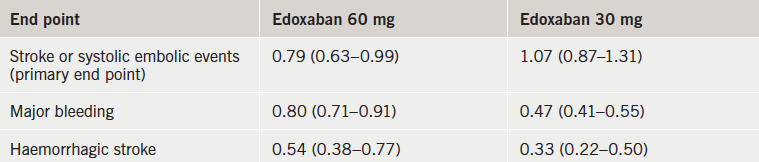
The ENGAGE AF-TIMI 48 (Effective AnticoaGulation with Factor XA Next Generation in Atrial Fibrillation – Thrombolysis In Myocardial Infarction 48) trial included more than 21,000 AF patients from 46 countries who were randomised to edoxaban at one of two doses (60 mg or 30 mg per day) or warfarin.

Results (table 1) showed that both edoxaban doses were associated with significantly less major bleeding than warfarin. The rate of ischaemic stroke was similar with high-dose edoxaban and warfarin but was higher with the low-dose edoxaban regimen. Haemorrhagic strokes and cardiovascular mortality were both significantly lower with both doses of edoxaban than with warfarin.

ENGAGE table 1
Table 1. Hazard ratio (97.5% CI) for major end points for edoxaban vs. warfarin

Dr Robert Giugliano (Brigham and Women’s Hospital, Boston, USA) who was lead investigator of the study, said: “Once-daily edoxaban may be an important alternative to warfarin”.

Designated discussant of the trial, Dr Elaine Hylek (Boston University Medical Center, Boston, USA), highlighted the reduction in haemorrhagic stroke that has been seen with all the new oral anticoagulants in comparison with warfarin. She commented: “The current trial provides very important confirmation for another oral factor Xa inhibitor, that indeed we are seeing a dramatic reduction in intracerebral haemorrhage.”

Compared to previous studies of other new oral anticoagulants, the ENGAGE AF-TIMI 48 trial design stipulated a more rigorous dosage reduction for patients with certain features that enhance blood levels of the drug. This recommended dosage reduction was 50% for patients with renal dysfunction, low body weight, or those who were also taking P-glycoprotein-inhibiting drugs such as verapamil or quinidine. These dosage reductions applied to about a quarter of patients in the trial. “The dosage reduction worked in that it maintained similar efficacy as seen in those patients who did not need to be dose-reduced, and patients with dosage modifications did better on the trial’s measures of safety.” Dr Guigliano said.

Another impressive feature of the trial was that the benefit of edoxaban was compared with fairly well managed warfarin treatment, with warfarin patients being in the therapeutic INR range for 68.4% of the time, Dr Guigliano pointed out. 

Edoxaban is now the fourth new oral anticoagulant to have shown benefit in this indication, joining dabigatran, rivaroxaban and apixaban. Answering questions on how clinicians will choose which agent to use, commentators at an AHA media briefing on the ENGAGE AF-TIMI 48 trial said all four new agents seemed to have benefits over warfarin, particularly on safety, but were hard to compare with each other. They suggested that clinicians will make a judgment on patient characteristics that may favour one drug over the others, such as individual side effects of the drugs and dosing schedules. 

Edoxaban is currently only available in Japan for patients undergoing orthopedic surgery. 

ENGAGE AF-TIMI 48 was also published online in the New England Journal of Medicine on 28th November 2013 (doi: 10.1056/NEJMoa1310907). 

STREAM: thrombolysis still an option if no immediate PCI

One-year results from the STREAM trial show similar survival rates between immediate thrombolysis with tenecteplase and transfer to percutaneous coronary intervention (PCI) in ST-elevation myocardial infarction (STEMI) patients for whom PCI is not immediately available. 

The 30-day results – showing similar outcomes in the two treatment groups – were presented at the American College of Cardiology (ACC) meeting last March.

STREAM (Strategic Reperfusion Early After Myocardial Infarction) is the first trial to have succeeded in showing that fibrinolysis given before transfer to a PCI hospital can be as effective as primary PCI, which has been attributed to the fact that thrombolysis patients were only given urgent PCI on arrival at the PCI hospital if the electrocardiogram showed they had not reperfused. This avoided the situation of performing PCI with fibrinolysis on board – which has been associated with adverse outcomes – in two-thirds of patients.

The STREAM trial included 1,892 STEMI patients who were not able to undergo PCI within the first hour of arriving at hospital. They were randomised to medical therapy with age-adjusted bolus tenecteplase, clopidogrel and enoxaparin, which was followed by later PCI only if symptoms persisted, or to PCI as soon as it could be performed. Both groups were treated within three hours of symptom onset.

One-year mortality rates were 2.1% in the thrombolysis group versus 1.5% in the PCI group, a non-significant difference.

“In this study, the thrombolytic strategy proved a reasonable approach to take as an initial treatment immediately after severe heart attack when PCI is not immediately available,” said Dr Peter Sinnaeve, the study’s lead author and assistant professor of cardiology (University of Leuven, Belgium).

Using genetics to guide warfarin dose: contradictory results

Two new trials looking at the use of genetic information to guide warfarin dosing have reached different conclusions. 

The EU-PACT (European Pharmacogenetics of Anticoagulant Therapy – Warfarin) study, conducted in Sweden and the UK, showed that genetically guided dosing was associated with a greater time in therapeutic range, whereas the COAG (Clarification of Optimal Anticoagulation Through Genetics) trial, conducted in the USA, showed no difference in time in therapeutic range, and a possible worse result for African-American patients, when genetics were used in addition to normal clinical variables. 

Trying to address the reason for the different results, lead investigator of the EU-PACT trial, Dr Munir Pirmohamed (University of Liverpool), suggested that this might be due to the specific algorithms used in conjunction with the genetic testing. He pointed out that the algorithm used in EU-PACT was developed and tested in a European population, which was similar to the population included in this EU-PACT study. He said that more work need to be done to develop further ethnicity-specific algorithms to apply to other populations. 

In the COAG trial, 1,015 patients with a history of stroke, venous thrombosis or atrial fibrillation (AF), who took warfarin were randomised to dose adjustment using clinical information, such as age, weight, and smoking status, or clinical information plus genetic information on three genes (CYP2C9*2, CYP2C9*3, and VKORC1) that affect warfarin levels. Patients were followed for up to six months from 2009–2013. 

Results showed that both groups were within the appropriate therapeutic range 45% of the time over the first four weeks. “These findings highlight the importance of developing and evaluating pharmacogenetic testing in patients from diverse racial and ethnic backgrounds,” said Dr Gary H Gibbons (National Heart, Lung, and Blood Institute, Bethesda, Maryland, USA), which funded the COAG trial.

In the EU-PACT study, 454 patients with either AF or venous thromboembolism were randomised to clinical or genetic tests to guide warfarin therapy. For the genetic group, information about the same three genes as in COAG was used to adjust warfarin doses. At 12 weeks, the genetic guided group had been in therapeutic range for 67% of the time, compared to 60% for those patients guided by clinical factors alone. Dr Pirmohamed estimated the cost of such genetic guidance at about 50 euros per test, and said the next step would be to look at the cost-effectiveness of the process. “My feeling is that we would need to undertake further studies to determine whether this had an impact over the long term in terms of clinical outcome measures,” he commented. 

Both studies were published online in The New England Journal of Medicine (EU-PACT doi: 10.1056/NEJMoa1311386; COAG doi: 10.1056/NEJMoa1310669). In an accompanying editorial (doi: 10.1056/NEJMe1313682), Dr Bruce Furie (Harvard Medical School, Boston, USA) concluded that “these trials indicate that this pharmacogenetic testing has either no usefulness in the initial dosing of vitamin K antagonists or, at best, marginal usefulness, given the cost and effort required to perform this testing”.

Repair and replacement of mitral valve give similar results

Patients with severe ischaemic mitral regurgitation (MR) had similar heart function and survival rates whether their mitral valve was repaired or replaced in the CTSN (Cardiothoracic Surgical Trials Network) Severe MR trial. But patientswith repaired valves had a greater risk of experiencing recurrent regurgitation.

“Practice guidelines recommend repairing or replacing mitral valves in severe cases, but there has been a lack of conclusive evidence that one approach is better than the other,” said Dr Michael Acker (University of Pennsylvania’s Perelman School of Medicine, USA) and a clinical investigator in the trial. But he noted that in the USA there is a strong preference for repair over replacement. “But our study suggests that mitral valve replacement provides a more durable correction.”

The study included 251 patients with severe ischaemic mitral valve regurgitation in 22 USA clinical centres. It compared 125 patients who underwent valve replacement with 126 who had their faulty valve repaired. 

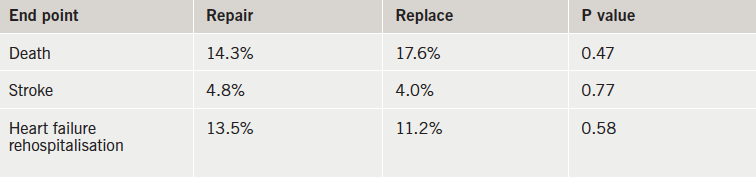
Results (table 1) showed that rates of death, stroke and re-hopsitalisation for heart failure were similar in the two groups at one year. In addition, there was no significant difference in the mean left-ventricular end-systolic volume index (LVESVI) between groups – 54.6 mL/m2 in the repair group versus 60.7 mL/m2 in the replacement group. This translated into a mean change from baseline of -6.6 and -6.8 mL/m2, respectively.

Table 1. CTSN Severe MR trial: clinical end points

However, the recurrence of mitral regurgitation at 12 months was much higher in the repair group – 32.6% versus 2.3% in the replacement group. In addition, three patients in the repair group underwent reoperation while none of the patients in the replacement group needed a repeat procedure.

TOPCAT: spironolactone shows a signal of benefit

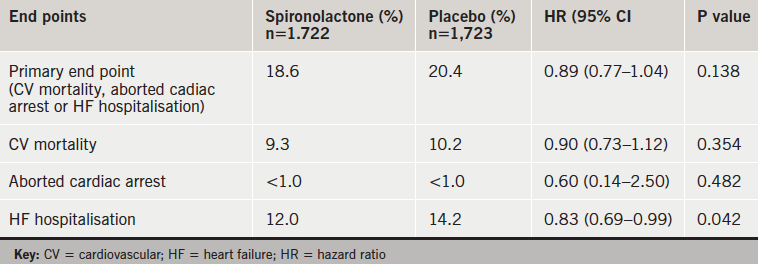
Spironolactone did not show a benefit on the composite primary end point in the TOPCAT trial in patients with heart failure with preserved ejection fraction, but the drug was associated with significantly fewer heart-failure hospitalisations.

Presenting the study, Professor Marc Pfeffer (Harvard Medical School, Brigham and Women’s Hospital, Boston, USA) said the reduction in hospitalisation was “an important finding”. 

Noting that at present there is no therapy for patients with heart failure with preserved ejection fraction, Professor Pfeffer said that he would now use spironolactone for this patient population. “We have a generic medication that we can show how to use safely and we do believe it relieves the burden these patients have,” he commented. 

Designated discussant Dr Margaret M Redfield (Mayo Clinic, Rochester, USA) agreed that the trial, “although not statistically significant, showed a signal of benefit”. But she also cautioned that the occurrence of worsening renal function and hyperkalaemia would likely be more common in clinical practice given the careful creatinine and potassium monitoring that occurred in the trial.

TOPCAT (Treatment of Preserved Cardiac Function Heart Failure with an Aldosterone Antagonist) included 3,445 heart-failure patients aged 50 or over with an LVEF >45% from six countries. They were randomised to spironolactone (titrated up to 30–45 mg/day) or placebo. The mean follow up was 3.3 years. 

There were no significant differences in clinical adverse events (table 1), but there was more hyperkalaemia with spironolactone and more hypokalaemia on placebo (table 2). There were no hyperkalemia-related deaths.

Table 1. Clinical outcomes in the TOPCAT study
Table 2. Rates of hyperkalaemia and hypokalaemia in the TOPCAT study

Bleeding risk with new anticoagulants varies with indication

While there appears to be little difference in overall bleeding risks between the various new oral anticoagulants, there does appear to be variations based on in which indication they are being used, a new meta-analysis has found. 

The analysis was based on 48 randomised clinical trials including a total of 141,932 patients testing dabigatran, rivaroxaban, apixaban, edoxaban or darexaban in various clinical indications.

Presenting the results, Dr Partha Sardar (New York Medical College, USA) noted that as a group, the new oral anticoagulants caused significantly less major bleeding compared with vitamin K antagonists (relative risk 0.82), with no differences between drug type. But while no differences in bleeding were seen between the newer agents and comparators (vitamin K antagonists or low-molecular-weight heparin) for the treatment of atrial fibrillation and extended treatment of venous thromboembolism, significant bleeding differences were seen in other settings.

The new drugs were linked with significantly higher risks of bleeding than the comparator agents in patients undergoing hip surgery, patients with acute coronary syndrome, and medically ill patients being treated for thromboprophylaxis. There was a lower risk of bleeding in patients treated for venous thromboembolism and pulmonary embolism.

CATIS: no benefit of blood pressure lowering in acute stroke

There was no benefit of antihypertensive treatment in the first days after an acute ischaemic stroke in patients with elevated blood pressure (BP) in the CATIS (China Antihypertensive Trial in Acute Ischaemic Stroke) trial.

“These findings suggest that unless a patient’s systolic BP is 220 mmHg or more or diastolic pressure is 120 mmHg or more, the decision to lower BP with antihypertensive treatment in patients with acute ischaemic stroke does not improve or worsen outcome and therefore should be based on individual clinical judgment,” the researchers conclude.

The study was published online on 17th November 2013 in JAMA (doi: 10.1001/jama.2013.282543) to coincide with its presentation at the AHA meeting. 

The authors explain that although the benefit of antihypertensive treatment in reducing the risk for stroke in both primary and secondary prevention is well established, the benefit of reducing BP in the acute phase of stroke is not clear.

The CATIS trial included 4,071 patients from 26 hospitals with acute ischaemic stroke who were within 48 hours of symptom onset and had elevated BP. Patients who received thrombolytic therapy were excluded. Patients were randomised to receive antihypertensive treatment or to discontinue all hypertensive medications they had been on prior to their stroke during their hospitalisation. In those randomised to receive antihypertensive treatment, the aim was to lower BP by 10–25% within 24 hours of randomisation, achieve a BP <140/90 mmHg within seven days, and maintain at this level during hospitalisation. At hospital discharge, all patients were prescribed antihypertensive medications according to clinical guidelines.

Several antihypertensive agents, including intravenous ACE inhibitors (first line), calcium blockers (second line), and diuretics (third line) could be used individually or in combination in the intervention group according to a prespecified treatment algorithm.

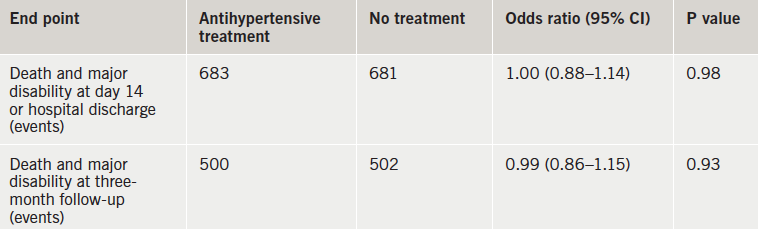
While systolic BPs were significantly lowered in the treated group versus the control group by seven days – 137 vs. 146 mmHg – this did not affect outcomes, either on the primary or the secondary composite end point (table 1)

Table 1. CATIS: primary and secondary outcomes

News from the BSH 16th Annual Autumn Meeting

Br J Cardiol 2014;21:15 Leave a comment
Click any image to enlarge
Authors:
First published online February 4th, 2014

The 16th Annual Autumn Meeting of the British Society for Heart Failure (BSH) entitled ‘Making sense of acute heart failure’, was held on 28–29 November 2013 at the Queen Elizabeth II Conference Centre in London. Over 700 delegates attended the meeting, which was introduced by BSH Chair Professor Andrew Clark. Colin Cunnington reports on some of the highlights.

Counting the cost of acute heart failure

In the first keynote lecture, Professor John McMurray (BHF Cardiovascular Research Centre, Glasgow) began by addressing the definition of acute heart failure (HF). He felt the term ‘acute’ was unhelpful, as it can be applied to a broad spectrum of clinical presentation, from the rapid onset of acute pulmonary oedema, to the subacute deterioration in chronic HF symptoms (predominantly peripheral oedema) that culminates in hospitalisation. Accordingly, the new 2013 American College of Cardiology Foundation (ACCF)/American Heart Association (AHA) HF guidelines refer to ‘the hospitalised patient’, rather than ‘acute HF’.1 In contrast to treatments for chronic HF, treatments for acute HF are not supported by randomised-controlled trials (RCTs). Indeed, other than venous thromboembolism prophylaxis, no treatment for acute HF is supported by Class 1 Level A evidence.2 Nonetheless, he stressed the importance of up-titration of chronic HF therapies, such as angiotensin-converting enzyme (ACE) inhibitors or angiotensin-receptor blockers (ARBs), beta blockers and mineralocorticoid receptor antagonists (MRA). Updated National Institute for Health and Care Excellence (NICE) guidelines for acute HF are currently in preparation.

In the 2012/13 National Heart Failure Audit (available at www.bsh.org.uk), in-hospital mortality from acute HF was 9.4%. This is considerably higher than the 3–4% seen in large US registries;3,4 however, mortality at 30 days (14.9%) is equivalent, and, thus, the observed difference in in-hospital mortality may be artefactual. Importantly, the early risk of death following discharge after a HF hospitalisation was emphasised, with mortality increasing with the frequency and duration of hospitalisations.5 Furthermore, there is a high risk of early re-admission (25%), although only 35% of patients are re-admitted due to HF,6 highlighting the extensive comorbidity of HF patients, and the destabilising effect of acute HF on comorbidities.

Professor John Cleland (Imperial College, London) discussed triggers for hospitalisation. An identifiable cause for decompensation is apparent in 60% of cases,7 including pneumonia, ischaemia and arrhythmia. The importance of hypertension underlying the development of systolic HF was emphasised.8 Acute coronary syndromes are a less frequent cause of acute decompensation in patients with pre-existing chronic HF,9 although troponin is commonly elevated in acute HF and is a marker of worse prognosis.10 

National Heart Failure Audit

Professor Theresa McDonagh (King’s College Hospital, London) discussed in detail the National Heart Failure Audit, which includes data from 95% of acute trusts in England and Wales. There have been improvements over the last year: in-hospital mortality fell from 11.1% to 9.4%, and the proportion of patients undergoing echocardiography and accessing specialist HF care has increased. However, 6.1% of those who survived to discharge died within 30 days, with the risk doubling in patients not on ACE inhibitor/ARB at discharge.

Professor McMurray summarised recent RCTs in acute HF, which have been largely disappointing. The Diuretic Optimisation Strategies Evaluation (DOSE) trial showed no difference in high-dose versus low-dose, or continuous versus bolus intravenous diuretics.11 Serelaxin reduced dyspnoea but had no effect on early prognosis (RELAX-AHF – Relaxin in Acute Heart Failure12); there was, however, a reduction in all-cause mortality at six months. RELAX-AHF2, a larger study of over 6,000 patients, will evaluate this further. Cardiorenal Rescue Study in Acute Decompensated Heart Failure (CARRESS-HF) demonstrated a paradoxical worsening of renal function, and no improvement in outcomes, with ultrafiltration compared with standard therapy.13 Similarly, the Renal Optimization Strategies Evaluation (ROSE) trial showed no benefit of low-dose dopamine (or nesiritide) on renal function or diuresis.14 In the Aliskiren Trial on Acute Heart Failure Outcomes (ASTRONAUT), aliskiren did not improve outcomes following discharge after a HF hospitalisation.15 

What does the future hold for acute HF? Trial of Ularitide’s Efficacy and Safety in Patients with Acute Heart Failure (TRUE-AHF) will investigate the novel natriuretic peptide ularitide following the disappointing results of nesiritide in ASCEND-HF (Acute Study of Clinical Effectiveness of Nesiritide in Decompensated Heart Failure).16 ATOMIC-AHF (Acute Treatment with Omecamtiv Mecarbil to Increase Contractility in Acute Heart Failure) and COSMIC-HF (Chronic Oral Study of Myosin Activation to Increase Contractility in Heart Failure) will examine intravenous and oral forms of the cardiac myosin activator omecamtiv mecarbil, which has shown improvement in cardiac function in small studies.17 Finally, SOCRATES will examine the effect of a novel soluble guanylate cyclase stimulator (BAY1021189).

Philip Poole-Wilson lecture: beta blockers in heart failure

Professor Sian Harding (National Heart & Lung Institute, London) gave the biennial Philip Poole-Wilson lecture, entitled ‘beta blockers in heart failure: active agents with unexplored potential’. This fascinating lecture chronicled over 20 years of research by Professor Harding and Professor Poole-Wilson into the cellular mechanisms through which beta-adrenergic receptor subtypes influence cardiomyocyte function in health and disease, via divergent cardioprotective and cardiodepressive effects. At the time of her initial experiments using isolated human myocytes from failing hearts,18 beta blockers were contraindicated in HF. She illustrated how understanding of these pathways informed the contemporary use of beta blockers in HF, through landmark RCTs such as COMET (Carvedilol or Metoprolol European Trial).19 Finally, Professor Harding described recent work in another cause of acute HF, takotsubo cardiomyopathy.20 

Heart failure with preserved ejection fraction

The second keynote lecture was given by Professor Walter Paulus (VU University Medical Center, Amsterdam, Netherlands) (figure 1). Via an entertaining case report, he examined the predisposing factors and triggering events that lead to acute decompensation in patients with HF with preserved ejection fraction (HeFPEF). Comorbidities, especially obesity21 and diabetes mellitus,22 appear central to the pathophysiology of HeFPEF through the development of a pro-inflammatory state, which promotes myocardial oxidative stress and, subsequently, cardiomyocyte hypertrophy and fibrosis.23 Furthermore, recent mechanistic studies have shown how triggering factors, such as salt-loading, can cause elevation in pulmonary capillary wedge pressure,24 and thus pulmonary oedema.

Figure 1. Professor Walter Paulus. Photo courtesy of Roy Gardner

Professor Alan Fraser (Cardiff University School of Medicine) gave an overview of echocardiographic assessment in HeFPEF. Long-axis systolic function is impaired in patients with HeFPEF.25 Individual measures of diastolic function, such as E/e′ ratio, are specific but lack sensitivity; other markers of elevated left ventricular (LV) filling pressure, such as left atrial volume index, should be taken into account. The concept of measuring diastolic function on exercise (a diastolic ‘stress test’) was introduced, but this remains a research tool at present.

Professor Martin Cowie (Imperial College, London) discussed treatment of HeFPEF. ACE inhibitors and ARBs, which are beneficial in HF with reduced ejection fraction (EF), do not improve outcome in HeFPEF;26,27 however, patients with HeFPEF frequently have comorbidities (e.g. hypertension or diabetes) that warrant treatment with these agents. Most recently, the TOPCAT (Treatment of Preserved Cardiac Function Heart Failure with an Aldosterone Antagonist) trial (presented as a late-breaking clinical trial at the AHA Scientific Sessions, November 2013) demonstrated no effect of spironolactone on the primary composite end point of cardiovascular death or HF hospitalisation, although the secondary end point of HF hospitalisation was significantly reduced. Finally, Dr Luke Howard (National Heart & Lung Institute, London) discussed the pulmonary hypertension syndromes associated with HF.

Other sessions in brief

The Young Investigators’ Award was contested by Dr Pierpaolo Pellicori, Dr Ahmad Shoaib (both Castle Hill Hospital, Hull) and Dr Donah Zachariah (Portsmouth Hospitals NHS Trust). Three excellent abstracts were presented. Dr Pellicori was awarded the prize for his work in characterising HF patients using cardiac magnetic resonance according to QRS morphology. Dr Jane Cannon (Golden Jubilee National Hospital, Glasgow) was awarded the inaugural BSH Research Fellowship. 

Aspects of acute HF service provision were discussed in a stimulating multi-disciplinary session. Dr Nigel Rowell (Endeavour Practice, Middlesbrough) presented his view on ideal practice through the eyes of a commissioner. Dr Gerry Carr-White (St Thomas’ Hospital, London) described novel methods using B-type natriuretic peptide to prioritise inpatient specialist services, and Mrs Jayne Masters (Southampton University Hospitals NHS Trust) and Dr Jackie Taylor (Glasgow Royal Infirmary) gave overviews of inpatient HF team models. Dr Angus Nightingale (Bristol Royal Infirmary) discussed HF post-MI, Dr Suzanna Hardman (Whittington Hospital, London) described the workings of a dedicated HF unit, and Dr Jim Moore (Stoke Road Surgery, Cheltenham) and Mrs Annie MacCallum (Gloucester Care Services NHS Trust) presented their successful community-based model.

Two further clinical sessions discussed specific aspects of HF treatment. Dr Martin Thomas (The Heart Hospital, London) addressed diuretic resistance, particularly the role of ultrafiltration, Dr Dominic Kelly (Hampshire Hospitals NHS Foundation Trust) discussed arrhythmias in HF, Dr John Baxter (Sunderland Royal Hospital) gave his amusing take on preventing HF decompensation in patients hospitalised for other reasons, and Dr Simon Williams (University Hospital of South Manchester) summarised the management of myocarditis. Dr Derek Connelly (Golden Jubilee National Hospital, Glasgow) discussed indications for implantable cardioverter-defibrillators, and Dr Carol Whelan (Royal Free Hospital, London) and Dr Mark Petrie (Golden Jubilee National Hospital, Glasgow) gave overviews on cardiac amyloidosis and peripartum cardiomyopathy, respectively.

Finally, focusing on the most severe end of the HF spectrum, Dr Roy Gardner (Golden Jubilee National Hospital, Glasgow) rationalised management of the hypotensive patient, Dr Peter Cowburn (Southampton University Hospitals NHS Trust) described his experience of cardiac resynchronisation therapy in severely unwell patients, and Dr Steve Shaw (University Hospital of South Manchester) gave an update on mechanical circulatory support

Acknowledgement

The BSH gratefully acknowledges the support provided by the Friends of the BSH: Abbott Vascular, Edwards Lifesciences, HeartWare, Medtronic, Novartis, Pfizer, Servier Laboratories, and Thoratec.

Further information

Future BSH meetings:

  • 6th Heart Failure Day for Training and Revalidation, 20 March 2014
  • 4th Heart Failure Nurse Study Day, 21 March 2014
  • 17th Annual Autumn Meeting, 27–28 November 2014

BSH contact details:

Colin Cunnington
Specialty Registrar in Cardiology

Manchester Heart Centre,
Manchester Royal Infirmary,
Manchester, M13 9WL
([email protected])

References

1. Yancy CW, Jessup M, Bozkurt B et al. 2013 ACCF/AHA guideline for the management of heart failure: executive summary: a report of the American College of Cardiology Foundation/American Heart Association Task Force on practice guidelines. Circulation 2013;128:1810–52. http://dx.doi.org/10.1016/j.jacc.2013.05.020

2. McMurray JJ, Adamopoulos S, Anker SD et al. ESC Guidelines for the diagnosis and treatment of acute and chronic heart failure 2012: The Task Force for the Diagnosis and Treatment of Acute and Chronic Heart Failure 2012 of the European Society of Cardiology. Developed in collaboration with the Heart Failure Association (HFA) of the ESC. Eur Heart J 2012;33:1787–847. http://dx.doi.org/10.1093/eurheartj/ehs104

3. Steinberg BA, Zhao X, Heidenreich PA et al. Trends in patients hospitalized with heart failure and preserved left ventricular ejection fraction: prevalence, therapies, and outcomes. Circulation 2012;126:65–75. http://dx.doi.org/10.1161/CIRCULATIONAHA.111.080770

4. Gheorghiade M, Abraham WT, Albert NM et al. Systolic blood pressure at admission, clinical characteristics, and outcomes in patients hospitalized with acute heart failure. JAMA 2006;296:2217–26. http://dx.doi.org/10.1001/jama.296.18.2217

5. Solomon SD, Dobson J, Pocock S et al. Influence of nonfatal hospitalization for heart failure on subsequent mortality in patients with chronic heart failure. Circulation 2007;116:1482–7. http://dx.doi.org/10.1161/​CIRCULATIONAHA.107.696906

6. Dharmarajan K, Hsieh AF, Lin Z et al. Diagnoses and timing of 30-day readmissions after hospitalization for heart failure, acute myocardial infarction, or pneumonia. JAMA 2013;309:355–63. http://dx.doi.org/10.1001/jama.2012.216476

7. Fonarow GC, Abraham WT, Albert NM et al. Factors identified as precipitating hospital admissions for heart failure and clinical outcomes: findings from OPTIMIZE-HF. Arch Intern Med 2008;168:847–54. http://dx.doi.org/10.1001/archinte.168.8.847

8. Levy D, Larson MG, Vasan RS, Kannel WB, Ho KK. The progression from hypertension to congestive heart failure. JAMA 1996;275:1557–62. http://dx.doi.org/10.1001/jama.1996.03530440037034

9. Torp-Pedersen C, Poole-Wilson PA, Swedberg K et al. Effects of metoprolol and carvedilol on cause-specific mortality and morbidity in patients with chronic heart failure – COMET. Am Heart J 2005;149:370–6. http://dx.doi.org/10.1016/j.ahj.2004.10.002

10. Peacock WFT, De Marco T, Fonarow GC et al. Cardiac troponin and outcome in acute heart failure. N Engl J Med 2008;358:2117–26. http://dx.doi.org/10.1056/NEJMoa0706824

11. Felker GM, Lee KL, Bull DA et al. Diuretic strategies in patients with acute decompensated heart failure. N Engl J Med 2011;364:797–805. http://dx.doi.org/10.1056/NEJMoa1005419

12. Teerlink JR, Cotter G, Davison BA et al. Serelaxin, recombinant human relaxin-2, for treatment of acute heart failure (RELAX-AHF): a randomised, placebo-controlled trial. Lancet 2013;381:29–39. http://dx.doi.org/10.1016/S0140-6736(12)61855-8

13. Bart BA, Goldsmith SR, Lee KL et al. Ultrafiltration in decompensated heart failure with cardiorenal syndrome. N Engl J Med 2012;367:2296–304. http://dx.doi.org/10.1056/NEJMoa1210357

14. Chen HH, Anstrom KJ, Givertz MM et al. Low-dose dopamine or low-dose nesiritide in acute heart failure with renal dysfunction: The ROSE Acute Heart Failure Randomized Trial. JAMA 2013;published online. http://dx.doi.org/10.1001/jama.2013.282190

15. Gheorghiade M, Bohm M, Greene SJ et al. Effect of aliskiren on postdischarge mortality and heart failure readmissions among patients hospitalized for heart failure: the ASTRONAUT randomized trial. JAMA 2013;309:1125–35. http://dx.doi.org/10.1001/jama.2013.1954

16. O’Connor CM, Starling RC, Hernandez AF et al. Effect of nesiritide in patients with acute decompensated heart failure. N Engl J Med 2011;365:32–43. http://dx.doi.org/10.1056/NEJMoa1100171

17. Cleland JG, Teerlink JR, Senior R et al. The effects of the cardiac myosin activator, omecamtiv mecarbil, on cardiac function in systolic heart failure: a double-blind, placebo-controlled, crossover, dose-ranging phase 2 trial. Lancet 2011;378:676–83. http://dx.doi.org/10.1016/S0140-6736(11)61126-4

18. Harding SE, Jones SM, O’Gara P, del Monte F, Vescovo G, Poole-Wilson PA. Isolated ventricular myocytes from failing and non-failing human heart: the relation of age and clinical status of patients to isoproterenol response. J Mol Cell Cardiol 1992;24:549–64. http://dx.doi.org/10.1016/0022-2828(92)91843-T

19. Poole-Wilson PA, Swedberg K, Cleland JG et al. Comparison of carvedilol and metoprolol on clinical outcomes in patients with chronic heart failure in the Carvedilol Or Metoprolol European Trial (COMET): randomised controlled trial. Lancet 2003;362:7–13. http://dx.doi.org/10.1016/S0140-6736(03)13800-7

20. Paur H, Wright PT, Sikkel MB et al. High levels of circulating epinephrine trigger apical cardiodepression in a beta2-adrenergic receptor/Gi-dependent manner: a new model of Takotsubo cardiomyopathy. Circulation 2012;126:697–706. http://dx.doi.org/10.1161/CIRCULATIONAHA.112.111591

21. Haass M, Kitzman DW, Anand IS et al. Body mass index and adverse cardiovascular outcomes in heart failure patients with preserved ejection fraction: results from the Irbesartan in Heart Failure with Preserved Ejection Fraction (I-PRESERVE) trial. Circ Heart Fail 2011;4:324–31. http://dx.doi.org/10.1161/CIRCHEARTFAILURE.110.959890

22. van Heerebeek L, Hamdani N, Handoko ML et al. Diastolic stiffness of the failing diabetic heart: importance of fibrosis, advanced glycation end products, and myocyte resting tension. Circulation 2008;117:43–51. http://dx.doi.org/10.1161/CIRCULATIONAHA.107.728550

23. Paulus WJ, Tschope C. A novel paradigm for heart failure with preserved ejection fraction: comorbidities drive myocardial dysfunction and remodeling through coronary microvascular endothelial inflammation. J Am Coll Cardiol 2013;62:263–71. http://dx.doi.org/10.1016/j.jacc.2013.02.092

24.Fujimoto N, Borlaug BA, Lewis GD et al. Hemodynamic responses to rapid saline loading: the impact of age, sex, and heart failure. Circulation 2013;127:55–62. http://dx.doi.org/10.1161/CIRCULATIONAHA.112.111302

25. Yip G, Wang M, Zhang Y, Fung JW, Ho PY, Sanderson JE. Left ventricular long axis function in diastolic heart failure is reduced in both diastole and systole: time for a redefinition? Heart 2002;87:121–5. http://dx.doi.org/10.1136/heart.87.2.121

26. Cleland JG, Tendera M, Adamus J, Freemantle N, Polonski L, Taylor J. The perindopril in elderly people with chronic heart failure (PEP-CHF) study. Eur Heart J 2006;27:2338–45. http://dx.doi.org/10.1093/eurheartj/ehl250

27. Massie BM, Carson PE, McMurray JJ et al. Irbesartan in patients with heart failure and preserved ejection fraction. N Engl J Med 2008;359:2456–67. http://dx.doi.org/10.1056/NEJMoa0805450

Building an effective business case to support heart failure services

Br J Cardiol 2014;21:14 Leave a comment
Click any image to enlarge
Authors:
First published online February 4th, 2014

The development of an effective business case for heart failure services was discussed at a meeting held at the Royal College of Physicians on 14th October 2013. Approximately 90 delegates attended the meeting, which was organised by Hayward Medical Communications (HMC) and the York Health Economics Consortium (YHEC). The focus of the day was to provide information and advice on how to prepare and structure a business case, what sources of data and information to use, and how to employ a business case to inform service development.

Audit

The stage was set by Professor Theresa McDonagh (King’s College, London) who showed how the National Heart Failure Audit can be used as a tool to support business case development. Professor McDonagh highlighted that “data is power”. She discussed how the audit allows service providers to demonstrate to commissioners the potential gains that can be made by providing adequate services for patients admitted to hospital. In particular, the audit highlights how the best outcomes are achieved for patients who are admitted to hospital under the care of cardiologists and are subsequently followed up by a cardiologist. The next step, once a robust mechanism for risk-adjusting the data has been finalised, will be to produce hospital-level outcome data, including mortality data, in the audit.

The discussion that followed emphasised that one of the perennial weaknesses in the available dataset is the ubiquitous problem of coding. For some hospitals, the discrepancy between cases reported to the audit and cases coded as heart failure in the Hospital Episode Statistics (HES) returns is almost 100%. Importantly, the audit only really covers secondary care. Data from primary care are more sparse, particularly when considering that the number of cases on Quality and Outcomes Framework (QOF) registers is almost always lower than what would be expected from epidemiological data.

Screen shot 2014-02-04 at 18.00.57

Value for money

Professor John Hutton (University Hospitals of Morecambe Bay NHS Foundation Trust) addressed the considerable problems introduced by the upheavals of the Health and Social Care Act. In some circumstances, the principles underlying the act are mutually contradictory. For example, a merger of services might improve efficiency, yet fall foul of the requirement to maintain patient choice.

Additional challenges are posed by the Quality, Innovation, Productivity and Prevention (QIPP) demand of a 20% increase in productivity by 2015, and by the shift of funding from health to social care. Nevertheless, some important principles are unarguable – performance will be best measured through patient outcomes.

The central feature of a business case must involve the demonstration of ‘value for money’. Professor Hutton concluded by describing the traditional view, where the Treasury is seen as being solely interested in minimising costs, while patients, doctors and providers are interested in maximising health; the Department of Health, health technology assessment bodies, such as the National Institute for Health and Care Excellence (NICE), and, crucially in this context, commissioners are interested in the value judgement. A pessimistic reading of the NHS changes sees doctors, commissioners and providers all moving into the Treasury’s corner, concerned only with reducing costs and leaving the patients alone with the aim of maximising health, as shown in the table below. Conversely, the optimist pictures most aligning themselves with the ‘value for money’ column in table 1.

Table 1. Different views of costs

The commissioner

The commissioners’ position was then described in more detail by Dr Nigel Rowell (South Tees Clinical Commissioning Group [CCG]). When you are preparing a business case, it is vital to understand that commissioners want to ensure that a patient sees the right person at the right time. In the development of a model for care delivery, the clinician is the key figure who provides the evidence to underpin the business case, and for patients with heart failure, there is a wealth of evidence to underpin that process. As well as extraordinarily strong evidence for specific medical therapies, there is also strong evidence to support the value of the care delivered by heart failure specialist nurses and rehabilitation.

Dr Rowell went on to emphasise the need to provide evidence specifically tailored to local areas. Epidemiological data for individual localities is available from a variety of sources, in particular every health and well-being board, in conjunction with CCGs and local authorities, is obliged to produce a Joint Strategic Needs Assessment (JSNA). The JSNA provides a breakdown of local patient need, identifies potential gaps in service provision and provides predictions on likely future demographic changes. It is also important to be aware of resources available to commissioners, such as the ‘heart failure service commissioning and benchmarking tool’ available from the NICE website (http://www.nice.org.uk/usingguidance/commissioningguides/heartfailureservice/
thecommissioningtoolheartfailureservice.jsp
).

Dr Rowell summarised by emphasising the need to gather all the available evidence, describe the possible benefits to be gained in terms of reduction in the need for beds through reduced lengths of stay (with ‘flow is capacity’ being the relevant mantra!) and, very importantly, to ensure that primary and secondary care colleagues agree on the aims of the business case.

Constructing a business case

Mike Gains (HMC) and Nick Hex (YHEC) then described how to construct a business case, reminding the audience that the purpose of the document is to allow commissioners to make informed decisions. Central is the need to identify evidence that supports how any proposed change is likely to be beneficial, not only in terms of cost, but also in service provision. All available information should be included, but the data provided need to be kept relevant to the fundamental ‘decision problem’ of the business case. The application should contain a description of current practice and relevant pathways (the ‘base case’), and it is often helpful to include a case study.

Specifically, when considering service design, the case must be outcome-orientated and patient-focused; in other words, there should be an emphasis on patient-reported outcomes (PROMS). A safety and risk assessment, and a description of the time horizon over which the gains from any service redesign will accrue, should be included.

In considering the health economic aspects of any business case, it is always important to remember that the business case should include a cost–benefit analysis, rather than simple accountancy. Decisions to invest can often be determined by small differences between potential interventions. When evaluating the case, commissioners will consider the cost of current practice remaining unchanged, as well as the cost of change.

The costs to be considered include, not only the direct costs associated with providing care, but also the indirect costs not borne by the care provider (such as effects on patient earnings). Second-order costs may also be involved; that is, costs related to comorbidities or implicit in improved survival. It is here that administrators should be involved in developing the case; clinicians are usually not in a position to develop the health economic case explicitly. Bear in mind that those working in the pharmaceutical and device industries are very experienced in constructing business cases. Most companies employ health economists to help in presenting evidence. It may be worth contacting companies where they have an interest in heart failure, and many will be prepared to offer help and advice.

Recipe for success

To close the meeting, Professor Andrew Clark (Hull York Medical School) provided a recipe for a successful business case. Remember your audience: the CCG committee will typically include medical, nursing and lay members, who will all be involved in making decisions. It is important to remember that there is competition for limited resources, and the business case should explicitly make the case for the proposed intervention and why it should be chosen rather than any other.

Typically, a business case is approximately six pages in length, and should begin and end with an executive summary. A background exposition should outline the existing problem, summarise the existing services and consider what effects the local area demographics have on the problem. Discussing heart failure in terms of patterns across the UK is less appropriate than providing data on heart failure and how it is currently managed in the individual locality for which the case is being set out. The solutions to the present limitations of a service should then be detailed; in other words, the proposed changes should be presented, providing precise and budgeted information. Typically, when considering heart failure services, the emphasis will be on personnel rather than on equipment, although equipment may still be part of the bid.

In addition, the evidence base for the proposed changes should be provided, with, where possible, reference to specific guidelines (e.g. NICE, Scottish Medicines Consortium and European Society of Cardiology guidelines). The business case should then detail the expected benefits of making the proposed changes and describe the consequences of not supporting this plan. The outcome measures that will be improved by the intervention under consideration should be presented, as well as how outcomes from the intervention are going to be measured and over what time scale. Finally, an appendix illustrating a ‘before and after’ patient-centred scenario is often helpful

Acknowledgement

The organisers thank Servier, Novartis, and Care Innovations for their unrestricted grants which sponsored the meeting.

Andrew L Clark
Professor of Academic Cardiology

Hull York Medical School, Castle Hill Hospital, Castle Road, Cottingham, HU16 5JQ
([email protected])