

Obesity is a global epidemic, which, directly and indirectly, contributes to almost all cardiovascular diseases, including atherosclerotic cardiovascular disease, heart failure and atrial fibrillation. Reduction of weight is associated with substantial improvements in cardiometabolic risk factors, including blood pressure and glycaemic control, with over 10% weight loss required to see improvement in rates of major adverse cardiovascular events. Glucagon-like peptide-1 (GLP-1) receptor agonists have changed the landscape of type 2 diabetes and obesity management, showing significant benefit in glycaemic control and weight loss. Their potential for cardiovascular benefits means that they will likely have a central role in the management of patients with obesity-related cardiovascular diseases. This review summarises currently available GLP-1-based pharmacotherapies and highlights recent trials demonstrating cardiovascular benefits, and also provides practical guidance for patient selection, available agents, their initiation and patient monitoring. This will serve as an aid for cardiovascular clinicians, who will inevitably encounter patients suitable for, or already using, these drugs in their daily practice.
Introduction
Obesity and cardiovascular disease
In England, two thirds of adults are now living with overweight or obesity.1,2 About 40% of deaths attributable to a high body mass index (BMI) are due to cardiovascular disease.3 Coupled with being intimately linked to prevalent cardiovascular risk factors, such as hypertension, dyslipidaemia and type 2 diabetes (T2D), obesity, directly and indirectly, contributes to almost all cardiovascular diseases, including atherosclerotic cardiovascular disease, heart failure and atrial fibrillation (AF).4 All clinicians involved in the care of patients with cardiovascular disease will inevitably encounter people with co-existing obesity, and will be required to address this important risk factor. However, despite the clear links between obesity and the spectrum of cardiovascular diseases, obesity management is often overlooked by cardiologists.5,6
Established and emerging weight loss strategies
Lifestyle interventions, incorporating changes to dietary behaviours and increasing physical activity, have been shown to be effective in reducing weight by about 5–10%.7 Although, this amount of weight loss can improve multiple cardiometabolic risk factors, including blood pressure and glycaemic control,8 at least 10% weight loss is required in people with obesity and T2D to see improvement in cardiovascular events and mortality.9,10 Even with the most intensive lifestyle interventions, weight loss tends to plateau around 10% and long-term weight loss maintenance remains difficult – likely due to compensatory mechanisms, such as increased appetite and reduced energy expenditure.11
Bariatric surgery has been shown to be very effective in weight reduction, with Roux-en-Y gastric bypass being associated with around 25% weight loss in the long term,12 and has been shown to reduce the incidence of major adverse cardiovascular events (MACE) in observational studies.13 Although recommended in the UK obesity guidelines, bariatric surgery is not easily scalable at the population level. Patients with multiple comorbidities are often considered unsuitable for this intervention due to perceived surgical risks, and many are reluctant to pursue this option.14
Historically, anti-obesity drugs have been poorly tolerated, and many have been discontinued due to safety concerns, including cardiotoxicity.15,16 However, over the last decade, glucagon-like peptide-1 (GLP-1) receptor agonists (RAs) have changed the landscape of T2D and obesity management. GLP-1 is a gut-derived hormone produced in response to eating, with receptors present in various tissues in the body, including the pancreas, kidneys, gastrointestinal tract, brain and heart.17,18 In the pancreas, it increases the release of insulin and reduces glucagon secretion. Moreover, it slows gastric emptying and acts on the brain to reduce appetite, leading to fewer food cravings and a reduction in the anticipated pleasure of eating,19 consequently reducing calorie intake and leading to weight loss.
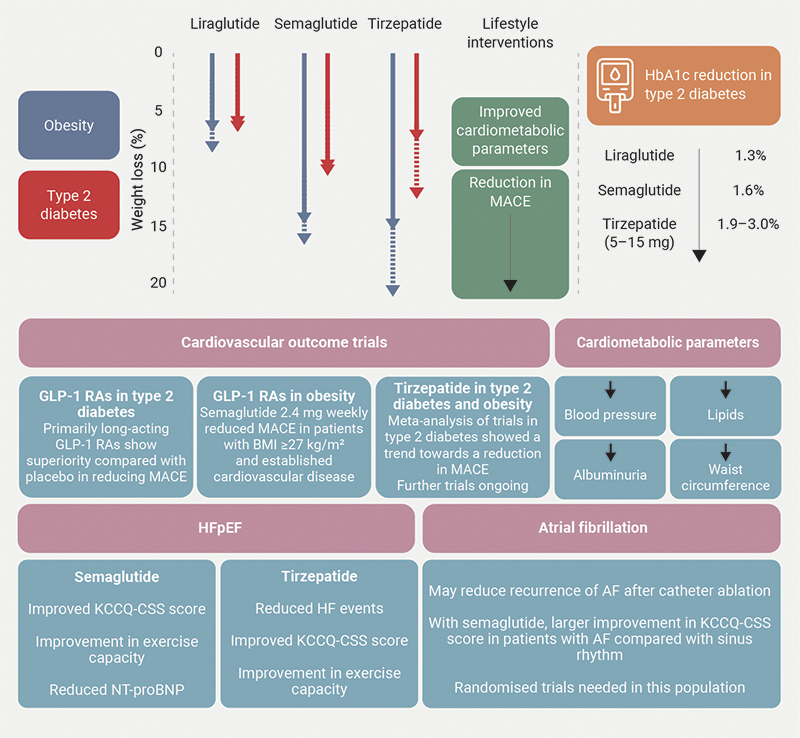
Since the approval of the first GLP-1 RA for T2D 20 years ago,20 more selective GLP-1 RAs have been developed, offering improved efficacy, better tolerability, and potential cardiovascular benefits. Their substantial impact on weight loss has led to trials of higher-dose formulations for obesity treatment. Figure 1 provides a summary of the weight loss seen in T2D and obesity, and table 1 provides information on the formulations available. Furthermore, combinations of GLP-1 with other entero-pancreatic hormones, such as glucose-dependent insulinotropic polypeptide (GIP), amylin and glucagon, have been developed as dual or triple agonists. Tirzepatide, which targets both GLP-1 and GIP receptors, is the first dual agonist to receive approval both for T2D and obesity management indications, and has greater weight loss efficacy compared with selective GLP-1 RAs.21,22
| Key: AF = atrial fibrillation; GLP-1 = glucagon-like peptide-1; HbA1c = glycated haemoglobin; HF = heart failure; HFpEF = heart failure with preserved ejection fraction; KCCQ-CSS = Kansas City Cardiomyopathy Questionnaire clinical summary score; MACE = major adverse cardiovascular events; NT-proBNP = N-terminal pro-B-type natriuretic peptide; RA = receptor agonist |
Table 1. Glucagon-like peptide-1 (GLP-1) receptor agonists approved for obesity in the UK (British National Formulary)84
| Name | Brand names | Indication in UK | Formulation | Dosage |
| Liraglutide | Victoza, Diavic | T2D (monotherapy or in combination with other anti-diabetic drugs) | Subcutaneous | T2D: 0.6–1.8 mg once daily (dose increased in steps of 0.6 mg after at least 1 week) |
| Saxenda | Weight management* | Weight management: 0.6–3 mg once daily (dose increased in steps of 0.6 mg after at least 1 week) | ||
| Semaglutide | Ozempic | T2D (monotherapy or in combination with other antidiabetic drugs) | Subcutaneous | 0.25–2 mg once weekly (increase dose after at least 4 weeks if tolerated) |
| Rybelsus | T2D (monotherapy or in combination with other antidiabetic drugs) | Oral | 3–14 mg once daily (increase dose to 7 mg and then 14 mg after at least 1 month if necessary) | |
| Wegovy | Weight management* | Subcutaneous | 0.25–2.4 mg once weekly (increase dose after at least 4 weeks if tolerated) | |
| Tirzepatide (GLP-1 and GIP receptor agonist) | Mounjaro | T2D (monotherapy or in combination with other anti-diabetic drugs) Weight management* |
Subcutaneous | 2.5–15 mg once weekly (increase dose in steps of 2.5 mg after at least 4 weeks if necessary) |
| *Figure 2 provides details of eligible patients. Key: GIP = glucose-dependent insulinotropic polypeptide; GLP-1 = glucagon-like peptide-1; T2D = type 2 diabetes |
||||
The potential of GLP-1-based therapies as durable, safe and effective weight loss drugs with associated cardiovascular benefits mean that they will likely have a central role in the management of patients with obesity-related cardiovascular diseases. Weight loss with GLP-1-based therapies is associated with significant improvements in multiple cardiovascular risk factors, including blood pressure, lipid levels, albuminuria and glycaemia.23–28 Beyond risk factor control, recent trials have demonstrated marked benefits on hard cardiovascular outcomes, with exciting therapeutic potential in atherosclerotic cardiovascular disease29 and heart failure with preserved ejection fraction (HFpEF),30,31 with potential benefit in other conditions including AF.32,33 A recent meta-analysis of 21 trials, including almost 100,000 patients at high-risk of cardiovascular events, demonstrated that GLP-1 RAs reduce both mortality and MACE.34 This review aims to summarise available GLP-1-based pharmacotherapies and highlight recent trials demonstrating cardiovascular benefits (figure 1 and table 2). We provide practical guidance for patient selection, drug initiation and patient monitoring (figure 2). This will serve as an aid for cardiovascular clinicians, who will inevitably encounter patients suitable for, or already using, these drugs in their daily practice.
Table 2. Randomised trials of glucagon-like peptide-1 (GLP-1) receptor agonists in non-diabetic individuals with established cardiovascular disease and patients with heart failure with preserved ejection fraction (HFpEF)
| Drug | Inclusion criteria | Outcome measure and follow-up | Population randomised | Results | |
| SELECT29 | Semaglutide 2.4 mg subcutaneous weekly vs. placebo | Age 45 years and older with a BMI >27 kg/m2 and established cardiovascular disease (previous myocardial infarction, previous stroke or symptomatic peripheral arterial disease) |
Composite of death from cardiovascular causes, nonfatal myocardial infarction or nonfatal stroke Follow-up: 40 months |
17,604 patients randomised (8,803 to semaglutide and 8,801 to placebo) Mean age: 62 years 27.7% female Mean BMI: 33.3 kg/m2 |
Primary outcome occurred in 569 (6.5%) of participants in the semaglutide group and 701 (8.0%) in the placebo group (HR 0.80, 95%CI 0.72 to 0.90, p<0.001) |
| STEP HFpEF DM31 | Semaglutide 2.4 mg subcutaneous weekly vs. placebo | Age 18 years and older with heart failure (ejection fraction >45%), diagnosis of T2D, BMI >30 kg/m2 and one of: elevated left ventricular filling pressures, elevated natriuretic peptide levels plus echocardiographic abnormalities or hospitalisation for heart failure within 12 months plus echocardiographic abnormalities or ongoing treatment with diuretics | Co-primary end points: change in the KCCQ-CSS and percentage change in body weight
Follow-up: 52 weeks |
616 participants randomised (310 to semaglutide and 306 to placebo) Median age: 69 years 44% female Mean BMI: 36.9 kg/m2 |
Mean change in the KCCQ-CSS was 13.7 points in the semaglutide group and 6.4 points in the placebo group (difference 7.3 points, 95%CI 4.1 to 10.4, p<0.001)
Mean percentage change in body weight was −9.8% in the semaglutide group and −3.4% in the placebo group (difference −6.4 percentage points, 95%CI −7.6 to −5.2, p<0.001) |
| STEP HFpEF30 | Semaglutide 2.4 mg subcutaneous weekly vs. placebo | Age 18 years and older with an ejection fraction >45%, BMI >30 kg/m2, NYHA class II–IV symptoms; KCCQ-CSS <90 points, 6-minute walk distance >100 m and at least one of the following findings: elevated left ventricular filling pressures, elevated natriuretic peptide levels plus echocardiographic abnormalities, or hospitalisation for heart failure in the 12 months before screening plus ongoing treatment with diuretics or echocardiographic abnormalities | Co-primary end points: change in the KCCQ-CSS and percentage change in body weight
Follow-up: 52 weeks |
529 participants randomised (263 to semaglutide and 266 to placebo) Median age: 69 years 56.1% female Mean BMI: 37 kg/m2 |
Mean change in KCCQ-CSS was 16.6 points in the semaglutide group and 8.7 points in the placebo group (difference 7.8 points, 95%CI 4.8 to 10.9, p<0.001)
Mean percentage change in body weight was −13.3% for the semaglutide group and −2.6% for placebo (difference −10.7 percentage points, 95%CI −11.9 to −9.4, p<0.001) |
| SUMMIT68 | Tirzepatide 15 mg subcutaneous weekly vs. placebo | Age >40 years and older with chronic heart failure (ejection fraction >50%) with NYHA II–IV, BMI >30 kg/m2, 6-minute walk test 100–425 metres, KCCQ ≤80 and at least one of: elevated NT-proBNP, left atrial enlargement, elevated filling pressures at rest or during exercise. Participants were also required to have had heart failure decompensation within 12 months or eGFR <70 ml/min/1.73 m2 | Composite of adjudicated death from cardiovascular causes or a worsening heart failure event and change in the KCCQ-CSS
Follow-up: 104 weeks |
731 participants randomised (364 to tirzepatide and 367 to placebo) Median age: 65 years 53.8% female Mean BMI: 38.2 kg/m2 |
The composite primary end point occurred in 36 patients (9.9%) in the tirzepatide group and in 56 patients (15.3%) in the placebo group (HR 0.62, 95%CI 0.41 to 0.95, p=0.026)
Mean change in the KCCQ-CSS was 19.5 in the tirzepatide group and 12.7 in the placebo group (between-group difference 6.9, 95%CI 3.3 to 10.6, p<0.001) |
| Key: BMI = body mass index; CI = confidence interval; eGFR = estimated glomerular filtration rate; HR = hazard ratio; KCCQ-CCS = Kansas City Cardiomyopathy Questionnaire clinical summary score; NT-proBNP = N-terminal pro-B-type natriuretic peptide; NYHA = New York Heart Association; T2D = type 2 diabetes | |||||
| *Use lower BMI thresholds (usually by 2.5 kg/m2) for people from South Asian, Chinese, other Asian, Middle Eastern, Black African or African-Caribbean ethnic backgrounds. **An implementation plan for prescribing in primary care aims to prioritise 220,000 people with the greatest need (including those with established cardiovascular disease) over the next three years and then, over time, provide medication to 3.4 million eligible people. Key: BMI = body mass index; GLP-1 RA = glucagon-like peptide-1 receptor agonist |
The effect of GLP-1 RAs on cardiovascular outcomes
GLP-1 mono-agonists and cardiovascular outcome trials in T2D
Most cardiovascular outcome trials undertaken with GLP-1 RAs have been in people with T2D and cardio–renal–metabolic (CaReMe) diseases. These were initially driven by a mandate from the US Food and Drug Administration (FDA) necessitating long-term cardiovascular outcome trials for safety of therapies for T2D.35
Summaries of the key cardiovascular outcome trials in T2D of GLP-1 RAs have previously been published.36,37 While some of these trials found that GLP-1 RAs were non-inferior compared with placebo for MACE in people with T2D, several, primarily the long-acting GLP-1 RAs, showed superiority compared with placebo: REWIND (dulaglutide),38 LEADER (liraglutide),39 SUSTAIN-640 and SOUL41 (subcutaneous and oral semaglutide), and Harmony Outcomes (albiglutide)42 trials.
Initial results of these trials indicated that improved outcomes with GLP-1 RAs in T2D were mainly driven by reduced atherosclerotic cardiovascular events, demonstrated by a significant reduction in nonfatal stroke in the REWIND and SUSTAIN-6 trials, and cardiovascular death in the LEADER trial, with no reduction in the exploratory outcome of heart failure hospitalisations across trials.38–40 This is in contrast to trials of sodium-glucose cotransporter-2 (SGLT2) inhibitors, which did show a reduction in the rate of heart failure hospitalisations.43–45 However, a recent meta-analysis of clinical trials that compared GLP-1 RAs with placebo in people with T2D demonstrated both a 13% reduction in the rate of MACE and a significant reduction in heart failure hospitalisations, with 3.7% participants experiencing the outcome in the placebo arm and 3.2% in those randomised to a GLP-1 RA.46
GLP-1 mono-agonists and cardiovascular outcome trials in people with obesity without diabetes
Approximately 40% of people with coronary artery disease are living with obesity, making it a major addressable risk factor in many with established atherosclerotic heart disease.47,48 In people without diabetes, the SELECT (Semaglutide Effects on Cardiovascular Outcomes in People with Overweight or Obesity) trial recruited participants with a BMI ≥27 kg/m2 and established cardiovascular disease (previous myocardial infarction [MI], stroke or symptomatic peripheral vascular disease) and randomised them to semaglutide 2.4 mg weekly or placebo.29 The trial is summarised in table 2. More than 75% of participants had a history of previous MI, and one quarter had chronic heart failure. The mean reduction in body weight in participants randomised to semaglutide was 10.2% over 208 weeks.49 The primary composite end point of death from cardiovascular causes, nonfatal MI, and nonfatal stroke was significantly lower in the semaglutide, versus placebo, arm by 20%, with an absolute risk reduction of 1.5%. Lower rates of nonfatal MI and coronary revascularisation were demonstrated, showing a reduction in atherosclerotic cardiovascular events similar to trials in people with T2D. The trial also showed lower occurrence of heart failure end points (hazard ratio [HR] 0.82, 95% confidence interval [CI] 0.71 to 0.96) and death from any cause (HR 0.81, 95%CI 0.71 to 0.93) in the semaglutide group. A subgroup analysis also revealed patients with previous coronary artery bypass graft (CABG), who are at elevated risk of atherosclerotic events, had an absolute risk reduction of 2.3% of the composite primary outcome with semaglutide compared with placebo.50
Tirzepatide (dual agonist) and cardiovascular outcome trials in T2D and obesity
A prespecified cardiovascular meta-analysis of seven clinical trials (each with a minimum follow-up of 26 weeks) evaluated time to first MACE in 4,887 tirzepatide-treated participants with T2D versus 2,328 controls.51 Approximately one-third of the study population had pre-existing cardiovascular disease. This showed a trend towards a reduction in MACE and cardiovascular death during an average of one year of treatment. Furthermore, the results of the SURPASS-CVOT trial, a randomised-controlled trial including over 13,000 participants with T2D, a BMI >25kg/m2 and established cardiovascular disease, have recently been published. This showed tirzepatide was non-inferior to dulaglutide for the composite end point of death from cardiovascular causes, myocardial infarction and stroke over a median follow-up of four years.52
Regarding the impact of tirzepatide on cardiovascular events in people with obesity without diabetes and established cardiovascular disease or high cardiovascular risk profile, the SURMOUNT-MMO trial (NCT05556512) is a large, ongoing trial focused on adults with obesity, and either established cardiovascular disease or risk factors. It aims to enrol over 15,000 participants to evaluate whether tirzepatide can reduce major health outcomes compared with placebo. The primary end point is a composite of all-cause mortality, nonfatal MI, nonfatal stroke, coronary revascularisation, or heart failure events. Results from the trial are expected by October 2027.
Several other dual therapies are currently being assessed for weight loss and cardiovascular disease, including the combination of cagrilintide, a long-acting amylin analogue, with semaglutide (NCT05669755) and survodutide, a dual glucagon and GLP-1 RA (NCT06077864). Retatrutide, a triple agonist targeting GIP, GLP-1, and glucagon receptors, is also under evaluation in the TRIUMPH-OUTCOMES cardiovascular and renal outcomes trial (NCT06138056).
Heart failure
HFpEF
Obesity is present in over half of those with HFpEF,53 and it is widely recognised that HFpEF is frequently associated with other comorbidities, such as hypertension, T2D and chronic kidney disease (CKD). Obesity-related HFpEF may, itself, also form a distinct phenotype warranting specific treatments.54,55 Unsurprisingly, targeting HFpEF treatment with weight loss has been the subject of intense research interest, and the results of trials with GLP-1-based RAs in this cohort of patients (table 2 and figure 1) were eagerly awaited.
Semaglutide in HFpEF
Once-weekly subcutaneous semaglutide 2.4 mg was investigated in the STEP HFpEF DM31 and STEP HFpEF30 trials, which were multi-centre placebo-controlled randomised trials in patients with HFpEF and a BMI >30 kg/m2, with and without diabetes, respectively. The co-primary end points were change in the Kansas City Cardiomyopathy Questionnaire (KCCQ) clinical summary score, which quantifies heart failure-related symptoms and physical function, and percentage change in body weight after receiving the intervention for 52 weeks.
In the STEP HFpEF DM trial, participants had a mean BMI of 36.9 kg/m2, 29% of patients had New York Heart Association (NYHA) class III or IV heart failure and median N-terminal pro-B-type natriuretic protein (NT-proBNP) was 493 pg/ml. Median glycated haemoglobin (HbA1c) was 6.8%, indicating very good diabetic control for most participants. Semaglutide caused a 6.4% greater reduction in body weight than placebo, and the KCCQ clinical summary score showed a mean improvement of 13.7 points in the semaglutide group versus 6.4 points in the placebo group (p<0.001 for both end points).
In the STEP HFpEF trial, the median age and BMI were similar to the STEP HFpEF DM trial, but a larger proportion (56.1%) were female. One third of participants had NYHA class III or IV heart failure with a median NT-proBNP level of 450.8 pg/ml. Only 3.6% of participants were receiving SGLT-2 inhibitors compared with 32.8% in the STEP HFpEF DM trial. Mean percentage change in body weight was –13.3% in the semaglutide group versus –2.6% in the placebo group (p<0.001) with a mean change in KCCQ clinical summary score of 16.6 points in the semaglutide group compared with 8.7 points in the placebo group (p<0.001).
Additionally, both trials reported a modest improvement in participant’s six-minute walk distance, along with a reduction in NT-proBNP of 23% in the STEP-HFpEF DM trial and 21% in the STEP HFpEF trial. Although not sufficiently powered to assess clinical events, in the STEP HFpEF trial one participant receiving semaglutide was hospitalised for heart failure during the trial period versus 12 participants in the placebo arm, and in the STEP HFpEF DM trial, seven participants receiving semaglutide versus 18 participants in the placebo group were hospitalised due to heart failure. A participant-level pooled analysis of four randomised-controlled trials, including the STEP HFpEF and STEP HFpEF DM trials, comprising 3,743 individuals with HFpEF, demonstrated that semaglutide significantly reduced the risk of the composite outcome of cardiovascular death or first worsening heart failure event compared with placebo.56
Importantly, the improvements in KCCQ clinical summary score with semaglutide, compared with placebo in these trials, were larger compared with other drugs in HFpEF, including SGLT2 inhibitors and the non-steroidal mineralocorticoid receptor antagonist finerenone.57–59 However, it is unclear whether symptom relief – such as reduced shortness of breath – is only due to weight loss, or whether there are direct effects of semaglutide on heart failure. In STEP HFpEF, clinical benefits with semaglutide were closely tied to the degree of weight loss, underscoring weight reduction as a key therapeutic mechanism in obesity-related HFpEF.60 Weight reduction caused by GLP-1 RAs likely contributes to the benefit seen, through reduced plasma volume, decreased ectopic fat and lowering of blood pressure.61 Patients with T2D treated with GLP-1 RAs have improved diastolic function62,63 (although this has not been consistent across studies64), as well as improvements in myocardial strain65 and perfusion.66
Tirzepatide in HFpEF
Due to the greater weight reduction expected, and its engagement with GIP receptors, which are expressed widely in ventricular cardiomyocytes, tirzepatide may result in even greater improvement in HFpEF outcomes compared with semaglutide.22,67 The SUMMIT trial randomised patients with obesity and HFpEF (>50%) – nearly half of whom had pre-existing T2D – to receive subcutaneous tirzepatide or placebo for at least 52 weeks, with a median follow-up of 104 weeks.68 The population was similar to the STEP HFpEF trials. Median NT-proBNP was, however, lower and about only one quarter of participants had NYHA class III or IV heart failure. Despite the lower-risk population than STEP HFpEF, cardiovascular death or worsening heart failure was reduced (9.9% with tirzepatide group vs. 15.3% in the placebo group, p=0.026), an outcome driven by a lower rate of heart failure events. Tirzepatide also showed greater improvement in KCCQ clinical summary scores at 52 weeks compared with placebo (19.5 vs. 12.7 points), which was a co-primary end point. It also met all key secondary end points, including improved exercise capacity – patients on tirzepatide walked about 18 metres farther in the six-minute walk test than those on placebo. Additionally, in a cardiac magnetic resonance (CMR) substudy of the SUMMIT trial, tirzepatide reduced left ventricular mass in patients with HFpEF by 8%.69
Heart failure with reduced ejection fraction (HFrEF)
There have been no specific trials of semaglutide or tirzepatide in HFrEF to date, with trials focusing on patients with HFpEF due to its greater association with obesity and metabolic disease, and current limited therapies available.
In patients with established heart failure with impaired left ventricular function (left ventricular ejection fraction [LVEF] <40%) with a recent acute heart failure admission, liraglutide was shown to have no significant effect on time to death, time to rehospitalisation for heart failure or proportional change in NT-proBNP over 180 days.70 A meta-analysis of this trial, and a subgroup with a LVEF <40% of the EXSCEL trial, which investigated exenatide in T2D, found that GLP-1 RAs may increase the risk of heart failure hospitalisations in this cohort of patients.71 In the LIVE trial, patients with chronic heart failure and an ejection fraction <45%, liraglutide did not improve LVEF or volumes from baseline to 24 weeks compared with placebo, and more serious adverse cardiac events occurred in the liraglutide group compared with placebo (19% vs. 3%, p=0.04).72 These results, therefore, led to caution in the use of GLP-1 RAs in patients with an ejection fraction of <40%. Notably, the weight loss in these trials was less compared with those in HFpEF trials with semaglutide and tirzepatide.
In the SELECT trial, 4,286 participants had a history of heart failure at enrolment, with just over half of these participants having HFpEF, one-third HFrEF and the rest had unclassified heart failure. Semaglutide 2.4 mg weekly improved the composite outcome of MACE, all-cause mortality, and hospitalisation or urgent hospital visit for heart failure compared with placebo, and these benefits were consistent across heart failure subtypes and independent of age, sex, BMI, or NYHA class.73 There was also no increase in adverse events in either heart failure subgroup. These findings reinforce semaglutide’s cardioprotective role and provides some reassurance around the use of GLP-1 RA in patients with impaired LV function. Future studies will clarify this.
Atrial fibrillation
Obesity has been shown to be an independent risk factor for AF,74,75 and up to 20% of AF cases may be directly attributable to individuals living with overweight or obesity. Additionally, obesity reduces the success rate of pharmacological rhythm control and catheter ablation.76,77 Several studies have suggested that weight reduction by lifestyle change is an effective strategy in reducing AF symptom burden, and ≥10% weight loss, achieved by 38% of participants in the LEGACY study, was associated with reversal of persistent AF to paroxysmal or no AF over 48 months, as well as a six-fold greater probability of being free from AF.78,79 GLP-1 RAs are, therefore, an attractive potential treatment for patients with AF.
GLP-1 RAs in AF
Initial studies of GLP-1 RAs identified an increased heart rate with their use, which led to concerns about increased arrhythmic risk,80,81 however, it has since been shown that GLP-1 RAs may be associated with a lower occurrence of AF in patients with T2D.82 Although there are no randomised trials of GLP-1 agonists in AF, observational data suggest they may have benefit. The use of GLP-1 RAs prior to catheter ablation for AF reduced the recurrence of AF over 12 months compared with those not receiving a GLP-1 RA.83 A meta-analysis of eight studies in people with T2D treated with GLP-1 RAs did not show a difference in the occurrence of AF in treated patients versus placebo, although these studies were not designed to assess the occurrence or burden of AF, and this was reported as part of the safety outcomes.33
Interestingly, in the STEP HFpEF and STEP HFpEF DM trials the improvement in KCCQ clinical summary score was larger in patients with AF compared with those without AF (change in KCCQ clinical summary score 11.7 vs. 4.1, respectively, p<0.01), despite similar changes in body weight.32 Of the participants with AF, 40% had paroxysmal AF, 24% persistent AF, and 35% permanent AF, with similar results seen across each group. A small single-centre randomised trial has just started recruitment to investigate whether tirzepatide will impact the severity and burden of symptoms of AF versus placebo (NCT06802081). Further larger studies of the use of GLP-1-based therapies in AF are required to demonstrate effectiveness at reducing AF symptom burden, however, these results provide promise that the weight loss that can be achieved with GLP-1 RAs will show benefit in this cohort of patients.
Current indications for chronic weight management in the UK
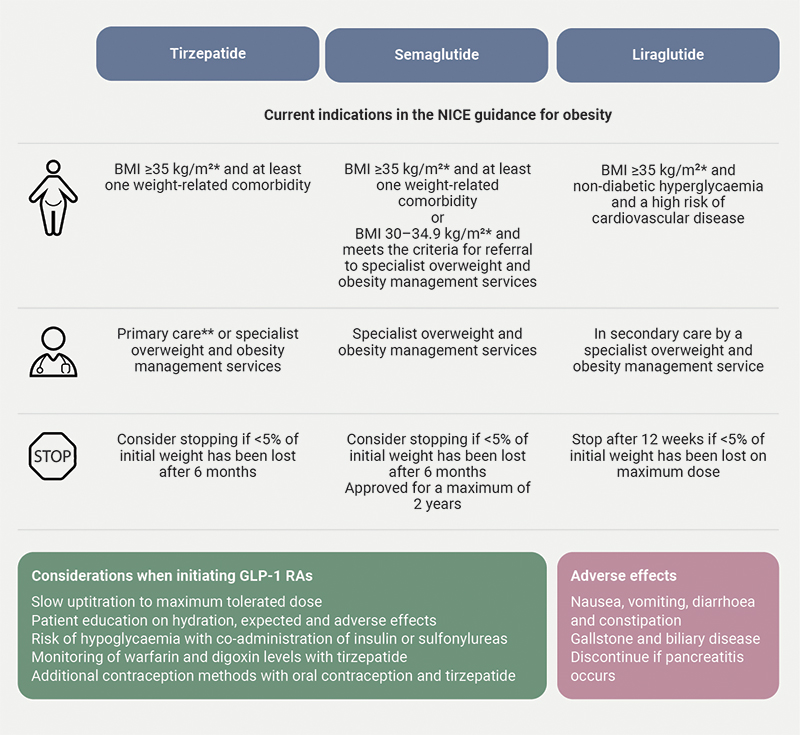
The GLP-1 RAs currently available in the UK for weight management are outlined in table 1.84 Following a recent update in the National Institute for Health and Care Excellence (NICE) guidance on the management of overweight and obesity, three subcutaneous GLP-1-based therapies are now recommended, alongside a reduced-calorie diet and physical activity: semaglutide 2.4 mg once weekly, liraglutide 3 mg once daily and tirzepatide 5, 10 and 15 mg once weekly.14 A summary of the patients eligible for each drug, and who can prescribe them, is presented in figure 2.
Current NICE guidelines recommend that semaglutide 2.4 mg for overweight and obesity be prescribed and managed through specialist weight management services, with treatment limited to a maximum of two years. Its use for cardiovascular risk reduction is currently undergoing NICE consultation.85
On the other hand, the recent NICE approval for tirzepatide recommends its availability in primary care, guided by a phased-implementation plan that aims to prioritise 220,000 people with greatest clinical need and multiple obesity-related complications over the next three years.86 This prioritised group includes individuals with established atherosclerotic cardiovascular disease (defined as ischaemic heart disease, cerebrovascular disease, peripheral artery disease or heart failure), although long-term outcome trials with tirzepatide are ongoing, including the SURPASS-CVOT (a dedicated cardiovascular outcome trial in people with T2D) and SURMOUNT-MMO (a major morbidity and mortality trial in people with obesity without diabetes). Going forward, and as evidence for the benefits of GLP-1-based therapies on multiple obesity-related complications expands, it may be beneficial for other secondary-care specialties – such as cardiology – to play a more active role in identifying eligible patients and recommending initiation, particularly for those with established cardiovascular disease. In some cases, enabling initiation within these clinics, in collaboration with lifestyle support services in the community, could also help improve timely access to treatment.
Practical prescribing of GLP-1-based therapies
A summary of practical prescribing advice is presented in figure 2.
Initiation, uptitration and other considerations
GLP-1-based therapies for weight management (liraglutide 3 mg, semaglutide 2.4 mg and tirzepatide), should be initiated at a low dose and gradually uptitrated according to the individual Summary of Product Characteristics (SpC), following a ‘start low, go slow’ strategy, particularly in the presence of gastrointestinal side effects.87 Specialist nurses can often help with this, particularly in the context of diabetes where there is concern around hypoglycaemia due to concomitant medication. Patients should be advised of common side effects, as well as the expected effects on appetite and weight, and to keep well hydrated.84 Patients should be guided on mitigation of side effects, including reducing meal sizes, avoiding high fat and spicy food, and reducing alcohol and fizzy drink intake.87 Additional patient education should be provided for injectable GLP-1 RAs on the storage and technique for administration to ensure safe and effective use.
Patient-specific factors, including comorbidities and concomitant medications, need to be considered, as with the initiation of any new medication. The British National Formulary should be consulted for a full list of drug interactions.84 Of note, GLP-1-based treatments, and in particular tirzepatide, transiently delay gastric emptying, which may affect the rate of absorption of other oral medications, especially during the early phase of treatment. Most cardiovascular drugs are considered safe to be co-prescribed with GLP-1 RAs, although closer monitoring of warfarin and digoxin may be required with co-administration of tirzepatide. Additionally, female patients on oral contraceptives should switch to non-oral methods or use an add-on barrier method for four weeks after starting tirzepatide, and after each dose increase. The delay in gastric emptying associated with tirzepatide is transient, owing to the development of tachyphylaxis with repeated dosing; however, the effect may transiently recur following dose escalation.88
Adverse effects and cautions
The most commonly reported adverse effects with GLP-1 RAs are gastrointestinal, including nausea, vomiting, diarrhoea and constipation.22,89–91 These symptoms are the most common reason for discontinuation of the drug, although symptoms are largely mild-to-moderate in severity. Slow uptitration and patient education may help with these symptoms. Real-world data suggest that discontinuation at 12 months may approach 50%, which is higher than that seen in randomised trials;92 however, other factors, including the cost of the medication, rather than adverse events, may contribute to this observation.93
There have been concerns about the loss of lean body mass, particularly skeletal muscle, with the use of GLP-1 RAs. However, despite a range in the proportion of weight loss attributable to lean body mass seen across clinical trials of GLP-1 RAs (between 20% and 50%), this is similar to that seen with lifestyle interventions and bariatric surgery.94,95 Physical function and mobility improves with GLP-1 RAs,96 and imaging studies have suggested improvement in muscle composition with reduction in muscle fat infiltration.97 However, rebound weight gain with cessation of GLP-1 RAs, and weight cycling, may lead to an overall reduction in percentage of lean body mass, as weight increase is predominantly due to increases in adipose tissue, with a lesser increase in muscle mass.98,99 This, therefore, may be of concern if these medications are stopped, but further studies are needed.
Gallbladder-related disease, including cholecystitis, is more common in those randomised to a GLP-1-based therapy in trials, and this appears to be associated with greater weight loss, although the incidence was low with an occurrence of up to 3.8% with tirzepatide over three years compared with 0.7% with placebo.90,100 Previous concerns of acute pancreatitis have been alleviated by a meta-analysis of clinical trials of GLP-1 RAs in T2D,101 however, current guidance is to discontinue the drug if pancreatitis develops.84 Furthermore, concerns regarding increased risk of pancreatic and thyroid cancer have not been confirmed in studies,101–103 and the European Medicines Agency have concluded that there is no evidence of a causal link between GLP-1 RAs and thyroid cancer.104
Additional clinical considerations for people with T2D
Most studies have shown no increased risk of hypoglycaemia in people with T2D receiving GLP-1 RAs, except if these therapies are used concomitantly with insulin or sulfonylureas.91 People on insulin or sulfonylureas are advised to reduce their insulin doses, or cut down sulfonylurea doses, as appropriate, as they uptitrate GLP-1 doses, and may require additional input from diabetes teams to mitigate this risk of hypoglycaemia. Dipeptidyl peptidase-4 (DPP-4) inhibitors should be stopped on the initiation of a GLP-1 RA.
The rapid reductions in HbA1c with GLP-1-based therapies may increase the risk of diabetic retinopathy. In the SUSTAIN-6 trial, semaglutide 1 mg was associated with a higher rate of retinopathy-related complications (3% vs. 1.8% with placebo). Risk was greatest in individuals with pre-existing retinopathy, higher baseline HbA1c, and longer diabetes duration.105 Patients with active retinopathy – such as those requiring urgent treatment, or with macular oedema – were not included in the SURPASS programme with tirzepatide. Caution is needed when starting treatment in these high-risk groups, especially if glycaemia is poorly controlled.
Special populations
Use in CKD
In the FLOW trial, which was a dedicated trial in T2D and CKD, patients who received semaglutide 1 mg weekly (the dose approved for T2D) had a 24% lower risk of the composite renal outcome (onset of kidney failure, substantial reduction in estimated glomerular filtration rate [eGFR], or death from kidney or cardiovascular causes) compared with placebo over a median follow-up of 3.4 years.106 However, depending on the specific drug, discontinuation of a GLP-1 RA may need to be considered in end-stage renal disease.37,84 Liraglutide 3 mg should not be initiated if creatinine clearance is <30 ml/min/m2 and semaglutide should be avoided in end-stage renal disease. However, tirzepatide can be started in those with renal failure and can be continued with dialysis, although there is limited experience of its use in this circumstance.107
Type 1 diabetes
GLP-1 RAs are not currently indicated for use in type 1 diabetes, however, in a selective group of patients they may have some benefit. In people with type 1 diabetes, two clinical trials found that liraglutide 1.8 mg (dose approved for T2D) reduced HbA1c and insulin requirements, as well as body weight,108,107 and similar results were found with exenatide in the short term.110 Further research is needed to establish their exact role in this population with a randomised-controlled trial underway (NCT06914895).
Conclusion
GLP-1-based therapies, which have shown significant benefits in patients with T2D and obesity, have also shown promising results in patients with cardiovascular disease. Semaglutide improves cardiovascular outcomes in patients with obesity, with and without diabetes, and both semaglutide and tirzepatide have shown benefit in patients with HFpEF. They will, no doubt, be medications cardiologists will utilise increasingly frequently in the future, although currently largely restricted to weight management clinics, and will form a significant aid in managing patients with obesity. Engaging with patient preference and offering the most appropriate options will be key to targeting this population. Additional trials of GLP-1-based therapies are ongoing, and further advancements will likely revolutionise the management of obesity, and become foundational treatments for the primary and secondary prevention of cardiovascular disease.
Key messages
- Obesity contributes to almost all forms of cardiovascular disease – including atherosclerotic cardiovascular disease, heart failure and atrial fibrillation – and in people with type 2 diabetes and obesity, over 10% weight loss is required to see improvement in rates of major adverse cardiovascular events
- Glucagon-like peptide-1 (GLP-1) receptor agonists show significant benefits in glycaemic control and weight loss
- GLP-1 receptor agonists’ potential for cardiovascular benefits means that they will likely have a central role in the management of patients with obesity-related cardiovascular diseases
Conflicts of interest
DP has acted as a speaker for Novo Nordisk, Eli Lilly, Boehringer Ingelheim and Johnson and Johnson and has received grants from Novo Nordisk, Novo Nordisk UK Research Foundation, Academy of Medical Sciences/Diabetes UK, Health Education East Midlands and the National Institute for Health and Care Research (NIHR). MJD has acted as a consultant/advisor and speaker for Eli Lilly, Novo Nordisk and Sanofi, has attended advisory boards for AbbVie, Amgen, AstraZeneca, Biomea Fusion, Carmot/Roche, Sanofi, Zealand Pharma, Regeneron, GSK and EktaH and as a speaker for AstraZeneca and Boehringer Ingelheim. SA, GPM, GSG: none declared.
Funding
SA is funded through a Clinical Research Training Fellowship from the British Heart Foundation. MJD and DP are funded by the NIHR Leicester Biomedical Research Centre, Leicester, UK. GPM is funded by an NIHR Research Professorship award and GSG by an NIHR Academic Clinical Lectureship.
Acknowledgements
Figures 1 and 2 were created in BioRender (https://BioRender.com/nwvkptm and https://BioRender.com/hba4iwl).
References
1. World Health Organization. Factsheet. Obesity and overweight. Geneva: WHO, December 2025. Available from: https://www.who.int/news-room/fact-sheets/detail/obesity-and-overweight
2. Office for Health Improvement & Disparities. Obesity profile: short statistical commentary May 2024. London: Office for Health Improvement & Disparities, May 2024. Available from: https://www.gov.uk/government/statistics/update-to-the-obesity-profile-on-fingertips/obesity-profile-short-statistical-commentary-may-2024
3. GBD 2015 Obesity Collaborators, Afshin A, Forouzanfar MH et al. Health effects of overweight and obesity in 195 countries over 25 years. N Engl J Med 2017;377:13–27. https://doi.org/10.1056/NEJMoa1614362
4. Koskinas KC, Van Craenenbroeck EM, Antoniades C et al. Obesity and cardiovascular disease: an ESC clinical consensus statement. Eur Heart J 2024;45:4063–98. https://doi.org/10.1093/eurheartj/ehae508
5. Ferrera A, Battistoni A, Lanza O, Rossi C, Tocci G, Volpe M. Low perception of obesity as a pathological condition among Italian cardiologists. High Blood Press Cardiovasc Prev 2023;30:351–6. https://doi.org/10.1007/s40292-023-00588-z
6. Ryan L, Coyne R, Heary C et al. Weight stigma experienced by patients with obesity in healthcare settings: a qualitative evidence synthesis. Obes Rev Off J Int Assoc Study Obes 2023;24:e13606. https://doi.org/10.1111/obr.13606
7. Look AHEAD Research Group, Pi-Sunyer X, Blackburn G et al. Reduction in weight and cardiovascular disease risk factors in individuals with type 2 diabetes: one-year results of the look AHEAD trial. Diabetes Care 2007;30:1374–83. https://doi.org/10.2337/dc07-0048
8. Look AHEAD Research Group, Wing RR. Long-term effects of a lifestyle intervention on weight and cardiovascular risk factors in individuals with type 2 diabetes mellitus: four-year results of the Look AHEAD trial. Arch Intern Med 2010;170:1566–75. https://doi.org/10.1001/archinternmed.2010.334
9. Look AHEAD Research Group. Effects of intensive lifestyle intervention on all-cause mortality in older adults with type 2 diabetes and overweight/obesity: results from the Look AHEAD study. Diabetes Care 2022;45:1252–9. https://doi.org/10.2337/dc21-1805
10. Look AHEAD Research Group, Gregg E, Jakicic J et al. Association of the magnitude of weight loss and changes in physical fitness with long-term cardiovascular disease outcomes in overweight or obese people with type 2 diabetes: a post-hoc analysis of the Look AHEAD randomised clinical trial. Lancet Diabetes Endocrinol 2016;4:913–21. https://doi.org/10.1016/S2213-8587(16)30162-0
11. Sarwer DB, von Sydow Green A, Vetter ML, Wadden TA. Behavior therapy for obesity: where are we now? Curr Opin Endocrinol Diabetes Obes 2009;16:347–52. https://doi.org/10.1097/MED.0b013e32832f5a79
12. Sjöström L, Peltonen M, Jacobson P et al. Bariatric surgery and long-term cardiovascular events. JAMA 2012;307:56–65. https://doi.org/10.1001/jama.2011.1914
13. Sutanto A, Wungu CDK, Susilo H, Sutanto H. Reduction of major adverse cardiovascular events (MACE) after bariatric surgery in patients with obesity and cardiovascular diseases: a systematic review and meta-analysis. Nutrients 2021;13:3568. https://doi.org/10.3390/nu13103568
14. National Institute for Health and Care Excellence. Overweight and obesity management. NG246. London: NICE, 2025. Available from: https://www.nice.org.uk/guidance/ng246
15. Krentz AJ, Fujioka K, Hompesch M. Evolution of pharmacological obesity treatments: focus on adverse side-effect profiles. Diabetes Obes Metab 2016;18:558–70. https://doi.org/10.1111/dom.12657
16. Zhou YH, Ma XQ, Wu C et al. Effect of anti-obesity drug on cardiovascular risk factors: a systematic review and meta-analysis of randomized controlled trials. PloS One 2012;7:e39062. https://doi.org/10.1371/journal.pone.0039062
17. Sharma D, Verma S, Vaidya S, Kalia K, Tiwari V. Recent updates on GLP-1 agonists: current advancements & challenges. Biomed Pharmacother 2018;108:952–62. https://doi.org/10.1016/j.biopha.2018.08.088
18. Zhao X, Wang M, Wen Z et al. GLP-1 receptor agonists: beyond their pancreatic effects. Front Endocrinol 2021;12:721135. https://doi.org/10.3389/fendo.2021.721135
19. Blundell J, Finlayson G, Axelsen M et al. Effects of once-weekly semaglutide on appetite, energy intake, control of eating, food preference and body weight in subjects with obesity. Diabetes Obes Metab 2017;19:1242–51. https://doi.org/10.1111/dom.12932
20. Nauck MA, Quast DR, Wefers J, Meier JJ. GLP-1 receptor agonists in the treatment of type 2 diabetes: state-of-the-art. Mol Metab 2021;46:101102. https://doi.org/10.1016/j.molmet.2020.101102
21. Frías JP, Davies MJ, Rosenstock J et al. Tirzepatide versus semaglutide once weekly in patients with type 2 diabetes. N Engl J Med 2021;385:503–15. https://doi.org/10.1056/NEJMoa2107519
22. Jastreboff AM, Aronne LJ, Ahmad NN et al. Tirzepatide once weekly for the treatment of obesity. N Engl J Med 2022;387:205–16. https://doi.org/10.1056/NEJMoa2206038
23. le Roux CW, Astrup A, Fujioka K et al. 3 years of liraglutide versus placebo for type 2 diabetes risk reduction and weight management in individuals with prediabetes: a randomised, double-blind trial. Lancet 2017;389:1399–409. https://doi.org/10.1016/S0140-6736(17)30069-7
24. Davies MJ, Bergenstal R, Bode B et al. Efficacy of liraglutide for weight loss among patients with type 2 diabetes: the SCALE Diabetes randomized clinical trial. JAMA 2015;314:687–99. https://doi.org/10.1001/jama.2015.9676
25. Kosiborod MN, Bhatta M, Davies M et al. Semaglutide improves cardiometabolic risk factors in adults with overweight or obesity: STEP 1 and 4 exploratory analyses. Diabetes Obes Metab 2023;25:468–78. https://doi.org/10.1111/dom.14890
26. Kennedy C, Hayes P, Cicero AFG et al. Semaglutide and blood pressure: an individual patient data meta-analysis. Eur Heart J 2024;45:4124–34. https://doi.org/10.1093/eurheartj/ehae564
27. Gastaldelli A, Cusi K, Fernández Landó L, Bray R, Brouwers B, Rodríguez Á. Effect of tirzepatide versus insulin degludec on liver fat content and abdominal adipose tissue in people with type 2 diabetes (SURPASS-3 MRI): a substudy of the randomised, open-label, parallel-group, phase 3 SURPASS-3 trial. Lancet Diabetes Endocrinol 2022;10:393–406. https://doi.org/10.1016/S2213-8587(22)00070-5
28. Hankosky ER, Wang H, Neff LM et al. Tirzepatide reduces the predicted risk of atherosclerotic cardiovascular disease and improves cardiometabolic risk factors in adults with obesity or overweight: SURMOUNT-1 post hoc analysis. Diabetes Obes Metab 2024;26:319–28. https://doi.org/10.1111/dom.15318
29. Lincoff AM, Brown-Frandsen K, Colhoun HM et al. Semaglutide and cardiovascular outcomes in obesity without diabetes. N Engl J Med 2023;389:2221–32. https://doi.org/10.1056/NEJMoa2307563
30. Kosiborod MN, Abildstrøm SZ, Borlaug BA et al. Semaglutide in patients with heart failure with preserved ejection fraction and obesity. N Engl J Med 2023;389:1069–84. https://doi.org/10.1056/NEJMoa2306963
31. Kosiborod MN, Petrie MC, Borlaug BA et al. Semaglutide in patients with obesity-related heart failure and type 2 diabetes. N Engl J Med 2024;390:1394–407. https://doi.org/10.1056/NEJMoa2313917
32. Verma S, Butler J, Borlaug BA et al. Atrial fibrillation and semaglutide effects in obesity-related heart failure with preserved ejection fraction: STEP-HFpEF program. J Am Coll Cardiol 2024;84:1603–14. https://doi.org/10.1016/j.jacc.2024.08.023
33. Wei J, Wang R, Ye H, Wang Y, Wang L, Zhang X. Effects of GLP-1 receptor agonists on arrhythmias and its subtypes in patients with type 2 diabetes: a systematic review and meta-analysis. Front Endocrinol 2022;13:910256. https://doi.org/10.3389/fendo.2022.910256
34. Galli M, Benenati S, Laudani C et al. Cardiovascular effects and tolerability of GLP-1 receptor agonists: a systematic review and meta-analysis of 99,599 patients. J Am Coll Cardiol 2025;86:1805–19. https://doi.org/10.1016/j.jacc.2025.08.027
35. Davies MJ, Drexel H, Jornayvaz FR, Pataky Z, Seferović PM, Wanner C. Cardiovascular outcomes trials: a paradigm shift in the current management of type 2 diabetes. Cardiovasc Diabetol 2022;21:144. https://doi.org/10.1186/s12933-022-01575-9
36. Gulsin GS, Graham-Brown MPM, Davies MJ, McCann GP. Emerging glucose-lowering therapies: a guide for cardiologists. Heart 2020;106:18–23. https://doi.org/10.1136/heartjnl-2019-315758
37. Bailey C, Day C. Cardiorenal effects of therapies for type 2 diabetes and obesity. Br J Cardiol 2024;31:129–35. https://doi.org/10.5837/bjc.2024.041
38. Gerstein HC, Colhoun HM, Dagenais GR et al. Dulaglutide and cardiovascular outcomes in type 2 diabetes (REWIND): a double-blind, randomised placebo-controlled trial. Lancet 2019;394:121–30. https://doi.org/10.1016/S0140-6736(19)31149-3
39. Marso SP, Daniels GH, Brown-Frandsen K et al. Liraglutide and cardiovascular outcomes in type 2 diabetes. N Engl J Med 2016;375:311–22. https://doi.org/10.1056/NEJMoa1603827
40. Marso SP, Bain SC, Consoli A et al. Semaglutide and cardiovascular outcomes in patients with type 2 diabetes. N Engl J Med 2016;375:1834–44. https://doi.org/10.1056/NEJMoa1607141
41. McGuire DK, Marx N, Mulvagh SL et al. Oral semaglutide and cardiovascular outcomes in high-risk type 2 diabetes. N Engl J Med 2025;392:2001–12. https://doi.org/10.1056/NEJMoa2501006
42. Hernandez AF, Green JB, Janmohamed S et al. Albiglutide and cardiovascular outcomes in patients with type 2 diabetes and cardiovascular disease (Harmony Outcomes): a double-blind, randomised placebo-controlled trial. Lancet 2018;392:1519–29. https://doi.org/10.1016/S0140-6736(18)32261-X
43. Wiviott SD, Raz I, Bonaca MP et al. Dapagliflozin and cardiovascular outcomes in type 2 diabetes. N Engl J Med 2019;380:347–57. https://doi.org/10.1056/NEJMoa1812389
44. Zinman B, Wanner C, Lachin JM et al. Empagliflozin, cardiovascular outcomes, and mortality in type 2 diabetes. N Engl J Med 2015;373:2117–28. https://doi.org/10.1056/NEJMoa1504720
45. Neal B, Perkovic V, Mahaffey KW et al. Canagliflozin and cardiovascular and renal events in type 2 diabetes. N Engl J Med 2017;377:644–57. https://doi.org/10.1056/NEJMoa1611925
46. Badve SV, Bilal A, Lee MMY et al. Effects of GLP-1 receptor agonists on kidney and cardiovascular disease outcomes: a meta-analysis of randomised controlled trials. Lancet Diabetes Endocrinol 2025;13:15–28. https://doi.org/10.1016/S2213-8587(24)00271-7
47. Mentias A, Hill E, Barakat AF et al. An alarming trend: change in the risk profile of patients with ST elevation myocardial infarction over the last two decades. Int J Cardiol 2017;248:69–72. https://doi.org/10.1016/j.ijcard.2017.05.011
48. Gaalema DE, Savage PD, Leadholm K et al. Clinical and demographic trends in cardiac rehabilitation: 1996–2015. J Cardiopulm Rehabil Prev 2019;39:266–73. https://doi.org/10.1097/HCR.0000000000000390
49. Ryan DH, Lingvay I, Deanfield J et al. Long-term weight loss effects of semaglutide in obesity without diabetes in the SELECT trial. Nat Med 2024;30:2049–57. https://doi.org/10.1038/s41591-024-02996-7
50. Verma S, Emerson S, Plutzky J et al. Semaglutide improves cardiovascular outcomes in patients with history of coronary artery bypass graft and obesity. J Am Coll Cardiol 2025;85:541–5. https://doi.org/10.1016/j.jacc.2024.11.008
51. Sattar N, McGuire DK, Pavo I et al. Tirzepatide cardiovascular event risk assessment: a pre-specified meta-analysis. Nat Med 2022;28:591–8. https://doi.org/10.1038/s41591-022-01707-4
52. Nicholls SJ, Pavo I, Bhatt DL et al.; SURPASS-CVOT Investigators. Cardiovascular outcomes with tirzepatide versus dulaglutide in type 2 siabetes. N Engl J Med 2025;393:2409–20. https://doi.org/10.1056/NEJMoa2505928
53. Bae JP, Kallenbach L, Nelson DR et al. Obesity and metabolic syndrome in patients with heart failure with preserved ejection fraction: a cross-sectional analysis of the Veradigm Cardiology Registry. BMC Endocr Disord 2024;24:59. https://doi.org/10.1186/s12902-024-01589-2
54. Shah SJ, Borlaug BA, Kitzman DW et al. Research priorities for heart failure with preserved ejection fraction. Circulation 2020;141:1001–26. https://doi.org/10.1161/CIRCULATIONAHA.119.041886
55. Borlaug BA, Jensen MD, Kitzman DW, Lam CSP, Obokata M, Rider OJ. Obesity and heart failure with preserved ejection fraction: new insights and pathophysiological targets. Cardiovasc Res 2023;118:3434–50. https://doi.org/10.1093/cvr/cvac120
56. Kosiborod MN, Deanfield J, Pratley R et al. Semaglutide versus placebo in patients with heart failure and mildly reduced or preserved ejection fraction: a pooled analysis of the SELECT, FLOW, STEP-HFpEF, and STEP-HFpEF DM randomised trials. Lancet 2024;404:949–61. https://doi.org/10.1016/S0140-6736(24)01643-X
57. Solomon SD, McMurray JJV, Claggett B et al. Dapagliflozin in heart failure with mildly reduced or preserved ejection fraction. N Engl J Med 2022;387:1089–98. https://doi.org/10.1056/NEJMoa2206286
58. Anker SD, Butler J, Filippatos G et al. Empagliflozin in heart failure with a preserved ejection fraction. N Engl J Med 2021;385:1451–61. https://doi.org/10.1056/NEJMoa2107038
59. Yang M, Henderson AD, Talebi A et al. Effect of finerenone on the KCCQ in patients with HFmrEF/HFpEF: a prespecified analysis of FINEARTS-HF. J Am Coll Cardiol 2025;85:120–36. https://doi.org/10.1016/j.jacc.2024.09.023
60. Borlaug BA, Kitzman DW, Davies MJ et al. Semaglutide in HFpEF across obesity class and by body weight reduction: a prespecified analysis of the STEP-HFpEF trial. Nat Med 2023;29:2358–65. https://doi.org/10.1038/s41591-023-02526-x
61. Sattar N, Lee MMY. Estimating direct tissue effects versus weight loss effects of incretin-based drugs for obesity on various chronic conditions. Lancet Diabetes Endocrinol 2025;13:347–54. https://doi.org/10.1016/S2213-8587(24)00363-2
62. Yagi K, Imamura T, Tada H et al. Diastolic cardiac function improvement by liraglutide is mainly body weight reduction dependent but independently contributes to B-type natriuretic peptide reduction in patients with type 2 diabetes with preserved ejection fraction. J Diabetes Res 2021;2021:8838026. https://doi.org/10.1155/2021/8838026
63. Bizino MB, Jazet IM, Westenberg JJM et al. Effect of liraglutide on cardiac function in patients with type 2 diabetes mellitus: randomized placebo-controlled trial. Cardiovasc Diabetol 2019;18:55. https://doi.org/10.1186/s12933-019-0857-6
64. Nyström T, Santos-Pardo I, Hedberg F et al. Effects on subclinical heart failure in type 2 diabetic subjects on liraglutide treatment vs. glimepiride both in combination with metformin: a randomized open parallel-group study. Front Endocrinol 2017;8:325. https://doi.org/10.3389/fendo.2017.00325
65. Lambadiari V, Pavlidis G, Kousathana F et al. Effects of 6-month treatment with the glucagon like peptide-1 analogue liraglutide on arterial stiffness, left ventricular myocardial deformation and oxidative stress in subjects with newly diagnosed type 2 diabetes. Cardiovasc Diabetol 2018;17:8. https://doi.org/10.1186/s12933-017-0646-z
66. Chowdhary A, Thirunavukarasu S, Joseph T et al. Liraglutide improves myocardial perfusion and energetics and exercise tolerance in patients with type 2 diabetes. J Am Coll Cardiol 2024;84:540–57. https://doi.org/10.1016/j.jacc.2024.04.064
67. Greenwell AA, Chahade JJ, Ussher JR. Cardiovascular biology of the GIP receptor. Peptides 2020;125:170228. https://doi.org/10.1016/j.peptides.2019.170228
68. Packer M, Zile MR, Kramer CM et al. Tirzepatide for heart failure with preserved ejection fraction and obesity. N Engl J Med 2025;392:427–37. https://doi.org/10.1056/NEJMoa2410027
69. Kramer CM, Borlaug BA, Zile MR et al. Tirzepatide reduces LV mass and paracardiac adipose tissue in obesity-related heart failure: SUMMIT CMR substudy. J Am Coll Cardiol 2025;85:699–706. https://doi.org/10.1016/j.jacc.2024.11.001
70. Margulies KB, Hernandez AF, Redfield MM et al. Effects of liraglutide on clinical stability among patients with advanced heart failure and reduced ejection fraction: a randomized clinical trial. JAMA 2016;316:500–08. https://doi.org/10.1001/jama.2016.10260
71. Neves JS, Packer M, Ferreira JP. Increased risk of heart failure hospitalization with GLP-1 receptor agonists in patients with reduced ejection fraction: a meta-analysis of the EXSCEL and FIGHT trials. J Card Fail 2023;29:1107–9. https://doi.org/10.1016/j.cardfail.2023.03.017
72. Jorsal A, Kistorp C, Holmager P et al. Effect of liraglutide, a glucagon-like peptide-1 analogue, on left ventricular function in stable chronic heart failure patients with and without diabetes (LIVE) – a multicentre, double-blind, randomised, placebo-controlled trial. Eur J Heart Fail 2017;19:69–77. https://doi.org/10.1002/ejhf.657
73. Deanfield J, Verma S, Scirica BM et al. Semaglutide and cardiovascular outcomes in patients with obesity and prevalent heart failure: a prespecified analysis of the SELECT trial. Lancet 2024;404:773–86. https://doi.org/10.1016/S0140-6736(24)01498-3
74. Wang TJ, Parise H, Levy D et al. Obesity and the risk of new-onset atrial fibrillation. JAMA 2004;292:2471–7. https://doi.org/10.1001/jama.292.20.2471
75. Tedrow UB, Conen D, Ridker PM et al. The long- and short-term impact of elevated body mass index on the risk of new atrial fibrillation the WHS (women’s health study). J Am Coll Cardiol 2010;55:2319–27. https://doi.org/10.1016/j.jacc.2010.02.029
76. Glover BM, Hong KL, Dagres N et al. Impact of body mass index on the outcome of catheter ablation of atrial fibrillation. Heart 2019;105:244–50. https://doi.org/10.1136/heartjnl-2018-313490
77. Ornelas-Loredo A, Kany S, Abraham V et al. Association between obesity-mediated atrial fibrillation and therapy with sodium channel blocker antiarrhythmic drugs. JAMA Cardiol 2020;5:57–64. https://doi.org/10.1001/jamacardio.2019.4513
78. Pathak RK, Middeldorp ME, Meredith M et al. Long-term effect of goal-directed weight management in an atrial fibrillation cohort: a long-term follow-up study (LEGACY). J Am Coll Cardiol 2015;65:2159–69. https://doi.org/10.1016/j.jacc.2015.03.002
79. Middeldorp ME, Pathak RK, Meredith M et al. PREVEntion and regReSsive Effect of weight-loss and risk factor modification on Atrial Fibrillation: the REVERSE-AF study. Europace 2018;20:1929–35. https://doi.org/10.1093/europace/euy117
80. Lepore JJ, Olson E, Demopoulos L et al. Effects of the novel long-acting GLP-1 agonist, albiglutide, on cardiac function, cardiac metabolism, and exercise capacity in patients with chronic heart failure and reduced ejection fraction. JACC Heart Fail 2016;4:559–66. https://doi.org/10.1016/j.jchf.2016.01.008
81. Ferdinand KC, White WB, Calhoun DA et al. Effects of the once-weekly glucagon-like peptide-1 receptor agonist dulaglutide on ambulatory blood pressure and heart rate in patients with type 2 diabetes mellitus. Hypertension 2014;64:731–7. https://doi.org/10.1161/HYPERTENSIONAHA.114.03062
82. Krychtiuk KA, Marquis-Gravel G, Murphy S et al. Albiglutide and atrial fibrillation in patients with type 2 diabetes and established cardiovascular disease: insights from the Harmony Outcomes trial. Eur J Prev Cardiol 2024;33:30–41. https://doi.org/10.1093/eurjpc/zwae379
83. Karakasis P, Fragakis N, Patoulias D et al. Effects of glucagon-like peptide 1 receptor agonists on atrial fibrillation recurrence after catheter ablation: a systematic review and meta-analysis. Adv Ther 2024;41:3749–56. https://doi.org/10.1007/s12325-024-02959-x
84. National Institute for Health and Care Excellence. British National Formulary (BNF). Available from: https://bnf.nice.org.uk/
85. National Institute for Health and Care Excellence. Semaglutide for managing overweight and obesity. TA875. London: NICE, 2023. Available from: https://www.nice.org.uk/guidance/TA875/chapter/1-Recommendations
86. NHS England. Interim commissioning guidance: implementation of the NICE technology appraisal TA1026 and the NICE funding variation for tirzepatide (Mounjaro®) for the management of obesity. Leeds: NHS England, 2025. Available from: https://www.england.nhs.uk/publication/interim-commissioning-guidance-implementation-of-the-nice-technology-appraisal-ta1026-and-the-nice-funding-variation-for-tirzepatide-mounjaro-for-the-management-of-obesity/
87. Wharton S, Davies M, Dicker D et al. Managing the gastrointestinal side effects of GLP-1 receptor agonists in obesity: recommendations for clinical practice. Postgrad Med 2022;134:14–19. https://doi.org/10.1080/00325481.2021.2002616
88. Skelley JW, Swearengin K, York AL, Glover LH. The impact of tirzepatide and glucagon-like peptide 1 receptor agonists on oral hormonal contraception. J Am Pharm Assoc 2024;64:204.e4–211.e4. https://doi.org/10.1016/j.japh.2023.10.037
89. Wilding JPH, Batterham RL, Calanna S et al. Once-weekly semaglutide in adults with overweight or obesity. N Engl J Med 2021;384:989–1002. https://doi.org/10.1056/NEJMoa2032183
90. Pi-Sunyer X, Astrup A, Fujioka K et al. A randomized, controlled trial of 3.0 mg of liraglutide in weight management. N Engl J Med 2015;373:11–22. https://doi.org/10.1056/NEJMoa1411892
91. Husain M, Birkenfeld AL, Donsmark M et al. Oral semaglutide and cardiovascular outcomes in patients with type 2 diabetes. N Engl J Med 2019;381:841–51. https://doi.org/10.1056/NEJMoa1901118
92. Weiss T, Yang L, Carr RD et al. Real-world weight change, adherence, and discontinuation among patients with type 2 diabetes initiating glucagon-like peptide-1 receptor agonists in the UK. BMJ Open Diabetes Res Care 2022;10:e002517. https://doi.org/10.1136/bmjdrc-2021-002517
93. Reddy TK, Villavaso CD, Pulapaka AV, Ferdinand KC. Achieving equitable access to incretin-based therapies in cardiovascular care. Am Heart J Plus Cardiol Res Pract 2024;46:100455. https://doi.org/10.1016/j.ahjo.2024.100455
94. Sargeant JA, Henson J, King JA, Yates T, Khunti K, Davies MJ. A review of the effects of glucagon-like peptide-1 receptor agonists and sodium-glucose cotransporter 2 inhibitors on lean body mass in humans. Endocrinol Metab 2019;34:247–62. https://doi.org/10.3803/EnM.2019.34.3.247
95. Neeland IJ, Linge J, Birkenfeld AL. Changes in lean body mass with glucagon-like peptide-1-based therapies and mitigation strategies. Diabetes Obes Metab 2024;26(suppl 4):16–27. https://doi.org/10.1111/dom.15728
96. Borlaug BA, Zile MR, Kramer CM et al.; SUMMIT Trial Study Group. Impact of body mass index, central adiposity, and weight loss on the benefits of tirzepatide in HFpEF: the SUMMIT trial. J Am Coll Cardiol 2025;86:242–55. https://doi.org/10.1016/j.jacc.2025.04.059
97. Sattar N, Neeland IJ, Dahlqvist Leinhard O et al. Tirzepatide and muscle composition changes in people with type 2 diabetes (SURPASS-3 MRI): a post-hoc analysis of a randomised, open-label, parallel-group, phase 3 trial. Lancet Diabetes Endocrinol 2025;13:482–93. https://doi.org/10.1016/S2213-8587(25)00027-0
98. Lee JS, Visser M, Tylavsky FA et al.; Health ABC Study. Weight loss and regain and effects on body composition: the health, aging, and body composition study. J Gerontol A Biol Sci Med Sci 2010;65:78–83. https://doi.org/10.1093/gerona/glp042
99. Newman AB, Lee JS, Visser M et al. Weight change and the conservation of lean mass in old age: the health, aging and body composition study. Am J Clin Nutr 2005;82:872–8. https://doi.org/10.1093/ajcn/82.4.872
100. Jastreboff AM, le Roux CW, Stefanski A et al. Tirzepatide for obesity treatment and diabetes prevention. N Engl J Med 2025;392:958–71. https://doi.org/10.1056/NEJMoa2410819
101. Cao C, Yang S, Zhou Z. GLP-1 receptor agonists and pancreatic safety concerns in type 2 diabetic patients: data from cardiovascular outcome trials. Endocrine 2020;68:518–25. https://doi.org/10.1007/s12020-020-02223-6
102. Baxter SM, Lund LC, Andersen JH et al. Glucagon-like peptide 1 receptor agonists and risk of thyroid cancer: an international multisite cohort study. Thyroid 2025;35:69–78. https://doi.org/10.1089/thy.2024.0387
103. Pasternak B, Wintzell V, Hviid A et al. Glucagon-like peptide 1 receptor agonist use and risk of thyroid cancer: Scandinavian cohort study. BMJ 2024;385:e078225. https://doi.org/10.1136/bmj-2023-078225
104. European Medicines Agency (EMA). Meeting highlights from the Pharmacovigilance Risk Assessment Committee (PRAC) 23–26 October 2023. Available at: https://www.ema.europa.eu/en/news/meeting-highlights-pharmacovigilance-risk-assessment-committee-prac-23-26-october-2023
105. Vilsbøll T, Bain SC, Leiter LA et al. Semaglutide, reduction in glycated haemoglobin and the risk of diabetic retinopathy. Diabetes Obes Metab 2018;20:889–97. https://doi.org/10.1111/dom.13172
106. Perkovic V, Tuttle KR, Rossing P et al. Effects of semaglutide on chronic kidney disease in patients with type 2 diabetes. N Engl J Med 2024;391:109–21. https://doi.org/10.1056/NEJMoa2403347
107. Mima A, Horii Y. Tirzepatide reduces fat mass and provides good glycaemic control in type 2 diabetes patients undergoing haemodialysis: a single-centre retrospective study. Endocrinol Diabetes Metab 2024;7:e489. https://doi.org/10.1002/edm2.489
108. Mathieu C, Zinman B, Hemmingsson JU et al. Efficacy and safety of liraglutide added to insulin treatment in type 1 diabetes: the ADJUNCT ONE Treat-To-Target randomized trial. Diabetes Care 2016;39:1702–10. https://doi.org/10.2337/dc16-0691
109. Ahrén B, Hirsch IB, Pieber TR et al. Efficacy and safety of liraglutide added to capped insulin treatment in subjects with type 1 diabetes: the ADJUNCT TWO randomized trial. Diabetes Care 2016;39:1693–701. https://doi.org/10.2337/dc16-0690
110. Herold KC, Reynolds J, Dziura J et al. Exenatide extended release in patients with type 1 diabetes with and without residual insulin production. Diabetes Obes Metab 2020;22:2045–54. https://doi.org/10.1111/dom.14121


