Subxiphoid pericardiocentesis guided by contrast echocardiography in a patient with cardiac tamponade

Br J Cardiol 2010; 17:293-95 Leave a comment
Click any image to enlarge
Authors:

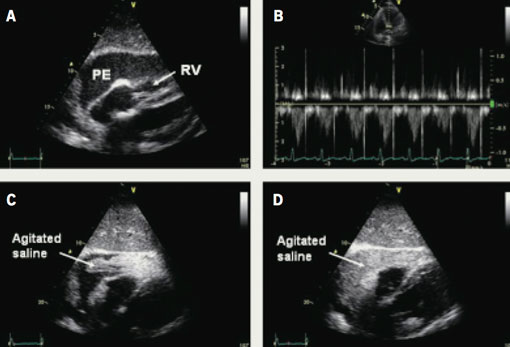
A 66-year-old male presented with increasing dyspnoea. He was an ex-smoker and had been diagnosed with stage IV undifferentiated large cell carcinoma of the left lung two months previously. Clinical examination revealed signs consistent with cardiac tamponade. Cardiac tamponade, a life-threatening condition, is a continuum of haemodynamic compromise, initiated by a collection of fluid in the pericardial space causing an increase in intra-pericardial pressure and cardiac compression. Transthoracic echocardiography confirmed the presence of a large global pericardial effusion with echocardiographic signs of cardiac tamponade (figure 1A and 1B).

Figure 1. (A) Subcostal two-dimensional echocardiogram showing a large pericardial effusion (PE) with collapse of the right ventricular (RV) free wall during diastole. (B) Doppler echocardiography demonstrating marked changes in left ventricular outflow tract velocity during respiratory fluctuations. (C, D) Agitated saline contrast within the pericardial space

The patient underwent therapeutic subxiphoid pericardiocentesis guided by contrast echocardiography. Pericardiocentesis is not without risk, and complications include laceration of cardiac chamber or coronary artery, aspiration of ventricular blood, arrhythmias, pneumothorax and puncture of peritoneum, oesophagus or aorta. Traditionally, many units still advocate pericardiocentesis drainage under fluoroscopy guidance given the dangers with blind drainage. However, transferring haemodynamically unstable patients to a cardiac catheter laboratory is not always safe and echocardiographic guidance allows pericardiocentesis to be performed safely at the bedside. 

The echocardiogram was performed from the apical four-chamber view by an experienced operator. Pericardial needle aspiration revealed heavily blood-stained fluid. Agitated saline (9.5 ml normal saline, 0.5 ml air) was injected to exclude accidental puncture of a cardiac chamber with continuous echocardiographic monitoring (figure 1C and 1D).1 There was notable and immediate passage of contrast into the pericardial space. A pigtail catheter was then safely inserted and sutured in place.2 Over 1,000 ml of fluid was drained with immediate symptomatic improvement. 

Subxiphoid pericardiocentesis guided by contrast echocardiography is a safe and effective technique to help differentiate accidental cardiac chamber puncture from haemopericardium in the management of cardiac tamponade.

Conflict of interest

None declared.

References

  1. Vayre F, Lardoux H, Pezzano M, Bourdarias JP, Dubourg O. Subxiphoid pericardiocentesis guided by contrast two-dimensional echocardiography in cardiac tamponade: experience of 110 consecutive patients. Eur J Echocardiogr 2000;1:66–71.
  2. Spodick DH. Acute cardiac tamponade. N Engl J Med 2003;349:684–90.

MDCT coronary angiography: does the benefit justify radiation burden?

Br J Cardiol 2010;17:207–08 Leave a comment
Click any image to enlarge
Authors:

Recent technical developments in multi-detector computed tomography (MDCT), and particularly the introduction of 64-slice MDCT, have made the non-invasive imaging of coronary arteries a clinical reality. Beta blockers are used to decrease the heart rate to 65 bpm, sublingual glyceryl trinitrate (GTN) can be used to dilate the coronary arteries, and the patient is only required to breath-hold for a few seconds. Fast or irregular heart rates, extensive calcium blooming artefacts and patients with high body mass index (BMI) are the only limiting factors. The temporal resolution is faster with dual-source MDCT, reducing the need for beta blockers, and the 320-slice MDCT can image the heart in one heart beat.

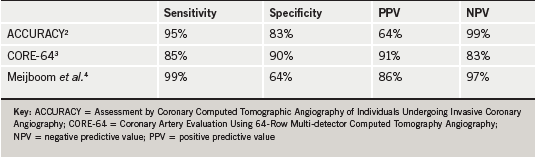
207-img-1MDCT coronary angiography (CTCA) has been shown to be highly accurate at detecting coronary artery disease (CAD) with more than 30 studies and several meta-analyses confirming excellent sensitivity and negative predictive value (NPV), when compared with invasive X-ray coronary angiography.1 This was confirmed in three multi-centre trials: Assessment by Coronary Computed Tomographic Angiography of Individuals Undergoing Invasive Coronary Angiography (ACCURACY) (n=230), Coronary Artery Evaluation Using 64-Row Multi-detector Computed Tomography Angiography (CORE-64) (n=291), and Meijboom et al. (n=360)2-4 (table 1). The positive predictive values (PPV) have generally been less impressive as the degree of coronary stenosis can appear more severe on MDCT than on invasive coronary angiography. This is the result of the calcium blooming artefacts and the fact that the extent of the positive remodelling of atherosclerosis in the vessel wall is not seen on invasive coronary angiography.

Br-J-Cardiol-2010-17-208-table-1
Table 1. Multi-centre trials of computed tomography coronary angiography (CTCA) versus invasive coronary angiography

The excellent NPV has led MDCT to become the optimal test to rule out CAD in patients with low-to-moderate likelihood of disease. CTCA is also increasingly used as a second-line test to verify the findings of equivocal functional tests. There are prognostic data identifying increased risk of mortality in symptomatic patients with 50% left main stem or 70% proximal left anterior descending artery stenoses and confirming extremely low risk for patients with normal CTCA.5 MDCT is the method of choice for imaging anomalous coronary arteries and is also used to evaluate coronary artery bypass grafts, adult congenital heart disease, cardiac tumours and the pericardium.

Exposure to radiation

This potential for increased use of CTCA comes with an associated increase in exposure of patients to radiation. This is particularly important in younger women, who receive a higher equivalent dose (25%) because of the breast tissue, and who frequently have equivocal exercise-tolerance tests. Significant progress has been made to lower the radiation dose, with electrocardiographically controlled tube current modulation (ECTCM) during the cardiac cycle reducing the dose by 25%. However, this is not sufficient for the younger patients. Einstein et al. calculates the risk for future cancer from a CTCA with ECTCM (14 mSv) in a 20-year-old woman to be one in 219 compared with one in 715 in a 60-year-old woman and one in 1,911 in a 60-year-old man (9 mSv).6 The radiation dose can be reduced by a further 40% by reducing the output of the CT X-ray tube, from 120 to 100 kVp, for patients with a BMI lower than 30 kg/m2. Furthermore, each reduction of the scan length by 1 cm reduces the dose by 1 mSv. Raff et al. reported a reduction in the median effective radiation dose from 21 to 10 mSv in 15 hospitals in the state of Michigan with the application of the above dose reduction techniques.7 However, the most effective way to lower the radiation dose is prospective electrocardiogram (ECG)-triggering, where the acquisition is limited to 10% of the cardiac cycle at end-diastole. This reduced the dose to an average of 2.1 mSv, compared with an average of 4.4 mSv for invasive coronary angiography, in a recent comparative study.8 This method is only suitable in patients with regular heart rates, ideally below 60 bpm.

A less commonly employed method, which lowers the radiation dose by 40%, is reducing the scanning field of view with a bow-tie filter to scan just the heart and exclude the lungs. Including the lungs in the scan not only increases the radiation dose but there is also a high incidence of incidental findings, the vast majority of which are of no clinical consequence. The most frequent incidental findings are small solid nodules, which require follow-up with up to four additional CT scans, based on the Fleishner society criteria, incurring significant additional cost and radiation.9 Such lung screening with CT has not been shown to be clinically effective or cost-effective in patients with a history of heavy smoking, and, hence, is unlikely to be useful in a population with low-to-moderate probability of CAD.10

The role of CTCA

CTCA has been shown to be clinically effective and the fast acquisition time should translate into low cost, compared with other non-invasive tests. The evidence is in favour of more utilisation of CTCA, and the recnt National Institute for Health and Clinical Excellence (NICE) guidance on chest pain11 has endorsed the use of MDCT as a rule-out test in patients with low-to-moderate probability of CAD. However, these patients are often relatively young and/or female and, as the use of CTCA increases, it is vital that all the radiation dose-lowering strategies are utilised and that referring physicians are aware of the radiation dose and the uptake of such strategies in their local CTCA service. This is particularly important in the light of the Prospective Multi-centre Study on Radiation Dose Estimates of Cardiac CT Angiography in Daily Practice (PROTECTION 1),12 an observational study of the radiation dose in 50 CTCA sites, reporting a six-fold variation in dose between sites, which was directly related to the utilisation of the dose-reduction techniques, and the recent data from the USA highlighting the high cumulative radiation dose in non-elderly patients, particularly in women, from medical imaging.13 Low radiation dose CTCA is clinically effective and likely to be a cost-effective test and should have its place in a cost-conscious national healthcare service. Future guidance should recommend the use of low radiation dose protocols and future cost-effectiveness studies of CTCA should consider the cost of the additional investigations as a result of the incidental lung findings.1,9

Conflict of interest

KA: None declared. MB has received speakers honoraria from GE.

Editors’ note

See also article by Obaid et al. on pages 235–9, which looks at cardiac CT.

References

1. Mowatt G, Cummins E, Waugh N et al. Systematic review of the clinical effectiveness and cost effectiveness of 64-slice or higher computed tomography angiography as an alternative to invasive coronary angiography in the investigation of coronary artery disease. Health Technol Assess 2008;12:iii–iv, ix–143.

2. Budoff MJ, Dowe D, Jollis JG et al. Diagnostic performance of 64-multidetector row coronary computed tomographic angiography for the evaluation of coronary artery stenosis in individuals without known coronary artery disease. Results from the prospective multicentre assessment of coronary computed tomographic angiography of individuals undergoing invasive coronary angiography (ACCURACY) trial. J Am Coll Cardiol 2008;52:1724–32.

3. Miller JM, Rochitte CE, Dewey M et al. Diagnostic performance of coronary angiography by 64-row CT. N Engl J Med 2008;359:2324–36.

4. Meijboom WB, Meijs ME, Schuijf JD et al. Diagnostic accuracy of 64 slice computed tomography coronary angiography: a prospective multicentre multivendor study. J Am Coll Cardiol 2008;52:2135–44.

5. Min JK, Shaw LJ, Devereux RB et al. Prognostic value of multidetector coronary computed tomographic angiography for prediction of all-cause mortality. J Am Coll Cardiol 2007;50:1161–70.

6. Einstein A, Henzlova M, Rajagopalan S. Estimating risk of cancer associated with radiation exposure from 64-slice computed tomography coronary angiography. JAMA 2007;298:317–23.

7. Raff GL, Chinnaigan KM, Share DA et al. Radiation dose from cardiac computed tomography before and after implementation of radiation dose reduction techniques. JAMA 2009;301:2340–8.

8. Herzog BA, Wyss CA, Husmann L et al. First head-to-head comparison of effective radiation dose from low-dose CT with prospective ECG-triggering versus invasive coronary angiography. Heart 2009;95:1656–61.

9. Machaalany J, Yam Y, Ruddy TD et al. Potential clinical and economic consequences of noncardiac incidental findings on cardiac computed tomography. J Am Coll Cardiol 2009;54:1533–41.

10. Swenson SJ, Jett JR, Sloan JA et al. Screening for lung cancer with low-dose spiral computed tomography. Am J Respir Crit Care Med 2002;165:508–13.

11. NICE. Chest pain of recent onset. Clinical Guideline 95. London: NICE, 2010. www.nice.org.uk/CG95

12. Hausleiter J, Meyer T, Hermann F et al. Estimated radiation dose associated with cardiac CT angiography. JAMA 2009;301:500–07.

13. Fazel R, Krumholz HM, Wang Y et al. Exposure to low dose Ionizing radiation from medical imaging procedures. N Engl J Med 2009;361:849–57.

Latest NICE guidance on chronic heart failure

Br J Cardiol 2010;17:209 Leave a comment
Click any image to enlarge
Authors:

The National Institute for Health and Clinical Excellence (NICE) has published new guidance on the management of chronic heart failure. This updates and replaces the previous guideline in this area (NICE clinical guideline 5).

The new guideline, which covers the management of heart failure in adults in primary and secondary care, contains new and updated recommendations on diagnosis, pharmacological treatment, monitoring and rehabilitation.

Key priorities for implementation in the guidance include:

  • Referring patients with suspected heart failure and previous myocardial infarction (MI) to transthoracic Doppler 2D echocardiography and specialist assessment within two weeks.
  • Measuring serum natriuretic peptides in patients with suspected heart failure without previous MI; referring those with very high levels of serum natriuretic peptides to urgent transthoracic Doppler 2D echocardiography and specialist assessment within two weeks.
  • First-line treatments for heart failure due to left ventricular systolic dysfunction are angiotensin converting enzyme (ACE) inhibitors and beta blockers licensed for heart failure. The latter should be offered to older patients and other special groups.
  • If symptoms persist despite optimal first-line treatment, specialist advice should be sought and a second-line treatment should be added such as an aldosterone antagonist, an angiotensin receptor blocker (also an alternative first-line treatment) or hydralazine in combination with nitrate.
  • Monitoring all patients to include a clinical review.
  • Patients with heart failure should be offered a supervised group exercise-based rehabilitation programme if they are stable.
  • Patients from hospital should be discharged only when their condition is stable and their management plan optimised, taking into account patient/carer wishes and the level of support and care in the community

Full guidance can be found at http://guidance.nice.org.uk/CG108

Transient loss of consciousness

A NICE guideline on the transient loss of consciousness in adults and young people has been published. NICE highlights how people who experience spontaneous blackouts may not be receiving accurate or timely diagnoses because of inadequate assessments made by health care staff. The full guidance is available at http://guidance.nice.org.uk/CG109

Dronedarone

NICE has published its final technology appraisal on the use of dronedarone (Multaq®) for the treatment of atrial fibrillation (AF). It recommends it as a possible treatment for some people with non-permanent AF, such as those who have tried another drug which has not worked or for those who are at higher risk, such as patients with diabetes, those over 70 years old, those taking at least two drugs for high blood pressure and those with a history of stroke or a blood clot. The full guidance is available at http://guidance.nice.org.uk/TA197.

News from the 2010 Congress of the European Society of Cardiology

Br J Cardiol 2010;17:211-14 Leave a comment
Click any image to enlarge

News from the world of cardiology.

Highlights of this year’s European Society of Cardiology Congress, held in Stockholm, Sweden, from August 28th to September 1st included a new drug which benefits heart failure by slowing heart rate, and more exciting results from oral compounds that could replace warfarin in various indications.

211-img-1Highlights of this year’s European Society of Cardiology Congress, held in Stockholm, Sweden, from August 28th to September 1st included a new drug which benefits heart failure by slowing heart rate, and more exciting results from oral compounds that could replace warfarin in various indications.

SHIFT: ivabradine shows benefit in heart failure

A new agent that slows heart rate by inhibiting sodium-potassium channels found in the sino-atrial node of the heart appears to benefit heart failure patients when added on to current therapy.

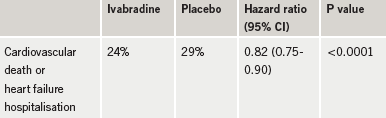
The agent, ivabradine, was associated with a significant 18% drop in the composite rate of cardiovascular death or heart-failure hospitalisation, compared with placebo, in the SHIFT trial (table 1). It was also associated with a reduction of 26% in heart-failure events leading to hospitalisation or death.

Table 1. Primary end point results in SHIFT

SHIFT (Systolic Heart Failure Treatment with the If Inhibitor Ivabradine Trial) involved 6,500 patients with New York Heart Association (NYHA) class II – IV heart failure, left ventricular ejection fraction of 35% or less, and a prior hospitalisation for worsening heart failure within the previous 12 months. They were randomised to either ivabradine or placebo. All patients were receiving currently recommended heart failure medication, and had a heart rate of at least 70 bpm.

Principal investigator Professor Michel Komajda (Pitié Salpetrière Hospital, Paris, France) said: “These results have been achieved in addition to the effects of other medications. Heart failure and high heart rates are extremely common so it is very good news for patients and doctors that, even when using the best current drug treatment available, ivabradine further reduces the risk of death or hospitalisation by over 25%. Ivabradine has only one known cardiac action, so this opens a fascinating area of research. The SHIFT trial has demonstrated, for the first time, that reducing heart rate alone is beneficial for patients with heart failure.”

The main side-effect of ivabradine is bradycardia, which occurred in 10% of patients in this study, leading to withdrawal in 1% of patients receiving the drug.

The main concern voiced about the SHIFT trial was that patients might not have been on optimal doses of beta blockers and the benefits brought about by ivabradine may also have been seen by raising the beta-blocker dose. But designated discussant of they trial, Dr Inder Anand (University of Minnesota, USA), dismissed these concerns, noting that higher doses of beta blockers have not been shown to reduce heart rate further and, in the real world, physicians are unable to increase doses of beta blockers to target levels because of concerns about side effects.

FUTURA OASIS 8: use standard dose heparin with fondaparinux in PCI

Acute coronary syndrome (ACS) patients being treated with fondaparinux can be given a standard dose of heparin during percutaneous coronary intervention (PCI) to reduce the risk of catheter thrombosis without increasing risk of major bleeding, according to the results of FUTURA OASIS 8 (Fondaparinux Trial with UFH during Revascularisation in Acute Coronary Syndromes).

An earlier trial, OASIS 5, had shown that anticoagulation with fondaparinux was more effective than enoxaparin in reducing mortality and serious bleeding rates in ACS patients, but rates of catheter thrombosis during angioplasty with fondaparinux were found to be higher than with enoxaparin, which prompted the adjunctive use of unfractionated heparin to prevent clotting in patients treated with fondaparinux. But there has been uncertainty about the optimal dose of heparin to use.

FUTURA OASIS 8 trial randomised 2,026 patients receiving fondaparinux 2.5 mg daily to low fixed dose heparin (50 U/kg) or standard dose heparin (85 U/kg or 60 U/kg with GP IIb/IIIa inhibitors) at the time of PCI.

Results showed no significant difference in the primary outcome of peri-PCI major bleeding/minor bleeding/major vascular complications. Major bleeding rates were 1.4% in those given low-dose heparin and 1.2% the standard dose. Minor bleeding was reduced in the low-dose group, but this was accompanied by a trend towards higher risk of death, myocardial infarction or target vessel revascularisation. The rates of catheter thrombosis were very low in both groups (0.5% and 0.1% in the low and standard dose, respectively).

It was also noted that the rates of major bleeding in FUTURA-OASIS 8  were not significantly different from that observed in the fondaparinux alone arm of the OASIS 5 trial (1.5%) but lower than in the enoxaparin arm (3.6%).

AVERROES: new factor Xa inhibitor prevents stroke in AF patients

Another breakthrough in anticoagulation therapy appears to be on the horizon with the new oral factor Xa inhibitor, apixaban, having shown a clinically important reduction in stroke and systolic embolism compared with aspirin in high-risk atrial fibrillation (AF) patients unsuitable for treatment with warfarin in the AVERROES (Apixaban Versus Acetylsalicylic Acid to Prevent Stroke) trial.

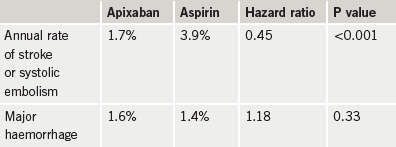
The 5,600-patient trial was terminated earlier this year following an interim analysis showing a reduced rate of stroke/systolic embolism in apixaban-treated patients compared with those on aspirin, without a significant increase in major bleeding (table 1).

Table 1. AVERROES study: major results

The rate of haemorrhagic stroke was 0.2% per year in both treatment groups and there was no evidence of hepatic toxicity or other major adverse events.

Principal investigator, Dr Stuart Connolly (McMaster University, Hamilton, Ontario, Canada), described the results of the trial as “truly impressive”. He added: “The reduction in stroke and systemic embolism is very important and the increased risk of haemorrhage is small. It appears that apixaban will be an excellent treatment for the many patients with atrial fibrillation who are unsuitable for warfarin. These findings will reduce the burden of stroke in society.”

Apixaban has already been investigated for the prevention of deep vein thrombosis, following orthopaedic surgery, and is also being studied against warfarin in AF patients suitable for warfarin.

RESPONSE: nurse-led programme improves risk factors in ACS patients

A six-month out-patient prevention programme conducted by nurses resulted in sustained improvements in the control of cardiovascular risk factors, including cholesterol levels and blood pressure, in acute coronary syndrome (ACS) patients.

The nurses were able to increase the proportion of patients with good control of risk factors by 40% (defined as at least seven out of nine risk factors on target) and to reduce the calculated risk of dying in the next 10 years by about 17%.

Principal investigator of the RESPONSE (Randomised Evaluation of Secondary Prevention by Outpatient Nurse Specialists) trial, Professor Ron Peters (Academic Medical Center, Amsterdam, The Netherlands) explained that the preventive aspect of treatment is given insufficient priority and that new approaches are needed to realise the full benefits of prevention in patients who have suffered a cardiac event.

The trial evaluated the effect of a nursing programme in 754 patients hospitalised for an acute coronary complication. They were randomised to either usual care alone or usual care plus a six-month nursing intervention that included four extra visits to the out-patient clinic for advice on healthy lifestyle and monitoring of major risk factors.

“The nurse programme was practical and well attended by the patients,” Professor Peters said. “More than 93% of patients attended all visits to the nurse. These findings are very encouraging and support the initiation of prevention programmes by nurses to help patients reduce their risk of future complications.”

Genetic profiling targets benefits of ACE inhibitors

The beneficial effects of angiotensin converting enzyme (ACE) inhibitors could be increased by targeting the therapy to those patients most likely to benefit, according to a new genetic study.

Presenting the study, Dr Jasper Brugts (Erasmus University Medical Centre, Rotterdam, The Netherlands) explained that his team analysed 12 candidate genes that were determined as being within the pharmacodynamic pathway of ACE inhibitors, taking in 52 single nucleotide polymorphisms (SNPs), in patients taking part in the EUROPA (European Trial on Reduction of Cardiac Events with Perindopril in Stable Coronary Artery Disease) trial of the ACE inhibitor, perindopril.

Three SNPs, located in the angiotensin-II type I receptor genes and bradykinin type I receptor genes, were significantly associated with the treatment benefit of perindopril after multivariate adjustment for confounders and correction for multiple testing.  A pronounced treatment benefit was observed in a subgroup of 73.5% of the patients, while no benefit was apparent in the remaining 26.5%.  An interaction effect of similar direction and magnitude, although not statistically significant, was observed in a preliminary confirmatory analysis of over 1,000 patients with cerebrovascular disease, who were treated with perindopril or placebo from the PROGRESS-trial, Dr Brugts reported.

This research study is the first to identify genetic determinants of the treatment benefit of ACE inhibitor therapy. “If confirmed in subsequent studies, our findings open the route to individualise therapy by pharmacogenetic profiling.  Such individualised therapy could revolutionise medical drug therapy by prescribing drugs only to those patients most likely to benefit from the therapy.  This would not only increase efficacy, but also decrease unnecessary treatment of patients and avoid unwanted side effects, thereby decreasing the overall costs,” Dr Brugts added.

No benefit of omega-3 fatty acids in patients with previous MI

Low doses of omega-3 fatty acids did not reduce the overall rate of major cardiovascular events in patients who have had a previous myocardial infarction (MI) in the Alpha Omega Trial.

Presenting the trial, Professor Daan Kromhout (Wageningen University, the Netherlands) explained that n-3 (or omega-3) fatty acids can be divided in two main classes: eicosapentaenoic acid (EPA) and  docosahexaenoic acid (DHA) derived from fish; and alpha-linolenic acid (ALA) from plant foods such as soybean oil and walnuts.  He noted that several intervention studies in cardiac patients have shown that a daily intake of 1-2 g of EPA + DHA via fish oil capsules has been associated with a reduced mortality from coronary heart disease, and  epidemiological studies in healthy populations have also suggested that 250 mg EPA + DHA or eating fish once or twice a week can lower the risk of cardiovascular disease. For ALA, there is less evidence of a cardioprotective effect.

The Alpha Omega Trial was designed as a dietary intervention study to examine the effect of low doses of omega-3 fatty acids on major cardiovascular events. In the study, 4,837 men and women who had suffered an MI approximately four years previously were randomised to daily use of one of four margarines for 40 months: containing EPA + DHA (400 mg/day); ALA (2 g/day); both EPA + DHA and ALA; or placebo.

Results showed no reduction in major cardiovascular events in any of the omega-3 groups compared to placebo. However, among sub-groups, there was a borderline significant reduction in major cardiovascular events in women who received ALA. In addition, in patients with diabetes, omega-3 fatty acids were protective against ventricular arrhythmia-related events, and the EPA + DHA combination appeared to be associated with a reduction in CHD mortality.

Professor Kromhout suggested that the lack of any effect in the overall population may have been due to the amount of other treatments being taken by the patients, with 98% on antithrombotic agents, 90% on antihypertensive drugs, and 86% on lipid lowering drugs. “We found that cardiovascular mortality rate in the study population was only half that expected, probably because of their excellent treatment. This may also be why the rate of major cardiovascular events during follow-up was no lower in the fatty acid groups than in the placebo group,” he speculated.

ISAR-REACT 3A: lower doses of heparin best for PCI

Lower doses of unfractionated heparin are preferable to higher doses in percutaneous coronary intervention (PCI), the results of the ISAR-REACT 3A trial suggest.

Presenting the trial, Dr Stefanie Schulz (Deutsches Herzzentrum, Munich, Germany) explained that although unfractionated heparin has been the standard anti-thrombotic agent in interventional cardiology for decades, there is still no solid evidence from large clinical trials to guide its dosing during PCI.

The current study examined a contemporary heparin dose of 100 U/kg in 2,505 patients undergoing elective PCI, and compared outcomes with a historical control group of patients receiving heparin at a dose of 140 U/kg in the previously conducted ISAR-REACT-3 trial.

Results at 30 days showed that the primary net clinical outcome (a composite of death, myocardial infarction/ urgent target vessel revascularisation and bleeding) was significantly reduced with the lower heparin dose (7.3% vs. 8.7%, P=0.045).  The 100 U/kg heparin dose also met the criterion of non-inferiority compared to the bivalirudin arm of ISAR-REACT 3.

But discussant of the trial, Dr Christian Hamm (Kerckhoff-Klinik, Bad Nauheim, Germany), pointed out that 100 U/kg was actually now thought of as a relatively high dose of heparin, and that lower doses needed to be tested.

ANTIPAF: no effect of angiotensin blocker on paroxysmal AF

The ANTIPAF (ANgiotensin II anTagonists In Paroxysmal Atrial Fibrillation) trial has put an end to speculation that angiotensin II receptor blockers could reduce the recurrence of atrial fibrillation (AF), showing no such effect of olmesartan in this indication.

The trial included 425 patients with documented episodes of paroxysmal AF who were stratified according to presence of beta-blocker therapy and randomised to placebo or olmesartan (40 mg/day).  Patients were followed using daily trans-telephonic ECG recordings independent of symptoms and were encouraged to submit further tele-ECGs in any case of AF-related symptoms.

Results showed that the primary end point of the trial – the percentage of days with documented episodes of paroxysmal AF throughout 12 months of follow-up – showed no significant difference in the two groups. However, the time to prescription of recovery medication (amiodarone) was longer in patients treated with olmesartan than in those receiving placebo

Discussing the trial, Professor John Camm (St George’s Hospital, London) noted that angiotensin receptor blockers were effective in primary prevention of AF, but this trial adds to other recent evidence that they don’t seem to help in patients with persistent AF.

Take care when switching to generic statins

The switching of patients from branded to generic statins is having an adverse effect on lipid level for many patients, according to a Dutch study.

The study was undertaken to determine dose-specific patterns associated with switching patients in the Netherlands from the Lipitor-branded atorvastatin to generic simvastatin. Researchers took a representative sample of pharmacist dispensing data from across the Netherlands, and combined this information with published data on the dose-specific effects of each drug.  “Our research demonstrated that many patients were, in fact, receiving a non-equivalent dose after switching to the generic drug,” reported Professor Danny Liew (University of Melbourne).

Results showed that in the first three months of 2009, over one third of patients who had initially been prescribed atorvastatin (Lipitor®) had been switched to a less potent dose of simvastatin.  “The predicted net effect of this would be at least a 5 to 6% increase in LDL (low-density lipoprotein), which translates to a 3% average increase in the risk of heart disease and stroke,” Professor Liew added.

Rivaroxaban looks good in DVT treatment

Another promising new oral anticoagulant showed good results in the treatment of deep vein thrombosis (DVT). Rivaroxaban showed similar rates of efficacy and bleeding compared with standard treatment (enoxaparin followed by a vitamin K antagonist such as warfarin) in the treatment of patients with acute, symptomatic DVT in the EINSTEIN DVT study.

The trial involved 3,400 patients.  The primary end point of recurrent symptomatic venous thromboembolism (ie, the composite of recurrent DVT, non-fatal or fatal pulmonary embolism) occurred in 2.1% of the rivaroxaban recipients and 3.0% of the subjects receiving standard therapy. The primary safety end point – major and clinically relevant non-major bleeding – occurred in 8.1% of both groups.

Principal investigator, Professor Harry Büller (Academic Medical Center, Amsterdam, The Netherlands) said: “The single-drug approach with rivaroxaban will provide clinicians and patients with an attractive, simple, alternative regimen for the initial and long-term treatment of deep vein thrombosis.”

PLATO and CURE genotype results – when is genetic testing relevant in ACS patients?

New genotype analysis results from the PLATO (A Study of Platelet Inhibition and Patient Outcomes) and TRITON-TIMI 38 studies together suggest that the antiplatelet agents ticagrelor and prasugrel are not affected by variations in the CYP2C19 gene, which can affect clopidogrel.

However, similar results from the PLATO and CURE (Clopidogrel in Unstable Angina to Prevent Recurrent Events) trials in patients taking clopidogrel suggest that the “loss of function” CYP2C19 alleles actually do not appear to be a problem in terms of outcomes during chronic treatment. If genetic testing with clopidogrel is necessary, it only seems relevant during the first month of treatment or perhaps if a stent is placed.

The genetic results from the PLATO and CURE trials were presented at the ESC meeting. The PLATO results were simultaneously published along with those from the TRITON study in The Lancet (DOI:10.1016/S0140-6736(10)61273-1 and 61274-3), and the genetic results from CURE were published in the New England Journal of Medicine (DOI: 10.1056/NEJMoal008410).

While the CYP2C19 loss of function alleles showed no effects on outcomes with ticagrelor or prasugrel in PLATO and TRITON-TIMI 38, respectively, results from the clopidogrel group of the PLATO trial, showed a higher event rate in patients with any of loss-of-function allele early on in the study (first 30 days) in association with the index event and often in association with an early PCI procedure. But later, after 30 days, there was no difference in event rates between those with and without loss-of-function alleles taking clopidogrel.

And in the CURE genetic study, there was no difference in outcomes in patients taking clopidogrel long-term in carriers of the loss-of-function alleles versus non-carriers. Presenting the data, Dr Guillaume Paré (McMaster University, Hamilton, Canada), pointed out that these results contrast with several previous studies in ACS patients, but they suggest that this may be due to the low number of patients receiving stenting in the CURE trial, 14.5%, compared with around 70% of previous studies looking at this issue, adding that it has consistently been shown that the greatest benefit of clopidogrel is the reduction of stent thrombosis.

Two cups of coffee a day may benefit cardiovascular health

213-img-1Moderate consumption of coffee by hypertensive elderly individuals can lead to improvements in aortic distensibility, a measure of the elasticity of arteries which is recognised as an indicator of atherosclerosis and a predictor of future cardiovascular events, new results suggest.

For the study, a team from the University of Athens conducted a health and nutrition survey using a target group of 343 men and 330 women aged between 65 and 100 – all of whom were long-term residents of the Aegean island of Ikaria. The island was selected because of its population’s high life expectancy, with an above-average proportion of residents over 90 years of age.

Coffee consumption was particularly measured during the initial phase of the study because it is a deeply embedded social tradition within the Greek population, and also because of conflicting evidence of its impact on cardiovascular health.

Lead researcher, Dr Christina Chrysohoou, explained that the pressor response to caffeine seems to be more pronounced in hypertensive or hypertension-prone subjects than in normotensive ones. Therefore, they focused on a sub-group of 235 hypertensive subjects, in whom they measured the impact of daily coffee consumption using echocardiographic indices of aortic distensibility.

Results showed that moderate coffee consumption (between one and two cups per day) is associated with higher values of aortic distensibility. Adjustments were made for various factors such as age, gender, physical activity status, creatinine levels, BMI and diabetes mellitus. There was also evidence that moderate coffee consumption leads to reduced cardiovascular disease, lower prevalence of diabetes and hyperlipidaemia, lower body mass index, better renal functions and higher creatinine clearance levels. There was no evidence, however, that increasing coffee consumption to three to five cups per day would lead to further improvements in aortic distensibility.

The researchers attribute these beneficial effects to the polyphenolic compounds found in coffee, especially traditional Greek blends, and other micronutrients, including flavonoids, magnesium, potassium, niacin and vitamin E.

ATOLL: enoxaparin for primary PCI

The low molecular weight heparin, enoxaparin, may be preferable to unfractionated heparin (UFH) in myocardial infarction (MI) patients undergoing primary percutaneous coronary intervention (PCI), the ATOLL trial suggests.

Professor Gilles Montalescot (Pitié-Salpêtrière University Hospital, Paris, France) explained that there was already good data supporting enoxaparin in elective PCI but, so far, primary PCI for ST-elevation myocardial infarction (STEMI) has traditionally been supported by unfractionated heparin.

In the ATOLL study, 910 MI patients were randomised to receive IV enoxaparin  (0.5 mg/kg) or IV UFH (50-70 IU/kg with GP IIb/IIIa inhibitors, 70-100IU without GP IIb/IIIa inhibitors then adjusted according to clotting times) before coronary angiography. Primary PCI was performed through a radial access in 68% of cases, with 75% of patients receiving GP IIb/IIIa inhibitors and two-thirds of patients receiving high-dose clopidogrel.

Results (table 1) tended to favour enoxaparin, although the primary end point – death, complications of MI, procedure failure or non-CABG major bleeding at 30 days – was not significant. The main secondary end point – death, recurrent MI/acute coronary syndrome or urgent revascularisation – was significant, as was net clinical benefit (death, complication of MI or major bleeding).

Table 1. ATOLL: major results

Commenting on the results, Professor Montalescot said: “Enoxaparin showed a good safety profile with a superior net clinical benefit. Our data demonstrate that this strategy, which is easier to use, is also more effective at reducing the most serious ischaemic complications of STEMI treated with primary PCI.”

New ESC guidelines announced

During the meeting, The European Society of Cardiology ESC) also announced several new sets of clinical guidelines.

Myocardial revascularisation

This guidelines included surgery, stent implantation and drug therapies. These guidelines introduce the concept of Heart Teams, essentially a grouping from across disciplines ensuring – when practical – that the patient is fully informed and takes part in the key decisions. The heart team should include one of each of the following specialists; interventional cardiologist, clinical cardiologist, and cardiac surgeon.

Atrial fibrillation

These are the first guidelines on atrial fibrillation prepared solely by the ESC, with earlier guidelines on this topic having been a collaboration with the American Heart Association and the American College of Cardiology, Divergence in practice, drug treatments and the regulatory environment compared with the US have now made it vital to create a European-specific version. The guidelines reflect notable developments in many of the conventional treatments for the condition as well as the very latest techniques to manage it.

Grown-up Congenital Heart Disease (GUCH)

This is now estimated to affect more than two million adults in Europe.

Device therapy in heart failure

In addition, the clinical practice guidelines covering device therapy in heart failure have been updated, reflecting the pace of research in this field and the importance of recently published evidence. The changes made in the guidelines take account of: recently published evidence from clinical trials, new developments in device technology and performance and more extensive understanding of treatment options and responses.

All the new guidelines can be found at: http://www.escardio.org/guidelines-surveys/esc-guidelines.

PCI in the UK – the continuing journey

Br J Cardiol 2010;17:s3-s4 Leave a comment
Click any image to enlarge
Authors:
Sponsorship Statement: The Alliance of DAIICHI SANKYO and Eli Lilly & Company Ltd commissioned this supplement. The Alliance funded its development, production and distribution. The British Journal of Cardiology worked with the Alliance and expert cardiologists (Dr Peter Ludman, Birmingham; Professor Kausik Ray, London; and Dr Clive Weston, Swansea) in developing the supplement and in its review. The Alliance also reviewed the content of the supplement for accuracy and compliance with the ABPI Code of Practice. Conflict of interest: PL has received honoraria in the past year from Eli Lilly and Cordis Johnson & Johnson. KKR has received honororia from AstraZeneca, Bristol-Myers Squibb, Pfizer, Novartis, Eli Lilly, DAIICHI SANKYO, sanofi-aventis, Merck, Schering Plough, Solvay and Roche. CW has received honoraria in the past year from the Alliance of DAIICHI SANKYO and Eli Lilly, and from MSD.

A new and exciting ‘journey’ in interventional cardiology began more than 20 years ago with the introduction of intracoronary stenting.

Introduction

Developments along the way have included better patient selection, improved peri-procedural management of patients and, with newer-generation drugs and devices, better results. Recent hurdles have been confronted, including left main stem disease, complex bifurcation lesions and total chronic occlusions. Similarly, primary percutaneous coronary intervention (PCI) has become the treatment of choice in acute myocardial infarction. Challenges remain, however, including restenosis. The fine balance between thrombosis and haemostasis demands that we provide more effective and predictable antiplatelet strategies to optimise risk reduction.

Newer approaches are being developed, including stents made of biological materials and biodegradable stents, along with refinements and adjuncts in pharmacology, to provide more potent and selective inhibition of the many pathways of platelet activation and aggregation. We may also be entering an era of routine genotyping and point-of-care platelet function testing. Exciting times! The purpose of this supplement is to review the “state of the art” and see where the journey has brought us, and also to look a little at what may lie ahead. In this first section we will review newer terms and definitions, and we will move on to look in detail at some of the remaining clinical challenges such as coronary artery disease in patients with diabetes.

New terms and approaches to risk management

Acute coronary syndrome (ACS) is now the label which describes a range of symptoms extending from unstable angina to myocardial infarction. As more sensitive and specific serological biomarkers and more precise imaging techniques have developed, ever smaller amounts of myocardial necrosis are now detectable. Therefore previous definitions of myocardial infarction have been re-evaluated, a process which has implications for clinicians for risk-stratifying high- versus low-risk groups; for health care delivery systems for future planning and resource utilisation; and also for design and analysis of clinical trials.

A universal definition of myocardial infarction was developed by a joint European Society of Cardiology/American College of Cardiology Foundation/American Heart Association/World Heart Federation (ESC/ACCF/AHA/WHF) task force.1 Now, the term myocardial infarction should be used when there is evidence of myocardial necrosis in a clinical setting consistent with myocardial ischaemia. Criteria include detection of rise and/or fall of cardiac biomarkers (preferably troponin) with at least one value above the 99th percentile of the upper reference limit together with evidence of myocardial ischaemia with at least one of the following:

  • Symptoms of ischaemia
  • ECG changes indicative of new ischaemia (new ST-T changes or new left bundle branch block)
  • Development of pathological Q waves in
    the ECG
  • Imaging evidence of new loss of viable myocardium or new regional wall
    motion abnormality.

The preferred biomarkers are troponin T or I, which have nearly absolute myocardial tissue specificity as well as high clinical sensitivity, reflecting even microscopic zones of myocardial necrosis.1

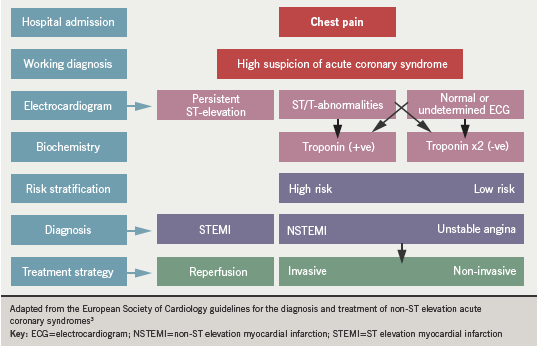
Acute ST-segment elevation myocardial infarction (STEMI) is associated with coronary artery occlusion and progressive necrosis of the myocardial tissue. In non-ST segment elevation myocardial infarction (NSTEMI), thrombus does not occlude the lumen completely, or perhaps blocks it intermittently.2 Some myocardial necrosis occurs in these circumstances also. But when myocardial ischaemia is present without myocardial necrosis (normal serum troponin level), the clinical syndrome is termed unstable angina. The ESC definition of ACS is illustrated in figure 1.3

Figure 1. The spectrum of acute coronary syndromes

Although mortality from myocardial infarction has declined in recent years in the UK, the number of people admitted to hospital with unstable angina and NSTEMI (NSTE-ACS) has shown less of a decline. Although STEMI historically was considered to produce worse outcomes, we now know that six-month mortality from NSTE-ACS is comparable to that of STEMI patients.3 Indeed, data suggest that six-month mortality may be worse in NSTEMI.4 The management of these patients, therefore, remains a high priority, particularly in face of worrying trends in the incidence of obesity and diabetes. Patients with ACS also have widely varying risks of mortality and other cardiovascular events, both in-hospital and after discharge.2 Many factors have been shown to be predictive of adverse outcome during ACS, including advancing age, raised heart rate, the magnitude in rise of biomarkers of myocardial injury, and diabetes mellitus.2

A single risk factor may not provide a reliable assessment of outcome. In clinical practice there has been a tendency to use serum troponin levels for patient risk stratification but “serum troponin does not accurately measure risk in individual patients, particularly when used as a dichotomous outcome”.2 A number of risk scoring systems have been developed to predict outcome in ACS patients. Many are derived from clinical trial populations (such as PURSUIT5 and PREDICT6), which have generally excluded patients at highest risk; others (such as GRACE7) have been derived from large patient databases in an attempt to obtain a population with a broader spectrum of risk. None of these risk models is clearly superior, according to the National Institute for Health and Clinical Excellence (NICE) 2010 guideline. 2 The same document continues: “Clinical assessment alone may not accurately reflect the patient’s risk. There is potential for a systematic approach to risk assessment (that would) result in more accurate estimation of risk and more appropriate intervention”2.

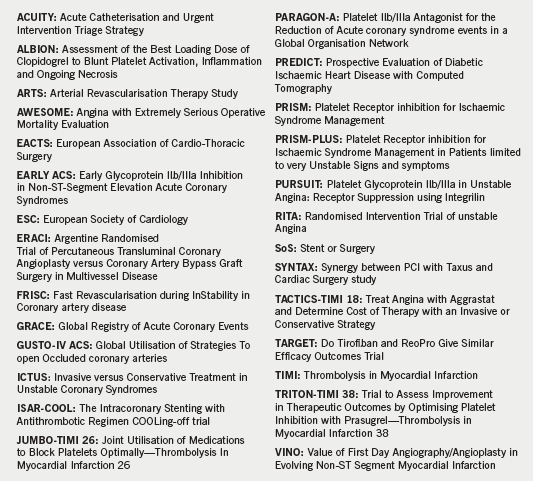
Table of trial acronyms and abbreviations used in this supplement

References

1. Thygesen K, Alpert JS, White HD on behalf of the Joint ESC/ACCF/AHA/WHF Task Force for the Redefinition of Myocardial Infarction. Universal definition of myocardial infarction. Eur Heart J 2007; 28:2525–38.

2. The National Institute for Health and Clinical Excellence (NICE). Unstable angina and NSTEMI: the early management of unstable angina and non-ST-segment-elevation myocardial infarction. Clinical guideline CG94. London: NICE, 2010.

3. Guidelines for the diagnosis and treatment of non-ST elevation acute coronary syndromes. Task Force for diagnosis and treatment of non-ST elevation acute coronary syndromes of the European Society of Cardiology. Bassand JP, Hamm CW, Ardissino D et al. Eur Heart J 2007;28:1598–660.

4. Nair SB, Chacko SM, Dixit A et al. Comparisons of patients’ demographics, in-hospital and three-year mortality rates and independent predictors of death in ST-elevation versus non-ST-elevation myocardial infarction. An interventional centre experience. Heart 2010;96(suppl 1):A71–A72.

5. Boersma E, Pieper KS, Steyerberg EW et al. Predictors of outcome in patients with acute coronary syndromes without persistent ST-segment elevation. Results from an international trial of 9461 patients. The PURSUIT Investigators. Circulation 2000;101:2557–67.

6. Jacobs DR, Kroenke C, Crow R et al. PREDICT: A simple risk score for clinical severity and long-term prognosis after hospitalization for acute myocardial infarction or unstable angina: the Minnesota heart survey. Circulation 1999;100:599–607.

7. Fox KA, Dabbous OH, Goldberg RJ et al. Prediction of risk of death and myocardial infarction in the six months after presentation with acute coronary syndromes: prospective multinational observational study (GRACE). BMJ 2006;333:1091.

Disclaimer: UK prescribing information current at the date of publication of this supplement can be found by downloading the PDF. Medinews Cardiology Limited advises healthcare professionals to consult up-to-date Prescribing Information and the full Summary of Product Characteristics available from the manufacturers before prescribing any product. Medinews Cardiology Limited cannot accept responsibility for any errors in prescribing which may occur.

Intervention: who to treat and how? 

Br J Cardiol 2010;17:s5-s8 Leave a comment
Click any image to enlarge
Authors:
Sponsorship Statement: The Alliance of DAIICHI SANKYO and Eli Lilly & Company Ltd commissioned this supplement. The Alliance funded its development, production and distribution. The British Journal of Cardiology worked with the Alliance and expert cardiologists (Dr Peter Ludman, Birmingham; Professor Kausik Ray, London; and Dr Clive Weston, Swansea) in developing the supplement and in its review. The Alliance also reviewed the content of the supplement for accuracy and compliance with the ABPI Code of Practice. Conflict of interest: PL has received honoraria in the past year from Eli Lilly and Cordis Johnson & Johnson. KKR has received honororia from AstraZeneca, Bristol-Myers Squibb, Pfizer, Novartis, Eli Lilly, DAIICHI SANKYO, sanofi-aventis, Merck, Schering Plough, Solvay and Roche. CW has received honoraria in the past year from the Alliance of DAIICHI SANKYO and Eli Lilly, and from MSD.

Treatment options in ACS include optimised medical therapy, intervention and surgical revascularisation.

Introduction

While primary PCI, rather than thrombolysis, is now the reperfusion treatment of choice for STEMI, the majority of patients coming for revascularisation in the UK have stable coronary disease or NSTE-ACS. In the treatment of NSTE-ACS, first principles involve the selection of patients for diagnostic angiography followed by either PCI or coronary artery bypass grafting (CABG). Rates of PCI are increasing annually in the UK, which, in part, is a reflection of greater awareness of coronary artery disease, its earlier diagnosis and treatment in the ageing population.

This section looks at coronary intervention in general, how PCI activity in the UK compares with other European countries, and trends in the mode of vascular access. We also look at outcomes following PCI compared with CABG and latest UK guidance in this area.

Percutaneous coronary intervention statistics in the UK

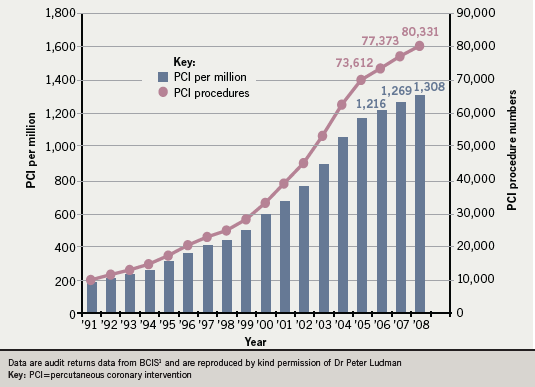
Audit returns data from the British Cardiovascular Intervention Society (BCIS)1 show the current state of PCI in the UK. It is becoming an increasingly common procedure: latest data from 2008 show that 105 centres in the UK performed percutaneous coronary intervention (PCI).1 PCIs were performed in five NHS and one private facility in Scotland; in 76 NHS and 16 private facilities in England; in three hospitals in Northern Ireland; and in two in Wales.1 The total number of PCIs for the UK for 2008 was 80,331: the vast majority (78,077) in NHS hospitals and 2,254 in the private sector.1 Figure 1 expresses BCIS data showing that both the number of PCIs performed and the number of PCIs performed per million population are gradually increasing each year. In addition, 54 of the 87 NHS units now perform day-case PCI.1

Figure 1. PCIs performed in the UK in 2008

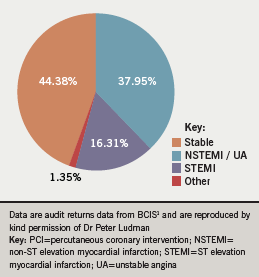
Figure 2. Indications for PCI during 2008

Figure 2 shows the indications for PCI during 2008.1 The “other” indications include bailout and hybrid procedures.

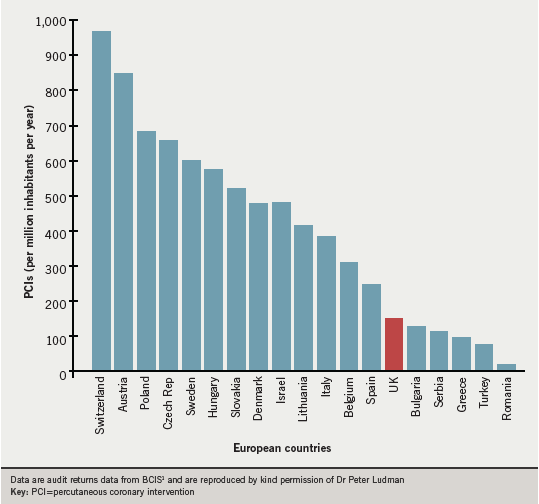
In all, 11,784 PCIs were performed for STEMI, most of them (n=9,224) primary PCI and the others rescue PCI.1 This gives an overall primary PCI rate of 150 per million population in the UK, a lower figure than those from many European countries (figure 3).1

Compared to 2007, interventionists made increasing use of thrombectomy, laser, rotablation, intravascular ultrasound and pressure wires but decreasing use of cutting balloons and distal protection.1

Femoral and radial access routes for PCI: take-up and results

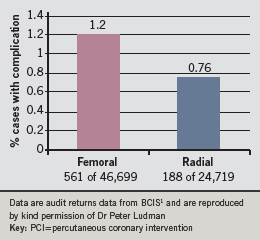
Historically PCI has been carried out using femoral artery access. Over the years, the mode of vascular access in PCI has changed to reduce procedural complications. BCIS data for 2008 show how radial artery access for PCI is slowly becoming more widespread in the UK.1 It was used for 28.1% of cases in 2007 and 34.61% of cases in 2008, in roughly one third of patients presenting with stable coronary syndromes, acute coronary syndromes (not STEMI) and those who underwent primary PCI.1 Fewer complications were reported after use of the radial route compared to the femoral route, see figure 4.1 BCIS also reports that there appears to be no significant difference in door-to-balloon (DTB) time between the two routes. The mean DTB time for the 2,511 procedures using femoral artery access was 66.02 minutes, compared to 63.16 minutes for the 976 procedures using the radial artery (p=0.08).

Figure 3. Number of primary PCIs per million population in Europe in 2008

The patient pathway

Figure 4. BCIS data showing complications of PCI including bleeding by access route used (2008 data)

Symptomatic patients who receive PCI may already be in hospital. More often, they will be admitted from the community, either directly to a PCI centre or having first been admitted to a non-PCI centre and then transferred. Data indicate that the time to PCI is shorter when the patient is admitted directly to a PCI centre. Thus, for NSTEMI/unstable angina and convalescent STEMI, the median door to PCI time is 2.96 days. In contrast, it is 4.2 days in total for patients who follow the latter route: this is composed of 3.2 days for door 1 (non-PCI centre) to door 2 (PCI centre) and 1.0 days for door 2 to PCI.1 (These figures may be compared with NICE clinical guideline 94, which recommends that coronary angiography [with follow-up PCI if indicated] should be offered within 96 hours of first admission to hospital to patients at intermediate or higher risk of adverse cardiovascular events.)2

Outcomes of PCI

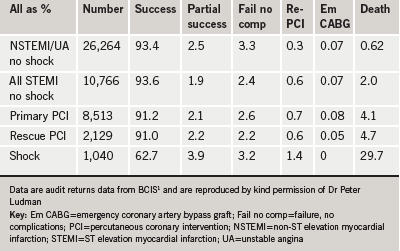
For 2008, BCIS reports there was a 91.8% procedure success rate for all PCIs.1 Adverse outcomes include death (overall mean in-hospital mortality rate 1.03%), cerebrovascular accident (0.08%) and need for emergency CABG (0.07%).1

Table 1 shows an analysis of outcomes for 2008 for PCIs performed for NSTEMI, STEMI, primary PCI and rescue PCI.1 It can be seen that success rates are very high—over 93% for NSTEMI, unstable angina and STEMI in the absence of shock, and over 91% for primary and rescue PCI. The mortality may be risk-stratified by syndrome. The overall in-hospital mortality rate is 1.03% but the mortality is far lower among those with an elective PCI (0.13%), low in those treated by PCI for unstable angina or NSTEMI (0.62%), and higher in those treated with primary or rescue PCI (4.1% and 4.7%, respectively).1

Table 1. Outcomes for PCI in the UK during 2008

There are also gender differences in in-hospital mortality: overall mortality is higher among women (1.36% versus 0.95%). The percentage mortality is similar between men and women for those with elective procedures but again is higher in women for those with STEMI (5.44% versus 3.58%).1 This highlights that the difference in outcome between genders is greater in the higher-risk procedures.

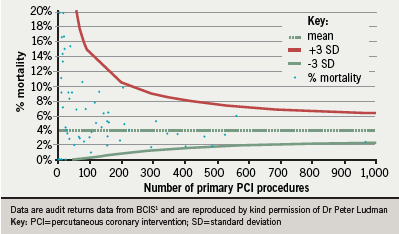
The mortality for primary PCI varies with the number of interventions performed. Figure 5 illustrates the mortality versus volume funnel, showing that while there were no worrying ‘outliers’, and that there is wide variation in reported mortality between centres, there appears to be a trend of lower complications at higher volumes.1 This has led to calls for PCI to be carried out in higher volume specialist centres.

Figure 5. Mortality versus volume funnel for primary PCIs in the UK in 2008

Primary PCI as routine treatment for STEMI

With the introduction of specialist centres has come national policy to promote primary PCI rather than thrombolysis as a treatment of choice for STEMI.3 2008 BCIS data show there were either daytime-only or round-the-clock primary PCI in 50 NHS centres and round-the-clock in 28 NHS centres.1 For patients admitted directly to PCI units, the mean door-to-balloon (DTB) time was 53.8 minutes, with 81.3% of all patients having a DTB time below 90 minutes. For this same group of patients, the mean call-to-balloon time (CTB) was 116.6 minutes, with 78.8% of all patients having a CTB time below 150 minutes.1

These figures may be compared with international figures.4 Data from 5,170 patients with STEMI enrolled in GRACE from 2003 to 2007 were examined. The median elapsed time from first hospital presentation to primary PCI was 86 minutes (interquartile range 53-135 minutes), with no significant changes in delay times to treatment over the years under study. The strongest predictors of prolonged delay time were geographic location and patient transfer.

Crossroads decision: PCI versus CABG in NSTE-ACS

For non-STEMI patients, cardiologists now have to decide on optimum treatment and which pathway to follow.

Guidance for NSTE-ACS was published in March 2010 in the UK by the National Institute for Health and Clinical Excellence (NICE).2 The guideline was developed by the National Clinical Guideline Centre of the Royal College of Physicians on behalf of NICE. Part of this guidance considered PCI versus CABG and concluded that current evidence supports the use of both revascularisation strategies – the selection of which procedure to use in an individual patient will depend on factors such as the extent and severity of coronary disease (which presently would require diagnostic coronary angiography), left ventricular function, estimated risk, co-morbidity and patient choice. Multi-disciplinary meetings may be used to help determine this. Comparative cost-effectiveness of the two procedures is uncertain given the lack of outcome data: it will need to take into consideration any survival advantage and the need for repeat procedures (including drug intervention to prevent re-stenosis).

This guidance was based on the results from four randomised trials in which patients with unstable angina or NSTEMI were randomised to PCI or CABG: ERACI-II,5 AWESOME,6 SoS7 and ARTS8.

In ERACI-II, 450 patients with NSTE-ACS were randomised: at 30 days, CABG patients had higher rates of death, acute myocardial infarction and major adverse cardiac and cerebrovascular events.5 The difference in mortality rates persisted to 33 months but was non-significant at five years. Those who underwent PCI initially had a higher rate of further revascularisation procedures during follow-up. In the AWESOME trial,6 there was no difference in survival between the PCI and CABG groups but more from the PCI group required further revascularisation procedures. A subgroup analysis of SoS,7 and similarly of ARTS,8 showed a non-significant difference in death rates (lower with CABG) after one year, and those in the PCI group had a higher need for repeat revascularisation. All these trials involved only placement of bare-metal stents, which are known to have a higher risk of restenosis than drug-eluting stents. The most significant difference observed in these trials between the two treatment approaches – the difference in need for repeat revascularisation – may therefore over-estimate the advantage of CABG given the increased use of drug-eluting stents.

Caveats to the guidance included the fact that many of the trial data are derived from patients with stable angina; the elderly and those at highest risk may be excluded from trials; and, as surgical techniques and adjunctive therapy have advanced, so the populations of patients considered suitable for either PCI or CABG have changed.

There are still treatment dilemmas. CABG is the obvious choice for a patient with diffuse triple vessel disease or left main stem disease, for example, as shown in the SYNTAX trial.9 In this trial, 1,800 patients with three-vessel or left main coronary disease were randomly assigned to undergo CABG or PCI. Rates of death and myocardial infarction at one year were similar between the two treatment groups; the rate of stroke was increased in the CABG group and the rate of repeat revascularisation was increased in the PCI group. Patients with low or intermediate SYNTAX scores had similar rates of major adverse cardiac or cerebrovascular events; among patients with high SYNTAX scores, the event rate was significantly increased in the PCI group. It is challenging to work out the patient group equally suitable for treatment with either PCI or CABG. NICE recommends that research be conducted into the efficacy and cost-effectiveness of CABG versus PCI in the management of patients with NSTE-ACS.

Early invasive versus conservative management strategies

In order to be considered for PCI or CABG, patients with NSTE-ACS need to be referred for diagnostic angiography. Patients who do not stabilise on optimal medical management, including beta blockers, low molecular weight heparin, plus antiplatelet therapy (conventionally, aspirin and clopidogrel) clearly warrant referral. Many patients, however, settle on medical therapy and historically have been successfully discharged home without any PCI – the “conservative” approach to treatment. Yet, there is evidence that even those who do initially become symptom-free on medical therapy might benefit from revascularisation – the “invasive” approach.

The NICE 2010 guideline considered five trials from the coronary stent era that compared early invasive with conservative strategies for management of NSTE-ACS (FRISC II, TACTICS-TIMI 18, VINO, RITA-3 and ICTUS).10-14 An invasive strategy was found to significantly decrease the composite of death and myocardial infarction at 6-12 months’ follow-up and to reduce the long-term rate of re-hospitalisation. Procedure-related myocardial infarction was significantly increased in the invasive arm. There was no difference in mortality according to whether angiography was performed less than 24 hours or more than 48 hours from randomisation.

Data from FRISC II10 and RITA-313 suggest that the benefit of an invasive strategy is mostly in higher-risk people. ICTUS14 suggested that an early invasive strategy did not confer benefit but in this trial the conservative arm had a high rate of early angiography and revascularisation. Appropriate use of GP IIb/IIIa inhibitors reduced in-hospital mortality when added to an invasive strategy (TACTICS-TIMI 18 and ICTUS trial data).11,14 People randomised to an early invasive strategy had better quality of life scores at six and 12 month follow-up (FRISC II and RITA-3).10,13

NICE recommendations made are: 2

  • patients with a predicted six-month mortality of 3% or less should be managed conservatively, without early coronary angiography, but ischaemia testing should be considered before discharge
  • patients who are unstable and those at high ischaemic risk should have an angiogram as
    soon as possible after admission
  • those who have an intermediate or higher
    risk of cardiac events (predicted six-month mortality > 3.0%) should be offered angiography/PCI within 96 hours in the
    absence of contra-indications

References

1. BCIS audit returns for the year 2008, presented by Peter F Ludman, BCIS National Audit Lead. Available online as: BCIS%20Audit%202008%20for%20web%2016-10-09%20version%201.pdf

2. NICE. Unstable angina and NSTEMI: the early management of unstable angina and NSTEMI. Clinical guideline CG94. London: NICE, 2010.

3. McLenachan JM, Marley C, Machin S. Heart improvement. A guide to improving primary angioplasty. NHS improvement 2009. www.improvement.nhs/uk/heart/reperfusion

4. Spencer FA, Montalescot G, Fox KAA et al; GRACE Investigators. Delay to reperfusion in patients with acute myocardial infarction presenting to acute care hospitals: an international perspective. Eur Heart J 2010;31:1328–36.

5. Rodriguez AE. Five-year follow-up of the Argentine randomized trial of coronary angioplasty with stenting versus coronary artery bypass surgery in patients with multiple vessel disease (ERACI II). J Am Coll Cardiol 2005;46:582–8.

6. Morrison DA, Sethi G, Sacks J et al. Percutaneous coronary intervention versus coronary artery bypass graft surgery for patients with medically refractory myocardial ischemia and risk factors for adverse outcomes with bypass: a multicenter randomized trial. J Am Coll Cardiol 2001;38:143–9.

7. Zhang Z, Spertus JA, Mahoney EM et al. The impact of acute coronary syndrome on clinical, economic and cardiac-specific health status after coronary artery bypass surgery versus stent-assisted percutaneous coronary intervention: 1-year results from the Stent or Surgery (SoS) trial. Am Heart J 2005;150:175–81.

8. De Feyter PJ, Serruys PW, Unger F et al. Bypass surgery versus stenting for the treatment of multivessel disease in patients with unstable angina compared with stable angina. Circulation 2002;105:2367–72.

9. Serruys PW, Morice M-C, Kappetein P et al. Percutaneous coronary intervention versus coronary-artery bypass grafting for severe coronary artery disease. N Engl J Med 2009;360:961–72.

10. Anon. Invasive compared with non-invasive treatment in unstable coronary artery disease: FRISC II prospective randomized multicentre study. Lancet 1999;354:708–15.

11. Cannon CP, Weintraub WS, Demopoulos LA et al. Comparison of early invasive and conservative strategies in patients with unstable coronary syndromes treated with the GP IIb/IIIa inhibitor tirofiban. N Engl J Med 2001;344:1879–97.

12. Spacek R, Widimsky P, Straka Z et al. Value of first-day angiography/angioplasty in evolving non-ST segment elevation MI; an open multicentre randomized trial. The VINO study. Eur Heart J 2002;23:130–8.

13. Fox KA, Poole-Wilson PA, Henderson RA et al. Interventional versus conservative treatment for patients with unstable angina or NSTEMI; the British Heart Foundation RITA 3 randomised trial. Lancet 2002;360:743–51.

14. De Winter R, Windhausen F, Cornel JH et al. Early invasive versus selectively invasive management for acute coronary syndromes. N Engl J Med 2005;353:1095–104.

Disclaimer: UK prescribing information current at the date of publication of this supplement can be found by downloading the PDF. Medinews Cardiology Limited advises healthcare professionals to consult up-to-date Prescribing Information and the full Summary of Product Characteristics available from the manufacturers before prescribing any product. Medinews Cardiology Limited cannot accept responsibility for any errors in prescribing which may occur.

Optimising medical treatment of ACS

Br J Cardiol 2010;17:s9-s14 Leave a comment
Click any image to enlarge
Authors:
Sponsorship Statement: The Alliance of DAIICHI SANKYO and Eli Lilly & Company Ltd commissioned this supplement. The Alliance funded its development, production and distribution. The British Journal of Cardiology worked with the Alliance and expert cardiologists (Dr Peter Ludman, Birmingham; Professor Kausik Ray, London; and Dr Clive Weston, Swansea) in developing the supplement and in its review. The Alliance also reviewed the content of the supplement for accuracy and compliance with the ABPI Code of Practice. Conflict of interest: PL has received honoraria in the past year from Eli Lilly and Cordis Johnson & Johnson. KKR has received honororia from AstraZeneca, Bristol-Myers Squibb, Pfizer, Novartis, Eli Lilly, DAIICHI SANKYO, sanofi-aventis, Merck, Schering Plough, Solvay and Roche. CW has received honoraria in the past year from the Alliance of DAIICHI SANKYO and Eli Lilly, and from MSD.

The first widely used antiplatelet agent, aspirin, continues to be standard therapy in ACS patients. The meta-analysis of the Antithrombotic Trialists’ Collaboration showed a 40% reduction in the rate of vascular events with aspirin.1

Introduction

The discovery of the thienopyridines, or ADP receptor antagonists, led to the development of more effective oral antiplatelet agents. Trials assessed dual antiplatelet therapy in high-risk patients versus aspirin alone and the significant benefits observed have resulted in dual antiplatelet therapy becoming a mainstay of treatment. As expected with more potent dual therapy, there is always a fine balance between prevention of thrombosis and bleeding risk.

There are still many challenges to overcome. Many patients, such as those with diabetes or with a previous stent thrombosis, are at high risk for further infarction, indicating the need for improvements in existing treatments. Considerable interest has also emerged regarding resistance to existing antiplatelet treatments and recent trials have shed much light on this, particularly the extent to which the variability of the effectiveness of antiplatelet agents is genetically determined. It has also been seen that some high-risk groups may not respond optimally to existing therapies.

Potential new therapeutic options are addressed in this section, including the recent introduction of prasugrel, a thienopyridine with different characteristics to clopidogrel.

Drug treatment of ACS – updated recommendations

Many international guidelines for ACS predate advances in antiplatelet treatment. The European Society of Cardiology (ESC) together with the European Association of Cardio-Thoracic Surgery (EACTS) has recently published new guidance on myocardial revascularisation.2 In the UK, NICE3 has recently updated its guidance on the early management of unstable angina and NSTEMI, which replaced previous guidance including the technology appraisal for clopidogrel. The thienopyridine prasugrel was also the subject of a NICE technology appraisal4 and was not considered further for the 2010 NICE guidance on unstable angina/NSTEMI.

Recommendations made for clopidogrel covered dosage and timing of administration. The two approaches to timing are to start treatment early (upstream) or to wait until coronary anatomy has been defined by catheterisation. The former approach has the potential to reduce early ischaemic events but also the potential for increased bleeding in patients who go on to early CABG. Also considered were the benefits of different loading doses of clopidogrel, 300 mg and 600 mg (NICE notes the higher dose is not currently licensed in the UK),3 and the benefits of clopidogrel with and without GP IIb/IIIa inhibitors on a background of aspirin therapy.

The NICE guideline recommends that once the risk of adverse cardiovascular events has been assessed, a loading dose of clopidogrel
300 mg plus aspirin should be offered to patients with a predicted six-month mortality risk >1.5% and no contra-indications.3

For particular groups of patients, NICE recommends the use of prasugrel with aspirin for patients who have diabetes or who have had a stent thrombosis on clopidogrel treatment (in addition to STEMI patients undergoing primary PCI).4

The ESC/EACTS guidelines2 recommend that (excluding patients with higher bleeding risk), prasugrel offers significant benefit over clopidogrel; that it confers a significant advantage in diabetic patients presenting with ACS; and that it should be used in patients who present with stent thrombosis while taking clopidogrel.2

In patients going on to CABG, discontinuation of clopidogrel may be considered five days before surgery if the risk of adverse events is considered low. For patients at intermediate or higher risk, it will be necessary to balance the individual risks of ischaemia and bleeding.

Length of antiplatelet therapy

NICE recommends that clopidogrel plus aspirin be continued for 12 months after the most recent episode of NSTE-ACS.3 Clinical review is advised before discontinuation of treatment: there are concerns that management facilitated by automated software programmes carry the danger of discontinuation without review. Some patients, such as those who have had a drug-eluting stent as part of complex PCI or those who have had late stent thrombosis, may be advised to remain indefinitely on dual antiplatelet treatment.

The ESC/EACTS guidelines concur that dual antiplatelet therapy should be given to all patients after ACS for one year, irrespective of revascularisation strategy. Certain patient populations, such as those at high risk of thromboembolic events, may benefit from more prolonged dual antiplatelet therapy.2

Premature discontinuation of dual antiplatelet therapy greatly increases the risk of stent thrombosis, MI and death:5 this American Science Advisory stresses the importance of 12 months of dual antiplatelet therapy after placement of a drug-eluting stent.

Concomitant therapy

Concomitant therapies, such as glycoprotein (GP) IIb/IIIa inhibitors, can be given alongside single or dual antiplatelet therapy. Some give a drug from this class routinely when the ACS patient arrives in hospital on the grounds that a treatment benefit exists whether or not the patient goes on to PCI. Other doctors discount clinical benefit upstream of PCI and wait for angiography results before considering their use.

The Boersma (2002) meta-analysis of six trials (PRISM, PRISM-PLUS, PARAGON-A, PARAGON-B, PURSUIT and GUSTO-IV ACS) compared GP IIb/IIIa inhibitors with placebo or control in NSTE-ACS patients not routinely scheduled for early revascularisation.6 The active treatment group had a significantly decreased chance of death or myocardial infarction (MI) at 30 days but also a significantly increased chance of major bleeding at 30 days. Another meta-analysis of the same six trials7 suggested that the benefit depended on the revascularisation strategy. The greatest benefit among patients not routinely scheduled for early revascularisation was seen in patients who underwent PCI during GPIIb/IIIa inhibitor infusion; the benefit was less marked in those who underwent PCI after drug discontinuation.

An analysis of the ACUITY TIMING and EARLY ACS trials published in the NICE 2010 guideline3 states that, compared with deferred use, upstream use significantly decreases the risk of MI and unplanned revascularisation at 30 days but at the expense of increased TIMI major and minor bleeding. In the ISAR-COOL trial,8 prolonged anti-thrombotic treatment (3–5 days) was compared with early intervention (<6 hours) in NSTE-ACS patients undergoing cardiac catheterisation. Those randomised to prolonged anti-thrombotic treatment had a significantly increased risk of death or non-fatal MI at 30 days.

Use of the GPIIb/IIIa inhibitors has decreased in the UK as clopidogrel has become more widely used.3 NICE felt that the evidence is less convincing for routine use of the former class of drugs in the medical management of patients with NSTE-ACS, especially with the increased use of early angiography and revascularisation. There maybe a place for IV eptifibatide or tirofiban as part of early management of patients at intermediate or higher risk of adverse cardiovascular events who are scheduled for angiography within 96 hours of hospital admission (this is a recommendation for off-label use).

Triple therapy with clopidogrel, GP IIb/IIIa inhibitors and aspirin is another area of interest although not licensed in the UK.

Maximising the consistency of antiplatelet response

Inter-individual variability of platelet inhibition with clopidogrel leads to a potential risk for recurrent atherothrombotic events.9 Other agents, such as the thienopyridine, prasugrel, appear to give a more consistent antiplatelet response.

In a review, Campo10 states that about 20% of patients who receive clopidogrel are either non-responders or poor responders. These patients have an increased risk of death, reinfarction and stent thrombosis.10 Poor/non-responsiveness is poorly defined and the literature reports variation between 5 and 56%.11 The mechanisms leading to poor responsiveness may include genetic factors (see below), accelerated platelet turnover, high baseline platelet reactivity, under-dosing and poor compliance. Switching to a different thienopyridine, re-evaluation of existing therapies and improved patient education are all potentially useful strategies in maximising the antiplatelet response.

Pharmacokinetics and response variability in antiplatelet agents

A two-way cross-over study12 found that prasugrel 60 mg results in more rapid, potent and consistent inhibition of platelet function than clopidogrel 300 mg in healthy individuals (see figure 1). In all, 68 healthy volunteers received one of the two thienopyridines orally for the initial dosing period and then crossed over to the other agent after a two-week washout period. Prasugrel 60 mg was associated with significant inhibition of platelet aggregation (IPA) in response to ADP as early as 15 minutes after treatment compared to baseline (p=0.0014); the level of IPA was significantly higher with prasugrel throughout the 24 hours after drug administration; the peak IPA was nearly twice as high with prasugrel; and there was a more consistent response between subjects in the magnitude of IPA received. The authors conclude that pharmacokinetic differences may account for the different effects of the two drugs, and that the rapid and consistent response may be of value both during urgent intervention and during long-term maintenance therapy.

Greater exposure to prasugrel’s active metabolite may result in a more favourable risk:benefit ratio. A study by Payne,9 in healthy volunteers, compared the level of platelet inhibition and the degree of response variability achieved by prasugrel (60 mg loading dose and 10 mg maintenance dose) against those achieved by clopidogrel (300 mg and 75 mg). At 30 minutes after the loading dose, prasugrel achieved greater mean inhibition of platelet aggregation (IPA) to 20 mM ADP than clopidogrel. During the maintenance phase, the mean IPA to 20 mM ADP exceeded 75% with prasugrel and was higher than that achieved with clopidogrel. The IPA was also less variable with prasugrel.

In this study, 39% of subjects could be classified as poor responders (IPA <20% at four hours or <25% at 24 hours) to clopidogrel 300 mg but all subjects responded to the loading dose of prasugrel. During the maintenance phase, all subjects taking prasugrel could be classified as responders whereas 9% were poor responders to clopidogrel. The active metabolites of prasugrel and clopidogrel are equally potent but, in vivo, a proportion of clopidogrel is hydrolysed in the intestine and/or liver to an inactive metabolite and then converted to its active metabolite by CYP enzymes. These steps limit both the rate and extent
of active metabolite formation in comparison to prasugrel.

The JUMBO-TIMI 26 trial13 was a dose-ranging study designed to assess the safety of prasugrel and clopidogrel when given at the time of PCI, in particular to establish whether the more powerful and consistent effects of prasugrel resulted in an unacceptable risk of bleeding. The study randomised 905 patients who were candidates for elective or urgent PCI. Subjects were randomised to three different loading and maintenance doses of prasugrel or to clopidogrel, with randomisation stratified by the investigators’ decision to use a GP IIb/IIIa inhibitor during PCI. All subjects received aspirin and UFH, and were monitored for 30 days. The primary end point was TIMI major plus minor non-CABG-related bleeding in the treatment groups. Bleeding rates were low: 0.7% experienced major bleeding, 1.1% minor bleeding and 2.4% minimal bleeding, with two thirds of episodes related to instrumentation. There was no significant difference between patients treated with prasugrel and those treated with clopidogrel (1.7% versus 1.2%, hazard ratio 1.42). In prasugrel-treated patients, there were numerically lower incidences of the primary efficacy composite end point (30-day major adverse cardiac events) and of the secondary end points MI, recurrent ischaemia and clinical target vessel thrombosis. The results of this trial were the foundation of the large phase III trial of prasugrel, TRITON-TIMI 38.14

Essentials of TRITON-TIMI 38

The Trial to assess Improvement in Therapeutic Outcomes by Optimising Platelet Inhibition with Prasugrel vs. Thrombolysis In Myocardial Infarction (TRITON-TIMI 38)14 was a landmark phase III trial assessing prasugrel and clopidogrel. It involved patients with ACS and scheduled PCI, and suggested that faster, greater and more consistent platelet inhibition is associated with reduced rates of ischaemic events.

The trial enrolled 13,608 patients, three quarters with moderate-to-high risk unstable angina or NSTEMI and one quarter with STEMI. Patients received a loading dose of 60 mg prasugrel or 300 mg clopidogrel, and maintenance doses of prasugrel 10 mg or clopidogrel 75 mg daily. All patients also received aspirin, and the median duration of therapy was 14.5 months. Ninety-four percent of patients received at least one intracoronary stent, and 14% of patients had multi-vessel PCI. The primary efficacy end point was a composite of rate of death from cardiovascular causes, non-fatal MI or non-fatal stroke during the follow-up period. Key safety end points were TIMI major bleeding or TIMI life-threatening bleeding not related to CABG, and TIMI major or minor bleeding.

Prasugrel demonstrated a 2.2% absolute reduction and a significant 19% relative risk reduction in the primary efficacy end point compared to clopidogrel (12.1% of clopidogrel patients vs. 9.9% of patients receiving prasugrel) (see figure 2). Rates of ischaemic events were also reduced in the prasugrel group, with a 2.3% absolute reduction and a 24% relative reduction in MI. A significant reduction in the primary end point was seen by the first pre-specified time point, three days (5.6% clopidogrel group vs. 4.7% prasugrel group, p=0.01), which persisted throughout the follow-up period. This difference was driven largely by the greater reduction in MI in the prasugrel group (9.7% in the clopidogrel group vs. 7.4% in the prasugrel group, HR 0.76, p<0.001) throughout the study. Subgroup analysis showed the need for urgent target vessel revascularisation was also reduced by 34% in the prasugrel group (3.7% vs. 2.5%, p<0.001), while stent thrombosis was reduced by 51% (2.4% vs. 1.1%, p<0.001).

All patients received aspirin. Bleeding rates were higher in patients treated with prasugrel than in patients treated with clopidogrel. Major bleeding occurred in 2.4% and 1.8%, respectively (HR 1.32, p=0.03); the rate of life-threatening bleeding was also greater with prasugrel (1.4% vs. 0.9%, p=0.01).

A pre-specified analysis of the trial which examined net clinical benefit, i.e. rates of death from any cause, non-fatal MI, non-fatal stroke and TIMI major haemorrhage showed that the net benefit significantly favoured prasugrel. However, three patient groups were identified who did not have a net clinical benefit with prasugrel treatment. Patients with a previous stroke or transient ischaemic attack had net harm from prasugrel; patients aged 75 years and above had no net benefit; and patients weighing less than 60kg had no net benefit. Patients with at least one of these three risk factors had higher rates of bleeding than those without them. The risks of intensive bleeding appear to be enhanced in these patients, and additional caution is required in their management. The summary of product characteristics should be consulted for further information.

Antiplatelet treatment and stent thrombosis

Findings from the sub-analysis of TRITON-TIMI 38 show that of 13,608 patients randomised into TRITON-TIMI 38, a total of 12,844 received a stent: 6,461 received a bare-metal stent and 5,743 had a drug-eluting stent.15 Overall, a 19% reduction in the primary end point was recorded with prasugrel compared with clopidogrel among patients who had a stent (9.7% vs. 11.9%, p=0.0001). The net clinical benefit significantly favoured prasugrel treatment (12.0% vs. 13.7%, p=0.002). There was a 51% reduction in stent thrombosis with prasugrel between day 0 and day 3; definite or probable stent thrombosis (ARC designations) were reduced by 59% within 30 days of stent placement. The analysis confirmed the adverse relationship between stent thrombosis and clinical outcomes, with 22% of such patients dying and 89% experiencing a non-fatal MI or dying. Figure 3 shows the relative risk reduction for early and late stent thrombosis in the TRITON-TIMI 38 study.

ACS in the patient with diabetes

Cardiovascular mortality risk increases continuously with blood glucose levels: elevated blood glucose, diabetes or both contribute to three million cardiovascular deaths globally a year.16 In the United States, nearly two thirds of individuals with diabetes die from cardiovascular disease.17 Diabetes confers an adverse prognosis in ACS.

The recently reported Euro Heart Survey18 on diabetes and the heart showed that abnormal glucose regulation was more common than normal glucose regulation in patients with coronary artery disease (CAD). In the study of 4,196 patients, 31% had diabetes. Looking at the subgroup of those with acute CAD without known diabetes, 36% had impaired glucose regulation and 22% newly detected diabetes. In the stable group, these proportions were 37% and 14%, respectively.

In the Donahoe study,17 patients with ACS were pooled from 11 TIMI studies from 1997 to 2006, giving a cohort of 62,036 patients. Of these patients, a total of 46,577 had STEMI, 15,459 NSTEMI and 10,613 (17.1%) had diabetes. Coronary angiography data were available for 25.1% of patients. Among this subset, patients with diabetes were more likely to have multi-vessel coronary disease (62.0% vs. 48.1%, p<0.001). At 30 days, mortality was significantly higher among patients with diabetes compared to those without diabetes following either unstable angina/NSTEMI (2.1% vs. 1.1%; p<0.001) or STEMI (8.5% vs. 5.4%; p<0.001). At one year, diabetes remained a significant independent factor associated with all-cause mortality for patients presenting with unstable angina/NSTEMI (HR 1.65) and for patients presenting with STEMI (HR 1.22). By one year, the mortality of patients with diabetes presenting with unstable angina/NSTEMI approached that of patients without diabetes but with STEMI.

Platelet aggregation and activation are increased in subjects with diabetes compared to those without:19 in this study, there were also higher numbers of clopidogrel non-responders among patients with diabetes. This suggests that decreased sensitivity to antiplatelet drugs may contribute to the increased antithrombotic risk observed in diabetes. A further study by Angiolillo20 confirmed that patients with type 2 diabetes have higher platelet reactivity compared to those without, and found that high platelet reactivity was associated with atherothrombotic complications even in patients taking dual antiplatelet therapy. It was the strongest predictor of major adverse cardiac events over two-year follow-up, with a three-fold increase in event rates. The authors suggest that there is a need for tailored anti-thrombotic regimens in these high-risk patients. This is considered in more detail later.

Antiplatelet treatment for diabetes patients

A pre-specified subgroup analysis of TRITON-TIMI 38 with patients stratified by diabetes status showed that subjects with diabetes tended to have a greater net treatment benefit, with prasugrel compared to clopidogrel (figure 4).21 There was a greater reduction in ischaemic events without an observed increased in TIMI major bleeding. Of the 13,608 patients randomised into TRITON-TIMI 38, a total of 3,146 (23%) had diabetes and 776 (6%) were on insulin treatment. There were some differences between patients with diabetes and those without: those with diabetes were more likely to have unstable angina or NSTEMI, to be older, to be female, and to have a higher median body mass index (BMI). They were also more likely to have had a previous MI or CABG. Patients with diabetes were also more likely to have multivessel intervention and at least one drug-eluting stent.

Rates of thrombotic events such as MI, cerebrovascular accident and stent thrombosis were higher among patients with diabetes than among those without diabetes. After controlling for baseline demographic and treatment differences, diabetes was an independent predictor of ischaemic outcomes, including the primary end point of the trial (cardiovascular death/non-fatal MI/non-fatal stroke), MI, stent thrombosis and net clinical benefit. Prasugrel was more effective than clopidogrel in reducing events among patients with diabetes. A 14% reduction in the primary efficacy end point was seen with prasugrel treatment among patients without diabetes (p=0.02), while among those with diabetes, the primary end point was reduced by 30% (p<0.001). The NNT to prevent one primary end point event among subjects with diabetes was 21.

The reduction in the primary end point was largely driven by a lower incidence of MI (an 18% reduction in subjects without diabetes compared to a 40% reduction in subjects with diabetes). Interestingly, in this study subjects with diabetes had similar non-CABG-related TIMI major bleeding rates regardless of treatment with prasugrel or clopidogrel (2.5% and 2.6%, respectively, at 15 months). The greater effect of prasugrel compared to clopidogrel in this analysis supports the theory that greater platelet inhibition results in better outcomes among patients with diabetes. Prasugrel was more effective than clopidogrel both in patients who were taking and those who were not taking a GP IIb/IIIa inhibitor.

Results of this trial led to the licensing of prasugrel in the UK and and the NICE technology appraisal of prasugrel,4 which said that that it was appropriate to consider prasugrel for treatment of people with diabetes having PCI, since diabetes mellitus represents an important and definable risk factor for more severe cardiovascular disease and greater risk of cardiovascular events during and after PCI. It concluded that use of prasugrel for patients with diabetes undergoing PCI could be considered a cost-effective use of NHS resources and should be recommended as an option.

More recent findings on platelet reactivity

The platelet substudy of TRITON-TIMI 38 shows that prasugrel results in greater inhibition of ADP-mediated platelet function than clopidogrel in patients with ACS.22 In this substudy, 125 patients were prospectively enrolled to evaluate ADP-attenuated phosphorylation of platelet vasodilator-stimulated phosphoprotein (VASP) and 31 patients to evaluate ADP-stimulated platelet aggregation. VASP platelet reactivity index was lower in patients treated with prasugrel than in patients treated with clopidogrel both one to two hours after PCI and at 30 days. Maximal platelet aggregation was lower in patients treated with prasugrel than in patients treated with clopidogrel both hours after PCI and at 30 days (p<0.001). Similarly, thienopyridine hyporesponsiveness was more frequent in patients treated with clopidogrel than patients treated with prasugrel at the shorter and longer measurement times. These findings would tie in with the observations of fewer ischaemic events and more bleeding early and late following PCI in patients treated with prasugrel.

Fast inhibition of platelet aggregation is important within the setting of ACS and PCI: interestingly, it appears that slow response to clopidogrel within the first hour is a reliable marker of low response at 24 hours and high post-treatment platelet reactivity.23 This study was a post-hoc analysis of the ALBION24 study: kinetic profiles of maximal platelet aggregation (MPA) and change in MPA were studied at eight time points after clopidogrel loading in patients with NSTE-ACS. Inflammatory markers (PAC-1 and P-selectin) and VASP were also measured.

Fifty-five percent of patients were slow responders. Non-current smoking and body mass index 25kg/m2 or above were associated with lower and slower responses. High post-treatment platelet reactivity was more frequent in slow responders, and there was a dose-response relationship of clopidogrel on change in MPA. Slow responders also had a slower and lower decrease in inflammatory markers and a higher VASP index at six hours.

A maintenance dose (MD) of prasugrel 10 mg has recently been shown, in ACS patients, to result in significantly greater platelet inhibition than clopidogrel given at a higher than usual maintenance dose and after a 900 mg loading dose (LD)25 (300 mg is the licensed LD in the UK for ACS-PCI). Patients with NSTE-ACS (n=56), treated with aspirin and clopidogrel 900 mg LD, were randomised to receive a maintenance dose of either prasugrel 10 mg or clopidogrel 150 mg. After 14 days, subjects were switched to the comparator drug for a further 14 days. Prasugrel reduced maximum platelet aggregation (MPA) from the LD level (41.2% to 29.1%, p=0.003). Poor response was 0-6% for the prasugrel MD and 4-34% for the clopidogrel MD, indicating a more complete and consistent response with prasugrel.

Platelet function tests can now help the physician to identify within minutes those who are likely to be clopidogrel non-responders.

Pharmacogenetics of clopidogrel

There is some evidence that the antiplatelet effects of clopidogrel are determined by genetic factors, and that this may have a bearing on cardiovascular events.26 Clopidogrel is transformed into its active metabolite by cytochrome P-450 (CYP) enzymes; the genes encoding CYP enzymes are polymorphic.

Mega and colleagues26 compared carriers and non-carriers of a reduced-function CYP2C19 allele among 16 healthy subjects and among 1,477 subjects with acute coronary syndromes within TRITON-TIMI 38. Among the healthy subjects, carriers of at least one reduced-function allele had reduced plasma exposure to the active metabolite of clopidogrel and an absolute reduction in maximal platelet aggregation in response to clopidogrel (both p<0.001). Among TRITON-TIMI 38 subjects, carriers of this allele had a relative increase of 53% in the composite primary efficacy outcome (12.1% vs. 8.0%, p=0.01) and treble the risk of stent thrombosis (2.6% vs. 0.8%, p=0.02).

Simon and colleagues enrolled 2,208 patients presenting with an acute myocardial infarction to a nationwide French registry;27 these patients received clopidogrel and were followed up for one year. The relationship of genetic polymorphisms affecting clopidogrel absorption (ABCB1), metabolic activation (CYP3A5 and CYP2C19) and biological activity (P2RY12 and ITGB3) to risk of all-cause death, non-fatal stroke and myocardial infarction was examined.

The single nucleotide polymorphisms (SNPs) CYP3A5, P2RY12 and ITGB3 were not associated with risk of adverse outcome. However, patients with two variant alleles of ABCB1 had a higher rate of cardiovascular events at one year than those with the wild-type genotype (15.5% vs. 10.7%). Patients carrying any two CYP2C19 loss-of-function alleles had a higher event rate compared to those with none (21.1% versus 13.3%). The rate of cardiovascular events was 3.58 times higher among the 1,535 patients with two loss-of-function alleles who underwent PCI during hospitalisation.

Carriers of the loss-of-function mutant allele of CYP2C19 also have higher risk of stent thrombosis compared with wild-type allele carriers after PCI. Sibbing and colleagues28 followed for 30 days 2,485 consecutive patients undergoing coronary stent placement after pre-treatment with clopidogrel 600mg (an off-licence dose). The incidence of stent thrombosis was 3.8 times higher in loss-of-function allele carriers (1.5% versus 0.4%, p=0.007). The risk was highest (2.1%) among patients homozygous for the loss-of-function allele.

High on-treatment platelet reactivity (HTPR) after a clopidogrel loading dose predicts the risk of thrombotic events after PCI.29 In a prospective study of patients undergoing PCI, body mass index (p=0.01), diabetes (p=0.03) and acute coronary syndrome (p=0.02) were clinical predictors of HTPR, and the mutant *2 allele CYP2C19 polymorphism was also significantly associated. In most cases, dose adjustment with platelet reactivity monitoring improves the HTPR: BMI was the only predictor of failed dose adjustment in this study.

Genetic testing to identify carriers of this allele can now be done at the bedside before the patient is taken to the catheter lab.

Conclusion

Looking ahead, while other products are under investigation and until such time as they are licensed, reviewed by NICE and widely adopted, physicians should optimise therapy with the currently available options.

It is clear that there is no single treatment for all patients in ACS. Physicians must choose the right evidence-based treatment for patients on an individual basis. With the increasing evidence base in this area, we are now on the brink of entering a new era of personalised treatment for this common disease.

References

1. Antithrombotic Trialists’ Collaboration. Collaborative meta-analysis of randomized trials of antiplatelet therapy for prevention of death, myocardial infarction, and stroke in high-risk patients. BMJ 2002;324:71–86.

2. The Task Force on Myocardial Revascularization of the European Society of Cardiology (ESC) and the European Association of Cardio-Thoracic Surgery (EACTS). Guidelines on myocardial revascularization. Eur Heart J 2010. doi:10.1093/eurheartj/ehq277.

3. The National Institute for Health and Clinical Excellence (NICE). Unstable angina and NSTEMI: the early management of unstable angina and non-ST-segment-elevation myocardial infarction. Clinical guideline CG94. London: NICE, 2010.

4. NICE. Prasugrel for the treatment of acute coronary syndromes with percutaneous coronary intervention. NICE technology appraisal TA 182 issued October 2009. Available from www.nice.org.uk

5. Grines CL, Bonow RW, Casey DE et al. Prevention of premature discontinuation of dual antiplatelet therapy in patients with coronary artery stents. Circulation 2007;115:813–18.

6. Boersma E, Harrington RA, Moliterno DJ et al. Platelet glycoprotein IIb/IIIa inhibitors in acute coronary syndromes: a meta-analysis of all major randomized controlled trials. Lancet 2002;359:189–98.

7. Roffi M, Chew DP, Mukherjee D et al. Platelet glycoprotein IIb/IIIa inhibition in acute coronary syndromes. Gradient of benefit related to revascularization strategy. Eur Heart J 2002;23:1441–8.

8. Neumann KJ, Kastrati A, Pogatsa-Murray G et al. Evaluation of prolonged anti-thrombotic pre-treatment (“cooling off strategy”) before intervention in patients with unstable coronary syndromes: a randomized controlled trial. JAMA 2003;290:1593–9.

9. Payne CD, Li YG, Small DS et al. Increased active metabolite formation explains the greater platelet inhibition with prasugrel compared to high-dose clopidogrel. J Cardiovasc Pharmacol 2007;50:555–62.

10. Campo G, Fileti L, Valgimigli M et al. Poor response to clopidogrel: current and future options for its management. J Thromb Thrombol 2010; Feb 16. Epub ahead of print.

11. Serebruany VL et al. Variability in platelet responsiveness to clopidogrel among 544 individuals. J Am Coll Cardiol 2005;45:246–51.

12. Brandt JT, Payne CD, Wiviott SD et al. A comparison of prasugrel and clopidogrel loading doses on platelet function: magnitude of platelet inhibition is related to active metabolite formation. Am Heart J 2007;153:66.e9–66.e16.

13. Wiviott SD, Antman EM, Winters KJ et al. Randomised comparison of prasugrel (CS-747, LY640315), a novel thienopyridine P2Y12 antagonist, with clopidogrel in percutaneous coronary intervention. Circulation 2005;111:3366–73.

14. Wiviott SD, Braunwald E, McCabe CH et al for the TRITON-TIMI 38 Investigators. Prasugrel versus clopidogrel in patients with acute coronary syndromes. N Eng J Med 2007;357:2001–15.

15. Wiviott SD, Braunwald E, McCabe CH et al. Intensive oral antiplatelet therapy for reduction of ischaemic events including stent thrombosis in patients with acute coronary syndromes treated with percutaneous coronary intervention and stenting in the TRITON-TIMI 38 trial: a subanalysis of a randomized trial. Lancet 2008;371:1353–63.

16. Danaei G, Lawes CMM, Vander Hoorn S et al. Global and regional mortality from ischaemic heart disease and stroke attributable to higher-than-optimum blood glucose concentration: comparative risk assessment. Lancet 2006;368:1651–9.

17. Donahoe SM, Stewart GC, McCabe CH et al. Diabetes and mortality following acute coronary syndromes. JAMA 2007;298:765–75.

18. Bartnik M, Ryden L, Ferrari R et al. The prevalence of abnormal glucose regulation in patients with coronary artery disease across Europe. The Euro Heart Survey on diabetes and the heart. Eur Heart J 2004;25:1880–90.

19. Angiolillo DJ, Fernandez-Ortiz A, Bernardo E et al. Platelet function profiles in patients with type 2 diabetes mellitus and coronary artery disease on combined aspirin and clopidogrel treatment. Diabetes 2005;54:2430–5.

20. Angiolillo DJ, Bernardo E, Sabate M et al. Impact of platelet reactivity on cardiovascular outcomes in patients with type 2 diabetes mellitus and coronary artery disease. J Am Coll Cardiol 2007;50:1541–7.

21. Wiviott SD, Braunwald E, Angiolillo DJ et al. Greater clinical benefit of more intensive oral antiplatelet therapy with prasugrel in patients with diabetes mellitus in the Trial to Assess Improvement in Therapeutic Outcomes by Optimizing Platelet Inhibition with Prasugrel—Thrombolysis in Myocardial Infarction 38. Doi 10.1161/circulationaha.108.791061

22. Michelson AD, Frelinger AL, Braunwald E et al; TRITON-TIMI 38 Investigators. Pharmacodynamic assessment of platelet inhibition by prasugrel versus clopidogrel in the TRITON-TIMI 38 trial. Eur Heart J 2009;30:1753–63.

23. Bellemain-Appaix A, Montalescot G, Silvain J et al. Slow response to clopidogrel predicts low response. J Am Coll Cardiol 2010;55:815–22.

24. Montalescot G, Sideris G, Meuleman G. A randomised comparison of high clopidogrel loading doses in patients with non-ST elevation acute coronary syndromes. J Am Coll Cardiol 2006;48:931–8.

25. Montalescot G, Sideris G, Cohen R et al. Prasugrel compared with high-dose clopidogrel in acute coronary syndrome. The randomized, double-blind ACAPULCO study. Thromb Haemost 2010;103:213–23.

26. Mega L, Close SL, Wiviott SD et al. Cytochrome P-450 polymorphisms and response to clopidogrel. Thromb Haemost 2009;360:354–62.

27. Simon T, Verstuyft C, Mary-Krause M et al. Genetic determinants of response to clopidogrel and cardiovascular events. N Engl J Med 2009;360:363–75.

28. Sibbing D, Stegherr J, Latz W. Cytochrome P450 2C19 loss-of-function polymorphism and stent thrombosis following percutaneous coronary intervention. Eur Heart J 2009;30:916–22.

29. Bonello-Palot N, Amero S, Paganelli F et al. Relation of body mass index to high on-treatment platelet reactivity and of failed clopidogrel dose adjustment according to platelet reactivity monitoring in patients undergoing percutaneous coronary intervention. Am J Cardiol 2009;104:1511–15.


Disclaimer: UK prescribing information current at the date of publication of this supplement can be found by downloading the PDF. Medinews Cardiology Limited advises healthcare professionals to consult up-to-date Prescribing Information and the full Summary of Product Characteristics available from the manufacturers before prescribing any product. Medinews Cardiology Limited cannot accept responsibility for any errors in prescribing which may occur.

The British Cardiovascular Society: an overview

Br J Cardiol 2010;17:220-21 Leave a comment
Click any image to enlarge

Welcome to the first of a regular series of news and reviews from the British Cardiovascular Society (BCS). Many of you will already be BCS members and so the Society felt our readers would be interested in a regular update on BCS activities. In this first column, Dr Charles Knight, Honorary Secretary of the BCS, gives an overview of the Society and its role in advancing cardiovascular medicine in the UK.

Founded in 1922, the BCS has developed over the years into a complex organisation that plays a pivotal role in the delivery of cardiovascular health across the UK. There are currently over 2,100 members of the BCS and membership is growing steadily to include the overwhelming majority of UK cardiologists and many other professionals with an interest in cardiovascular medicine. Our members include non-clinical scientists, cardiac surgeons, nurses, technicians and primary care physicians. We have over 300 trainee members and currently offer great value joint membership for BCS with the British Junior Cardiologists’ Association.

BCS aims to support and represent all those working in the fields of cardiovascular care and research. To help achieve this aim, BCS is affiliated with 17 unique organisations that work in various specific areas of cardiovascular medicine, health and patient care. In addition to BCS members, there are now over 8,000 members of these affiliated groups who are all associate members of the BCS. Together with our affiliated groups, BCS shares a mission to improve care for patients with cardiovascular disease and to provide a powerful voice for UK cardiovascular health care professionals.

The BCS is organised into several divisions: Education and Research, Clinical Standards, Corporate and Financial Affairs, and Training.

The Executive and Board of the BCS is outlined in the box. BCS Council has wider representation with both directly elected and regional members and representatives of affiliated groups.

The BCS is a charitable organisation and the President, Vice-Presidents and Executive all serve in a voluntary capacity. The BCS is run for and with its members: our staff manage the day to day running of the organisation, but the strategic direction of the Society is set by the members who volunteer their time to take on posts in our Executive, Board and Committees and throughout our Annual Conference.

Links with other bodies

We continue to strengthen our links with the European Society of Cardiology (ESC) and with the American College of Cardiology (ACC). British cardiology is well represented within the Board of the ESC and key ESC committees. Senior members of the ESC participate in our Annual Conference, and many BCS members have contributed to ESC guidelines. Our links with the ACC are strong. We are now twinned with the California Chapter of the ACC and this provides access to very high quality courses and short-term attachments, ‘preceptorships’. The pilot phase of this programme was initiated in 2009 and we aim to develop and expand these educational opportunities. A BCS/ACC Fellowship has been appointed and is underway in advanced imaging with six months in the US at Cedars Sinai Hospital, Los Angeles, and six months in the UK (at the Royal Brompton Hospital, London, for the first fellowship).

The BCS has also been active in its collaborative work with the Royal College of Physicians, the Department of Health, the British Heart Foundation and with other medical societies.

Education and Research Division

BCS is uniquely positioned to deliver high quality education mapped to the cardiology curriculum. With the development of revalidation, it is also important that we support our members with an educational programme that not only fulfils the needs of revalidation but ensures we all maintain our knowledge, skills and professionalism throughout our careers in cardiovascular medicine. An education strategy tailored to these needs underpins the aspirations of the BCS to promoting excellence in cardiovascular care. The planning and delivery of the Annual Conference has now been integrated into a broader education strategy in conjunction with our affiliated groups designed primarily to facilitate delivery of high quality education for our trainees and all our members.

Organised by Iain Simpson and the Programme Committee, the Annual Conference in Manchester in June 2010 was highly successful with a record number of delegates. Content included ‘Educational Spotlight’ sessions, themed ‘Imaging Council’ sessions and a popular top 10 trials session. The British Heart Foundation helped facilitate a linked, basic science track in the conference through association with the British Atherosclerosis Society and the British Society for Cardiovascular Research.

This year saw the inclusion of a full national training day for SpRs which will be a regular event at the BCS Annual Conference and will be integrated with a second national training day in the autumn. These national training days will provide a rolling programme of educational activities linked to the areas of the curriculum where it is more suitable to provide quality education on a national basis and also to ensure aspects of professionalism, which may be difficult to provide on a local or regional basis, are adequately covered.

Manchester is our most popular venue and we have committed to go there for the next two years.

The Cardiology Review Course

The Cardiology Review Course is a partnership between the British Cardiovascular Society and the Mayo Clinic, (with the courses run in association with the Royal College of Physicians of London). The first course in 2009 involved 80 participants and this was substantially expanded in 2010 (more than 260 registered) with many participants coming from abroad. The Cardiology Review Course is recognised for the exceptional quality and very high calibre of the contributors and will continue to be a major part of our educational strategy.

Clinical Standards Division

A simulator to practice the technique of transoesophageal echocardiography created much interest at the annual conference

Revalidation

Led by Dr David Hackett, the outgoing Vice-President for Clinical Standards, BCS has been proactive in developing tools for revalidation, consistent with the requirements of the General Medical Council and the needs of the profession. The aim is to develop a flexible and ‘user friendly’ approach to revalidation that meets professional needs in terms of knowledge, skills and assessment and an approach that minimises duplication.

BCS Imaging Council

BCS has established an Imaging Council with representation from all the cardiac imaging sub-specialties. During 2009, Dr Simon Ray as Vice-President Elect has chaired the Imaging Council meetings. The purpose of the Imaging Council is to improve cardiac imaging services in the UK, to raise the profile of cardiac imaging and improve links with international organisations. In addition, it will develop imaging training and provide coordinated and consistent advice to the Specialist Advisory Committee in Cardiology (SAC) and other groups responsible for training

Fitness to Fly

BCS established a Working Group on Fitness for Air Travel with Cardiovascular Conditions chaired by Dr David Smith, which has recently produced an excellent and comprehensive report now available on the BCS website.

Access to Cardiac Care

BCS with the British Heart Foundation and the Cardiovascular Coalition commissioned a study to establish the current provision of cardiac procedures compared with estimated need and to predict estimated future needs up to 2020. The Report was published and presented to the Annual Conference in June 2009 and can be found on the BCS website. Detailed local authority data was subsequently published in July 2009. These data will help in the development of local and regional services. Data from the Access to Cardiac Care study has also provided guidance on the need for cardiac and cardiac surgical interventions by locality and region of the UK up to 2020. BCS is analysing the corresponding need for cardiac catheterisation laboratories, consultant cardiologists, and trainees required for these procedure-based disciplines.

Training Division

BCS is based at 9 Fitzroy Square, London W1T 5HW, a fine listed Adam town house, dating from 1790 in central London. The society can be contacted on enquiries@bcs.com. Its web address is: www.bcs.com
BCS is based at 9 Fitzroy Square, London W1T 5HW, a fine listed Adam town house, dating from 1790 in central London. The society can be contacted on [email protected]. Its web address is: www.bcs.com

The main activities of the division continue to overlap with those of the SAC, which was chaired by Professor Stuart Cobbe, (the outgoing Vice President for Training), until June 2010 and is now chaired by Dr Jim Hall. BCS has a major influence in determining SAC Policy. The SAC has roles (amongst others) in setting the cardiology curriculum, organising national ST3 recruitment and in advising Postgraduate Medical Education Training Board (PMETB) on the quality of Postgraduate Medical Education in Cardiology.

Cardiology Curriculum

The 2007 Cardiology Curriculum has been revised to bring it fully into line with PMETB requirements. The revised curriculum now includes reference to generic areas of good medical practice, communication, medical leadership and a greater emphasis on public health issues. The updated curriculum will be operational for trainees entering Specialty Registrar posts at ST3 level in August 2010.

Knowledge-Based Assessment

The first Knowledge-Based Assessment (KBA) in Cardiology was held during the BCS Annual Conference in Manchester for trainees in the third year of Specialty Training (ST5). This consists of a single Multiple Choice examination of 120 best-of-five questions to test knowledge of the Core Curriculum. The examination is computer-based, and includes interpretation of ECGs, echocardiograms and other imaging modalities. The KBA is part of a European project, which may ultimately lead to a Europe-wide knowledge assessment. Supported by the ESC, it is dependent on the efforts of an international question-setting group, chaired by Dr Nick Brooks. As a result of the initiatives developed by BCS, the KBA has the distinction of being the cheapest speciality exam in the UK!

As you can see the BCS is a busy and active organisation which we believe is making a real contribution to enhancing cardiovascular care and training. However, BCS is only as strong as its membership – so please get involved. If you’d like to know more, please e-mail the Honorary Secretary at [email protected].

BCS is based at 9 Fitzroy Square, London W1T 5HW, a fine listed Adam town house, dating from 1790 in central London. The society can be contacted on [email protected]. Its web address is: www.bcs.com

Board of the BCS

BCS Executive:

Professor Keith Fox
President

Dr Charles Knight
Honorary Secretary

Dr Iain Simpson
Vice-President Education and Research

Dr Simon Ray
Vice-President Clinical Standards

Professor Derek Yellon
Vice-President Corporate and Financial Affairs

Dr Jim Hall
Vice-President Training

Dr Mark De Belder
President of BCIS (British Cardiovascular Intervention Society)

Dr Edward Rowland
President of HRUK (Heart Rhythm UK)

Dr Nav Masani
President of BSE (British Society of Echocardiography)

Dr Bernard Prendergast
Honorary Secretary Elect

Dr Sarah Clarke
Vice-President Education and Research Elect

Non-Executive Trustees

Professor Dame Carol Black

Mr Graham Meek

Mr Nigel Turner

Mr John Carrier

Epilepsy and the heart

Br J Cardiol 2010;17:223–9 Leave a comment
Click any image to enlarge
Authors:

Cerebrogenic control of cardiac function is well recognised and acute neurological events, including epileptic seizures, may cause a disturbance of cardiac function even in the absence of significant cardiac structural or electrophysiological abnormalities. Sudden unexpected death in epilepsy (SUDEP) is a major cause of mortality in patients with epilepsy. Cardiac dysrhythmias are a potential cause of SUDEP.

Continue reading Epilepsy and the heart

Drugs for diabetes: part 1 metformin

Br J Cardiol 2010;17:231–4 Leave a comment
Click any image to enlarge
Authors:

Metformin is one of the oldest oral treatments to reduce hyperglycaemia in people with diabetes. Gastrointestinal side effects are common, and metformin should be used with caution in patients with renal impairment because of the slight risk of lactic acidosis. In the United Kingdom Prospective Diabetes Study (UKPDS) patients treated with metformin had a significant reduction in myocardial infarction and mortality that was not demonstrated in patients treated with sulphonylureas or insulin. The fact that metformin significantly reduces cardiovascular events plus reduces weight has meant that metformin is the drug of first choice in guidelines for the treatment of type 2 diabetes. There are no longer concerns about using metformin in patients with chronic heart failure, other than in patients with associated renal failure, or during episodes of acute left ventricular failure when metformin should be temporarily stopped. 

Continue reading Drugs for diabetes: part 1 metformin